

Table of Contents
Since September 30, American’s gate staff have been told not to close an aircraft door until a volunteer has given up every oversold seat.
American Airlines and its American Eagle regional partners involuntarily bumped 14,758 passengers in 2025, according to the Department of Transportation’s February 2026 Air Travel Consumer Report. The other nine airline networks that report to the DOT bumped 9,838 between them.
That is 60% of the 24,596 involuntary bumps in the country. Delta, which carried 186.7 million passengers across its network that year, bumped none.
Now an internal memo, first reported by View from the Wing on October 4, makes zero involuntary bumping “a company requirement” rather than a goal.
Why American Bumped So Many People
Bumping starts with overbooking. Airlines sell more tickets than a flight has seats because some passengers never show up, a forecast that sits at the heart of how airline ticket pricing works.
When everyone does show up, the airline asks for volunteers. If too few come forward, the DOT lets it deny boarding by its own criteria, such as check-in time, fare paid or frequent flyer status.
The bumped passenger is owed cash, not just a voucher: 200% of the one-way fare for a shorter delay and 400% for a longer one, which airlines may cap at $1,075 and $2,150. Below one hour of arrival delay, nothing is owed at all.
The detail most coverage misses is where American’s bumps happened. Just 7,181 of the 14,758 were on American’s own mainline flights. The other 7,577, slightly more than half, were on its branded regional partners.
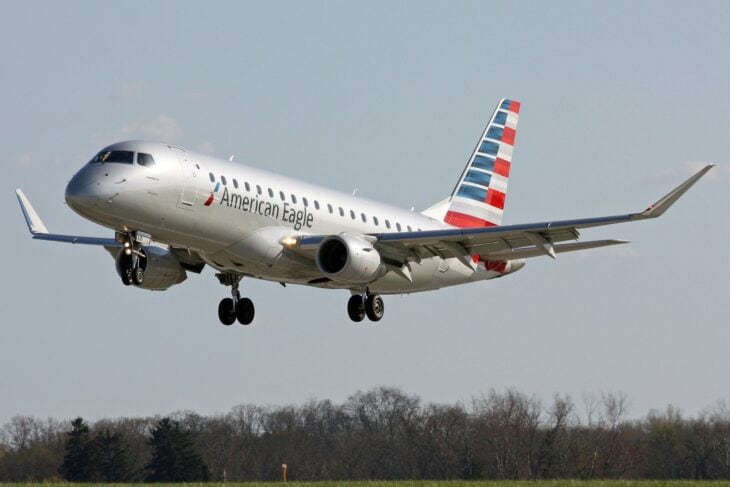
Those are the American Eagle flights run by Envoy, PSA, Piedmont, Republic and SkyWest, on regional jets such as the Embraer 175 and the CRJ900. On them, the 2025 bump rate was 1.36 passengers per 10,000, almost three times American’s mainline rate of 0.48.
American, Delta and Frontier, by the DOT’s Own Numbers
The DOT measures bumping two ways, and they rank airlines differently. By total passengers involuntarily bumped in 2025, American’s network led with 14,758, ahead of Frontier at 8,087 and Spirit at 596.
By rate per 10,000 passengers, the worst offender was Frontier, at 2.51. American’s network came second at 0.72, so Frontier bumped its passengers about 3.5 times as often, a gap our Frontier vs Spirit comparison also found.
American’s network bumped 13,927 people in 2024, so 2025 was worse, not better. United’s network bumped 309 in 2025 and Southwest bumped 226.
Delta’s zero is the number that frames everything else. It was not a fluke: Delta’s network bumped one passenger in 2024, on a codeshare partner flight, and none in the first half of 2026.
Delta still overbooks
Delta’s zero does not mean it sells only as many seats as it has. In 2025, 126,601 passengers on Delta’s network gave up their seats voluntarily for compensation, more than on any other US airline and 44% of the national total. Delta pays its way out of oversales instead of bumping.
American was already falling before the memo. Its network bumped 5,247 passengers in the first half of 2026, down about 27% from 7,163 a year earlier, and its second-quarter count fell 54%, from 4,257 to 1,953.
Even so, those 5,247 were about 58% of the 8,975 involuntary bumps across the industry in the first half of 2026. American still bumped more people than everyone else put together.
The Flight That Made Bumping a Scandal
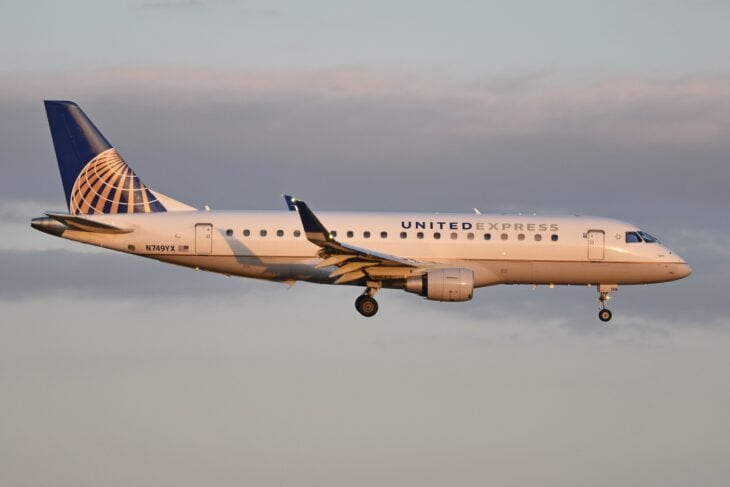
On April 9, 2017, Chicago Department of Aviation officers dragged Dr. David Dao off United Express Flight 3411 from Chicago O’Hare to Louisville. The seats were wanted for four Republic Airways employees who had to crew a flight from Louisville the next day.
Dao suffered a concussion, a broken nose and lost teeth. United raised the maximum compensation it would offer to $10,000 and said it would no longer call police in bumping situations, while Delta let supervisors offer up to about $9,950.
That flight was a regional one, operated by a partner under a major airline’s brand, the same corner of the network where American does most of its bumping today. Republic has also flown American Eagle routes since 2013.
_%E2%80%98N749YX%E2%80%99_United_Express_(50839382372).jpg)
The DOT rule that applies today also draws a line at the door. Once a gate agent has scanned a boarding pass and waved the passenger on, the airline generally cannot remove them for an oversale, only for safety, security, health or disruptive behavior.
That makes the gate the only place a bump can happen, and it is the gate that American’s memo now targets.
What American’s Gate Agents Must Do Now
According to View from the Wing and Simple Flying, the directive took effect on September 30, 2026, and covers mainline and regional flights, domestic and international. “Do not close the aircraft door until all volunteers have been secured for every oversale,” it reads.
Gate teams are told to take a delay when necessary. A customer service manager or someone more senior has to be on hand for an oversold flight, and station leadership, not the airline’s day-of-departure desk, now decides when to go above the maximum compensation.
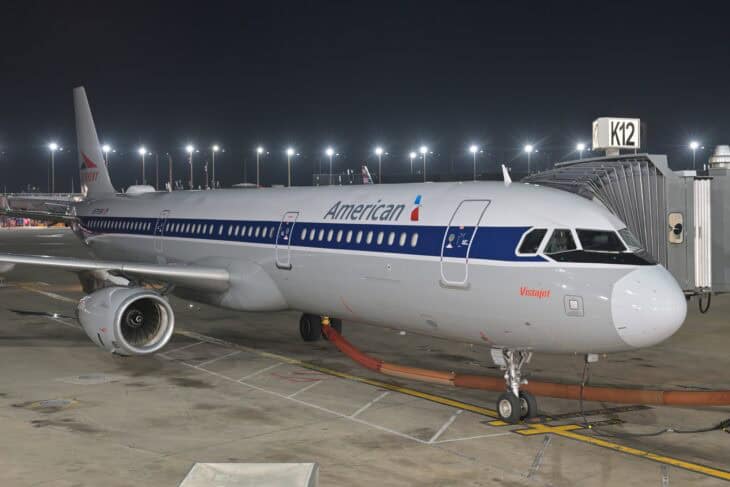

The memo also allows something new: “A volunteer may be confirmed on the very next departure, even when that flight does not currently show available seats.” A volunteer is no longer left waiting for whichever later flight happens to have space.
American has not announced the change publicly. One Mile at a Time and other outlets reported the memo’s contents, and Upgraded Points said on October 5 that American had not replied to its request for comment.
The trade is plain. Every oversale that once ended with a bumped passenger now ends with a held door, a bigger offer or both, and a held door can push a delay down the line, the chain reaction behind why one delayed flight creates more.
The Number That Will Show Whether It Worked
A memo is a promise to staff, not a filing. The proof will be in the DOT’s quarterly bumping tables, the same ones that put American at the top of the 2025 list.
October through December 2026 is the first full quarter under the new rule. The full 2025 tables appeared in the DOT’s February 2026 report, so the fourth-quarter 2026 figures should follow on the same schedule early in 2027.
For a sense of scale, American’s network carried 204.6 million passengers in 2025, more than Delta’s 186.7 million. Among the Big Three, Delta has already shown that zero is possible at that size. The question is whether American will buy its way out of oversales the way Delta does.
Sources and references used for research and fact-checking.
- U.S. Department of Transportation, February 2026 Air Travel Consumer Report (Passengers Denied Boarding, January-December 2025)
- U.S. Department of Transportation, August 2026 Air Travel Consumer Report (Passengers Denied Boarding, April-June and January-June 2026)
- U.S. Department of Transportation, Bumping & Oversales
- View from the Wing, Exclusive: American Airlines Will No Longer Bump Passengers, Volunteers Can Get The Next Flight Even If It's Full
- One Mile at a Time, American Airlines Commits To Ending Involuntary Denied Boardings
- Simple Flying, "Take A Delay" Instead: American Airlines Ends Bumping Passengers Involuntarily Off Flights
- Upgraded Points, American Airlines Ends Involuntary Passenger Bumping
- Wikipedia, United Express Flight 3411 incident
- Wikipedia, American Eagle (airline brand)
Get the Newsletter
The latest aviation news and stories sent to your inbox.
About the Author
Tim is the owner and lead editor of AeroCorner since 2019, overseeing aviation content covering aircraft, airlines, airports, and the broader aviation industry. Through years of researching, writing, editing, and publishing aviation-focused content, he has developed extensive practical knowledge of commercial aviation and air travel. Based in Asia and a frequent traveler himself, Tim also brings firsthand passenger experience to AeroCorner’s coverage. Outside of publishing, he has also explored aviation firsthand through hands-on flight training in New Zealand.