

Table of Contents
Its new airplanes are arriving years behind the original plan and cannot spray yet. Its old ones are being retired anyway.
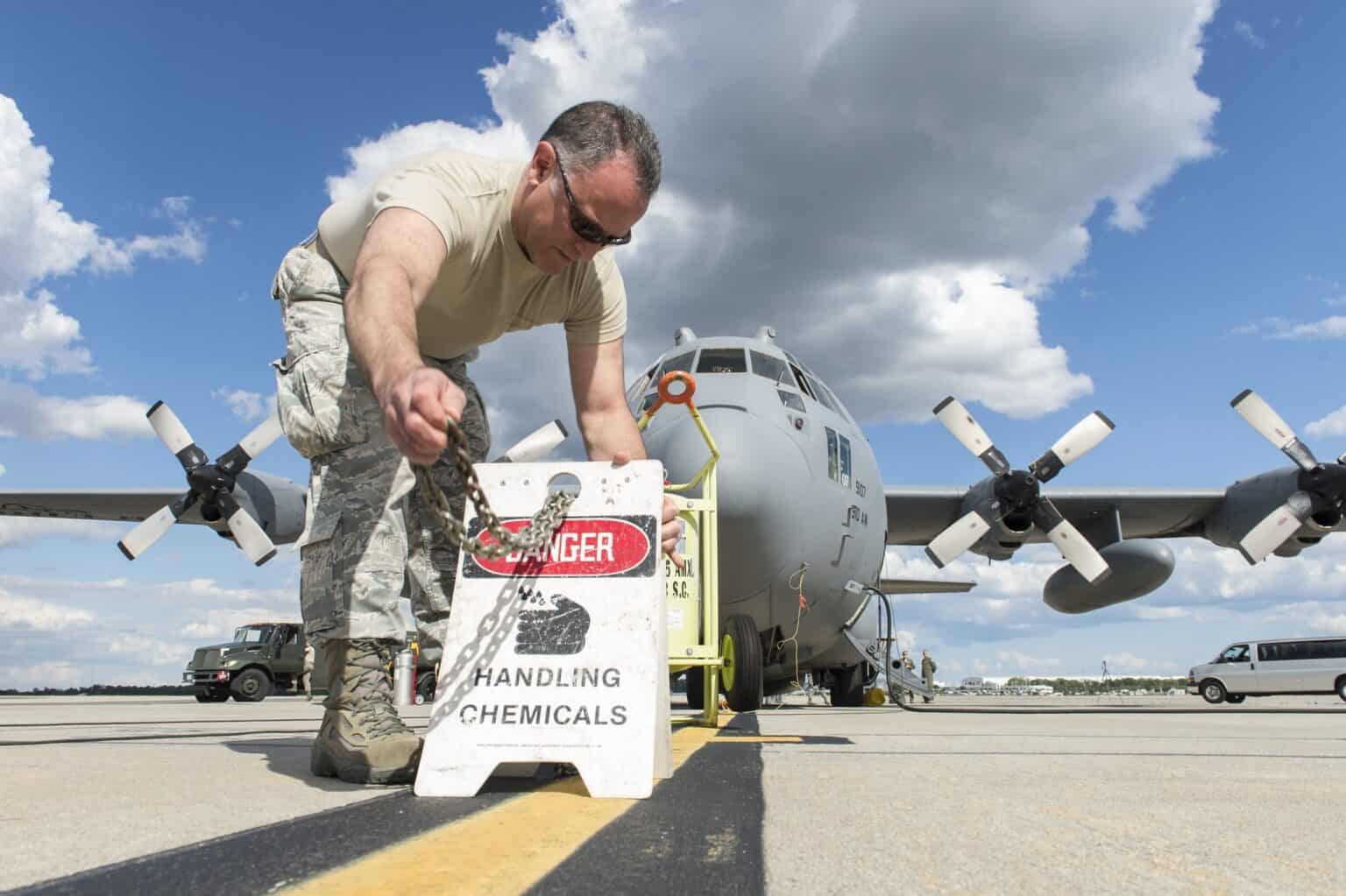
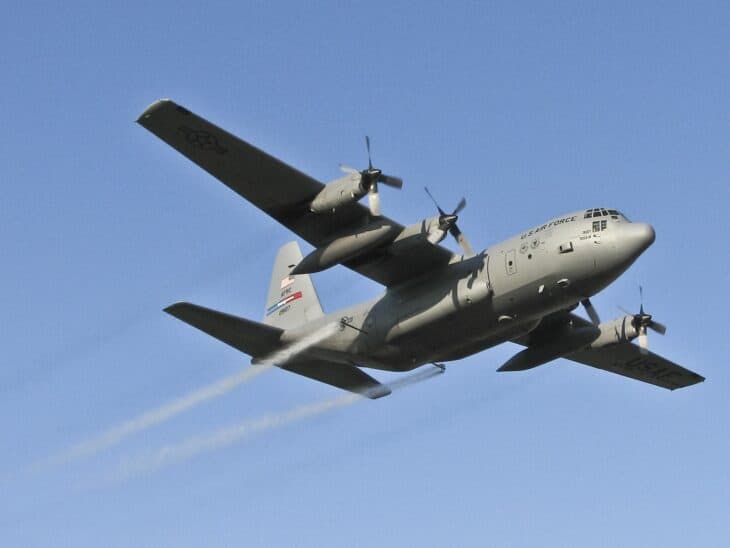
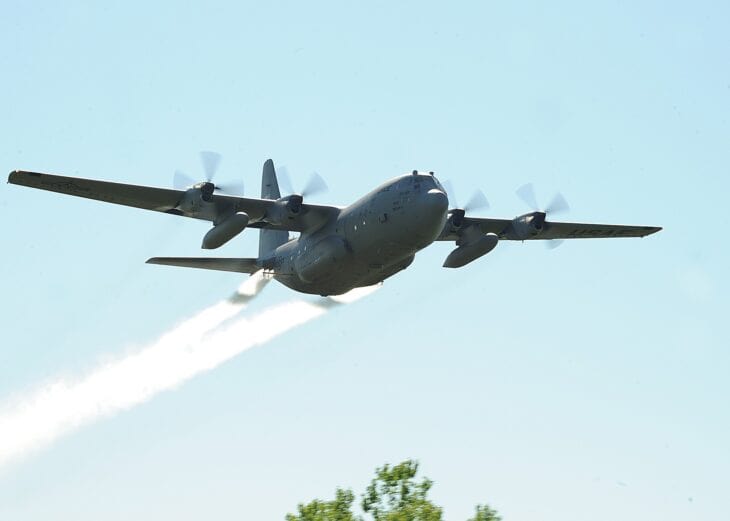
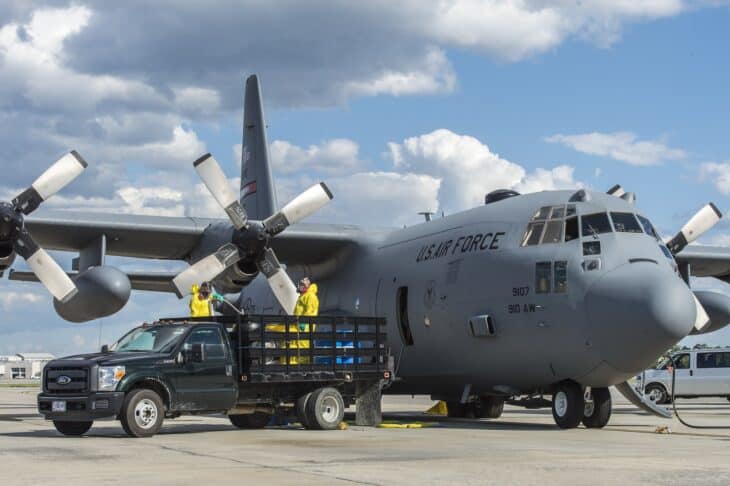
Air Force mosquito spraying comes down to a single unit in Ohio. The Air Force Reserve’s 910th Airlift Wing, at Youngstown Air Reserve Station, holds the Defense Department’s only large-area, fixed-wing aerial spray capability, and it flies the mission in C-130 Hercules transports at night, a few hundred feet off the ground.
As of September 2026, the wing has four C-130Hs built between 1989 and 1992 and three new C-130J Super Hercules that cannot fly the spray mission yet. In April, the outgoing chief of the Air Force Reserve warned Congress that in 2027 the country could be left with “only one potential spray system.”
The wing lost half its airplanes before the replacements came
The job is older than the Air Force. In 1943, the Army Air Forces worked with the Bureau of Entomology and Plant Quarantine to spray DDT from the air against mosquitoes in the Pacific theater of World War II.

The best-known American spray planes came later: the UC-123 Providers of Operation Ranch Hand, which defoliated jungle in Vietnam with Agent Orange. After the war, spray-equipped UC-123Ks were the last Fairchild C-123 Providers in US military service, fighting insect-borne disease with an Air Force Reserve spray flight at Rickenbacker, Ohio.
The Reserve took over the spray mission from active-duty units in 1973, at the tail end of the Vietnam War. The 910th, flying C-130s since 1981, has been the only unit doing it since 1992.
Spraying is the wing’s second job. Its main mission is tactical airlift, and the spray gear is a modular system loaded into the cargo hold, with a boom that reaches out through the paratroop door.

As recently as 2009, the wing had 16 aircraft. Between 2009 and 2014 it lost eight of them, as the Air Force retired more of its C-130H models.
Congress funded replacements in the fiscal 2020 budget: $730 million for eight C-130Js, split between the Air National Guard and the Reserve, with deliveries expected in 2023. In late 2022, the Air Force named Youngstown the preferred home for eight new Js, enough to replace the wing’s entire C-130H fleet.
Three new C-130Js, and none of them can spray yet
The first C-130J landed at Youngstown, which shares its runways with Youngstown-Warren Regional Airport, in July 2024. The second came in December 2024, and then deliveries stopped in 2025 while Lockheed Martin integrated a new communications suite to replace obsolete components.

Lockheed says it certified the fix and resumed deliveries earlier in 2026. The 910th received its third J in May. The fourth, expected over the summer, slipped again to September.
The wing kept retiring old airplanes as new ones arrived, which is how it ended up with three Js and four Hs. The youngest of those Hs was built in 1992, which makes them typical of the Air Force’s aging fleet.
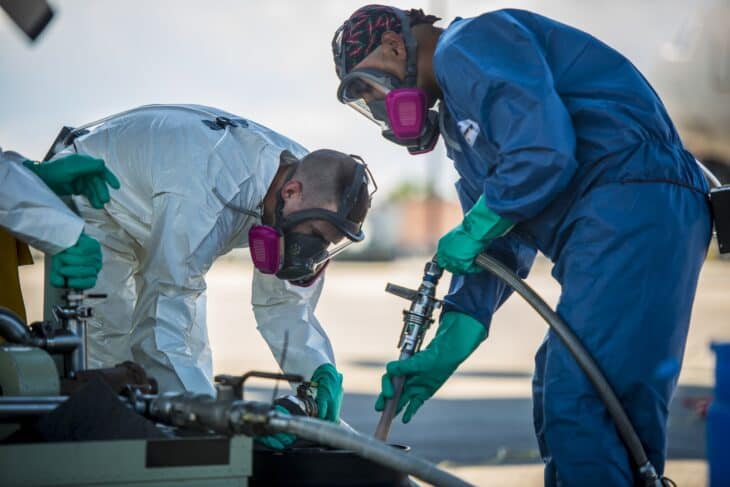
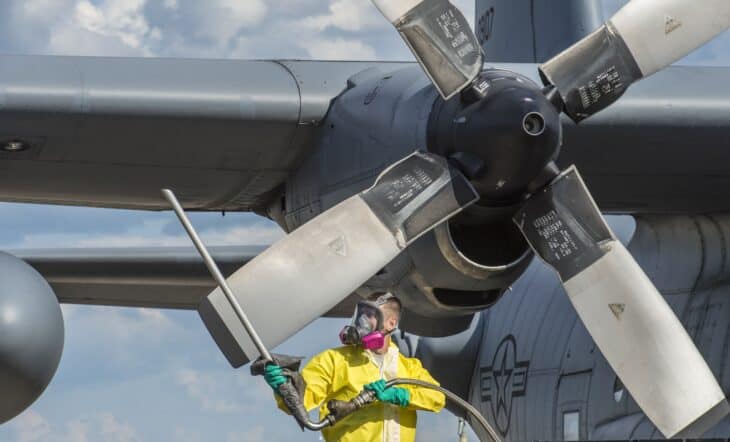
The spray gear they carry is 30 years old. The legacy Modular Aerial Spray System holds four 500-gallon tanks plus a 250-gallon flush tank.
Its successor, the Electronic Modular Aerial Spray System, or EMASS, carries up to 3,500 gallons and uses agricultural GPS to place each pass precisely. In 2025, the Air Force awarded Battelle Memorial Institute $98.4 million to build five of them for the Js.
Even with airplanes and sprayers in hand, the crews take time. Moving a pilot from the C-130H to the J takes six months to a year at Little Rock Air Force Base, Arkansas, and spray training requires at least 500 flight hours before it starts.
That training is crop dusting scaled up to a four-engine transport, flown as low as 150 to 300 feet (46 to 91 m). There is no spray simulator, so pilots first learn to hold a swath’s centerline from a lightbar mounted on a vehicle’s dashboard.
Up to 200 bites a minute, down to fewer than one
That is what the 910th’s own data shows its sprays can do to insect bite counts on the ground. The spray system disperses no more than one ounce of product per acre.
After a hurricane, this is the unit FEMA asks for
The routine work is 25 recurring missions a year across a dozen military installations in nine states. Crews spray mosquitoes carrying West Nile virus, herbicide on invasive plants at the Utah Test and Training Range, and even the sand fleas that bite recruits at Marine Corps Recruit Depot Parris Island, South Carolina.
At Minot Air Force Base, North Dakota, a three-person pest crew is responsible for 8,500 square miles (22,000 km²) and 150 ICBM launch facilities, and fogs what it can from trucks. The swampy ground the trucks cannot reach is left to the airplanes.
The bigger calls come after disasters. Since 1973, Reserve spray crews have flown 10 non-military emergency deployments and treated more than 7 million acres, from equine encephalitis in Panama in 1973 to dengue fever in Puerto Rico in 1987.
After Hurricanes Katrina and Rita in 2005, the 910th sprayed nearly 3 million acres (about 12,000 km²) of Louisiana and Texas, the largest aerial spray operation the Air Force Reserve has ever flown. After Hurricane Harvey in 2017, it treated 2.7 million acres (about 10,900 km²).
In 2010, it flew more than 90 sorties over the Gulf of Mexico during the Deepwater Horizon spill, laying dispersant on more than 30,000 acres (120 km²) of oily water. It was the first time the 910th had used its oil-dispersant capability on a real spill.
In October 2020, after heavy rains from Hurricanes Laura and Delta bred mosquitoes across southwest Louisiana, about 85 reservists took the C-130s to Barksdale Air Force Base. Flying at dusk and at night with night-vision technology, they treated nearly half a million acres in six days. That surge capacity is what is now at risk.
In April, in his final testimony before retiring, then-Chief of the Air Force Reserve Lt. Gen. John P. Healy told Congress: “I predict next year in ’27, where we’re going to be stuck with only one potential spray system to service the country, and I think that’s an uncomfortable risk with regard to the mission set that they provide.”
Air & Space Forces Magazine, which reported the squeeze on September 10, spelled out what that means. The Pentagon could be forced to rely on one plane for a dozen military sites in nine states, before a single hurricane is added.
The last C-130Hs are due to leave in 2027
Life extensions on the H models and the delivery of EMASS could ease the gap. The Reserve hopes to receive four new C-130Js in the coming months, and it plans to keep the last Hs through 2027.
Supply is loosening. Lockheed expects its 2026 deliveries to return to its historic average of 16 to 24 aircraft, and it had 40 C-130Js in various stages of production as of late August.
The J has already shown it can do the job. In March 2024, a C-130J-30 from Keesler Air Force Base, Mississippi, flew EMASS test flights at Youngstown, and the J needs a crew of three to the H’s five, with no navigator or flight engineer.
But crew training and EMASS certification mean the new Js will not be able to spray for months. Until they can, the Defense Department’s wide-area mosquito spraying depends on C-130Hs built between 1989 and 1992, carrying 30-year-old spray gear.
It is one of the least glamorous jobs in the military, and it has no backup. When the next hurricane leaves standing water across a state, the answer will still come from one wing in Ohio, and in 2027, possibly from one airplane.
Sources and references used for research and fact-checking.
- Air & Space Forces Magazine, USAF's Only Aerial Spray Unit Squeezed by Demand, Aging Equipment, Slow Modernization
- Air & Space Forces Magazine, Aerial Spray Unit Tests Its Life-Saving Mission on New C-130J
- Air Force Reserve Command, Air Force C-130s fly mosquito control aerial spray ops to support hurricane Delta, Laura recovery efforts
- AgAir Update, Defending Health from the Skies: The 910th Airlift Wing's Aerial Spray Mission
- Wikipedia, 910th Airlift Wing
- Wikipedia, Fairchild C-123 Provider
- Wikipedia, Youngstown Air Reserve Station
Get the Newsletter
The latest aviation news and stories sent to your inbox.
About the Author

Tim is the owner and lead editor of AeroCorner since 2019, overseeing aviation content covering aircraft, airlines, airports, and the broader aviation industry. Through years of researching, writing, editing, and publishing aviation-focused content, he has developed extensive practical knowledge of commercial aviation and air travel. Based in Asia and a frequent traveler himself, Tim also brings firsthand passenger experience to AeroCorner’s coverage. Outside of publishing, he has also explored aviation firsthand through hands-on flight training in New Zealand.