

Overview
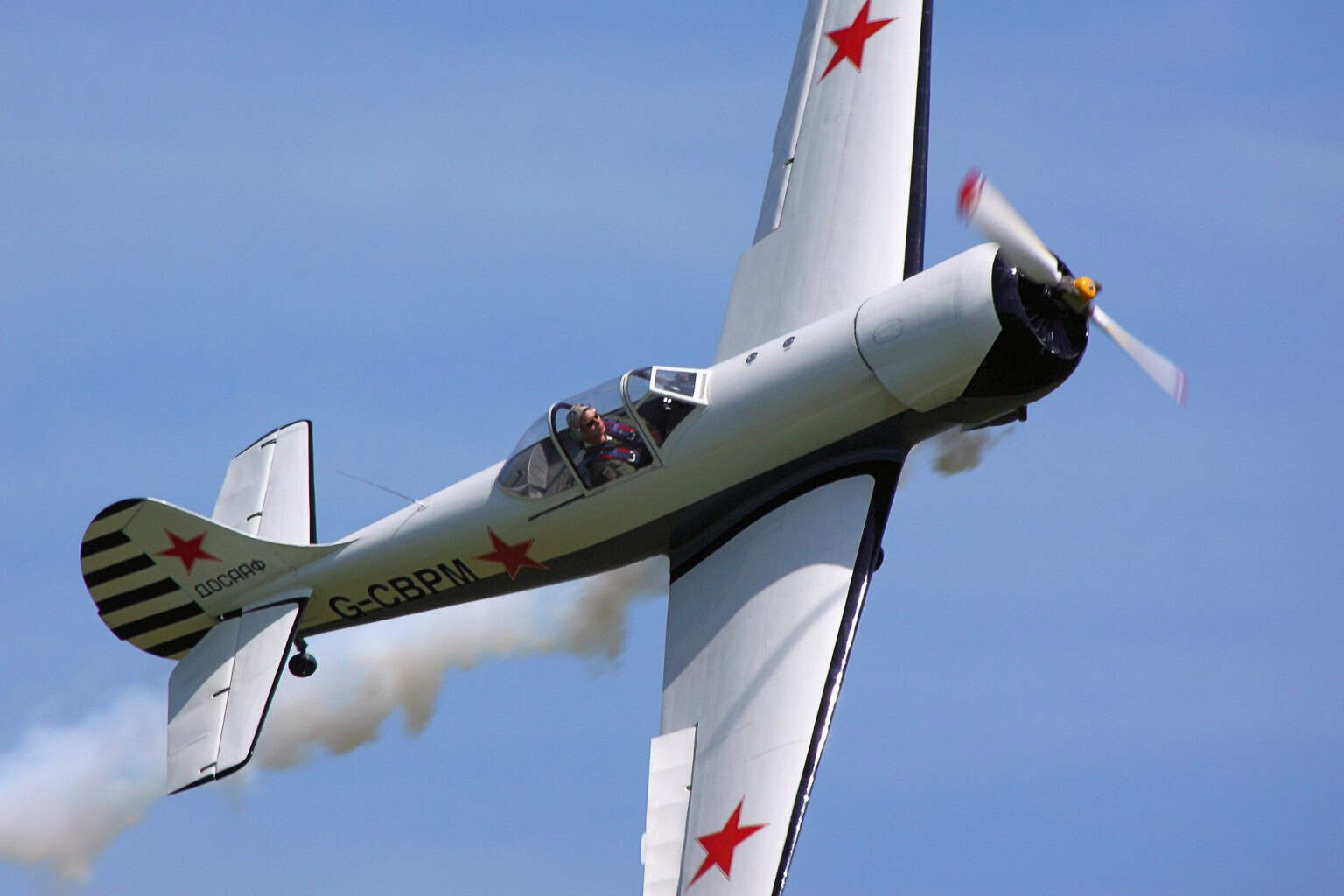
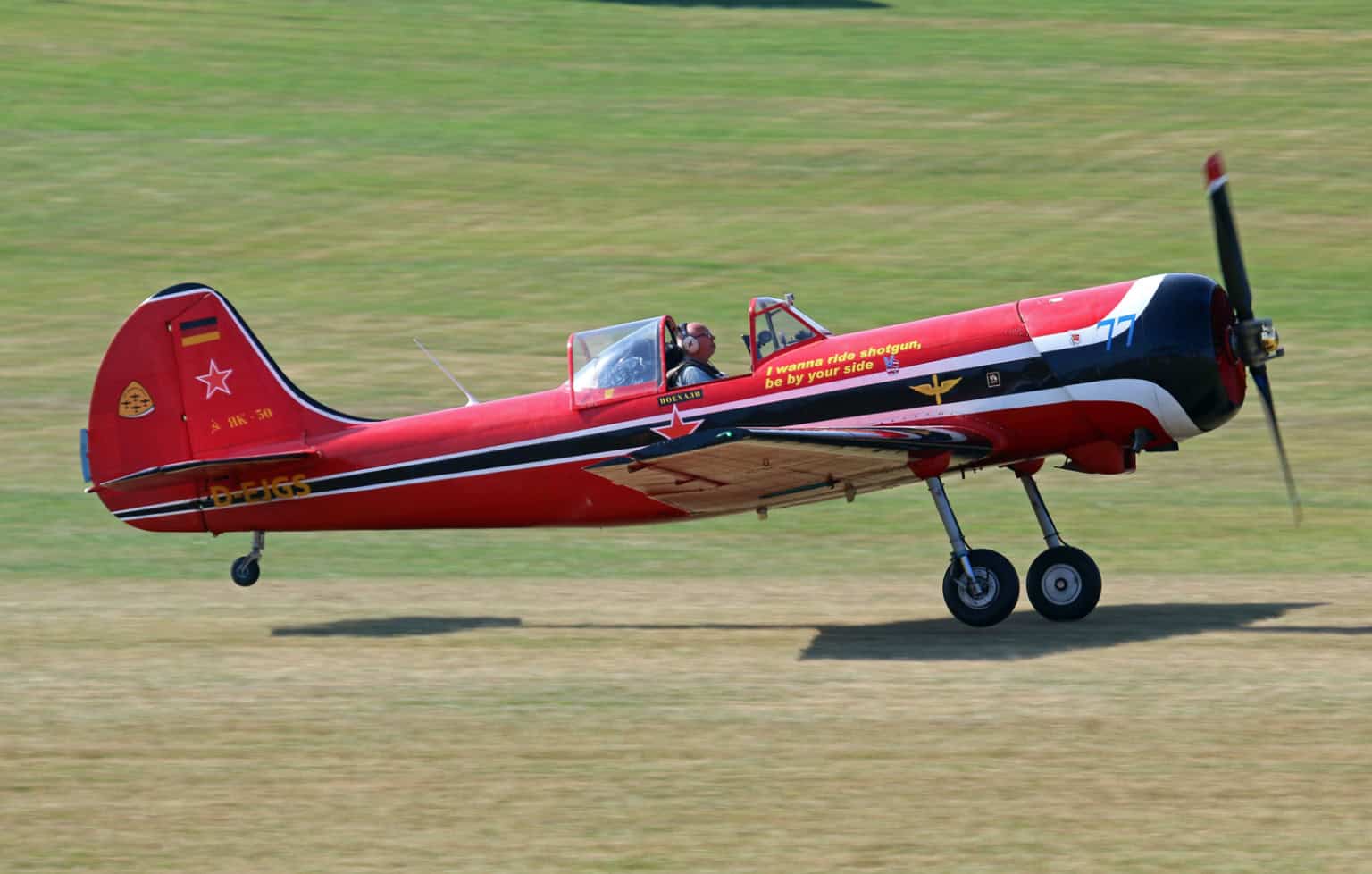
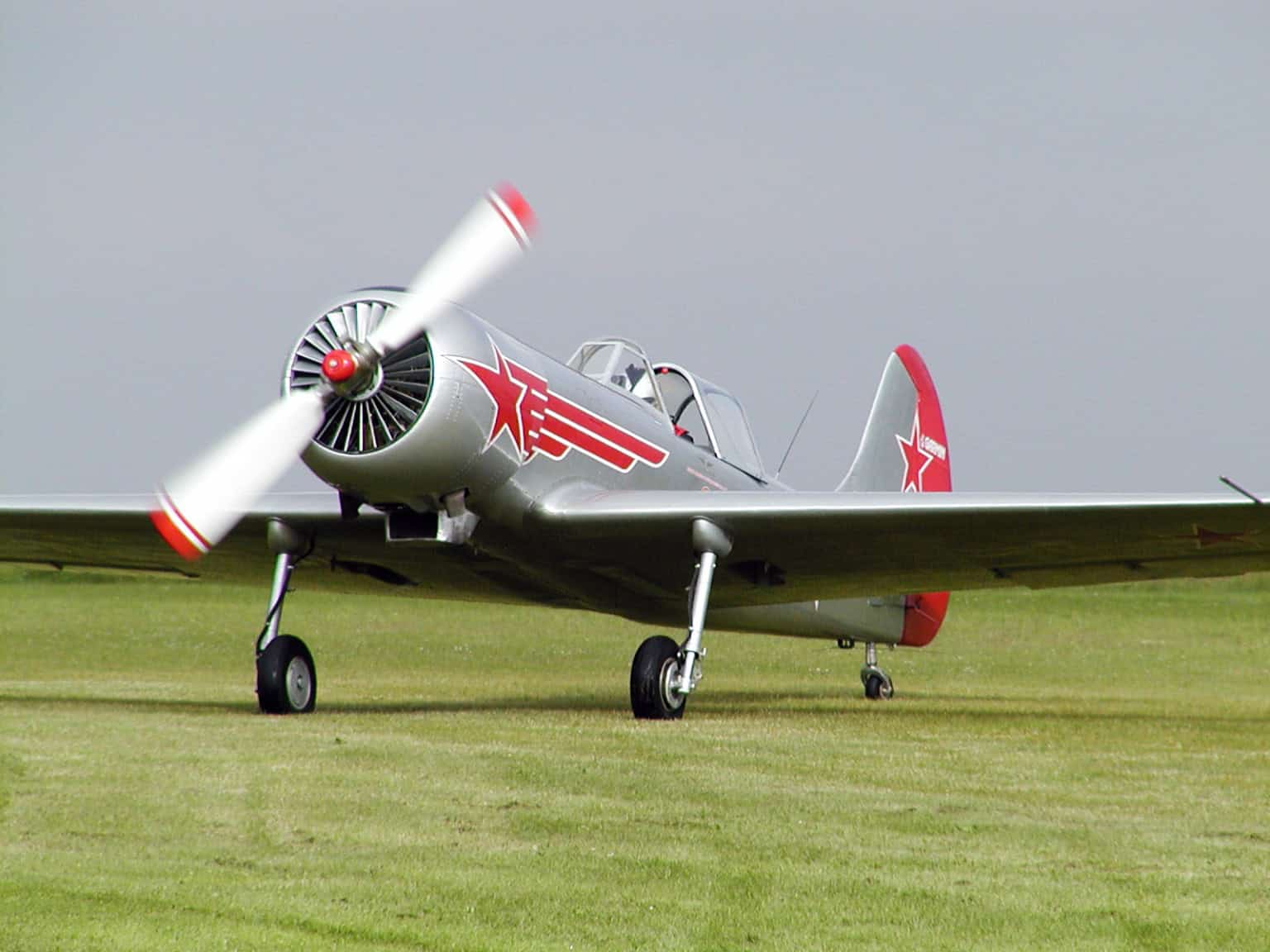
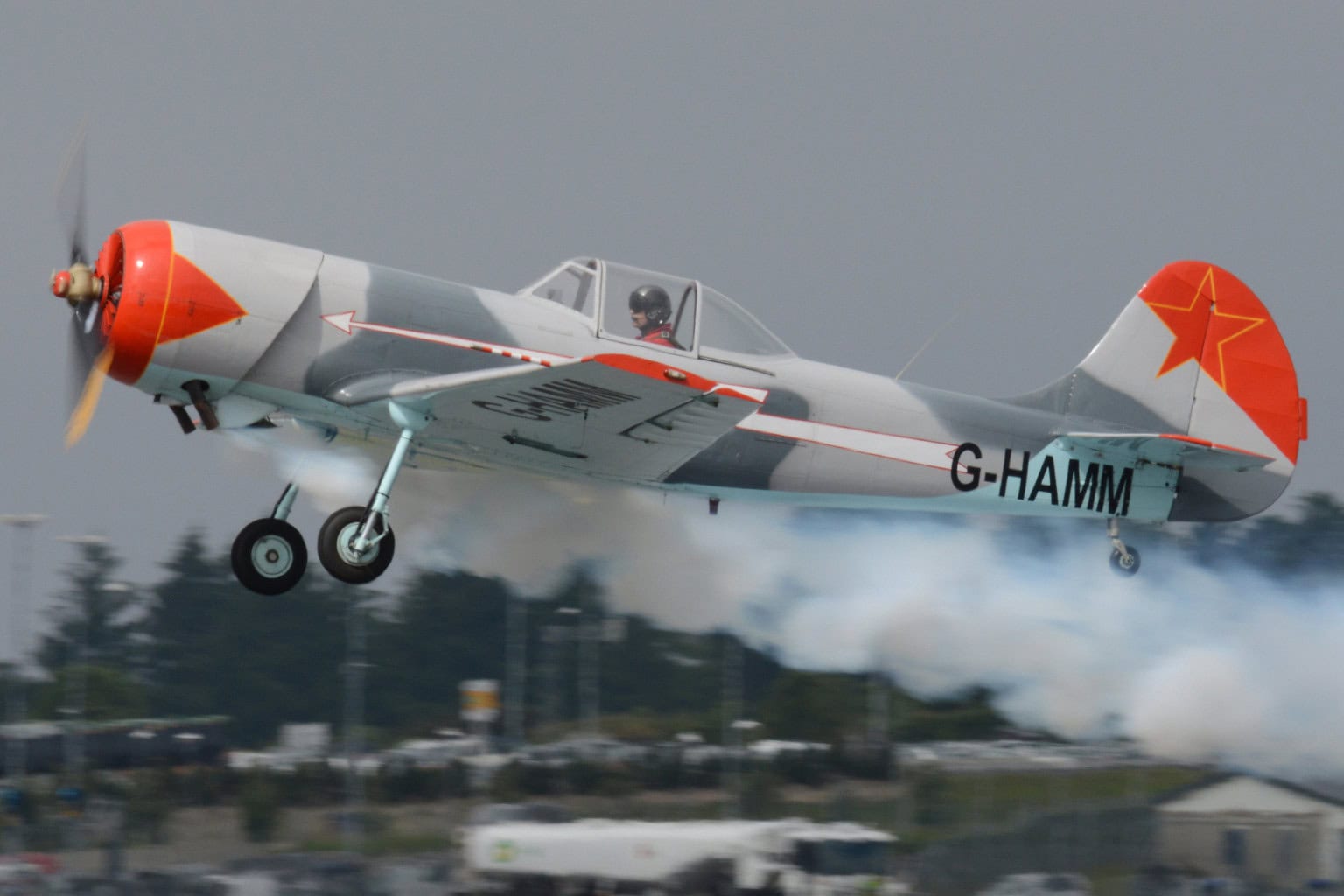
The Yakovlev Yak-50 is a single-seat, all-metal, low-wing aerobatic aircraft built by the Yakovlev design bureau. It first flew on June 25, 1975, and 314 were built through 1986. It was developed from the Yak-18 and led to the two-seat Yak-52.
Live Fleet Activity (YK50)
📡
Fetching live data…
Specifications
- Engine
- 1 × Vedeneyev M-14P
- Engine type
- Piston
- Power
- 361 hp · 269 kW
- Avionics
- —
- Wing tips
- No winglets
- Seats
- 1
- Crew
- —
- Cabin width
- —
- Cabin height
- —
- Cabin length
- —
- Exterior length
- 25 ft 7 in · 7.80 m
- Tail height
- 10 ft 6 in · 3.20 m
- Fuselage diameter
- 2 ft 11 in · 0.90 m
- Wing span
- 31 ft 2 in · 9.50 m
- Baggage volume
- —
- Gross weight
- —
- Empty weight
- —
- Max takeoff weight
- 2,000 lb · 900 kg
- Max landing weight
- 2,000 lb · 900 kg
- Max payload
- 200 lb · 100 kg
- Fuel capacity
- 30 gal · 100 L · 100 kg (AvGas)
- Max cruise speed
- 220 kt · 253 mph · 407 km/h
- Maximum speed
- —
- Cruise speed
- —
- Approach speed
- 54 kt · 62 mph · 100 km/h
- Range
- 270 nm · 310 mi · 500 km
- Fuel burn
- —
- Ceiling
- 13,000 ft · 4,000 m
- Rate of climb
- 3,150 ft/min · 16 m/s
- Takeoff distance
- 330 ft · 100 m
- Landing distance
- 820 ft · 250 m
Gallery





(/)
tap to zoom
(/)

Live fleet activity details
📡
Operational Context
Table of Contents
What is the Yakovlev Yak-50?
The Yak-50 is a Soviet single-seat aerobatic aircraft. It is an all-metal, low-wing monoplane with retractable main wheels and a fixed tailwheel.
It first flew on June 25, 1975, and 314 were built before production ended in 1986. It grew out of the tandem two-seat Yakovlev Yak-18 trainer.
The full specification table for the aircraft is on this page. The sections below explain what the numbers mean in practice.
Design and history
The Yak-50 was built for unlimited aerobatics, not for teaching beginners. Its control surfaces are fabric-covered to save weight, and it has no flaps.
Landing gear, brakes and the engine starter run on compressed air. An engine-driven compressor tops the air supply back up.
The type was twice World Aerobatic Champion. It was later developed into the two-seat Yak-52, which became the better-known trainer.
Engine and performance
The Yak-50 uses a supercharged Vedeneyev M-14P nine-cylinder radial engine, driving the propeller through a reduction gearbox. Later engine versions, the M-14PF and M-14R, are more powerful.
Jane’s lists the airframe at +9 g and -6 g. That is the reason it was a competition aircraft rather than a basic trainer.
Published performance figures differ between sources. Service ceiling is the clearest example: one reference gives about 13,000 ft, while Jane’s gives about 18,000 ft.
The same spread appears in speed. Maximum speed, never-exceed speed and the Jane’s normal-operating limit are three different numbers, so check which one a source quotes.
Climb rate is 3,150 ft/min · 16 m/s in both Jane’s and Military Factory. That figure is the one shown in the specification table.


The spar failures
The Yak-50’s early years had a serious flaw. Spars failed during unlimited aerobatics, and 1976 world champion Viktor Letsko was among those affected.
Two modifications followed: Service Bulletin 61DA and Service Bulletin 79. Wikipedia reports no further failures after they were done.
Service and survivors
Soviet national aerobatic team aircraft were typically scrapped after about 50 flight hours because of airframe stress. Other DOSAAF club aircraft were scrapped or stored once the Yak-55 and Su-26 took over.
Operators included DOSAAF, the Soviet Union’s volunteer aviation society, and the Lithuanian National Defence Volunteer Forces. Military Factory also lists Russia and Ukraine.
About 90 or more survive airworthy with private owners in Europe, the United States, Australia and Canada. Yakitalia, an Italian aerobatic team, flies one Yak-50 alongside three Yak-52s.

Yak-50 vs Yak-52
The Yak-50 is a single-seater built for competition. The Yak-52 added a second seat for instruction and became the far more common type.
People searching for a Yak-50 often land on Yak-52 listings. They are different aircraft with different cockpits and roles.
Frequently Asked Questions
When did the Yak-50 first fly?
The Yak-50 first flew on June 25, 1975. Production ran from 1975 to 1986.
How many Yak-50s were built?
314 were built, according to Wikipedia and Military Factory.
What engine does the Yak-50 use?
It uses a Vedeneyev M-14P nine-cylinder air-cooled radial engine. The M-14PF and M-14R are more powerful versions.
How many Yak-50s are still flying?
Wikipedia reports about 90 or more airworthy, held by private owners in Europe, the United States, Australia and Canada.
Is the Yak-50 the same as the Yak-52?
No. The Yak-50 is a single-seat aerobatic aircraft, and the Yak-52 is a two-seat development of it.
What was the Yak-50 used for?
It was an aerobatic competition and training aircraft, flown by Soviet teams and DOSAAF clubs. It was twice World Aerobatic Champion.
Sources and references used for research and fact-checking.