In the late Cold War years, when Soviet engineers were focused on heavy transports and gunships, the Mil Mi-34 “Hermit” emerged as something different — a light, nimble helicopter designed for training, patrol, and civil use. Compact yet capable, it became the Soviet answer to the Western light helicopter market.
Mil Mi-34 “Hermit” — The Soviet Light Utility Helicopter
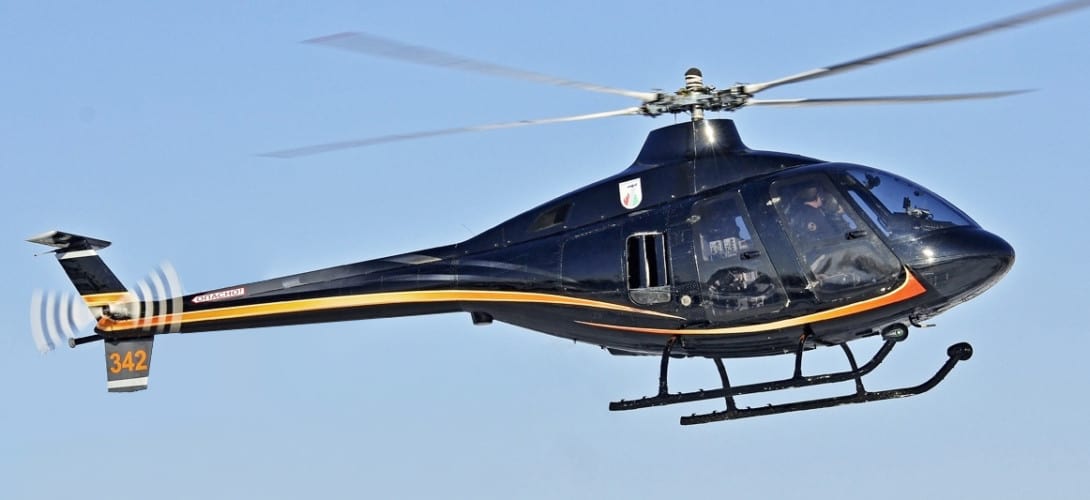
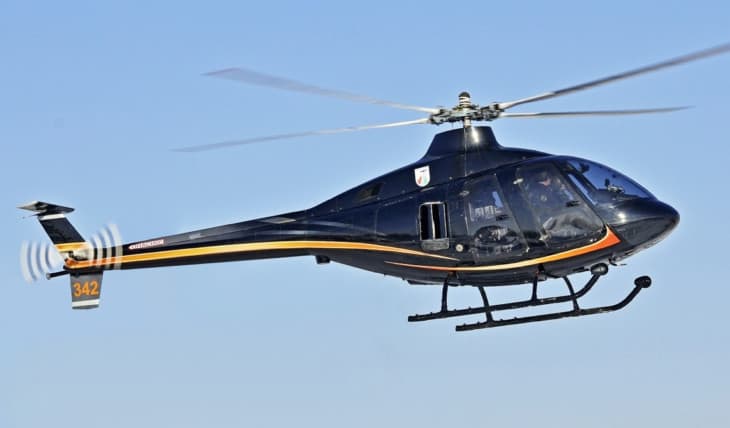
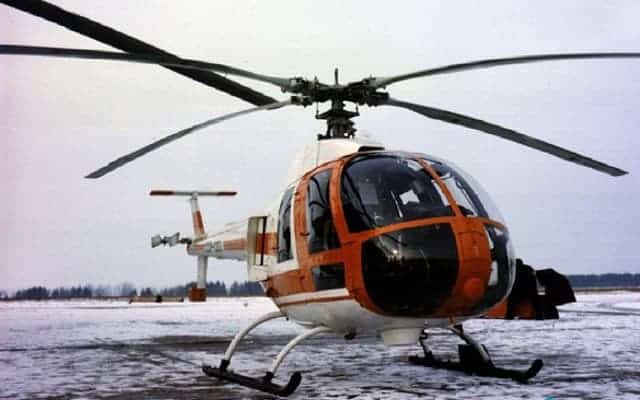
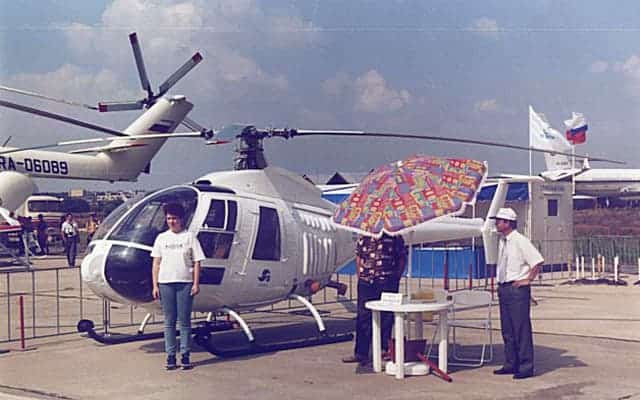
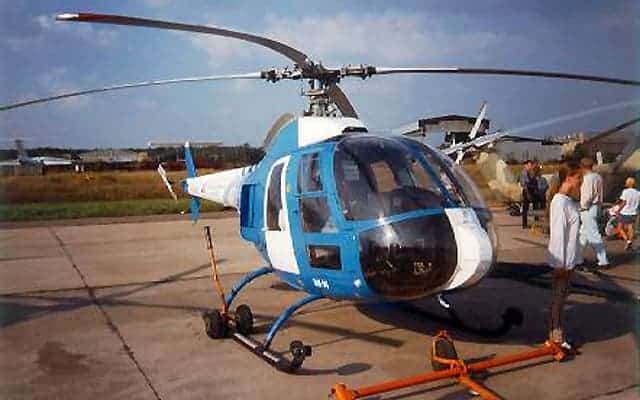
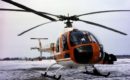
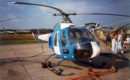
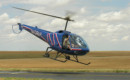
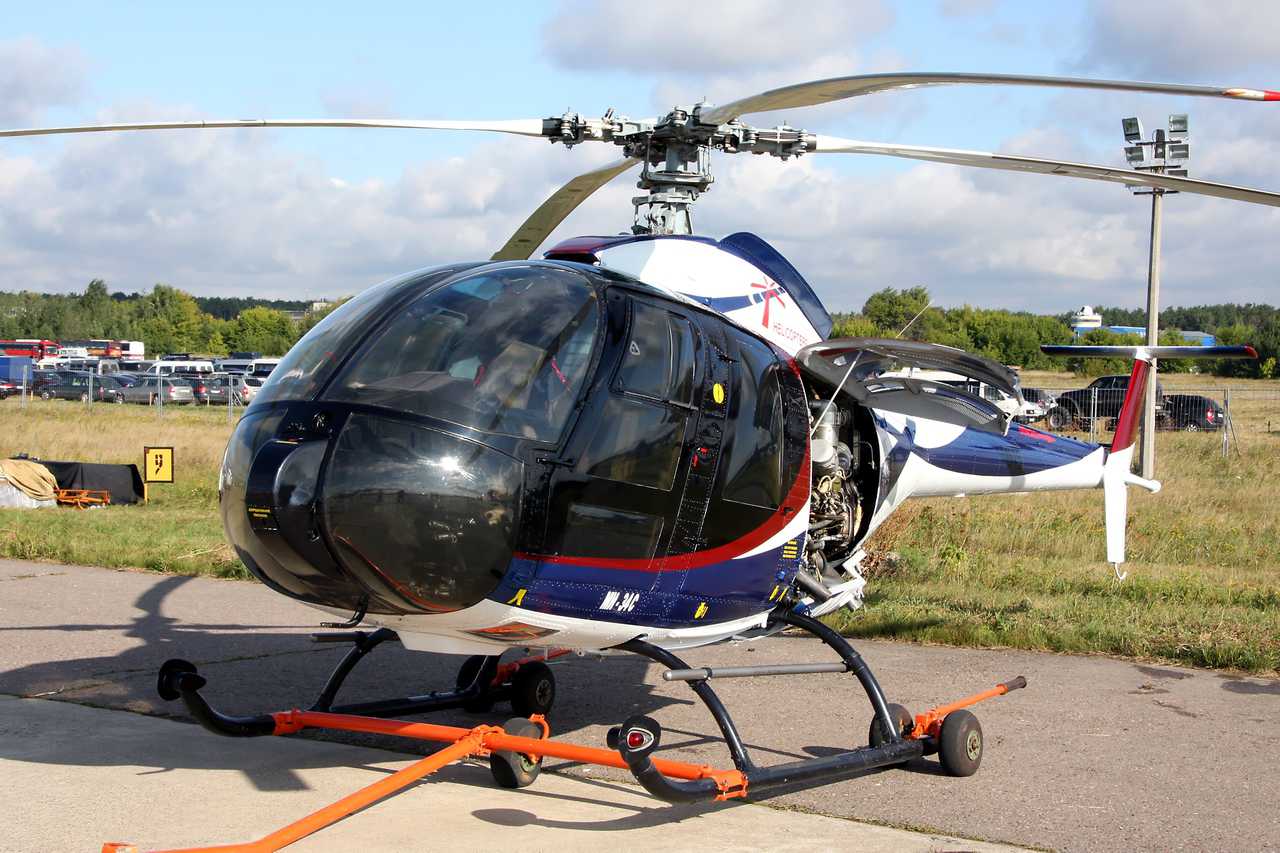
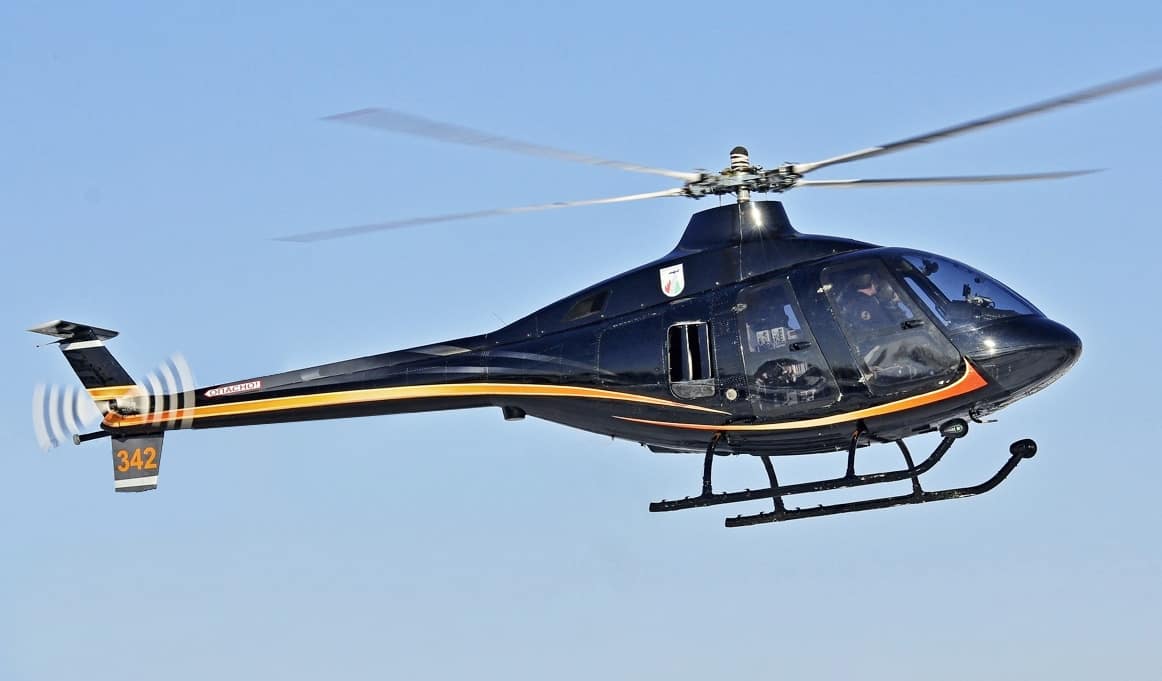
The Mil Mi-34, NATO reporting name “Hermit,” was a light, piston-engine helicopter developed by the Mil Moscow Helicopter Plant in the 1980s. Intended as a modern, multipurpose aircraft for training, liaison, sport flying, and law enforcement, it marked a departure from Mil’s traditional focus on large military rotorcraft such as the Mi-8 and Mi-24.
The Mi-34 first flew on November 17, 1986, and was publicly unveiled in 1987. Its design drew inspiration from the Mil Mi-24 Hind, scaled down into a compact, two-blade main rotor configuration with a conventional tail rotor. The initial production version, the Mi-34S, was powered by a 360 hp Vedeneyev M-14V-26 radial engine, giving it a top speed of about 135 mph (215 km/h), a range of roughly 280 miles (450 km), and a service ceiling of 10,000 ft (3,000 m).
The helicopter could carry up to four occupants, making it suitable for training, aerial patrol, and light transport. Later variants, including the Mi-34S1 and Mi-34S2 “Sapsan”, introduced modern avionics and optional turboshaft engines, improving performance and reliability.
Despite its agility and responsive handling — characteristics praised by pilots — the Mi-34 faced limited production due to cost and the economic collapse following the breakup of the Soviet Union. Only a small number were built through the 1990s and 2000s, primarily for civilian operators in Russia and Eastern Europe.
Today, the Mil Mi-34 “Hermit” stands as an intriguing symbol of late-Soviet innovation — a helicopter that blended military engineering discipline with the simplicity and versatility of a light civilian aircraft.
Want More of This?
We'll send you our latest and best content straight to your inbox













.jpg)