Amphibious
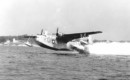
Martin PBM Mariner
ICAO: PBM
American patrol flying boat in 1951
The latest aviation news and stories sent to your inbox.
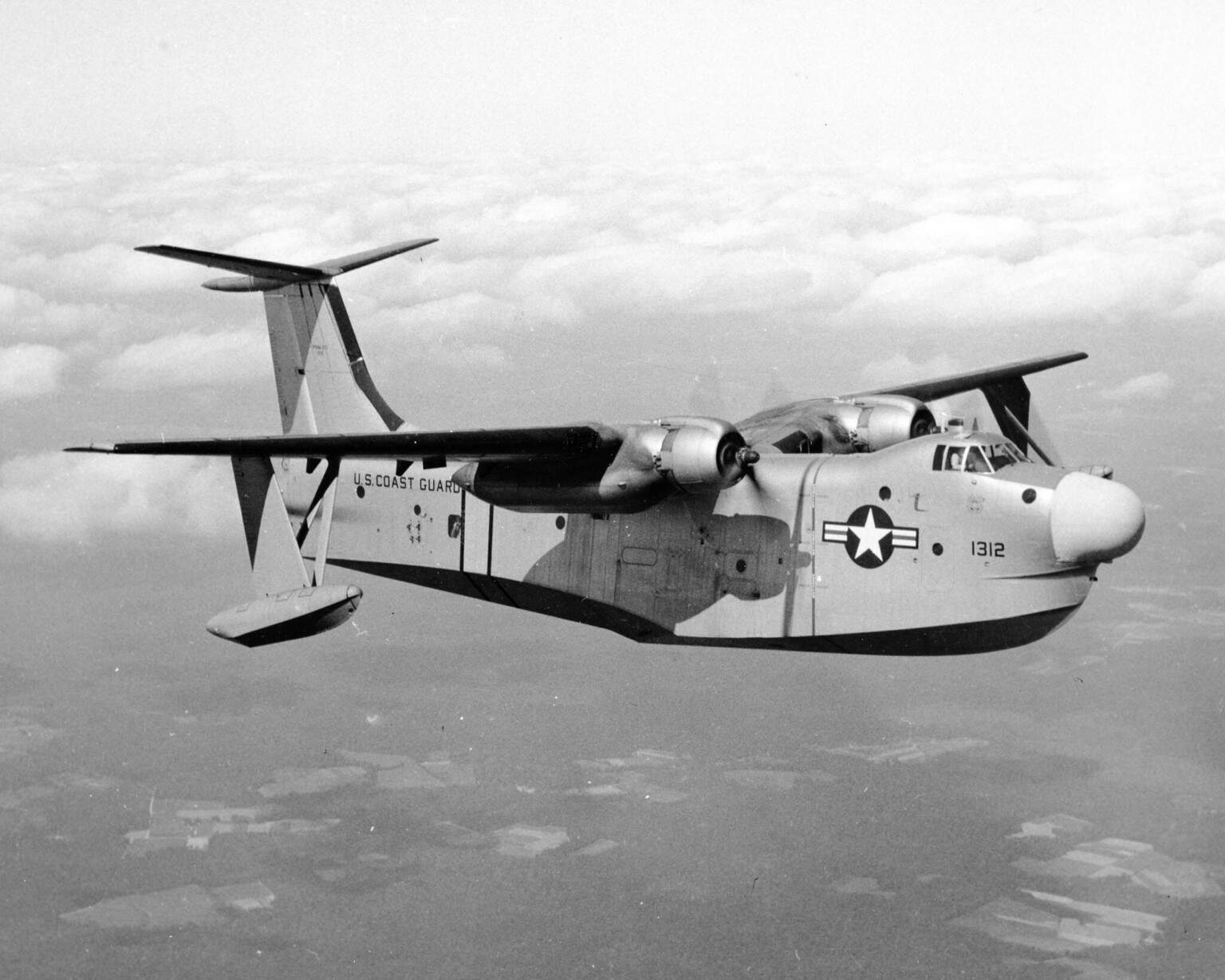
The Martin P5M Marlin was a flying boat fitted with twin-piston engines developed and manufactured by Glenn L. Martin Company. The aircraft entered service in 1951. The P5M Marlin was in service with the United States Navy in the late 1960s and was also primarily used by the United States Coast Guard as well as the French Navy.
Live Fleet Activity (P5M)
Fetching live data…

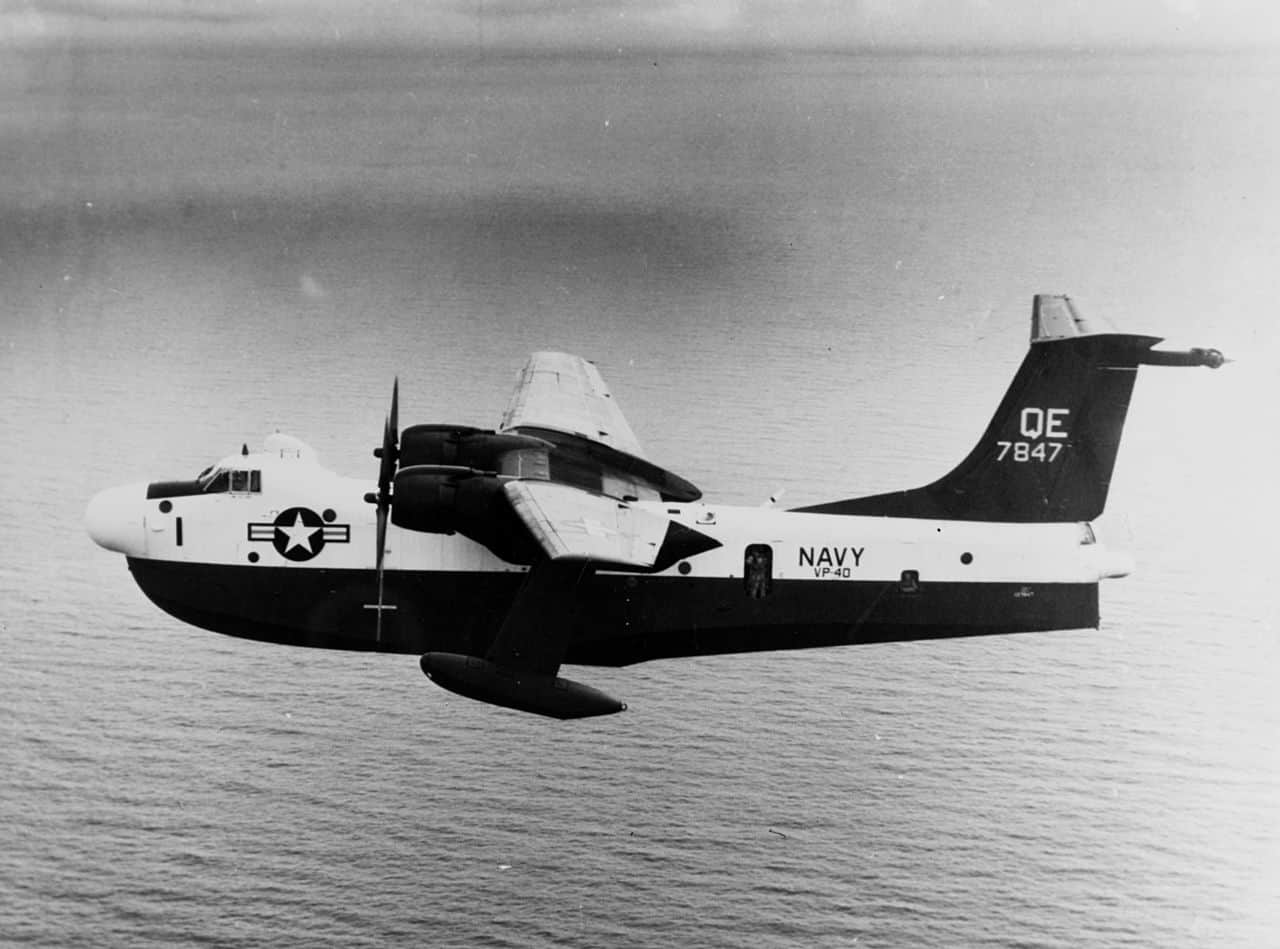


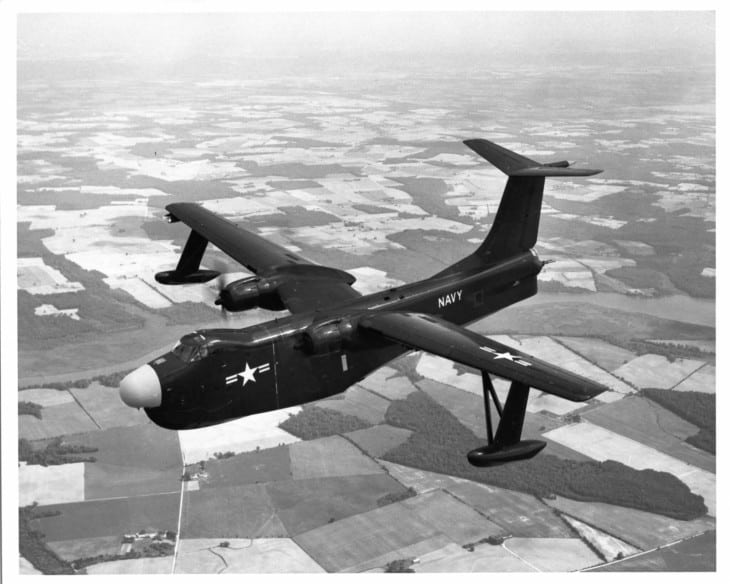
The Martin P5M was developed from the PBM Mariner, but with more powerful engines, a better hull, and a further conventional tail assembly. On May 30, 1948, the Marlin prototype took to the air for the first time. In 1951, the initial production aircraft designated as P5M-1 for the United States Navy was produced. On June 22, 1951, it conducted its maiden flight.
The P5M-1 incorporated an elevated flight deck for better visibility of the crew and featured a large radome instead of the nose turret for the AN/APS-44 search radar, the removal of the dorsal turret, and contemporary streamlined wing floats. It was also fitted with a stretched engine nacelles for more room to accommodate weapons bays. 160 P5M-1 were built in total. It was then followed by the P5M-2 updated production version that was equipped with a T-tail configuration. 108 of this version were produced for the United States Navy, and twelve for the French Navy.
The P5M-2 can accommodate up to eleven crew members. It has an external length of 30.66 meters, an external height of 5.5 meters, a tail height of 9.98 meters, and a fuselage width of 3 meters. The wingspan is 35.71 meters and the wing area is 130.6 square meters. It has a wheelbase of 17.5 meters. The aircraft has an empty weight of 22,900 kg, a gross weight of 34,743 kg, and a maximum takeoff weight of 35,380 kg. The maximum landing weight is 34,013 kg. It has a maximum payload of 5,000 kg and a fuel tank capacity of 2,810 US gallons.
The aircraft is powered by two Wright R-3350-32WA Duplex-Cyclone eighteen-cylinder, air-cooled, radial piston engines with water injection rated at 3,450 horsepower each. The engine drives a four-bladed fully-reversible constant-speed propeller. The Marlin has a maximum speed of 218 knots at sea level and a cruise speed of 130 knots at 1,000 feet. It has a travel range of 1,780 nautical miles. The aircraft can fly up to 24,000 feet and can climb at a rate of 1,200 feet per minute.
Sources and references used for research and fact-checking.