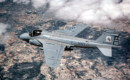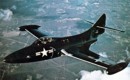
Grumman · United States · ICAO: F9F6 · 1951–1960 ·
$2 million (1955)

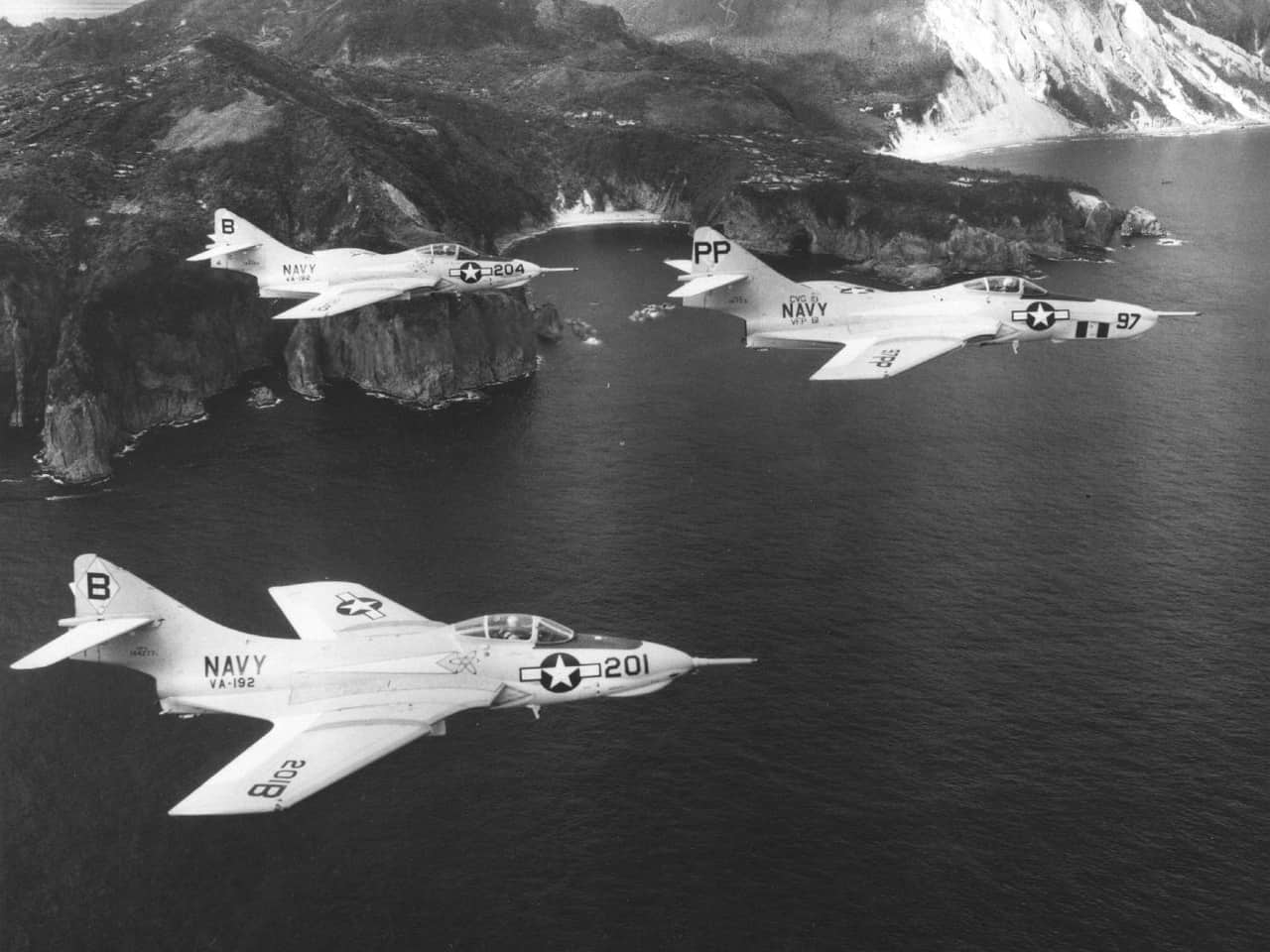
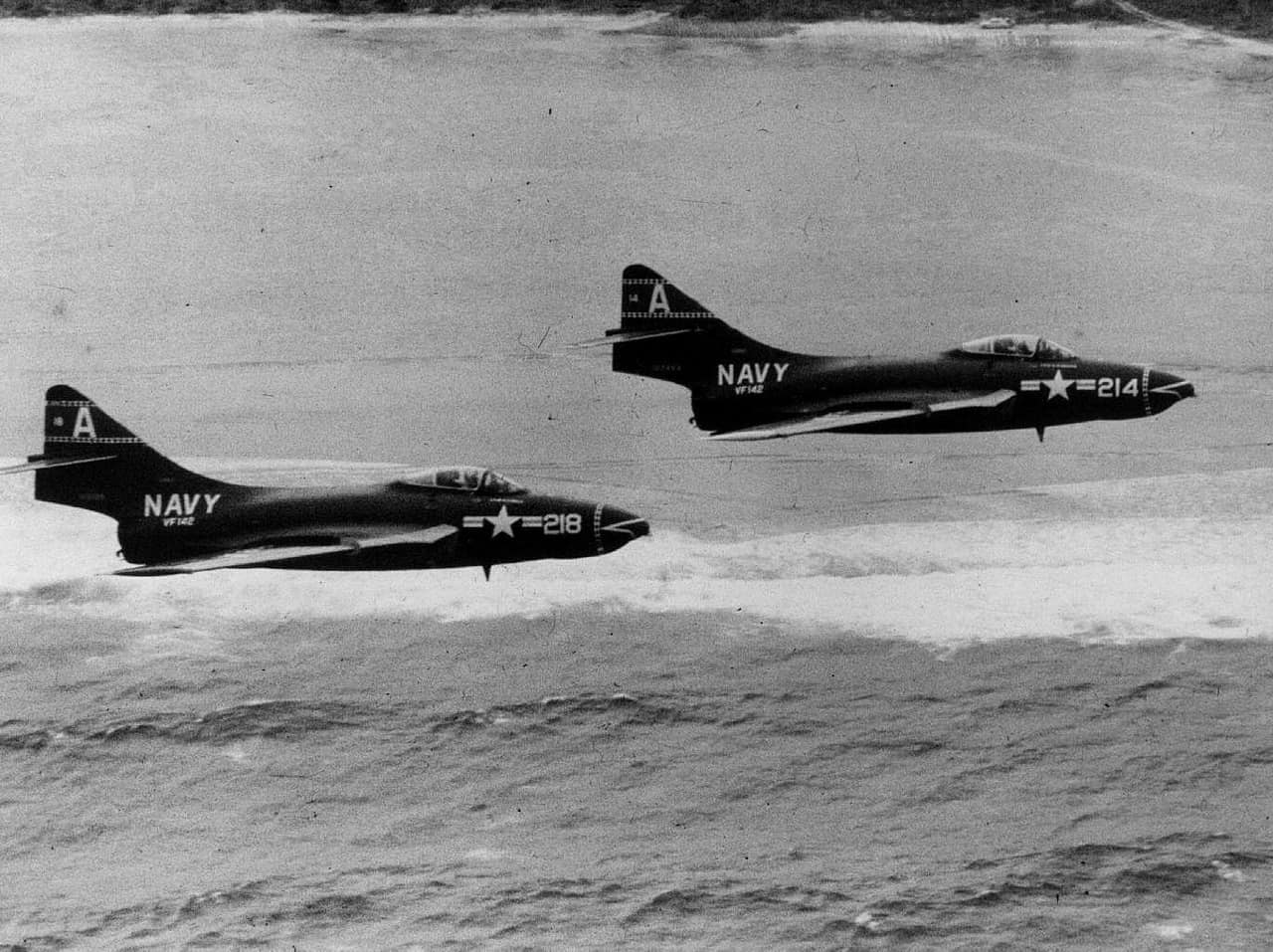
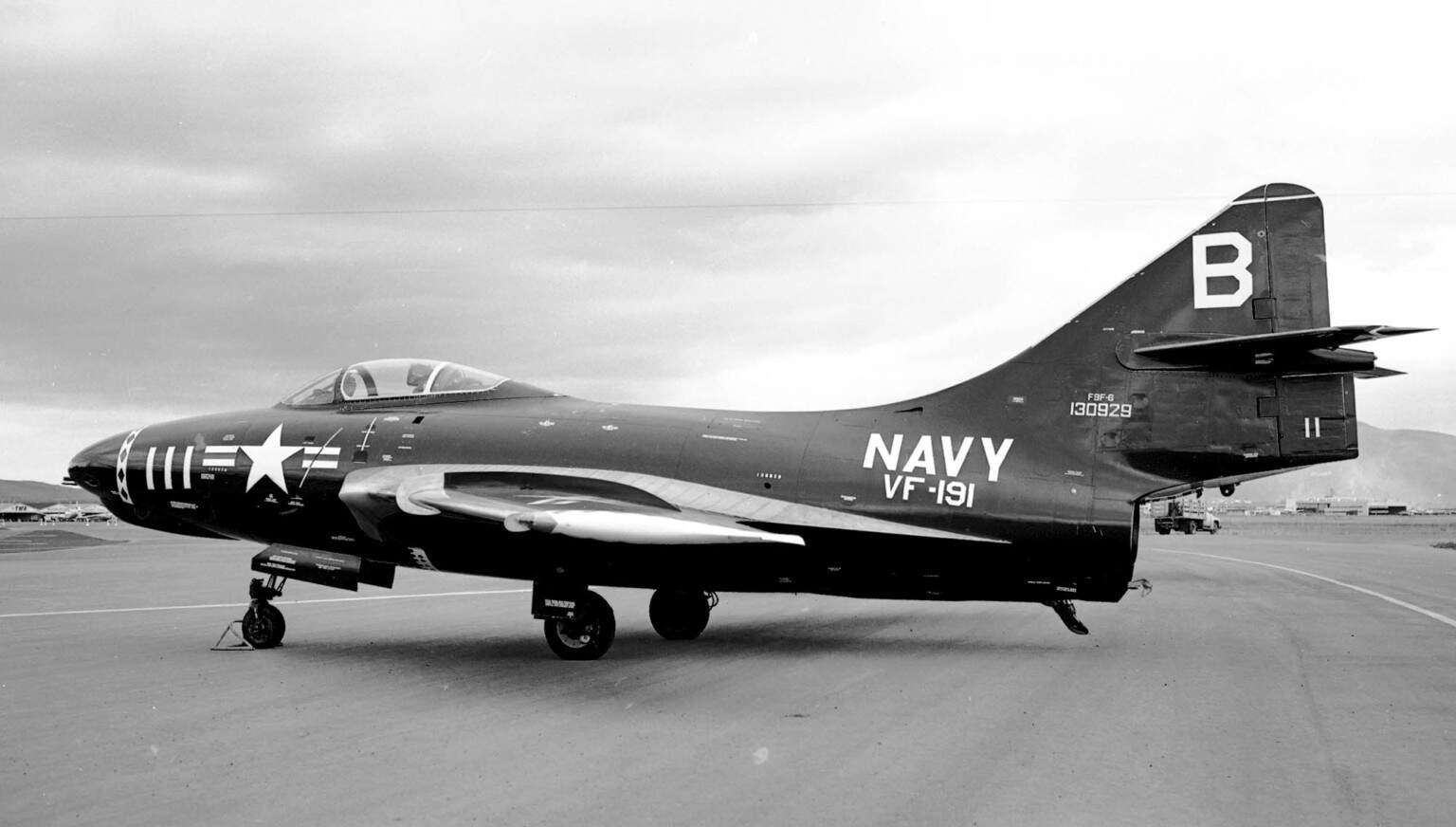
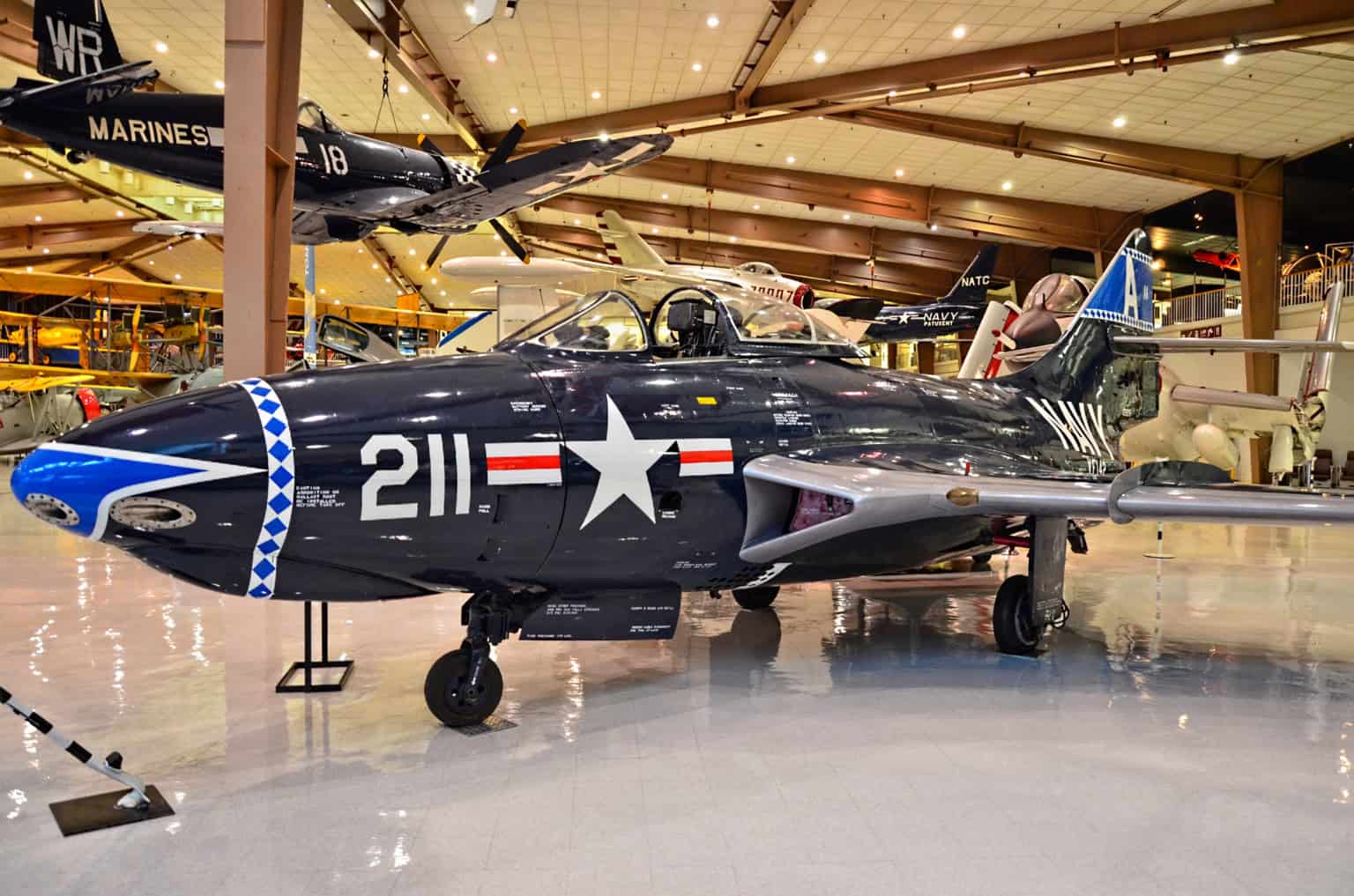
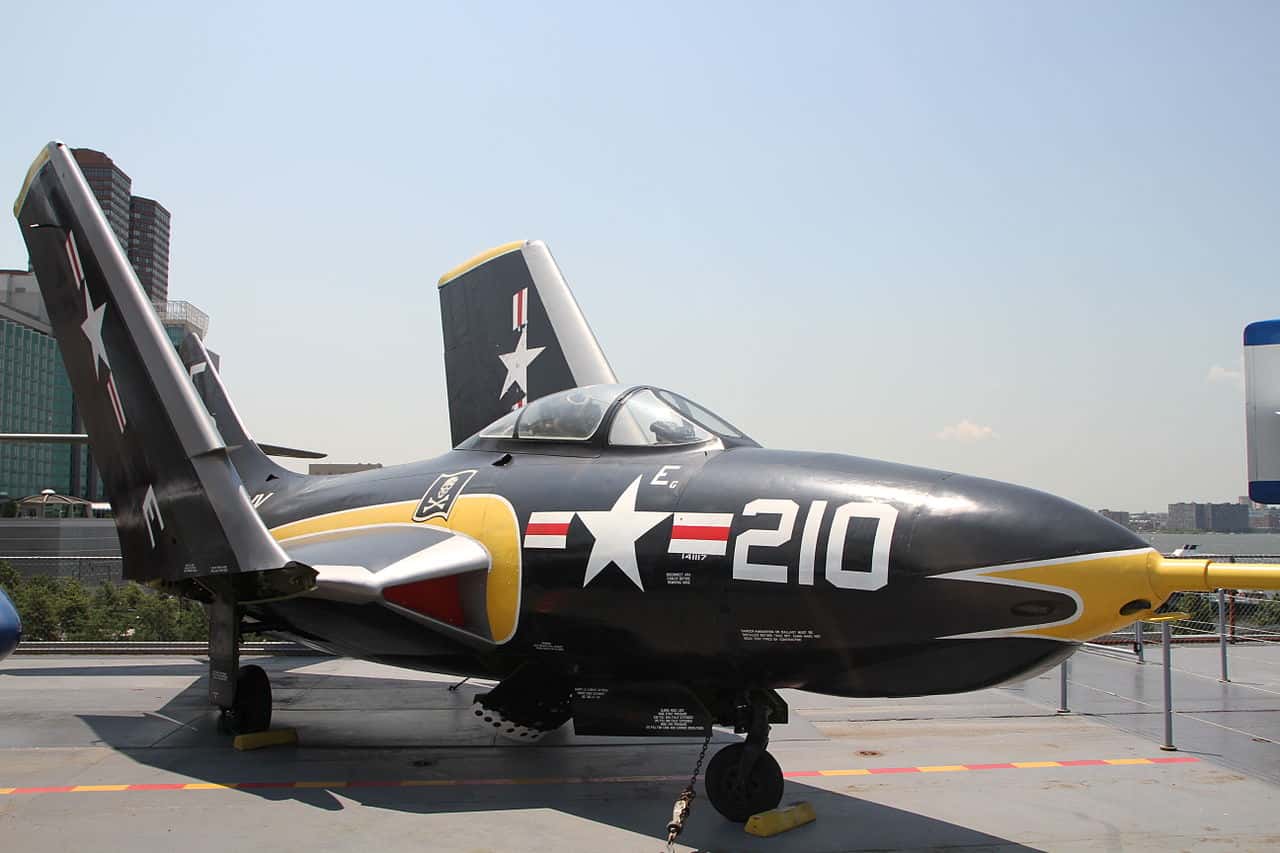
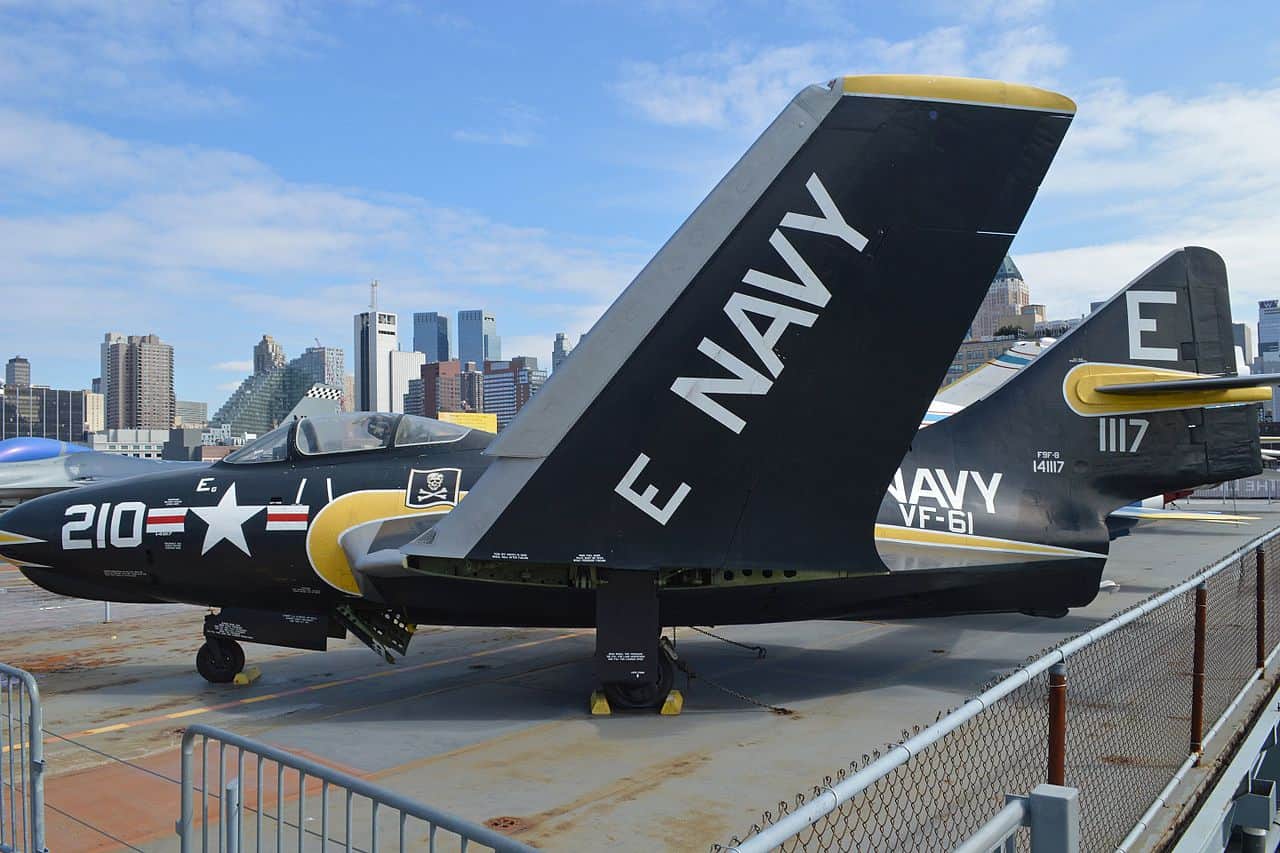
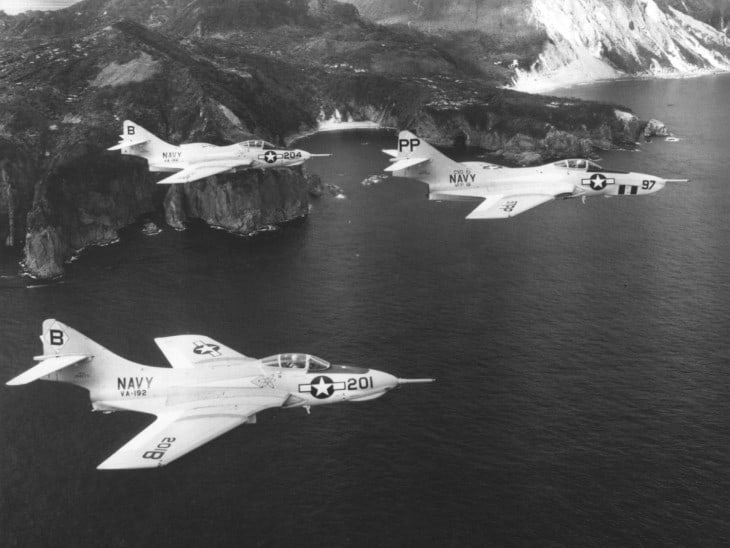
The Grumman F9F-6 Cougar was the initial production model of the F9F Cougar carrier-based aircraft developed and produced by Grumman. It performed its maiden flight in September 1951 and was delivered from 1952 until 1954.

Live Fleet Activity Details
Fetching live data…
F9F6s in the air: --
No aircraft of this type are airborne right now.
Average speed: -- kt (-- mph / -- km/h)
Region with most activity: --
Engine:
1× Pratt & Whitney J48-P-8
Engine type:
Jet
Thrust:
7,250 lbf  ·  32 kN
Avionics:
AN/APG-30, AN/ARC-27, AN/APN-1 etc.
Wing Tips:
No winglets
Seats:
1
Exterior length:
40 ft 11 in · 12.47 m
Tail height:
12 ft 4 in · 3.75 m
Fuselage diameter:
ft 11 in · 1.50 m
Wing span / rotor:
34 ft 6 in · 10.52 m
Max takeoff weight:
21,000 lb  ·  9,550 kg
Max landing weight:
15,800 lb  ·  7,150 kg
Max Payload:
3,100 lb  ·  1,400 kg
Fuel capacity:
920 gal  ·  3,500 L  ·  2,800 kg  (Jet A)
Max cruise speed:
568 kt  ·  654 mph  ·  1,052 km/h
Approach speed (Vref):
93 kt  ·  107 mph  ·  172 km/h
Range:
915 nm  ·  1,050 mi  ·  1,690 km
Ceiling:
44,500 ft  ·  13,600 m
Rate of climb:
6,750 ft/min  ·  34 m/s
Takeoff distance:
2,100 ft  ·  640 m
Landing distance:
1,360 ft  ·  420 m
Live Fleet Activity Details
Fetching live data…
Flight Airline Registration Altitude Speed Heading Vertical Rate Squawk Last Seen
Loading…
No aircraft of this type are airborne right now.

The F9F-6 Cougar was the first production version of the Grumman F9F carrier-based aircraft. Aircraft deliveries commenced from mid-1952 until July 1954. On September 20, 1951, the F9F-6 took to the air for the first time, seven months following the signing of the contract of Grumman with the United States Navy to build a swept-wing fighter aircraft.

It has an exterior length of 12.47 meters, an exterior height of 1.9 meters, and a fuselage width of 1.5 meters. The wingspan is 10.52 meters, the wheelbase is 3.5 meters, and the tail height is 3.75 meters. In 1962, the aircraft was designated as the F-9F. Sixty aircraft were manufactured as the F9F-6P reconnaissance aircraft fitted with cameras in lieu of the nose cannon. Several F9F-6s were designated as F9F-6D after it withdrew from service. These aircraft were used in combat training as unmanned drones. The F9F-6Ks were drone controllers.

The first thirty F9F-6 Cougars were fitted with the J42 P-6 engine but was then re-engined with a better J42 P-8, which was a license-built variant of the British Rolls-Royce Nene. It produces a maximum takeoff thrust of 7,250 lbf. The aircraft has a maximum speed of 568 knots and a travel range of 915 nautical miles. It can fly up to 44,500 feet and can climb at a rate of 6,750 feet per minute. The takeoff and landing distances are 640 meters and 415 meters, respectively. It has a maximum takeoff weight of 9,525 kg and a maximum landing weight of 7,167 kg. The maximum payload is 1,400 kg and the fuel tank capacity is 919 US gal.

The aircraft was armed with four 20 mm AN/M3 cannons located in the nose with 190 rounds per gun, six 127 mm rockets, four AIM-9 Sidewinder air-to-air missiles, and two 454 kg of bombs on inboard pylons plus two 227 kg of bombs on outer pylons. The avionics system included a Mark 6 Mod.0 automatic flight control system, AN/APG-30 radar ranging system, AN/ARC-27/1/1A VHF, AN/APN-1 radio altimeter, AN/ARR-21 automatic direction finding, VHF homing, UHF DF, and an identification friend or foe transponders.

Want More of This?
We'll send you our latest and best content straight to your inbox
Featured Image