Private Single Engine
Acro Sport Nesmith Cougar
ICAO: COUG
The Acro Sport Ace Junior Ace is a single-seat homebuilt biplane introduced in the 1950s. Designed for amateur construction, it emphasized simplicity and low operating cost. The aircraft remains popular among homebuilders.

The latest aviation news and stories sent to your inbox.
The Junior Ace first appeared in the 1950s as part of the broader homebuilt movement in the United States. It uses a welded steel tube fuselage and fabric covering. The biplane layout provides responsive handling suited to recreational flying.Engines vary by builder, but many installations produce between 65 and 100 horsepower. Cruise speeds typically range near 90 to 100 knots (167 to 185 km/h). Maximum takeoff weight generally falls below 1,000 pounds (454 kg), depending on configuration.The Junior Ace remains a symbol of grassroots aviation. Its straightforward construction makes it accessible to amateur builders. Many examples continue flying in the experimental category today.
Live Fleet Activity (JACE)
Fetching live data…



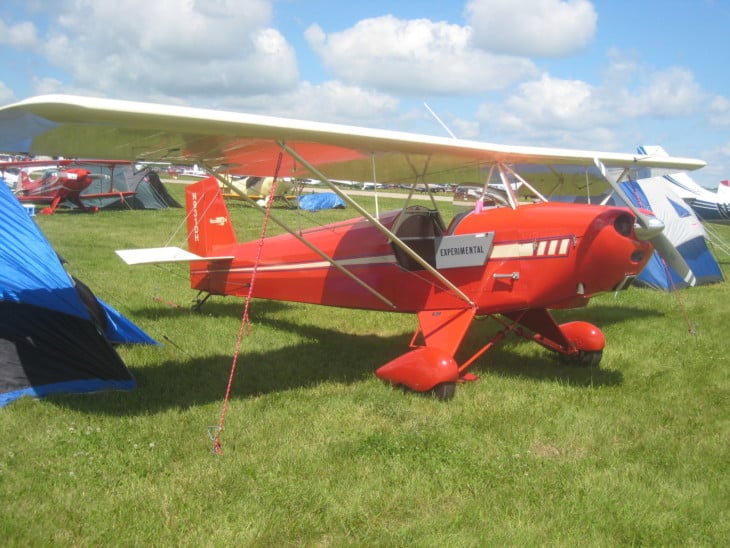
The Junior Ace was designed by Paul Poberezny, the founding president of the EAA (Experimental Aircraft Association) organization of aviation enthusiasts based in the United States. It is a lightweight aircraft, designed to be flown simply and needs very little maintenance.
The Junior Ace was piloted by Captain Bud Judy during its maiden flight where it was successful and showcased its shot field capabilities together with low stall speed which is suitable for small landing strips. The aircraft was adapted from the initial Corben Baby Ace so it could make effective use of aircraft engines.
The Junior Ace is of monoplane configuration with a parasol wing supported by cabane struts or a pylon. The wooden wing has a wingspan of 7.92 meters, and spars and ribs are manufactured from spruce. It is also fitted with conventional landing gear of chromoly tube with coil spring shocks which show better responsiveness to trail surfaces.
It is designed with modern wheels and has a wheelbase of 5 meters. The fabric-covered tubular fuselage of chromoly steel tube has been widened with a width of 0.8 meters, an external length of 6.5 meters, and an external height of 2 meters. The aircraft has a tandem cockpit for the pilot and passenger and may be closed off or left open. The tail assembly is of chromoly steel tube. It has a tail height of 2.2 meters.
The two-seat sports aircraft can be powered by a variety of Continental piston engines ranging from 85 hp to 120 hp. The Junior Ace has a maximum speed of 113 knots, a cruise speed of 91 knots, and a travel range of 217 nautical miles. It can fly up to 10,500 feet and can climb at a rate of 600 feet per minute. The takeoff and landing distances are 107 meters and 137 meters, respectively. The aircraft has a maximum takeoff weight of 606 kg, an empty weight of 367 kg, and a maximum payload of 170 kg. The fuel tank capacity is 24 US gal.
Sources and references used for research and fact-checking.