

Table of Contents
Aircraft propellers are sorted first by how their blade angle, or pitch, is set. There are six types on that measure: fixed-pitch, ground-adjustable, controllable-pitch, constant-speed, feathering and reversing.
Two more types describe where the propeller sits and how it is arranged: tractor versus pusher, and contra-rotating propellers that stack two rows on one axis. Blade material (wood, aluminum or composite) cuts across all eight.
The table below gives the short answer for each type. The sections after it explain how each one works and which aircraft use it.
| Type | When the blade angle changes | What changes it | Typical use |
|---|---|---|---|
| Fixed-pitch | Never | Set at the factory | Vintage and homebuilt aircraft |
| Ground-adjustable | On the ground, engine stopped | The blades are loosened and turned in the hub | Light sport and experimental aircraft |
| Controllable-pitch | In flight | The pilot, directly | Early variable-pitch aircraft of the 1930s |
| Constant-speed | In flight, continuously | A governor, to hold the RPM the pilot selects | High-performance piston aircraft and turboprops |
| Feathering | When an engine is shut down | The pilot or an automatic system | Multi-engine aircraft, some single-engine turboprops |
| Reversing | On the ground, after touchdown | The pilot, through the power levers | High-performance turboprops such as the C-130 |
| Tractor or pusher | (A layout, not a pitch system) | Propeller in front pulls, behind pushes | Tractor on most aircraft; pusher on the P.180 Avanti |
| Contra-rotating | (A layout, not a pitch system) | Two propellers on one axis turn opposite ways | Tu-95 bomber, An-22 transport |
What propeller pitch means
A propeller blade is a small spinning wing. Its airfoil shape creates a pressure difference across the blade, and that lift points forward as thrust.
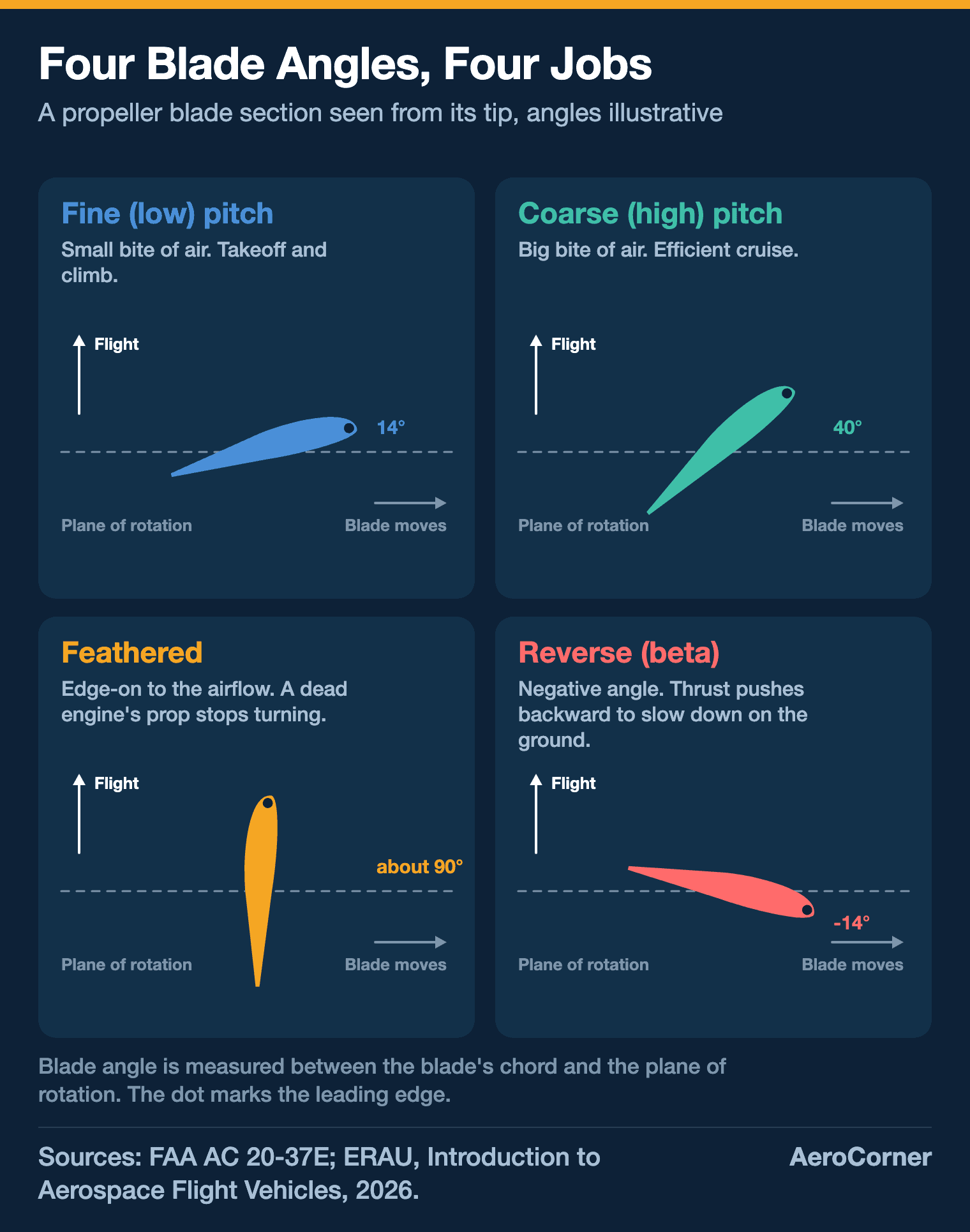
Blade angle, or pitch, is the angle between the blade and its plane of rotation. A fine (low) pitch takes a small bite of air and gives strong thrust at low speed, for takeoff and climb. A coarse (high) pitch takes a bigger bite and is efficient at cruise speed.
A blade fixed at one angle is only at its best in one flight condition. Every type of propeller below is a different answer to that problem.
1. Fixed-pitch propellers
The FAA defines a fixed-pitch propeller as a one-piece propeller with fixed blade angles. The pitch is built in at the factory, and nothing in the cockpit can change it.
That makes it a compromise. Pitch chosen for strong takeoff and climb loses thrust and efficiency at higher speeds, and pitch chosen for cruise leaves the propeller working at too high an angle of attack during takeoff.
Its strengths are simplicity and cost: there is no governor, no oil line and nothing for the pilot to manage. Fixed-pitch wooden propellers were the norm before World War II, according to Hartzell, and they remain popular on vintage aircraft.
Wooden fixed-pitch propellers

Wooden propellers are carved from blocks built up of glued layers, or laminations, of wood. The first airplane propellers, including the Wright brothers’ pair in 1903, were wooden and fixed pitch.
Wood has weaknesses. Early wooden propellers cracked and delaminated as engines grew more powerful, and a single bullet through a blade could destroy one in combat.
Metal fixed-pitch propellers

Metal blades, first made of steel, appeared during World War I, and one of the earliest users was the Handley Page O/400 bomber. Lighter aluminum alloys such as duralumin, patented in 1911, then made propellers lighter and stronger.
Aluminum is heavier than wood but far more durable, says Hartzell. Its weak spot is fatigue: manufacturers call for aluminum fixed-pitch propellers to be reconditioned at set intervals, in some engine pairings as often as every 500 hours.
2. Ground-adjustable propellers

A ground-adjustable propeller is a fixed-pitch propeller whose pitch can be reset between flights. The blades are loosened in the hub, rotated to a new angle and clamped again.
In the air it behaves exactly like a fixed-pitch propeller, so it is not counted as a variable-pitch design. Owners set a lower pitch for acceleration and takeoff performance or a higher one for cruise efficiency, often after some trial and error.
The idea is old: pioneers including A.V. Roe and Louis Breguet used propellers adjusted on the ground. Today it is a low-cost option for light sport and experimental aircraft and microlights.
3. Controllable-pitch propellers

A controllable-pitch propeller can change its blade angle in flight, with the pilot choosing the angle directly. The FAA’s definition is blades that “may be altered continuously to any desired angle during flight.”
Hamilton Standard’s controllable-pitch metal propeller of the early 1930s let pilots use a low pitch for takeoff and climb, then shift to a higher pitch for cruise. Frank W. Caldwell of Hamilton Standard won the 1933 Collier Trophy for the hydraulically controllable propeller.
The catch is workload. The blade angle only changes when the pilot changes it, so every change in speed or power means another adjustment, which is the problem the constant-speed propeller solved.
4. Constant-speed propellers
A constant-speed propeller is a variable-pitch propeller with a governor that changes the blade angle automatically. The pilot selects an RPM with the propeller control, and the governor holds it as airspeed and power change.

The governor works on a simple rule. If the propeller starts to overspeed, it increases the blade angle so the propeller takes a bigger bite and slows down; if it slows, it reduces the angle and the RPM comes back up.
The force that moves the blades is usually engine oil pressure, which makes the pitch-change mechanism part of the same family of systems described in how airplanes use hydraulics. A piston in the hub drives pins at the root of each blade to twist it.


Which way the oil pushes depends on the airplane. On a typical single-engine installation, oil pressure increases pitch, so a failure sends the blades to fine pitch rather than toward feather.
On a typical multi-engine installation, oil pressure decreases pitch, so a loss of oil lets springs, counterweights or a gas charge drive the blades toward feather. That is the setup in the next section.
Most of today’s high-performance propeller aircraft use constant-speed propellers, according to Hartzell, because they offer better performance and fuel efficiency. The Smithsonian’s P-51C Mustang Excalibur III, for example, flew with a four-blade Hamilton Standard Hydromatic constant-speed propeller.
5. Feathering propellers
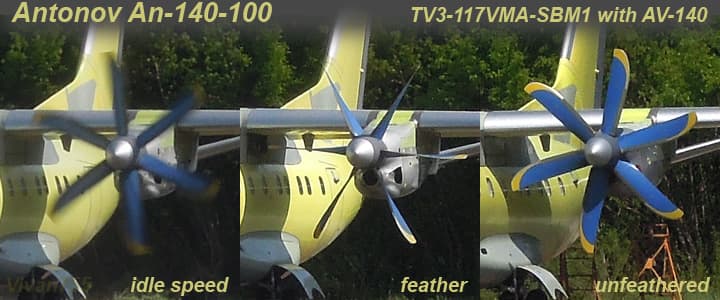
A feathering propeller can turn its blades to a high positive angle, nearly edge-on to the airflow, so a stopped engine’s propeller stops windmilling. The FAA calls this a full-feathering propeller.
A windmilling propeller on a dead engine creates heavy drag on one side of the airplane. Feathering cuts that drag and the uneven pull it creates, which is why the feature is common on multi-engine aircraft such as the fastest twin turboprops.

Springs, counterweights or a gas charge, or on some designs oil from a feathering pump, move the blades toward feather after a loss of engine power or governor oil pressure. Some single-engine turboprops can feather too, which stretches the glide after an engine failure.
Not every constant-speed propeller can feather. Many single-engine piston airplanes go the other way, toward low pitch, when oil pressure is lost, and a fixed-pitch propeller cannot feather at all.
Why an engine stops in the first place is a separate subject, covered in our guide to types of aircraft engines.
6. Reversing (reverse-pitch) propellers
A reversing propeller can turn its blades past flat to a negative angle, so the thrust points backward. The FAA lists three uses: slowing down, stopping, and moving the aircraft backward.
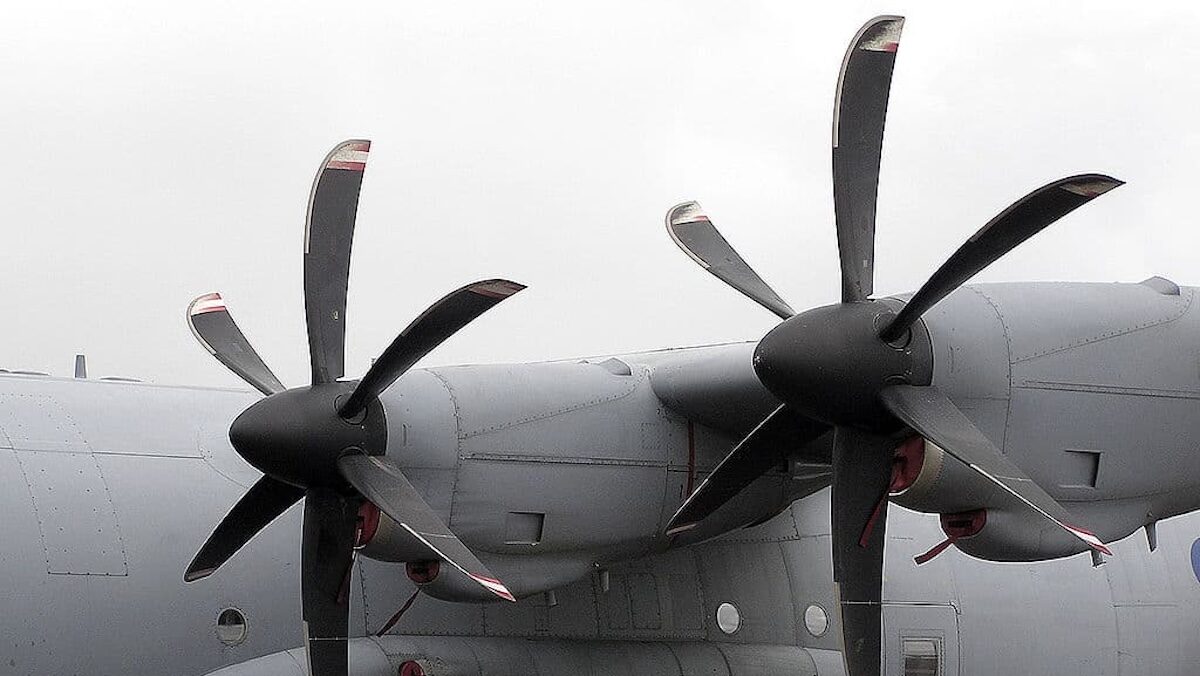
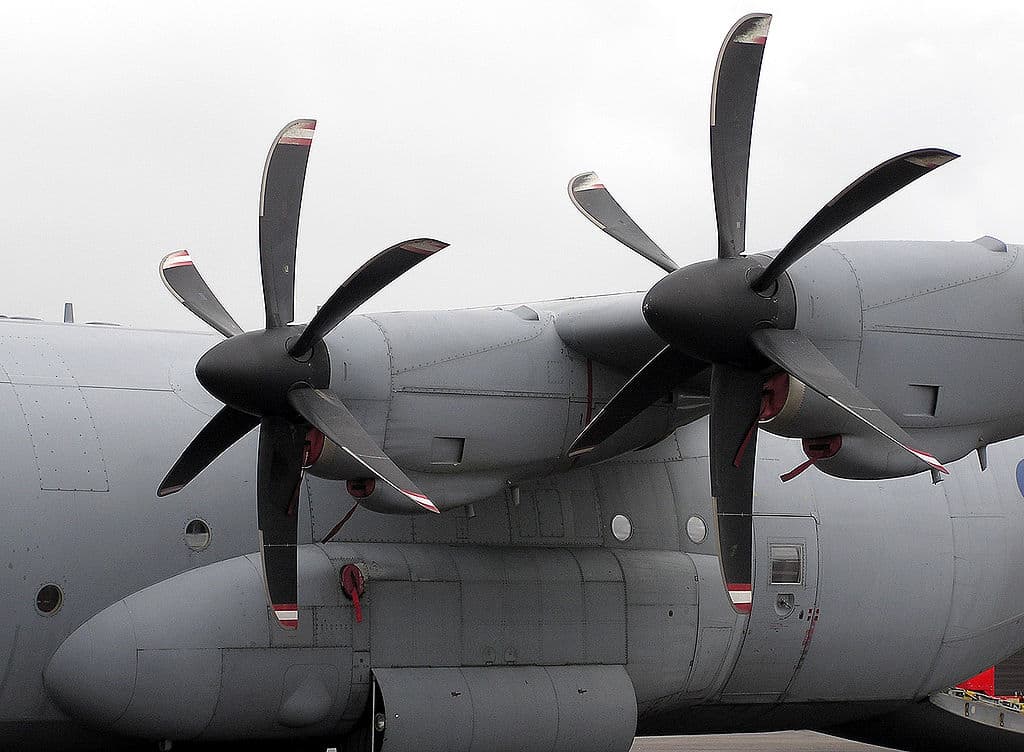
Pilots select it with the power levers after touchdown, in what turboprop crews call the beta range. The feature is usually found only on high-performance turboprops, such as the C-130J Super Hercules and its six-blade Dowty R391 composite propellers.
Reverse is a ground mode. The FAA advises checking the beta lockout, the system intended to keep a pilot from selecting reverse thrust in flight by mistake, before flight or as the manufacturer recommends.
Why beta lockouts exist
On Oct. 13, 2011, the crew of Airlines PNG Flight 1600, a Dash 8, pulled the power levers below flight idle on the descent into Madang, Papua New Guinea. Both propellers oversped and the airplane lost all engine power; 28 of the 32 people aboard died. A beta lockout that would have prevented the overspeed was available but not fitted, and it later became mandatory on every Dash 8.
On the ground, the same negative pitch is what lets some turboprops back up under their own power, the third use in the FAA’s definition.
7. Tractor and pusher propellers
A tractor propeller sits in front of the engine and pulls the airplane through the air. It is the usual layout, so much so that a propeller aircraft is assumed to be a tractor unless stated otherwise.
A pusher propeller sits behind the engine and pushes. The 1903 Wright Flyer was a pusher, and pushers were common in early aviation until tractors took over by the middle of World War I.
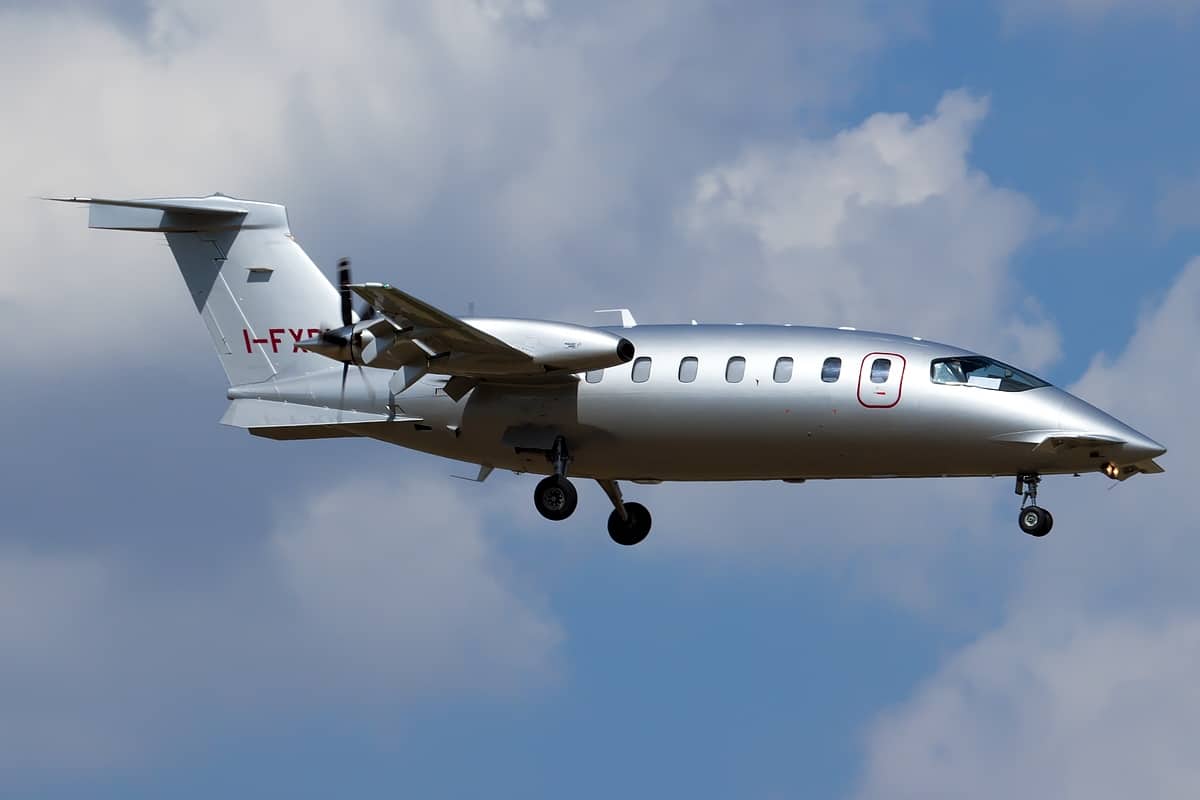

A modern example is the Piaggio P.180 Avanti, a twin turboprop that first flew in 1986. With its propellers behind the cabin, cabin noise is lower than in a conventional turboprop, though the outside noise is higher because the propellers work in disturbed air.
8. Contra-rotating propellers
Contra-rotating propellers are two propellers on the same axis, one behind the other, turning in opposite directions. The layout lets an engine absorb a great deal of power without a single propeller growing too large.

The Tupolev Tu-95 “Bear” bomber, which first flew in 1952, is the classic example. Production aircraft use four Kuznetsov NK-12 engines, each turning two four-blade propellers, and at about 15,000 equivalent shaft horsepower the NK-12 is the most powerful turboprop ever to enter service.
Only the United Kingdom and the Soviet Union built contra-rotating propeller aircraft in large numbers. British examples included the Avro Shackleton and the Fairey Gannet, and the NK-12 also powers the Antonov An-22 heavy transport.
Contra-rotating is not counter-rotating
Contra-rotating means two propellers on one powerplant and one axis. Counter-rotating means propellers on different engines that turn in opposite directions. The Airbus A400M is the second kind: the two propellers on each wing turn toward each other at the top, through a gearbox on two of its four identical engines.

Most multi-engine propeller aircraft turn all their propellers the same way, which is what makes the Airbus A400M layout unusual. The layout lessens torque and propeller wash on each wing and reduces yaw if an outboard engine fails.
Propeller blade materials and blade count
Any of the types above can come in wood, aluminum or composite. Most blades today are aluminum or carbon-fiber composite, says Hartzell, with composite the newest, offering weight savings and longer service life.
So a propeller is no longer almost always metal. The C-130J flies on six composite blades per propeller, and the A400M on eight woven-composite scimitar blades.
Blade count rises with engine power, because absorbing more power within a limited propeller diameter takes more blade area. Hartzell says modern propellers range from two to six blades, though the A400M’s eight show the count can go higher.
The loads are severe. A propeller is one of the most highly stressed parts of an airplane, with Hartzell putting the centrifugal force on it at 10 to 25 tons in normal flight.
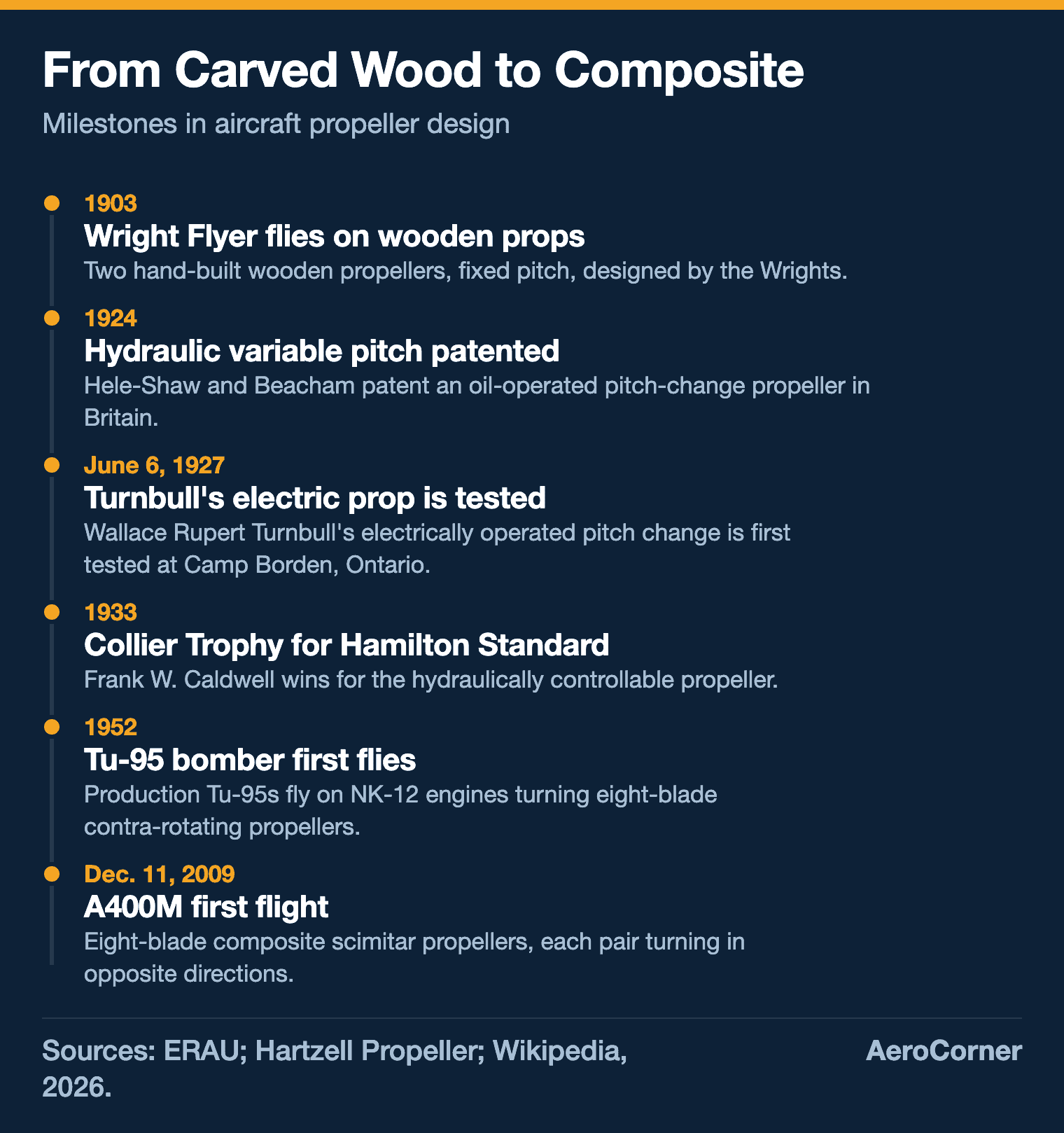
Efficiency has improved less than the hardware. Hartzell puts the Wright brothers’ propellers at about 82% efficient and today’s at around 90%.
FAQ
Sources and references used for research and fact-checking.
- Federal Aviation Administration, Advisory Circular 20-37E: Aircraft Propeller Maintenance
- Embry-Riddle Aeronautical University, Introduction to Aerospace Flight Vehicles: Aircraft Propellers
- Smithsonian National Air and Space Museum, How Things Fly: Propellers
- Hartzell Propeller, A Short History of the Aircraft Propeller
- Hartzell Propeller, How Do Fixed-Pitch Propellers Work?
- Hartzell Propeller, What's the Difference Between Constant-Speed and Ground-Adjustable Aircraft Propellers?
- Hartzell Propeller, Choosing a Propeller for Homebuilt Aircraft
- Wikipedia, Variable-pitch propeller (aeronautics)
- Wikipedia, Propeller (aeronautics)
- Wikipedia, Collier Trophy
- Wikipedia, Contra-rotating propellers
- Wikipedia, Kuznetsov NK-12
- Wikipedia, Tupolev Tu-95
- Wikipedia, Airbus A400M Atlas
- Wikipedia, Tractor configuration
- Wikipedia, Pusher configuration
- Wikipedia, Piaggio P.180 Avanti
- Wikipedia, Airlines PNG Flight 1600
Get the Newsletter
The latest aviation news and stories sent to your inbox.
About the Author

Tim is the owner and lead editor of AeroCorner since 2019, overseeing aviation content covering aircraft, airlines, airports, and the broader aviation industry. Through years of researching, writing, editing, and publishing aviation-focused content, he has developed extensive practical knowledge of commercial aviation and air travel. Based in Asia and a frequent traveler himself, Tim also brings firsthand passenger experience to AeroCorner’s coverage. Outside of publishing, he has also explored aviation firsthand through hands-on flight training in New Zealand.