

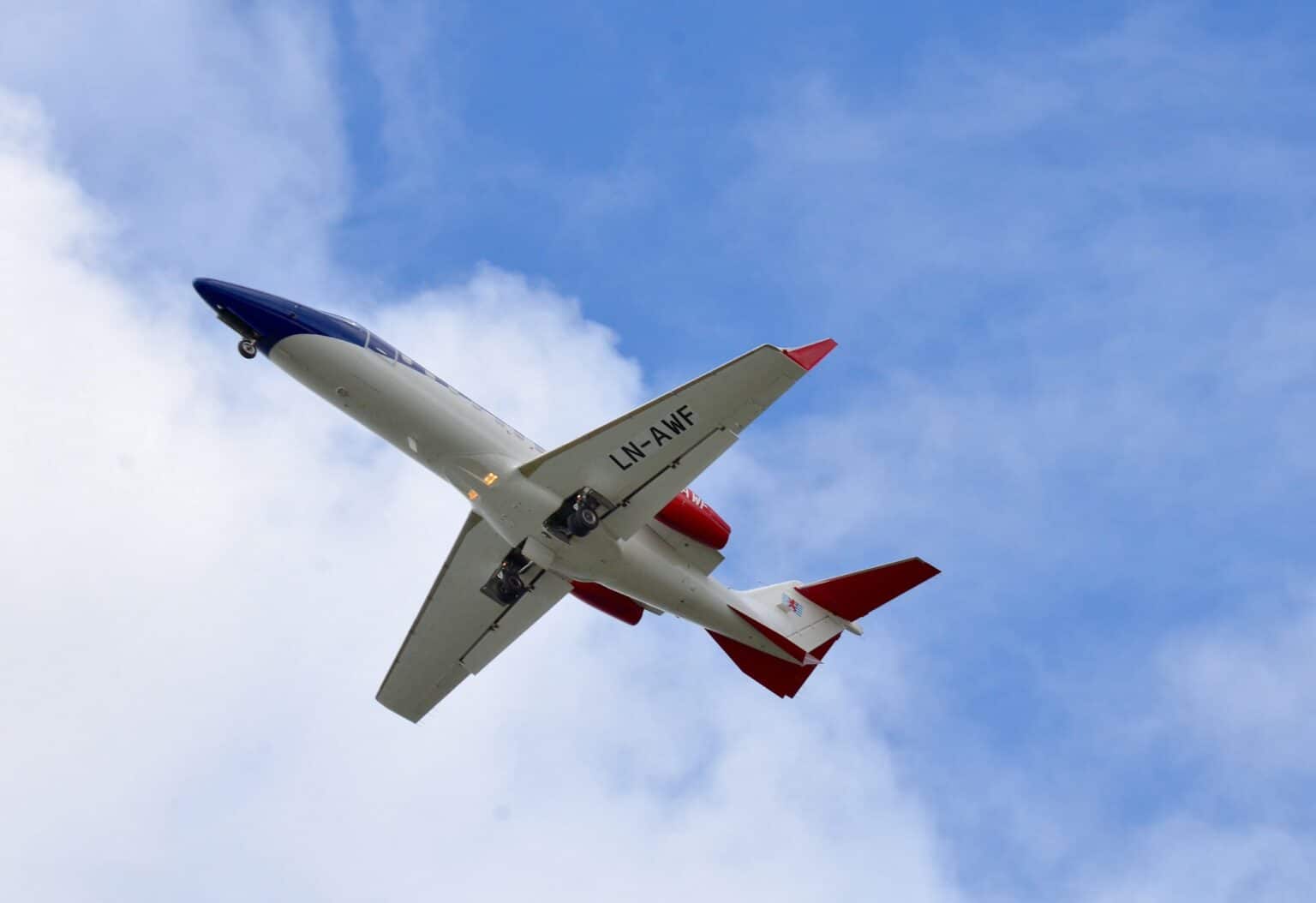
VT-DBL, the VSR Ventures Learjet 45XR that crashed at Mumbai airport in heavy rain on September 14, 2023, stalled just over 100 feet above the ground after its crew kept going on an approach that was no longer stabilized. That is the conclusion of India’s Aircraft Accident Investigation Bureau (AAIB), in a final report published on October 16, 2026.
All eight people on board, two pilots and six passengers including a cabin attendant, were seriously injured, and the jet was destroyed. The bureau also asks India’s regulator, the DGCA, for a one-time check of all fixed-wing pilots’ training records.
What happened on the approach
The charter from Visakhapatnam crashed at 11:32 UTC (5:02 pm local time) on an ILS approach to Runway 27, with Mumbai reporting heavy rain and 800 meters (about half a mile) of visibility. The reported runway visual range was within the operator’s limits, and the approach was normal until the autopilot was disconnected at 364 feet.
Flown by hand, the jet drifted left, then right, and rose to about four dots above the glideslope, against a one-dot limit. The captain told investigators he lost sight of the runway in a dark patch of cloud, and recorded data put the tailwind at an estimated 8 to 10 knots.
Airspeed bled away as the thrust levers came back. When the first officer finally called for a go-around, the levers were near idle and the jet was at 111 knots, below its 119-knot reference speed.
The stick shaker and stall warning fired as the captain pushed the thrust to roughly full power. He then pulled it back to idle, judging the jet could not climb out, which the report says runs against the flight manual’s stall recovery: lower the nose, set takeoff thrust, level the wings.
| Height above ground | Airspeed | What the recorders show |
|---|---|---|
| 364 ft | 138 kt | Autopilot off, on the localizer and glideslope |
| 172 ft | 127 kt | About 4 dots above the glideslope |
| 122 ft | 118 kt | Below the 119 kt reference speed |
| 112 ft | 111 kt | Go-around call, thrust near idle |
| 112 ft | 105 kt | Stick shaker and stall warning, thrust to near full |
| 122 ft | 101 kt | Thrust back to idle, right roll begins |
| 119 ft | 96 kt | 53 degrees right bank, last reliable data |
The Learjet rolled right. The captain said he banked further right on purpose to steer away from inhabited areas ahead, and the jet hit the ground right wing first at about 96 knots, near a taxiway intersection.
The fuselage broke in two, and rescuers had to cut through the windshield to free both pilots.
A curfew in the cockpit
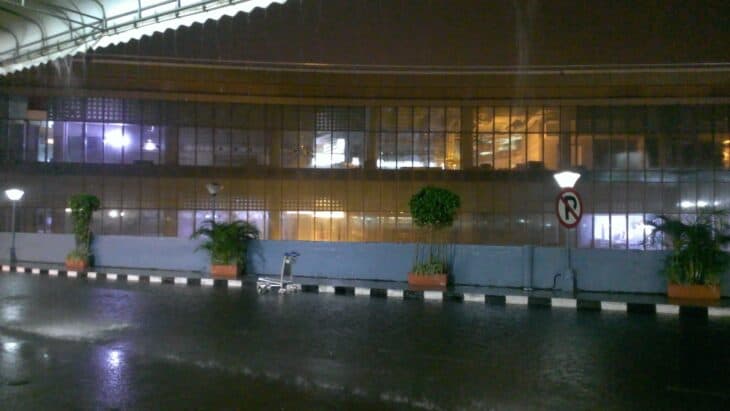
Mumbai airport‘s published rules bar general aviation each evening from 12:00 to 14:00 UTC (5:30 to 7:30 pm local), and the AAIB found that covers charter operators too. On the voice recorder, the crew discussed it and said they meant to land by 11:30 UTC.
.jpg)
The bureau calls that an “undue commitment” to land before the restriction and lists it as a contributory factor.
The probable cause, in the report’s words, is “the flight crew’s decision to continue the un-stabilized approach under marginal weather conditions and inappropriate handling of aircraft which led to an aerodynamic stall at low altitude from which the aircraft did not recover.” Both engines responded normally throughout.
Why the stabilized approach rule is so blunt
By a fixed height, the airplane should be on the glide path and centerline at a steady speed, configured to land, or it goes around. VSR’s DGCA-approved manual sets that gate at 1,000 feet on an instrument approach and says no approach may continue unstabilized below 500 feet.
It also scripts the pilot monitoring’s job: call “Approach not stabilized,” then “Go around, Captain,” and, if the captain still does not respond, take the controls. The AAIB found the first officer knew the approach was off but made the call only near the stall, and it calls the curfew the probable reason the crew delayed a go-around.
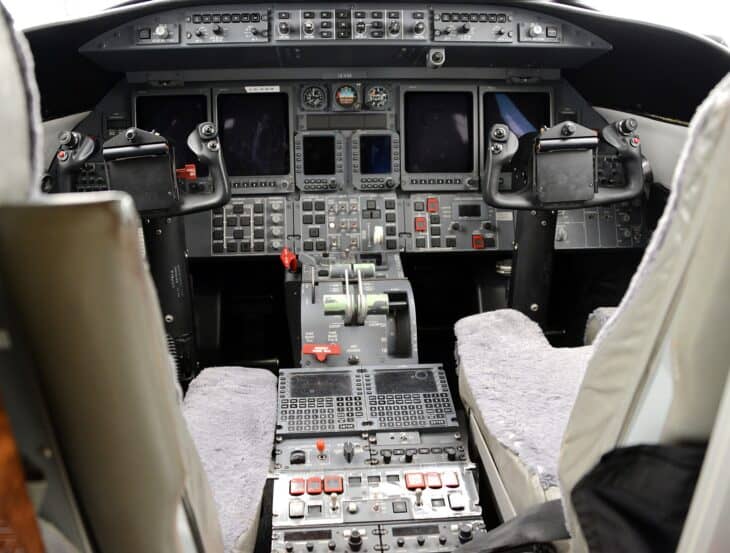
On VT-DBL’s Learjet 45XR, the report notes, the stick shaker fires at 83% of normalized angle of attack and the wing stalls above 100%. The jet reached 100% twice between about 113 and 122 feet, where the report says recovery was very difficult.

Training records and the regulator
Investigators found the stall recovery exercise, meant to be flown in every simulator session, marked “Not Applicable” on the co-pilot’s last simulator training form. The same gap turned up in the records of some other VSR pilots.
Some pilots’ proficiency checks showed it flown in the real airplane, which the rules allow only in a simulator. The bureau also found gaps in the logbooks, internal audits too generic to catch any of this, and DGCA audit reports, as reviewed by investigators, with none of its findings.
Beyond the records check, aimed especially at charter and general aviation operators, the 10 recommendations ask the DGCA to add the landing configuration to the stall recovery exercise and to press those operators on go-arounds and assertive callouts.
One goes to the Airports Authority of India: the Learjet crossed the threshold 45 seconds after a Vistara Boeing 777 took off, short of the two-minute wake gap, though the AAIB found wake played no part.
The same operator, a second Learjet
VSR Ventures also operated VT-SSK, a different Learjet 45XR that crashed while landing at Baramati on January 28, 2026, killing all five people aboard, according to the AAIB’s preliminary report. Among them was Maharashtra Deputy Chief Minister Ajit Pawar, as All India Radio reported.
Less than a month later, the DGCA grounded four other VSR jets after a special audit found “several non-compliances of approved procedures,” The Week reported. At the time of writing, the Baramati investigation is still open.
Sources and references used for research and fact-checking.
- Aircraft Accident Investigation Bureau (India), Final Investigation Report on Accident involving M/s VSR Ventures Pvt. Ltd. Learjet 45XR aircraft VT-DBL at Mumbai on 14 September 2023
- Aircraft Accident Investigation Bureau (India), Preliminary Report on accident to M/s VSR Ventures Pvt. Ltd. Learjet 45XR VT-SSK at Baramati on 28 January 2026
Get the Newsletter
The latest aviation news and stories sent to your inbox.
About the Author

AeroCorner News is the aviation news desk of AeroCorner.com. It covers accidents and incidents, safety rulings, airline and airport disruption, and new aircraft. It works from primary sources such as the NTSB, FAA, EASA and the manufacturers' own announcements.