

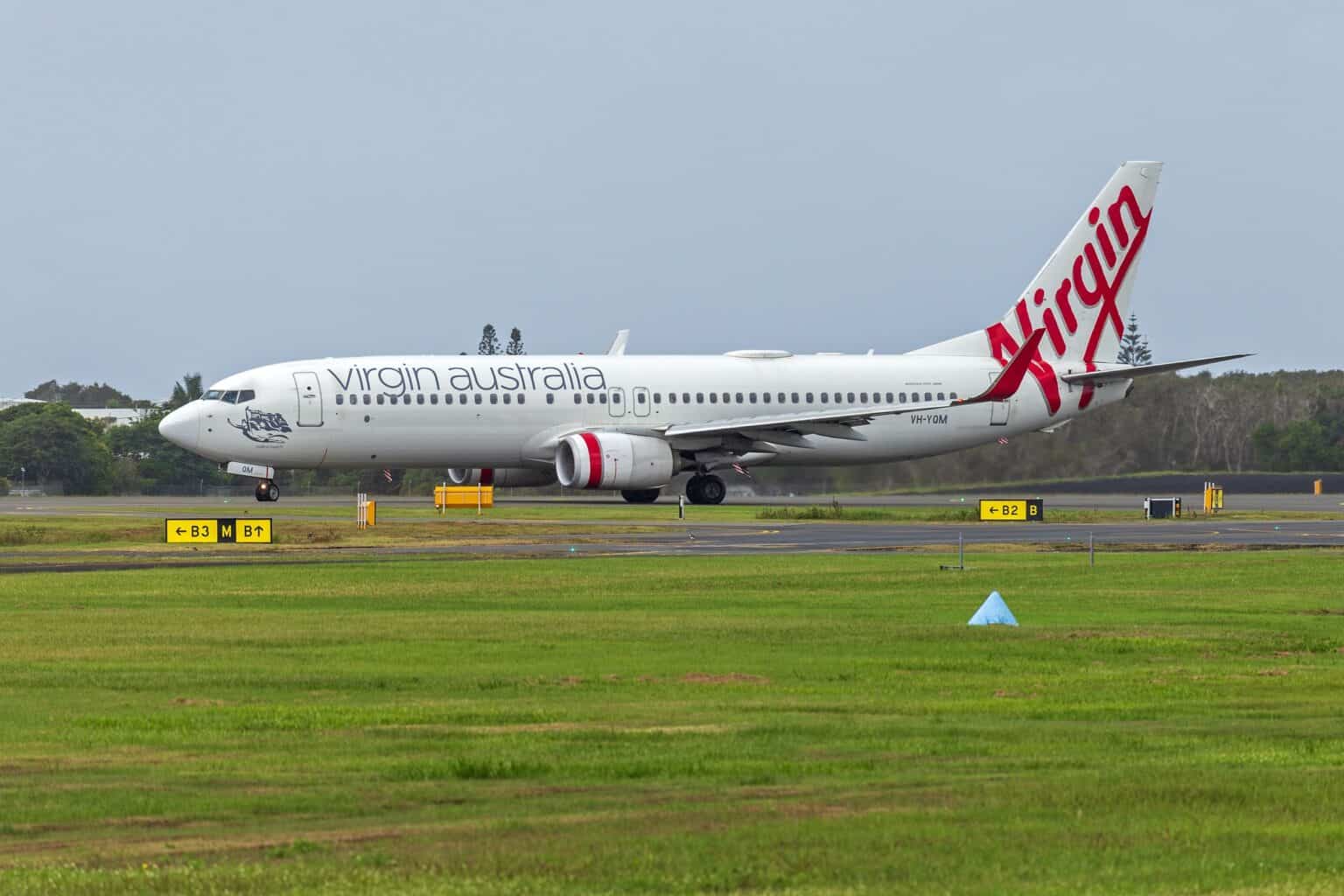
Virgin Australia Boeing 737-800 VH-YQM touched down about 3,850 feet (1,175 m) beyond the displaced threshold of runway 32 at Gold Coast Airport on January 24, 2023, well past the end of the touchdown zone. The Australian Transport Safety Bureau (ATSB) published its final report on the landing (investigation AO-2023-018) on November 19, 2026.
The pilots could not see the painted runway markings on a wet runway in near-dark conditions, the ATSB found. It is now urging Australian airports to consider reflective markings, after the national regulator declined to add guidance on them.
What happened on runway 32
The jet was flying a scheduled service from Sydney, the third of four sectors the crew operated that day. A thunderstorm was crossing the airport with heavy rain, and the first officer was flying an RNP AR satellite approach to runway 32, which has no instrument landing system.
The crew saw the runway at about 500 feet, above the 360-foot decision altitude, and disconnected the autopilot at about 190 feet. The Boeing 737-800 crossed the threshold at about 90 feet, against the 53 feet a jet on the 3-degree glidepath would show there.
The first officer began the flare at about 44 feet, some 24 feet higher than Boeing recommends. The aircraft floated, passing the crew’s chosen latest touchdown point at 15 feet and the last touchdown zone marker at 8 feet.
It touched down about 1,800 feet (550 m) beyond that latest touchdown point. The captain took control almost at once, applied maximum manual braking and reverse thrust, and the jet made the last taxiway.
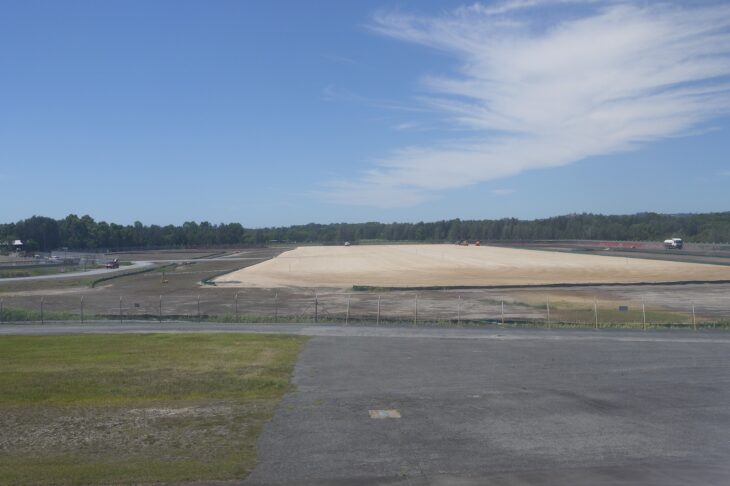

After the return flight to Sydney, the captain reported a possible long landing, which the airline’s recorded flight data confirmed. The aircraft was not damaged.
Why the markings disappeared
A landing pilot judges how far down the runway the jet is from the aiming point and touchdown zone stripes. At Gold Coast, the ATSB said, the touchdown zone markers were the only visual aid for finding the zone.
The landing came about six minutes before sunset, but low cloud, heavy rain and rising terrain made it as dark as night. The crew said they saw the markings late on final approach and lost them in the flare, with the first officer describing a “glassy” runway.
Plain paint follows the texture of the pavement, so once a film of water covers both, they reflect light the same way and the stripes vanish.
Glass beads mixed into the paint fix that by bouncing the landing lights straight back toward the cockpit. The runway 32 markings were plain white paint with no beads, and nothing required them.
Runway 32 had no touchdown zone lighting either, and none was required. With the markings gone, only the runway edge lighting showed the pilots the runway’s width.
A pressure setting 21 minutes out of date
The jet was also high: the local pressure setting (QNH) rose from 1011 to 1012 hectopascals at 6:28 p.m., but the airport’s automatic information broadcast was not updated until 6:49 p.m., and the tower did not pass the change on.
That left the jet about 35 feet higher than its instruments showed, which added about 705 feet (215 m) before touchdown. The ATSB said the runway’s PAPI lights were likely showing the crew high, but they were very likely watching the onboard glidepath instead.
The high flare caused most of the problem: the float added about 2,080 feet (635 m). On its own, the ATSB calculated, the early flare would have put the jet down about 1,080 feet (330 m) past the latest touchdown marker.
The bureau also found two chances to go around, first when the jet was high and then when the crew lost sight of the markings. Storm flying all day left both pilots with a prolonged high workload, and the captain was likely fatigued after several days of disrupted, poor-quality sleep.
The ATSB calls long landings and missed go-arounds the primary contributors to runway overruns, the risk that cockpit overrun alerting systems are built to catch.
Two safety issues, no changes
The International Civil Aviation Organization recommends reflective pavement markings at airports with night operations. Australia filed a difference against that recommendation in 2005, saying it needed “more evidence of the safety value of reflective markings before mandating their use.”
The FAA, by contrast, calls glass beads a proven way to make markings stand out at night or on wet pavement. Its guidance requires them on runway centerline, threshold, aiming point and touchdown zone markings in federally funded projects.
The Civil Aviation Safety Authority told the ATSB it had reviewed its guidance and found no significant support for change. The ATSB closed that safety issue as “not addressed” and issued a safety advisory notice to airport operators instead.
The Australian Airports Association told investigators that operators worry about cost, engine “glazing” from the beads, and water-based paint that may not hold them. The ATSB found no case of glazing creating an unsafe condition.
The second safety issue concerns the tower’s weather system, which alerts controllers only to a 2 hectopascal pressure change, while the rules require an update at 1. Airservices Australia said changing the alarm was not justified, pointing to other layers of protection, and the ATSB said the risk remains.
Sources and references used for research and fact-checking.
- Australian Transport Safety Bureau, Long landing involving Boeing 737-8FE, VH-YQM, at Gold Coast Airport, Queensland, on 24 January 2023 (AO-2023-018)
- Australian Transport Safety Bureau, Safety issue AO-2023-018-SI-01: Requirements for the visibility of runway markings as visual aids
- Australian Transport Safety Bureau, Safety issue AO-2023-018-SI-02: Incompatibility of ATC alerting tools and requirements for updating the QNH
Get the Newsletter
The latest aviation news and stories sent to your inbox.
About the Author

AeroCorner News is the aviation news desk of AeroCorner.com. It covers accidents and incidents, safety rulings, airline and airport disruption, and new aircraft. It works from primary sources such as the NTSB, FAA, EASA and the manufacturers' own announcements.