

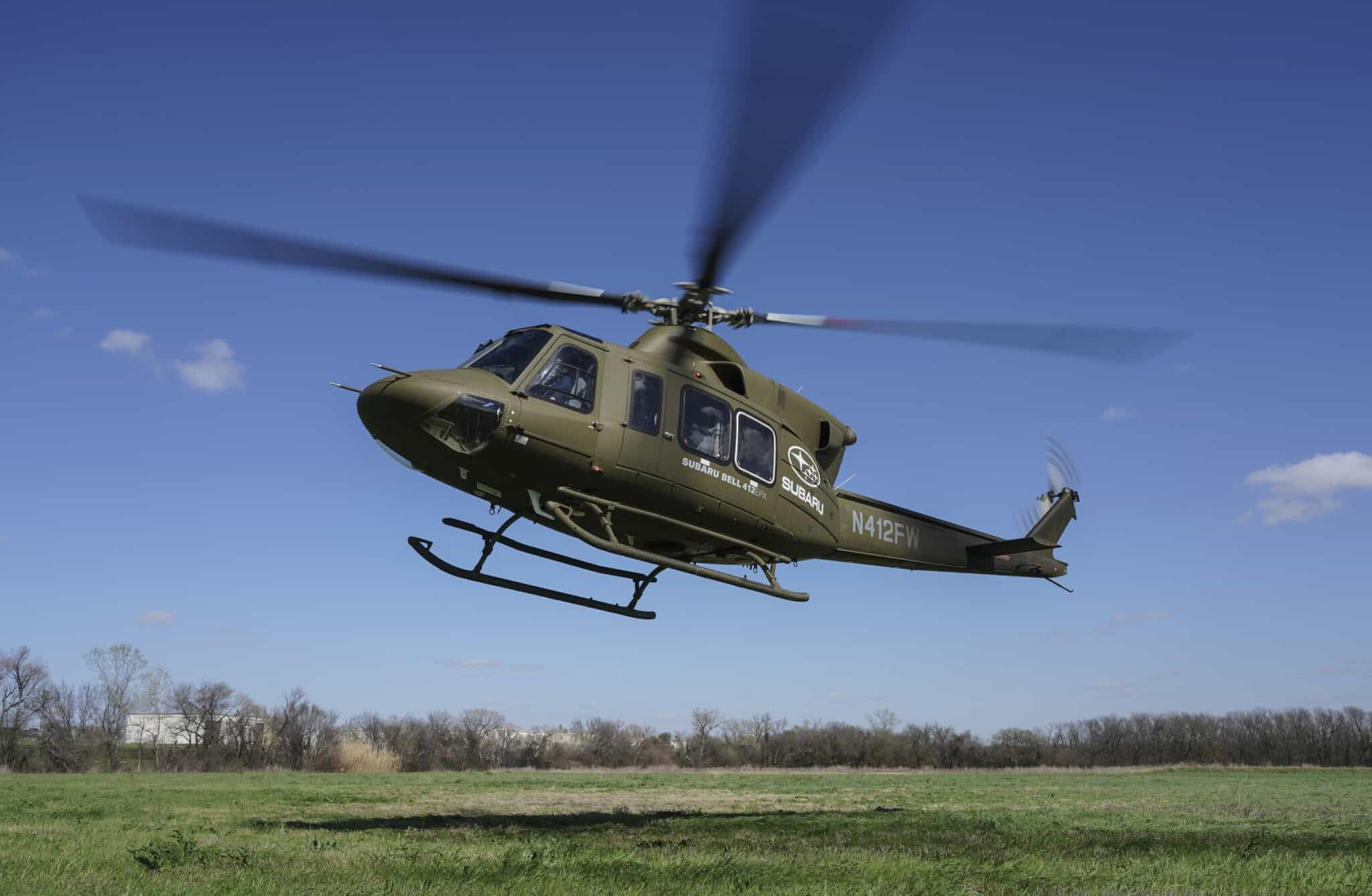
The US State Department approved a possible foreign military sale of Bell helicopters and associated weapons to Iraq on August 31, 2026, with an estimated value of $800 million. The Defense Security Cooperation Agency notified Congress the same day, opening the review window that has to close before any contract can be signed.
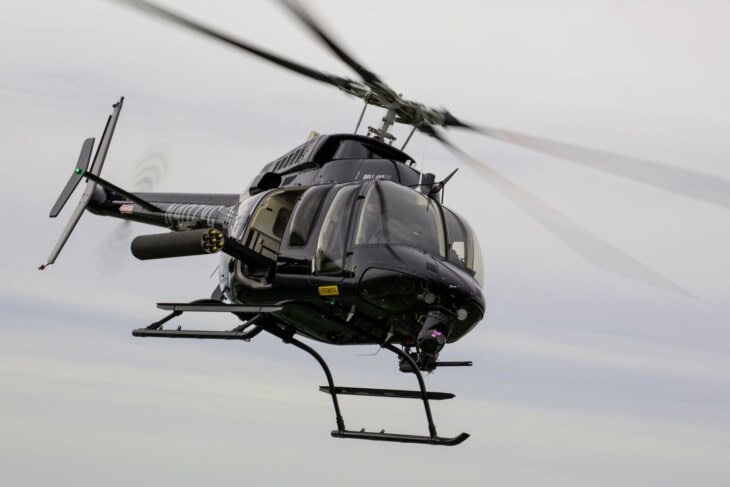
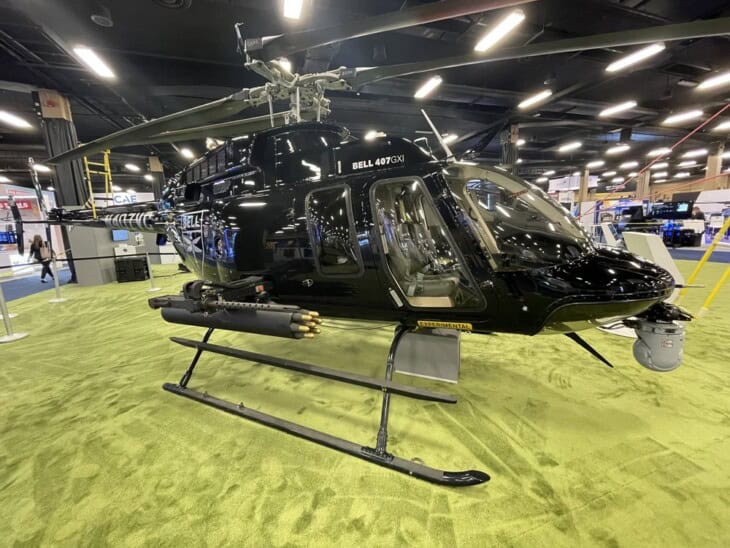
The package covers two very different aircraft: the Bell 412EPX, a twin-engine utility helicopter, and the Bell 407M, a light single-engine machine configured as an armed scout.
What Iraq Asked to Buy
Alongside the airframes, the request covers GAU-19 three-barrel machine guns and M260 seven-tube 2.75-inch rocket launchers, the standard light-attack fit for this class of aircraft.
The sensor and survivability half of the package matters more than the guns. It includes L-3 Wescam MX-15HDI electro-optical and infrared turrets, which is what turns a small helicopter into a usable surveillance platform, plus AN/AAR-60 Block 2 missile launch detection systems.
The rest is the unglamorous part that decides whether a fleet actually flies: VHF radios, spare parts, ground support equipment, technical publications, and pilot and maintenance training delivered by US government and contractor personnel. The principal contractor is Bell Textron of Fort Worth, Texas.
One detail is conspicuously missing. The notification does not say how many helicopters of either type are involved, so the widely reported $800 million figure is a ceiling for the whole package, not a price per aircraft.
An Approval Is Not an Order
This is the step of the arms-sale process most often mistaken for the deal itself. A State Department approval authorizes the government to offer the sale and triggers a 30-day congressional review; it does not commit Iraq to buy anything.
DSCA says as much in its own boilerplate: quantities and prices routinely change once negotiations begin, and packages are frequently signed at a fraction of the notified value, restructured, or quietly left to expire.
The stated justification follows the usual form. The sale supports US foreign policy and national security by improving the security of a strategic partner, and is intended to improve Iraq’s rotary-wing transport, reconnaissance and air-to-surface targeting capability.
Reality check
Nothing has been ordered. This is a congressional notification of a possible sale, with no quantities disclosed and no contract signed. Treat the $800 million as the notified ceiling for the full package, weapons, sensors, spares and training included, not as a committed Iraqi purchase.
Why Light Armed Scouts, and Why Now
Iraq is not new to the type. According to Army Recognition, Iraq took delivery of about 30 Bell 407 airframes between 2010 and 2013, including two dozen armed IA-407s, and earlier planning had envisioned roughly 15 Bell 407Ms and 20 Bell 412-family aircraft.
Buying more of an aircraft you already operate is a logistics decision as much as a tactical one. The crews, the maintenance base and much of the tooling already exist, which is the cheapest capability any air arm can buy.
The wider pressure is on the Russian half of Iraq’s fleet. Mi-17 spares and overhaul work became far harder to secure after 2022, and a mixed Russian and American inventory leaves an operator exposed to a supply chain it cannot control.
The choice of a light armed scout over a dedicated attack helicopter also reflects the mission. Bell markets the 407M as a descendant of the US Army’s OH-58 Kiowa, and that is the job: persistent overwatch, border and pipeline patrol, escort work, all of which reward endurance and sensors far more than heavy ordnance.
The timing is not incidental either. The US-led anti-ISIS coalition is due to complete its transition in Iraq by the end of September 2026, and equipment Iraq can support largely on its own becomes considerably more valuable once that support structure thins out.
For Bell, the notification lands while the 407 line is already in the news for other reasons, including the FAA directive issued in August over a cyclic stick defect on the civil 407. Whether this package converts into airframes will not be clear for months.
Sources and references used for research and fact-checking.
Get the Newsletter
The latest aviation news and stories sent to your inbox.
About the Author

Tim is the owner and lead editor of AeroCorner since 2019, overseeing aviation content covering aircraft, airlines, airports, and the broader aviation industry. Through years of researching, writing, editing, and publishing aviation-focused content, he has developed extensive practical knowledge of commercial aviation and air travel. Based in Asia and a frequent traveler himself, Tim also brings firsthand passenger experience to AeroCorner’s coverage. Outside of publishing, he has also explored aviation firsthand through hands-on flight training in New Zealand.