

Overview
The Bell 412 is a medium twin-turbine utility helicopter from the Huey family. It grew out of the Bell 212, with a composite four-blade main rotor as the big change, and it has stayed in production for more than four decades. Coast guards, armies, air ambulance operators and offshore oil crews fly it around the world.
Live Fleet Activity (B412)
📡
Fetching live data…
Specifications
- Engine
- 1 × Pratt & Whitney Canada PT6T-3D Twin-Pac
- Engine type
- Turboshaft
- Power
- 1,250 shp · 932 kW
- Avionics
- Garmin GTN-750 NAV/COM/WAAS GPS, Helicopter Terrain Avoidance Warning System (H-TAWS) Capability, Power Situation Indicator (single indicator for quick pilot monitoring)
- Wing tips
- No winglets
- Seats
- 15
- Crew
- —
- Cabin width
- 8 ft 0 in · 2.43 m
- Cabin height
- 4 ft 1 in · 1.24 m
- Cabin length
- 7 ft 8 in · 2.34 m
- Exterior length
- 55 ft 10 in · 17.02 m
- Tail height
- 14 ft 11 in · 4.54 m
- Fuselage diameter
- 8 ft 6 in · 2.60 m
- Wing span
- 46 ft 0 in · 14.02 m
- Baggage volume
- 28 ft³ · 0.8 m³
- Gross weight
- —
- Empty weight
- —
- Max takeoff weight
- 11,900 lb · 5,400 kg
- Max landing weight
- —
- Max payload
- 4,850 lb · 2,200 kg
- Fuel capacity
- 330 gal · 1,300 L · 1,000 kg (Jet A)
- Maximum speed
- 140 kt · 161 mph · 259 km/h
- Cruise speed
- 122 kt · 140 mph · 226 km/h
- Approach speed
- —
- Range
- 356 nm · 410 mi · 660 km
- Fuel burn
- 1.25 nm/gal · 0.61 km/L
- Ceiling
- 20,000 ft · 6,100 m
- Rate of climb
- 1,350 ft/min · 7 m/s
- Takeoff distance
- —
- Landing distance
- —
Gallery

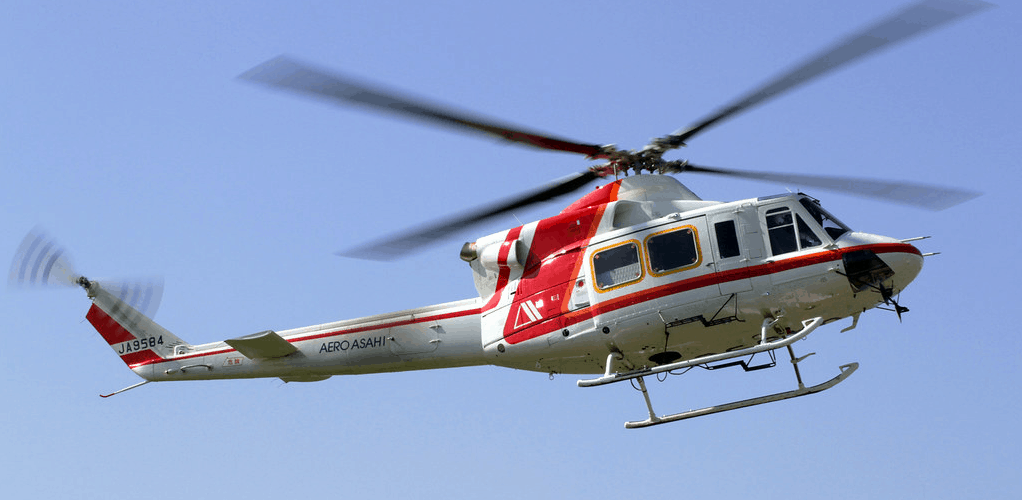
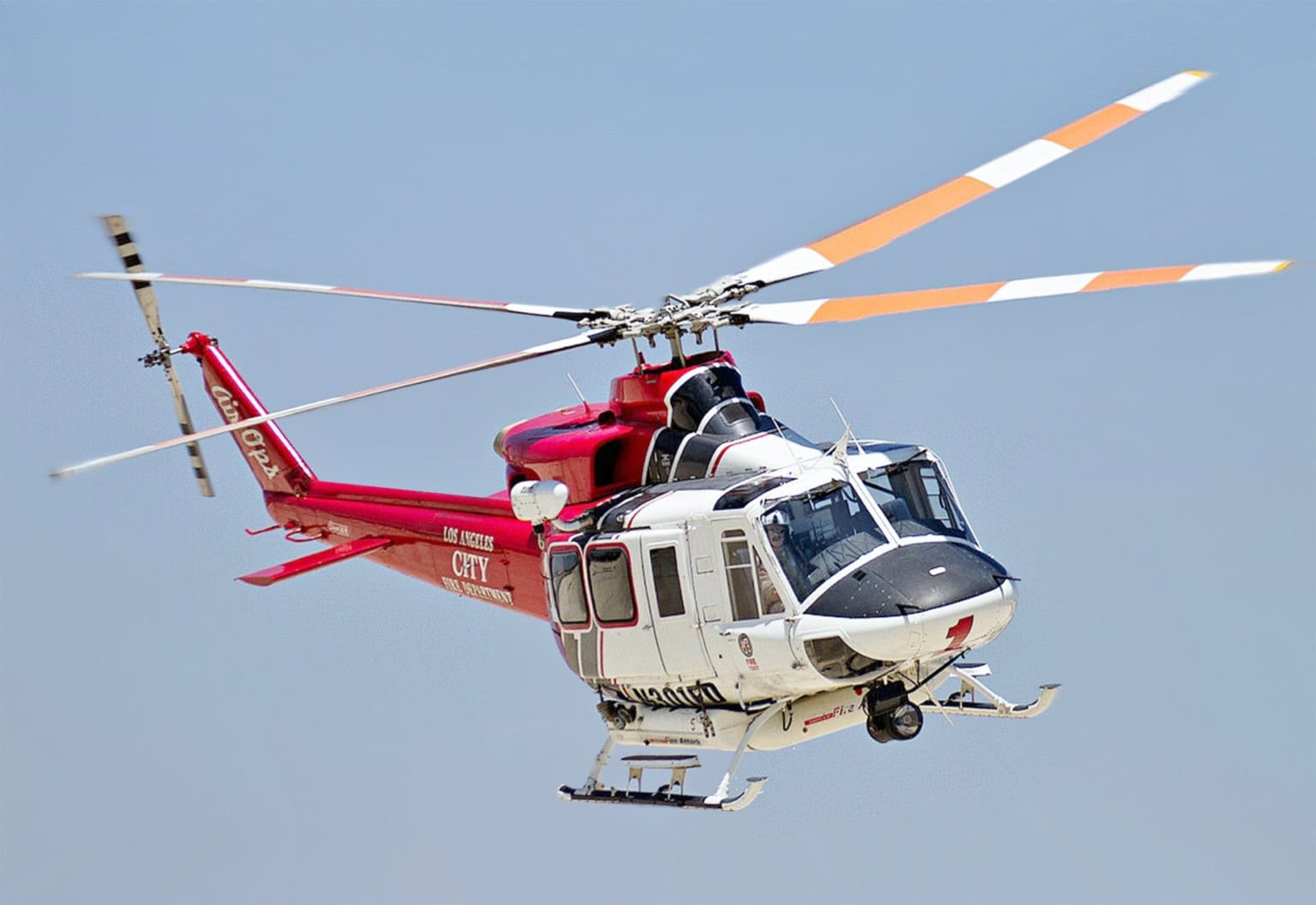
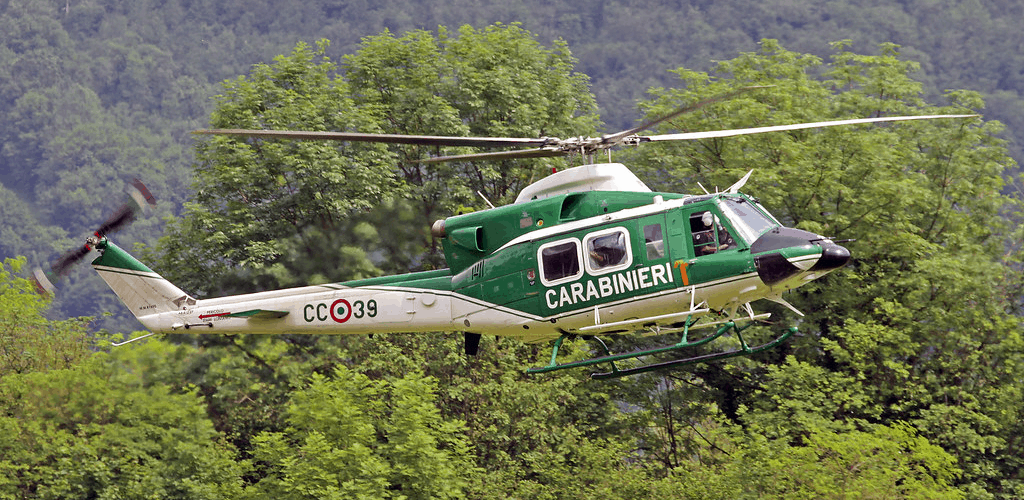


(/)
tap to zoom
(/)

Live fleet activity details
📡
Operational Context
Table of Contents
What is the Bell 412?
The Bell 412 is a twin-turbine utility helicopter built by Bell. It belongs to the Huey family and is a direct development of the Bell 212.
The key difference is the main rotor. The 412 swapped the 212’s two-blade rotor for a composite four-blade system, which gave it smoother flight and better performance.
The full specification table for the aircraft is on this page, so this article sticks to the story behind the numbers.
Development and history
Bell began work in the late 1970s by converting two Bell 212s into 412 prototypes. The new rotor was smaller in diameter than the 212’s.
A prototype first flew in August 1979. The initial model was certified in January 1981, and deliveries started the same month.
By 2022 Bell had delivered more than 1,300 of them, according to Wikipedia’s production summary.

Bell 412 variants
The 412 has been upgraded in steps rather than replaced. The main versions are:
- 412SP (Special Performance): more fuel capacity, a higher takeoff weight and optional seating layouts.
- 412HP (High Performance): replaced the SP in production in 1991, with an improved transmission.
- 412EP (Enhanced Performance): the long-running production version, with a dual digital automatic flight control system and the PT6T-3D or -3DF engine.
- 412EPI: introduced in 2013 with electronically controlled PT6T-9 engines, a Bell 429-style glass cockpit and a Garmin touchscreen navigation system.
- 412CF (CH-146 Griffon): 100 helicopters built for the Canadian Forces, based on the 412EP.
- Subaru Bell 412EPX: the commercial version of the Japanese UH-2 (formerly UH-X), built by Subaru.
Bell also offered the 412EP in the early 2000s for the US Army Light Utility Helicopter program. It lost to the EC145, which became the UH-72 Lakota.
Engines and safety features
The 412 uses a Pratt & Whitney Canada PT6T Twin-Pac, which couples two turboshaft engines to one gearbox. Wikipedia notes the PT6T has one of the lowest in-flight shutdown rates of any turboshaft engine.
If one engine fails, the other power section can supply emergency power for 30 minutes. That reserve is a big reason operators trust the type over water and rough terrain.

Explaining the numbers
The full specification table for the aircraft is on this page. A few figures need context because they differ by variant.
Range is the main one. Bell publishes different figures for the 412EPX, and the 412EP figure on Wikipedia is higher again, because manufacturers quote range at different weights, speeds and reserves. Check which variant and fuel assumption a number refers to before comparing helicopters.
Seating works the same way. Bell lists the 412EPX with one pilot and up to 14 passengers, while Wikipedia gives the 412EP as carrying up to 13 passengers, because seat layouts and the crew count change from operator to operator.
Where the Bell 412 is built and flown
Bell first built the 412 in Texas and later in Montreal, Canada. Agusta built it under licence in Italy, Indonesian Aerospace in Indonesia, and Subaru (Fuji Heavy Industries) in Japan. The CH-146 Griffon comes from Bell’s Mirabel, Quebec factory.
It is popular with oil and gas operators, police forces, air ambulance services and militaries. The Japan Ground Self-Defense Force is listed as the primary user, and the list of military operators runs from Algeria and Argentina to Norway, the Philippines and South Korea.
In the medical role the cabin takes six patients with two attendants, or two stretchers with up to four attendants.

Bell 412 price
Prices depend heavily on the version. Wikipedia reports that around 2022 to 2023 a new 412EPX cost between US$14.5 million and US$16 million.
Older used 412s sell for far less, and the price varies with airframe hours and equipment.
Frequently Asked Questions
Is a Bell 412 a Huey?
It is part of the Huey family. The 412 is a development of the Bell 212, which itself descends from the original UH-1 Huey, though it uses a four-blade rotor instead of the Huey’s two blades.
How much does a Bell 412 cost?
Wikipedia reports a new 412EPX at between US$14.5 million and US$16 million around 2022 to 2023. Earlier versions and used airframes cost less.
What is the difference between the Bell 212 and 412?
The main difference is the rotor. The 412 replaced the 212’s two-blade main rotor with a composite four-blade rotor of smaller diameter, and later versions added upgraded transmissions, engines and avionics.
Is the Bell 412 still in production?
Yes. The 412EP is described as the current production version, and Subaru builds the 412EPX for commercial customers.
Who flies the Bell 412?
Operators include the Japan Ground Self-Defense Force, the Canadian Forces (as the CH-146 Griffon), the Canadian Coast Guard, police and fire services, and air ambulance and oil industry operators.
Sources and references used for research and fact-checking.