

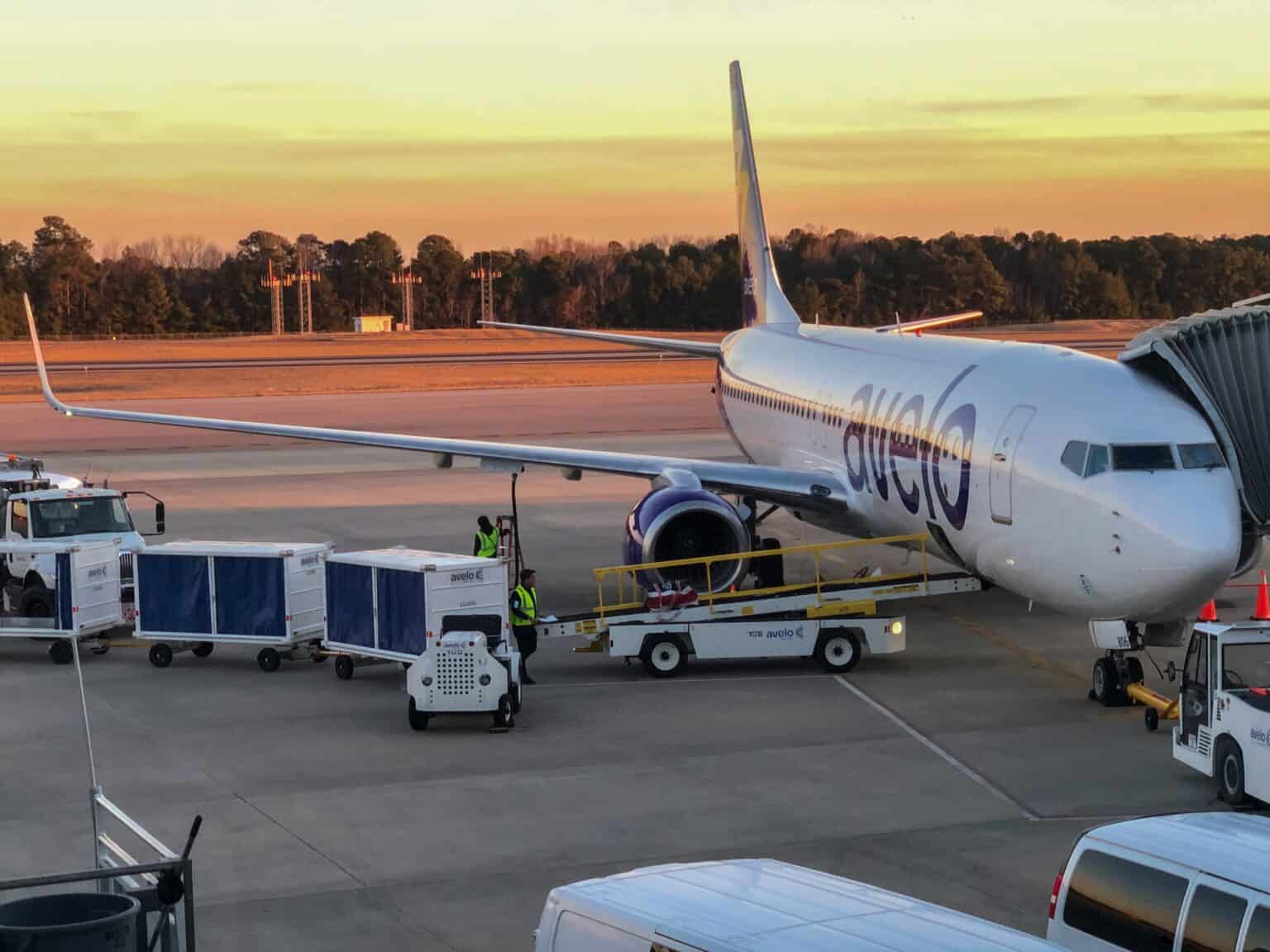
An RDU ground stop on Monday, October 12, 2026, began a day of FAA restrictions at Raleigh-Durham International Airport after air traffic control there lost communications and automation. An RDU spokesperson told ABC11 that a contractor had cut a fiber-optic line near the FAA tower during a plumbing repair.
The FAA did not declare the airport back to normal until 8:48 p.m. Eastern, according to its Air Traffic Control System Command Center advisories. By Monday evening about 261 flights at RDU had been delayed, according to FlightAware figures cited by WRAL.
What the FAA’s advisories show
The first ground stop took effect at 10:10 a.m. Eastern and held RDU-bound departures at airports under eight FAA en route centers. Its comment line read “loss of comms and automation.”
About an hour later the FAA widened it to every departure airport in the contiguous US, plus six Canadian airports including Toronto Pearson and Montreal. Shortly after noon the stop gave way to a ground delay program that capped RDU at 10 arrivals an hour.
That program’s notice said FAA technicians were on site and that Washington Air Route Traffic Control Center had taken over the airspace. The FAA’s first plan had the rate stepping up late in the program to 63 arrivals in its final hour.
Repairs ran long. The FAA reimposed ground stops at 3:45 p.m. and again at 5:03 p.m., the second time noting that repairs were “taking longer than expected.”
At 6:21 p.m. it reported that tests were beginning on the line repairs, and at 6:45 p.m. it extended the stop to 8 p.m. while communications checks continued.
10:10 a.m.
First ground stop. The FAA holds RDU-bound departures, citing a loss of communications and automation.
11:16 a.m.
Stop goes nationwide. The hold expands to all contiguous US departure airports and six Canadian airports.
12:15 p.m.
Ground delay program. Arrivals are capped at 10 an hour, with Washington Center handling the airspace.
3:45 p.m.
Ground stop returns. The FAA opens its diversion recovery tool for RDU at 4:01 p.m.
5:03 p.m.
Repairs run long. A new stop follows a brief lift; tests on the line repairs begin at 6:21 p.m.
8:48 p.m.
Normal operations. The FAA cancels the delay program: “Equipment is up and operational.”
When the last stop lifted at 7:58 p.m., the extended delay program showed an average assigned delay of 189 minutes. The longest delay it gave a single flight was 584 minutes, almost 10 hours.
Fifty minutes later the FAA canceled the program and told airlines to disregard their assigned departure times. The final advisory read: “Equipment is up and operational. RDU is normal ops.”
Diversions and stranded travelers
Some flights already in the air could not wait. WRAL reported that an inbound flight from New York JFK entered a holding pattern and then landed in Richmond, Virginia, while another diverted to New Bern, North Carolina.
In the evening the FAA asked that airborne requests to switch destination to RDU or three nearby airports, including Greensboro, not be approved, to protect the delay program. Travelers told WRAL that more than 300 people were waiting for agents at one gate.
By Monday afternoon RDU had 212 delays and nine cancellations, ABC11 reported, among them an international flight to Rome. One Cary traveler bound for a business meeting in Europe got a ride to Charlotte to catch another flight.
Why one cable can stop an airport
Controllers depend on telecom circuits to carry radio, radar and automation data. When those links drop, the FAA’s safe answer is to stop feeding traffic into the airport, which is what a ground stop does: flights stay at their origin instead of holding in the air.
A ground delay program is the softer follow-up, covered in our guide to ground stops and flow control. Each flight gets a timed departure slot so arrivals match whatever rate the remaining equipment can handle, which here was 10 an hour.
RDU’s first public account was modest: the airport told WRAL that flights were delayed about 20 minutes while repairs were made. Later its spokesperson said repairs were ongoing and referred questions about the FAA’s systems to the agency, which had not replied to WRAL when the station published.
WRAL described the evening stop as a second outage. The FAA’s advisories list the same cause, an equipment outage, from the first ground stop to the last, and the evening entries refer to line repairs and communications checks.
A cut cable did something similar on a larger scale three weeks earlier. On September 21, a cut backup cable and a failed primary circuit at Philadelphia TRACON stopped flights at five Northeast airports.
In August, a two-hour equipment failure at Minneapolis Center grounded flights across nine states. The FAA has not publicly said whether the RDU facility had a backup path for the circuit that was cut.
Sources and references used for research and fact-checking.
- FAA ATCSCC, ATCSCC Advisory 050, RDU/ZDC 10/12/2026, CDM Ground Stop
- FAA ATCSCC, ATCSCC Advisory 060, RDU/ZDC 10/12/2026, CDM Ground Stop
- FAA ATCSCC, ATCSCC Advisory 064, RDU/ZDC 10/12/2026, CDM Ground Delay Program
- FAA ATCSCC, ATCSCC Advisory 062, RDU/ZDC 10/12/2026, CDM Proposed Ground Delay Program
- FAA ATCSCC, ATCSCC Advisory 082, RDU/ZDC 10/12/2026, CDM Ground Stop
- FAA ATCSCC, ATCSCC Advisory 083, RDU/ZDC 10/12/2026, RDU Diversion Recovery
- FAA ATCSCC, ATCSCC Advisory 091, RDU/ZDC 10/12/2026, CDM Ground Stop
- FAA ATCSCC, ATCSCC Advisory 100, RDU/ZDC 10/12/2026, CDM Ground Stop
- FAA ATCSCC, ATCSCC Advisory 103, RDU/ZDC 10/12/2026, CDM Ground Stop
- FAA ATCSCC, ATCSCC Advisory 002, RDU/ZDC 10/13/2026, CDM Ground Delay Program
- FAA ATCSCC, ATCSCC Advisory 003, RDU/ZDC 10/13/2026, No Change of Destination
- FAA ATCSCC, ATCSCC Advisory 008, RDU/ZDC 10/13/2026, CDM Ground Delay Program CNX
Get the Newsletter
The latest aviation news and stories sent to your inbox.
About the Author

Tim is the owner and lead editor of AeroCorner since 2019, overseeing aviation content covering aircraft, airlines, airports, and the broader aviation industry. Through years of researching, writing, editing, and publishing aviation-focused content, he has developed extensive practical knowledge of commercial aviation and air travel. Based in Asia and a frequent traveler himself, Tim also brings firsthand passenger experience to AeroCorner’s coverage. Outside of publishing, he has also explored aviation firsthand through hands-on flight training in New Zealand.