

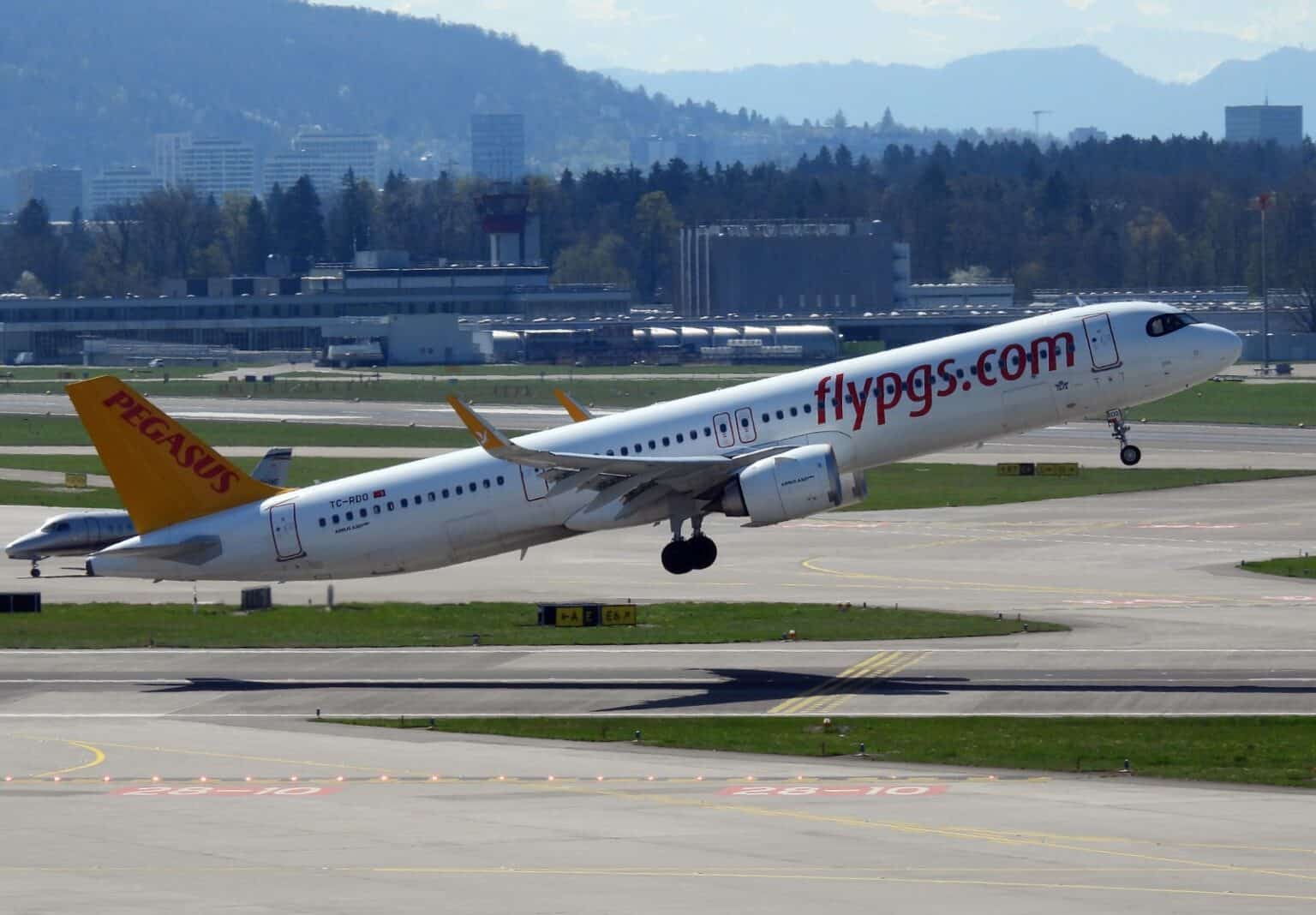
Pegasus Airlines flight PC996, an Airbus A321neo registered TC-RDO, began a takeoff roll in the wrong direction on Frankfurt’s Runway 18 West on October 20, 2026. Air traffic control called the crew, and the takeoff was rejected at about 35 knots (40 mph) of groundspeed.
The flight was bound for Istanbul Sabiha Gokcen. It left about seven minutes after the rejected takeoff, and nothing further happened on the way out.
What happened on the runway
The sequence was reported on October 23 by The Aviation Herald. It says the jet taxied to Runway 18 via taxiway S, which joins the runway about 4,130 feet (1,260 m) from its northern threshold.
After the crew was cleared for takeoff on Runway 18, which points south, the aircraft turned right onto the runway, toward the north. It then began its takeoff roll in the opposite direction to its clearance, AvHerald reports.
The controller called the crew, who rejected the takeoff at about 35 knots. The A321neo left the runway at taxiway M, about 1,740 feet (530 m) down the runway, then taxied back to the holding point at taxiway S and departed normally.
DFS, Germany’s air navigation service provider, told AvHerald that the occurrence had been reported to the responsible authorities. DFS added that whether an investigation takes place, and how far it goes, is up to the BFU, Germany’s federal accident investigation bureau.
As of October 23, the BFU had published nothing on the event, and no statement from Pegasus could be found.
Why a wrong turn on Runway 18 matters
Runway 18 West is the odd one out at Frankfurt Airport. The three other runways run east to west, while this one runs north to south and is used for takeoffs, according to airport operator Fraport.
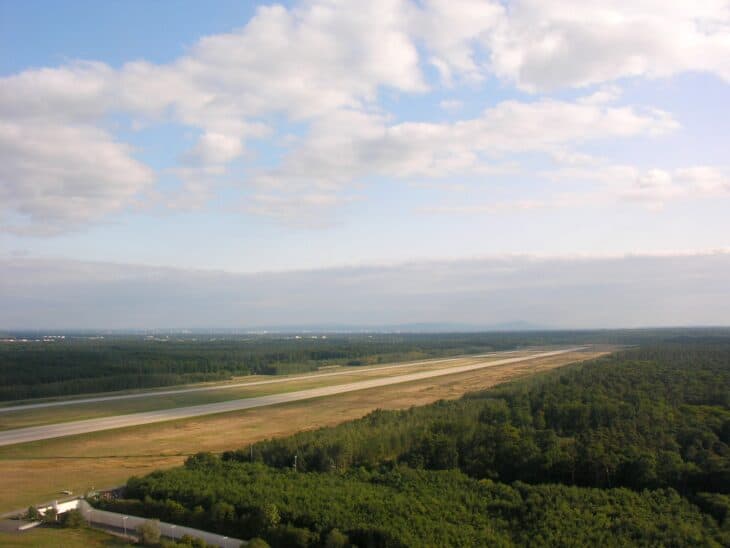

Departures on it go south only. The runway’s reciprocal direction, Runway 36, is not a takeoff runway, because the Taunus mountains rise to the north of the airport.
The runway is about 13,100 feet (4,000 m) long. Taxiway S therefore still leaves roughly 9,000 feet (2,740 m) of runway ahead of a southbound departure.
Turning north from the same point leaves only the 4,130 feet (1,260 m) behind the intersection, less than half the distance available in the cleared direction. That is why the early stop matters.
Crews confirm where they are from the runway markings and signs and by checking that the aircraft’s heading matches the runway number. That lineup check is meant to catch this kind of error before takeoff thrust is set.
Earlier wrong-surface takeoffs
Intersection departures save taxi time, but they put a crew onto a runway partway along its length, with pavement stretching in both directions.
On February 5, 2026, an SAS Airbus A320neo began a night takeoff on a taxiway at Brussels instead of the runway. Belgium’s AAIU says in its preliminary report that the first officer called “STOP” after looking up from the engine instruments, and the jet halted beyond an intersecting taxiway.
The worst outcome of a wrong-runway departure came on August 27, 2006, in Lexington, Kentucky. Comair Flight 5191, a CRJ100, was assigned the 7,003-foot Runway 22 but took off from the 3,501-foot Runway 26, and 49 of the 50 people on board died.
Clearance mix-ups on the ground can be just as dangerous. On July 30, a regional jet taxied onto a runway at Reagan National with a 737 on final approach.
In the Frankfurt case, the controller’s call came at about 35 knots, early in the roll. The BFU has not said whether it will investigate.
Sources and references used for research and fact-checking.
Get the Newsletter
The latest aviation news and stories sent to your inbox.
About the Author

AeroCorner News is the aviation news desk of AeroCorner.com. It covers accidents and incidents, safety rulings, airline and airport disruption, and new aircraft. It works from primary sources such as the NTSB, FAA, EASA and the manufacturers' own announcements.