

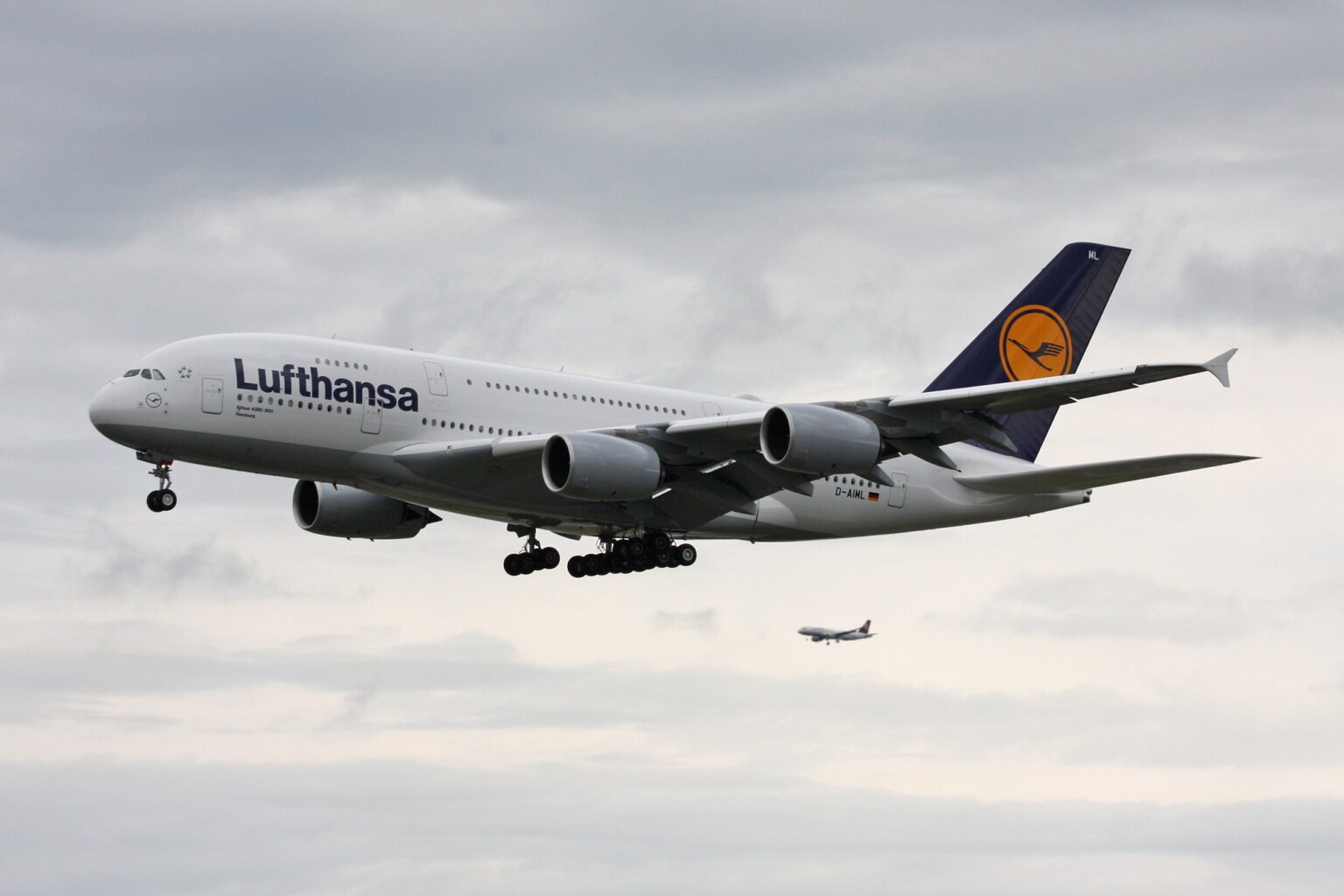
Lufthansa flight LH459, an Airbus A380 arriving from San Francisco, touched down 62 feet (18.8 m) before the threshold of Munich’s runway 26L on August 17, 2026, in heavy rain from a thunderstorm. That finding comes from an interim report Germany’s accident investigation bureau, the BFU, published on October 22.
The report adds that the first officer at the controls was on a training flight to re-qualify after an interruption of about eight months, and that the crew did not realize they had landed short until after they parked.
What the BFU Found
The BFU classifies the event as a serious incident. Its report names the aircraft only as A380-841 serial number 149 of a German operator, which is Lufthansa’s D-AIML, the jet we reported touching down short in August, with 352 passengers and 24 crew on board and no injuries listed.
The training captain was pilot monitoring, with a senior first officer as a third pilot in the cockpit. The ILS for runway 26L was being renovated, so the crew flew an RNP satellite approach to it, using the A380’s FMS Landing System (FLS) to show a virtual glideslope.
The approach had a minimum of 340 feet above ground and required visibility of 800 m (about half a mile). Thunderstorms, heavy rain and mist were in the airport weather broadcast, and the crew told investigators runway 26L was hidden by cloud on the downwind and base legs.
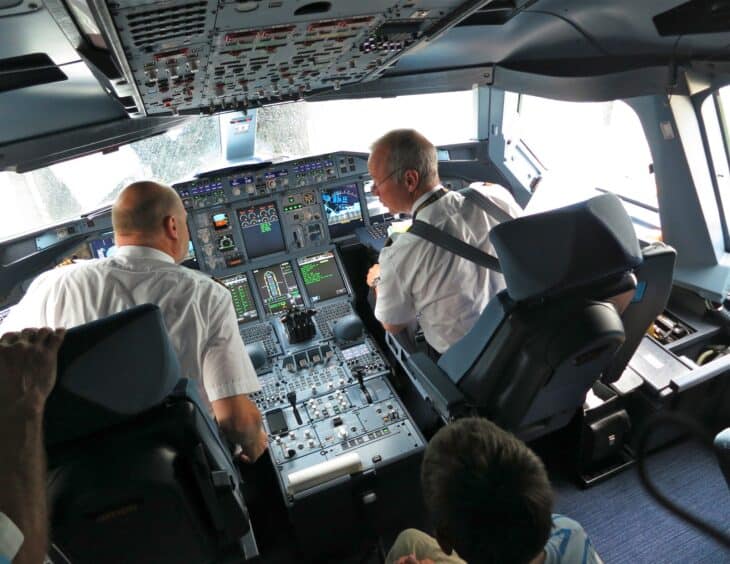

According to the crew, heavy rain set in at about 1,200 feet and the windshield wipers did little. They saw the approach lights at about 100 feet above the minimum, and the first officer continued, then switched off the autopilot and flew by hand in visibility the crew put at 500 m (about 1,640 feet) or less.
The Final 300 Feet
The flight data recorder shows the jet drifting below the virtual glideslope from about 300 feet. By about 80 feet above the ground the deviation reached 2 dots low and then full-scale deflection, the bottom of the scale on the pilots’ display.
At 30 feet the captain realized they were too low and said so, according to the cockpit voice recorder. Two seconds later, at 15:23:06 UTC (5:23 pm local), the A380 touched down with a vertical load of 2.1 g.
The crew told the BFU that the PAPI lights, which show pilots whether they are on the glide path, were never visible during the entire approach. Wind measured at the threshold also shifted sharply in the last seconds, with the headwind rising about 7 knots and then falling about 11.
The body landing gear tire marks begin 62 feet before the threshold, on paved surface. The main gear destroyed three runway threshold lights, glass ended up on all four main gear bogies, and seven main landing gear tires were damaged.
During the rollout, the first officer handed control to the captain and told the tower that visibility was below the minimum. A weather special issued at the moment of landing gave 800 m visibility in the touchdown zone.
Ground handling was suspended for the storm, and the jet took 51 minutes to reach its stand. The crew heard on the radio that threshold lights had been damaged, but only after parking, when the third pilot saw the tire damage, did they realize they had landed before the runway.
Why a Virtual Glideslope Is Not an ILS
An instrument landing system sends a radio beam from the ground. The FLS builds its beam inside the flight management computer from the database, so it looks like an ILS to the pilots but is still a non-precision approach.
The BFU points out one difference that matters: the FLS glideslope is referenced to barometric altitude. An altimeter setting 1 hPa off moves the whole path up or down by about 30 feet, and a new airport pressure, 1 hPa lower, was broadcast right after the landing.
The interim report draws no conclusions about cause. It sets out what the flight director showed below the minimum, and what the Airbus manual allows there: the guidance can stay on below minima, but outside visual references must become the primary reference until landing.
The operator has already acted. On August 19, two days after the landing, it told A380, A350 and FLS-equipped A320 crews to switch off the autopilot and flight directors from the minimum on FLS approaches, until the matter is clarified with Airbus.
The BFU’s final report is still to come. Two days before it, a Vietnam Airlines 787 ran past the far end of the same runway on takeoff and struck its tail, an accident the BFU is investigating separately.
Interim findings
This is an interim report. The BFU has not determined causes, and its findings may change in the final report.
Sources and references used for research and fact-checking.
Get the Newsletter
The latest aviation news and stories sent to your inbox.
About the Author

AeroCorner News is the aviation news desk of AeroCorner.com. It covers accidents and incidents, safety rulings, airline and airport disruption, and new aircraft. It works from primary sources such as the NTSB, FAA, EASA and the manufacturers' own announcements.