

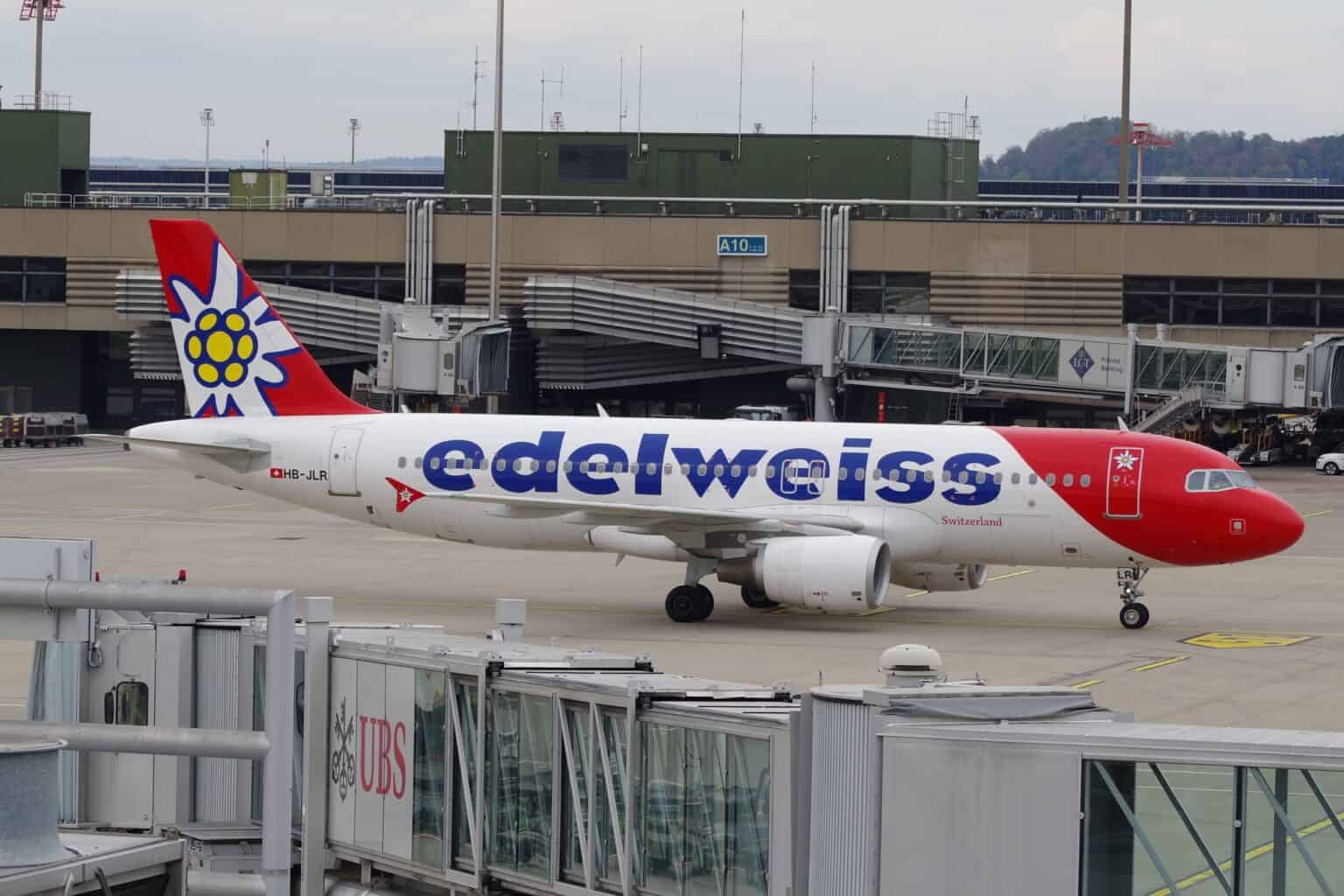
Edelweiss flight WK404 from Zurich to Pristina turned back over Bosnia and Herzegovina on October 20, 2026, with a problem in its bleed air system. The next morning the same Airbus A320, registration HB-JLR, turned back again while flying Swiss flight LX562 from Zurich to Nice.
Both flights landed safely in Zurich. Both return legs, from Pristina and from Nice, were cancelled.
Two returns in two days
On the first flight, the A320 was cruising at 35,000 feet near Sarajevo when the crew decided to go back to Zurich, The Aviation Herald reported. The jet stepped down to 34,000 feet and landed in Zurich about 2 hours and 10 minutes after turning around.
The Tages-Anzeiger said the Pristina flight turned around after about an hour in the air, over Bosnia and Herzegovina. The Zurich paper put the number of travelers at 134, the same figure The Aviation Herald gave for everyone on board.
The return service from Pristina, WK405, was cancelled. Flight tracking data on Flightradar24 lists WK404 as diverted to Zurich and WK405 as cancelled.
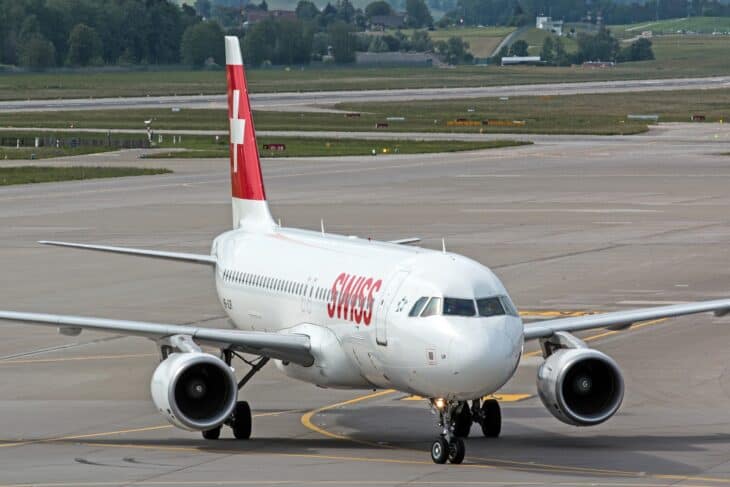
HB-JLR then sat on the ground in Zurich for about 10 hours before its next departure, according to The Aviation Herald. That departure was LX562 to Nice on October 21, which Edelweiss flew for Swiss under a wet lease, with Edelweiss supplying the aircraft and crew.
Near Turin, at 35,000 feet, the crew descended to 31,000 feet because of problems with the bleed air systems and returned to Zurich, landing about 35 minutes later, The Aviation Herald said. The Tages-Anzeiger reported 34 travelers on that flight.
Flightradar24 shows the Nice-to-Zurich return, LX563, as cancelled. The A320 stayed on the ground for about 21 hours before going back into service, The Aviation Herald reported, and the tracking data shows it flying to Cagliari, Samos and Berlin on October 22.
The Tages-Anzeiger attributed both returns to a defect in the aircraft’s compressed air supply system, which is the bleed air system. AeroCorner could not find a public statement from Edelweiss or Swiss on what failed or what was repaired between the two flights.
HB-JLR first flew in February 2012 and flew for Swiss before it joined Edelweiss in March 2023, according to the fleet records on Planelogger.

What bleed air does on an A320, and why crews turn back
Like most jetliners, the A320 runs a bleed air system: hot, compressed air tapped from the engine compressors (and from the auxiliary power unit) and piped through the aircraft.
That air leaves the engine pylon at roughly 390 to 480°F (200 to 250°C) and about 40 psi, according to SKYbrary, the aviation safety knowledge base. It feeds the air conditioning packs, which supply the cabin with the air that keeps it pressurized.
When a fault forces the crew to shut off part of the system, the airplane loses some of that supply. SKYbrary’s guidance on bleed air faults says isolating part of the system degrades air conditioning, pressurization and anti-icing, and that crews must then ask whether the planned altitude can still be held.
That may explain the modest descents on both flights, 1,000 feet on WK404 and 4,000 feet on LX562, though neither report gives the reason for them. Neither describes an emergency descent or oxygen masks dropping in the cabin.
Turning back rather than pressing on is the conservative choice with a degraded system. A jet running on part of its bleed system has less margin if another part fails, and Zurich is the airline’s home base.
SKYbrary’s case files show why that margin matters. In 2011 a Finnair A320 was dispatched with its left engine bleed system out of service, and when the right engine’s system then shut down from overheating, the crew had to make an emergency descent over southern Sweden.
Why a repeat on the same airframe stands out
A second return on the very next flight suggests the first night’s work did not fix the fault. Bleed problems can be hard to pin down, and the investigations SKYbrary summarizes include cases that took more than one attempt.
On a Fokker 100 that lost cabin pressurization in 2020, investigators found long-running bleed system problems that were only resolved after four malfunctioning components were identified and replaced. After a 2017 A320 dual failure, investigators found the likely cause was undetected degradation of the bleed regulation system and recommended a new scheduled maintenance check.
Which component failed on HB-JLR has not been made public. The second time, the jet stayed on the ground for about 21 hours rather than 10, and the airline has not said what was done.
Edelweiss had another return to Zurich Airport just three days earlier. On October 17, Edelweiss flight WK34 to Punta Cana dumped fuel over the Alps and came back when its A340’s center landing gear would not retract. That was a different aircraft type and a different system.
Sources and references used for research and fact-checking.
Get the Newsletter
The latest aviation news and stories sent to your inbox.
About the Author

AeroCorner News is the aviation news desk of AeroCorner.com. It covers accidents and incidents, safety rulings, airline and airport disruption, and new aircraft. It works from primary sources such as the NTSB, FAA, EASA and the manufacturers' own announcements.