

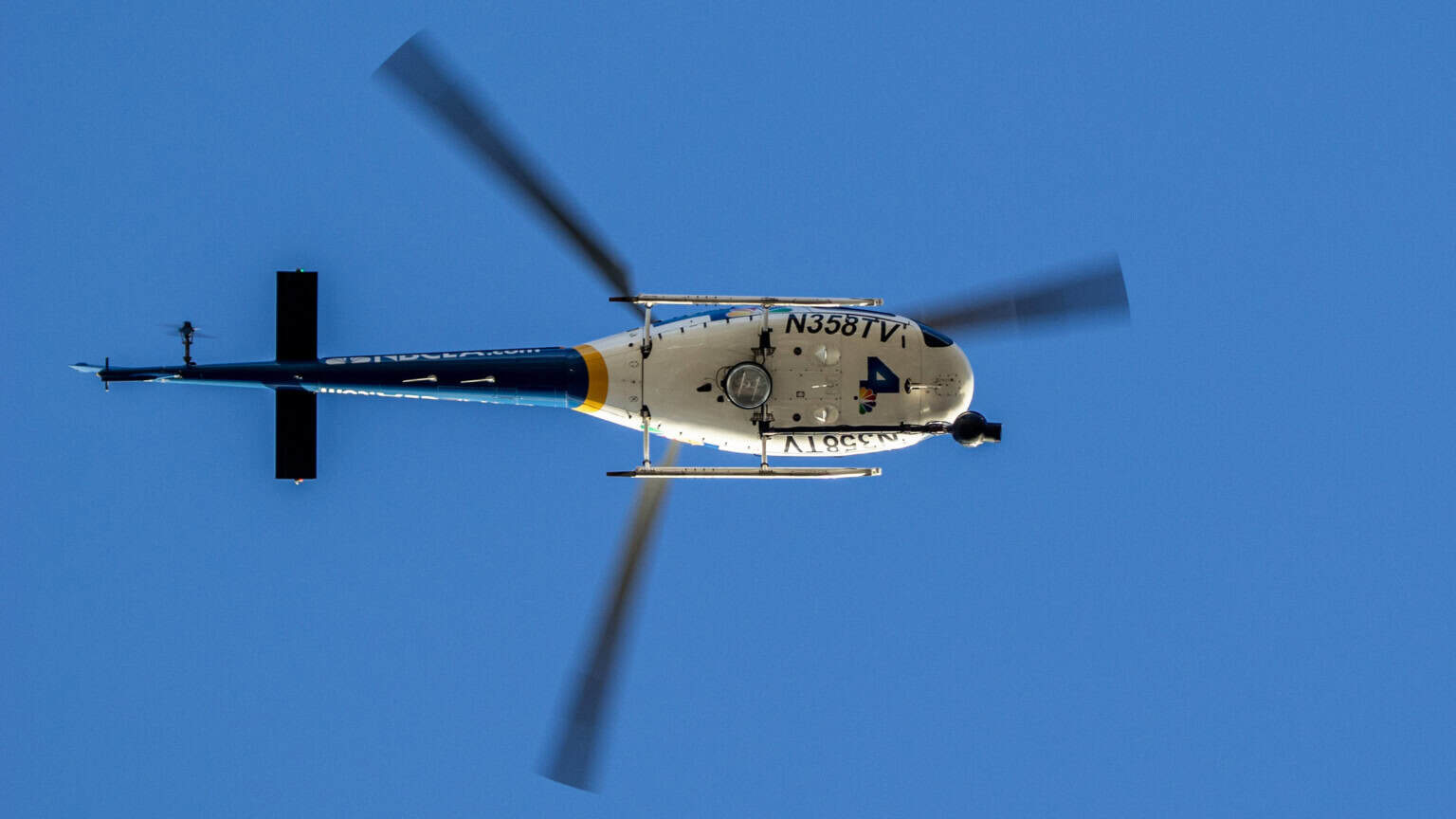
N358TV, the Airbus Helicopters AS350 B2 that crashed in Chatsworth, California, on September 15, 2026, had slowed to about 6 knots over the ground at about 800 feet when horns the investigators matched to high and low rotor speed alerts sounded in its final 29 seconds. That is the core of the National Transportation Safety Board’s preliminary report, released on October 6.
The report, case WPR26FA345, sets out facts only and names no cause. The crash killed reporter Eliana Moreno, pilot George Marciniw and Edy Gutierrez Mejia, a man on the ground, while the helicopter was covering a fatal Metro bus collision for NBC4 Los Angeles and Telemundo 52.
What the preliminary report says
According to the NTSB, the helicopter was operated by Angel City Air as an electronic news gathering flight under Part 91, the FAA’s general operating rules, and lists the operator as holding no operating certificate. It also records a fourth person, on the ground, with minor injuries.
The pilot and reporter left Whiteman Airport in Pacoima at about 5:24 p.m. and flew about 9 miles (14 km) west at an average altitude of about 1,600 feet above sea level. According to the report, the helicopter then maneuvered around the bus crash scene for about 1 hour and 24 minutes.
In the last minute of the flight, it was at about 1,700 feet above sea level, or about 800 feet above the ground, and slowed to about 6 knots of ground speed. Over the ground, that is close to a hover, but the report gives no wind, so its airspeed is not known.
About 5:24 p.m.
Departure. N358TV leaves Whiteman Airport and heads about 9 miles west to the bus crash scene.
Next 1 hr 24 min
On scene. The helicopter maneuvers near the bus crash.
Final minute
Slowing down. About 800 feet above the ground, slowing to about 6 knots ground speed.
Final 29 seconds
Horns. The helicopter noise changes frequency, and intermittent and continuous horns are heard.
About 6:55 p.m.
Descent. ADS-B shows a rapid descent in a right turn, ending over the crash site at about 38 knots ground speed.
Much of the report rests on a video of 4 minutes and 21 seconds that Moreno recorded on board. For most of it, the NTSB says, the rotor and engine noise was consistent with normal operations.
In the last 29 seconds, the noise changed frequency and the recording picked up intermittent and continuous horns. The NTSB describes them as “consistent with the helicopter’s main rotor high rpm, low rotor rpm and other aural advisories.”
At about 6:55 p.m., ADS-B data show the helicopter beginning a rapid descent while turning right. The last data point placed it directly above the crash site, descending fast at about 38 knots of ground speed.
Security cameras on nearby buildings recorded the helicopter coming down at a high rate and hitting a metal storage container, and a fire broke out quickly. The fuselage was mostly reduced to ash and heat-damaged metal.
The wreckage lay partly on its right side beside the container, with debris spread about 30 feet (9 m) around it. All major components were still attached or within that small area, the tailboom had separated but lay next to the fuselage, and both rotor assemblies were still on their mounts.
The nearest weather observation, at Whiteman about 8 nautical miles away, showed clear skies, 10 miles of visibility and 73°F (23°C) at 7 p.m., and the report leaves the wind entry blank. FAA registry records list N358TV as a 2004 Eurocopter AS350 B2, serial number 3788, with an Arriel series turboshaft engine.
What the horns tell investigators, and what they do not
A helicopter’s main rotor has to turn within a narrow speed band. In its report on a 2004 accident involving another AS350 B2, Canada’s Transportation Safety Board noted that the flight manual set that helicopter’s normal rotor speed at 385 to 394 rpm, with a continuous low rotor horn below 360 rpm.
Low rotor speed is the more dangerous side. The FAA’s Helicopter Flying Handbook says a helicopter will not fly below a certain rotor rpm, and if rotor speed keeps falling the rotor stalls, stops producing enough lift and the helicopter descends rapidly.
The NTSB matched the horns to both high and low rotor speed alerts, plus other advisories, but it does not say in which order they sounded, how long each lasted, or what the engine was doing. It does not mention any onboard flight data or cockpit voice recorder, which is why the reporter’s video carries so much weight.
At the NTSB’s on-scene briefing on September 16, investigator-in-charge Fabian Salazar said the audio would go to the agency’s recorder laboratory for sound spectrum analysis, according to reporting from that briefing. The preliminary report includes no results from that analysis.
What a preliminary report is
Every page of the NTSB document is marked as preliminary and subject to change. It records what investigators have gathered so far, and it does not say why N358TV went down. The cause comes only in the final report.
Who is investigating and what comes next
Besides Salazar’s NTSB team, the parties named in the report are the FAA, Airbus Helicopters and Intermountain Turbine Services, a Lindon, Utah, turbine engine maintenance and overhaul company. The report does not explain each party’s role.
The wreckage has been moved to a secure facility for further examination, which NBC Los Angeles reported is in Arizona. The station also reported that the NTSB said its investigation will include witness interviews.
The NTSB has classed the case as a Class 3 investigation. Under the agency’s own definition, that type looks for safety issues behind the accident and ends with a Board-approved final report naming the probable cause and any contributing factors.
Salazar said at the September briefing that the final report could take as long as 18 months. AeroCorner’s earlier report covers the crash and that briefing in more detail.
Sources and references used for research and fact-checking.
- NTSB, Aviation Investigation Preliminary Report WPR26FA345 (Chatsworth, CA, N358TV)
- NTSB, Aviation Investigation Classification
- FAA, Aircraft Inquiry: N358TV
- FAA, Helicopter Flying Handbook (FAA-H-8083-21B), Chapter 11: Helicopter Emergencies and Hazards
- Transportation Safety Board of Canada, Aviation Investigation Report A04P0240 (AS350 B2 C-GSHH)
Get the Newsletter
The latest aviation news and stories sent to your inbox.
About the Author

Tim is the owner and lead editor of AeroCorner since 2019, overseeing aviation content covering aircraft, airlines, airports, and the broader aviation industry. Through years of researching, writing, editing, and publishing aviation-focused content, he has developed extensive practical knowledge of commercial aviation and air travel. Based in Asia and a frequent traveler himself, Tim also brings firsthand passenger experience to AeroCorner’s coverage. Outside of publishing, he has also explored aviation firsthand through hands-on flight training in New Zealand.