

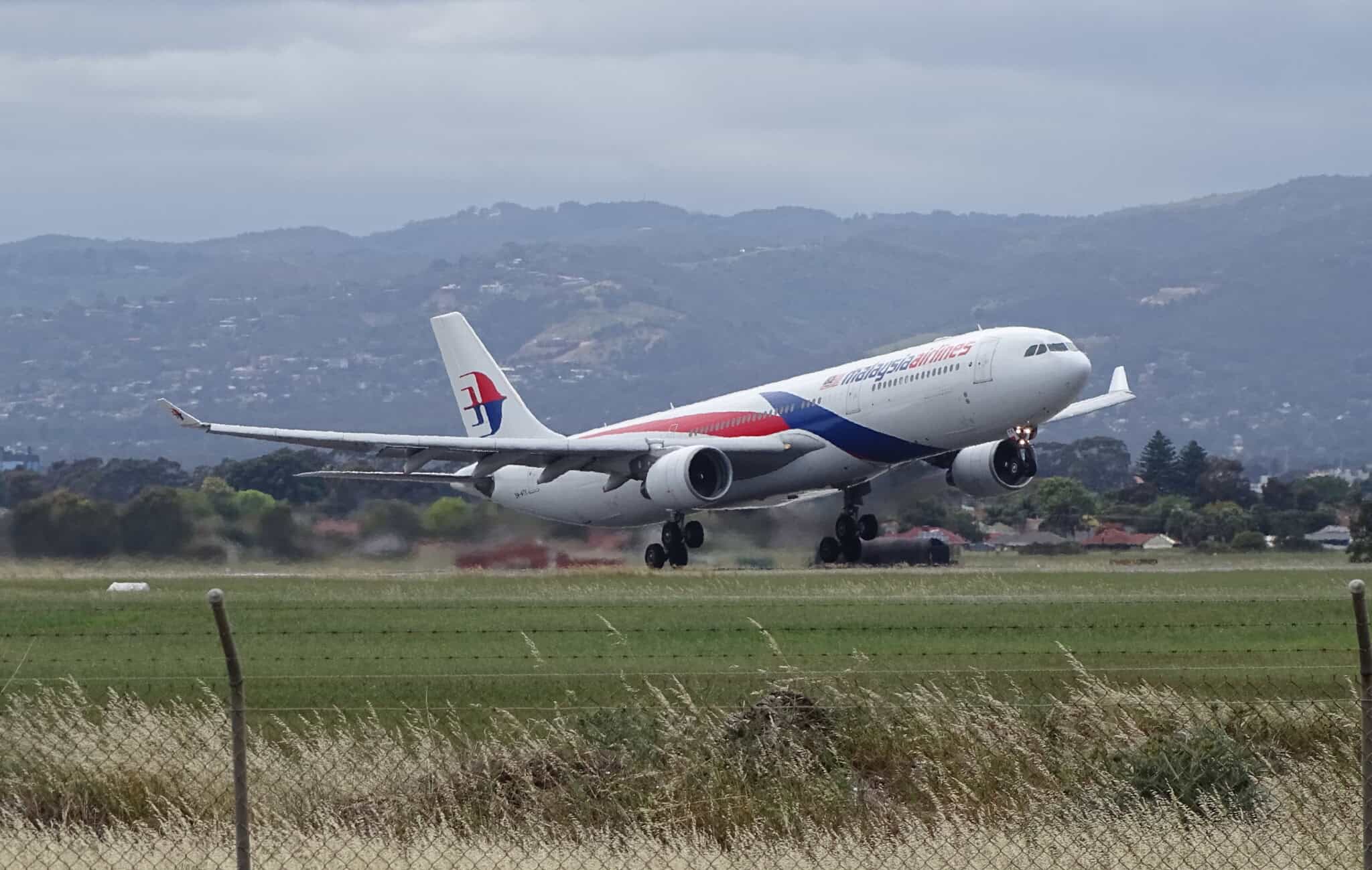
Malaysia Airlines flight MH89 rejected its takeoff at Tokyo’s Narita International Airport on August 20, 2026, after the left engine of the Airbus A330-300 caught fire during the takeoff roll. All 160 passengers and crew got off safely, and the airline canceled the flight for a technical inspection.
A Fire, Then a Low-Speed Stop
MH89, registration 9M-MTK, was rolling down runway 16R around 10:40 a.m. local time bound for Kuala Lumpur when the crew rejected the takeoff at roughly 30 knots, well below rotation speed. The left engine began emitting flames and smoke and lost thrust, according to Aviation Herald, which tracks aviation incident reports.
The jet veered left as the crew brought it to a stop but stayed on the runway pavement throughout. Fire engines and ambulances met the aircraft, according to Aviation A2Z.
None of the 160 people on board were hurt, Japan’s transport ministry said, according to Malay Mail.
Runway A stayed closed for roughly two and a half hours while inspectors found metal fragments on the pavement, according to Aviation Today; the earlier Aviation Herald report put the closure at closer to an hour, a common gap between an incident’s first, rougher estimate and later, on-scene reporting.
Malaysia Airlines confirmed the flight was canceled and apologized for the disruption, saying it arranged meals, lounge access, hotel rooms, and rebooking for affected passengers while the jet undergoes inspection.
Cause not yet confirmed
Malaysia Airlines has not said what caused the engine to catch fire. Aviation Herald identified it as a Pratt & Whitney PW4168, one of three engine options Airbus offers on the classic A330; the airline’s newer A330neo jets fly with different Rolls-Royce engines.
Why a Reject at 30 Knots Is the Easy Call
Every takeoff has a calculated decision speed, V1, worked out for that flight’s specific weight, runway, and conditions. Below V1, the standard response to an engine fire or major malfunction is to reject: close the throttles, brake, and stop on the runway that is already under the wheels.
At only 30 knots, MH89 was far below V1, so stopping carried little risk and plenty of runway to work with. The harder calls happen closer to V1, when the runway remaining to stop and the altitude needed to fly away are nearly balanced.
Rejected takeoffs are common, and usually uneventful
Airlines log low-speed rejected takeoffs regularly, most often for a warning light, a bird strike, or a system fault caught before the aircraft leaves the ground. The overwhelming majority end exactly like MH89 did, with an intact aircraft and no injuries.
Malaysia Airlines flies more than a dozen A330-300s of this era on regional and long-haul routes, alongside a newer A330neo fleet it has been adding since 2024. The A330-300 remains one of the most common widebodies serving Narita, a route where a smoke or engine event has grounded a widebody before, including a SWISS A330 that diverted to Bangor after smoke filled its cabin over the Atlantic.
Get the Newsletter
The latest aviation news and stories sent to your inbox.
About the Author

Tim is the owner and lead editor of AeroCorner since 2019, overseeing aviation content covering aircraft, airlines, airports, and the broader aviation industry. Through years of researching, writing, editing, and publishing aviation-focused content, he has developed extensive practical knowledge of commercial aviation and air travel. Based in Asia and a frequent traveler himself, Tim also brings firsthand passenger experience to AeroCorner’s coverage. Outside of publishing, he has also explored aviation firsthand through hands-on flight training in New Zealand.