

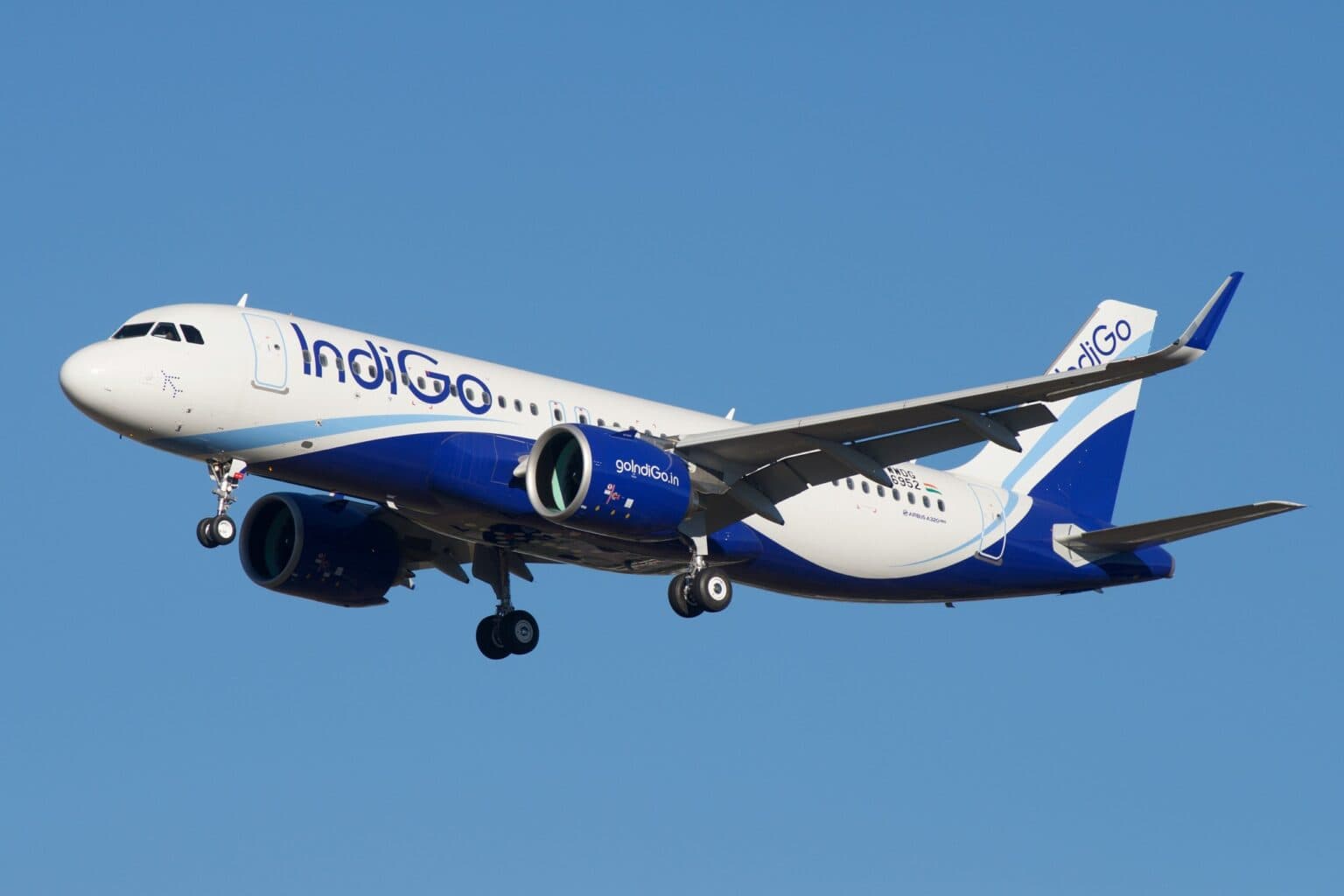
IndiGo flight 6E925 from Patna landed at Lucknow on the afternoon of Wednesday, October 7, 2026, with a damaged nose radome after its pilots reported a suspected lightning strike on the descent. All 104 passengers and six crew were reported safe.
The aircraft is grounded at Lucknow, and India’s Directorate General of Civil Aviation (DGCA) has opened a probe, IANS reported. IndiGo itself points to hail rather than lightning.
What happened on flight 6E925
The jet was an Airbus A320neo, an A320-251N registered VT-IQZ, OdishaBytes reported. Several reports put it at about 17,000 feet, heading toward Lucknow, when the crew felt the suspected strike.
The pilots reported the strike to air traffic control as a precaution because they could not tell whether the aircraft had been damaged. The damage only became visible after the jet had parked at its bay at Lucknow’s Chaudhary Charan Singh airport.
FlightAware’s track log shows the flight leaving Patna at 3:16 pm and landing at 4:05 pm local time, a 49-minute hop. Reports said it arrived about eight minutes ahead of schedule.
Some outlets described an emergency landing. An IndiGo spokesperson said the landing was normal and not an emergency, The Week reported.
The aircraft was due to fly on to Ahmedabad, and IndiGo put another jet on that service, LatestLY reported. IndiGo said the damaged A320neo will return to service only after maintenance and the required clearances.
One detail has muddied the coverage. IndiGo’s statement, as carried by IANS, gave the flight as 6E 625, but on October 7 that number flew an A321 from Pune to Chennai. The Patna to Lucknow sector that afternoon was 6E925, according to FlightAware.
Lightning or hail?
IndiGo’s account, as reported, does not mention lightning. Its spokesperson said the flight met unfavorable weather, including a hailstorm while landing, which damaged the radome, and that the relevant authorities were told straight away.
“The aircraft landed safely, and all customers disembarked at their destination,” the spokesperson said.
The DGCA probe is expected to look at the aircraft’s condition, the weather at the time and how the damage happened, according to LatestLY. No finding has been published at the time of writing.
What is still unconfirmed
The cause of the radome damage is not established. The pilots reported a suspected lightning strike, while IndiGo attributes the damage to hail during landing. Neither the DGCA nor IndiGo had published inspection findings at the time of writing.
IndiGo has been here before. On May 21, 2025, A321neo VT-IMD flew into a hailstorm on flight 6E2142 from Delhi to Srinagar and landed with visible damage to its nose cone.
The DGCA later gave “severe weather existing en-route” and “non-timely action in re-routing the aircraft clear of weather” as the probable cause, Minister of State for Civil Aviation Murlidhar Mohol told the Rajya Sabha in August 2025, The Tribune reported. That is why the weather picture, not just the hardware, matters in a probe like this one.
Why the nose cone takes the hit
Airliners are struck by lightning routinely. One lightning-protection engineer estimated that each US airliner is lightly struck more than once a year, telling Scientific American that a strike first attaches to an extremity such as the nose or a wingtip and exits from another, such as the tail.
The nose is the awkward part. The weather radar sits behind the radome, and the same engineer explained that radar cannot work inside a conductive enclosure, so the nose cone cannot be wrapped in metal.
Instead, lightning diverter strips run along the outside of the radome, made of solid metal bars or rows of closely spaced conductive buttons. They work much like a lightning rod on a building.
Certification rules require exactly this. The FAA’s transport-category standard, 14 CFR 25.581, says an airliner must be protected against catastrophic effects from lightning, and that non-metallic parts must either minimize a strike’s effect or divert the current so it does not endanger the airplane.
That protection is about keeping the aircraft flying, not keeping it unmarked, so a suspected strike still calls for a detailed inspection before the jet flies again. Weather at the airport itself can cause trouble too: in August, a lightning strike at Luton knocked out the airport’s air traffic control.
Sources and references used for research and fact-checking.
Get the Newsletter
The latest aviation news and stories sent to your inbox.
About the Author

Tim is the owner and lead editor of AeroCorner since 2019, overseeing aviation content covering aircraft, airlines, airports, and the broader aviation industry. Through years of researching, writing, editing, and publishing aviation-focused content, he has developed extensive practical knowledge of commercial aviation and air travel. Based in Asia and a frequent traveler himself, Tim also brings firsthand passenger experience to AeroCorner’s coverage. Outside of publishing, he has also explored aviation firsthand through hands-on flight training in New Zealand.