

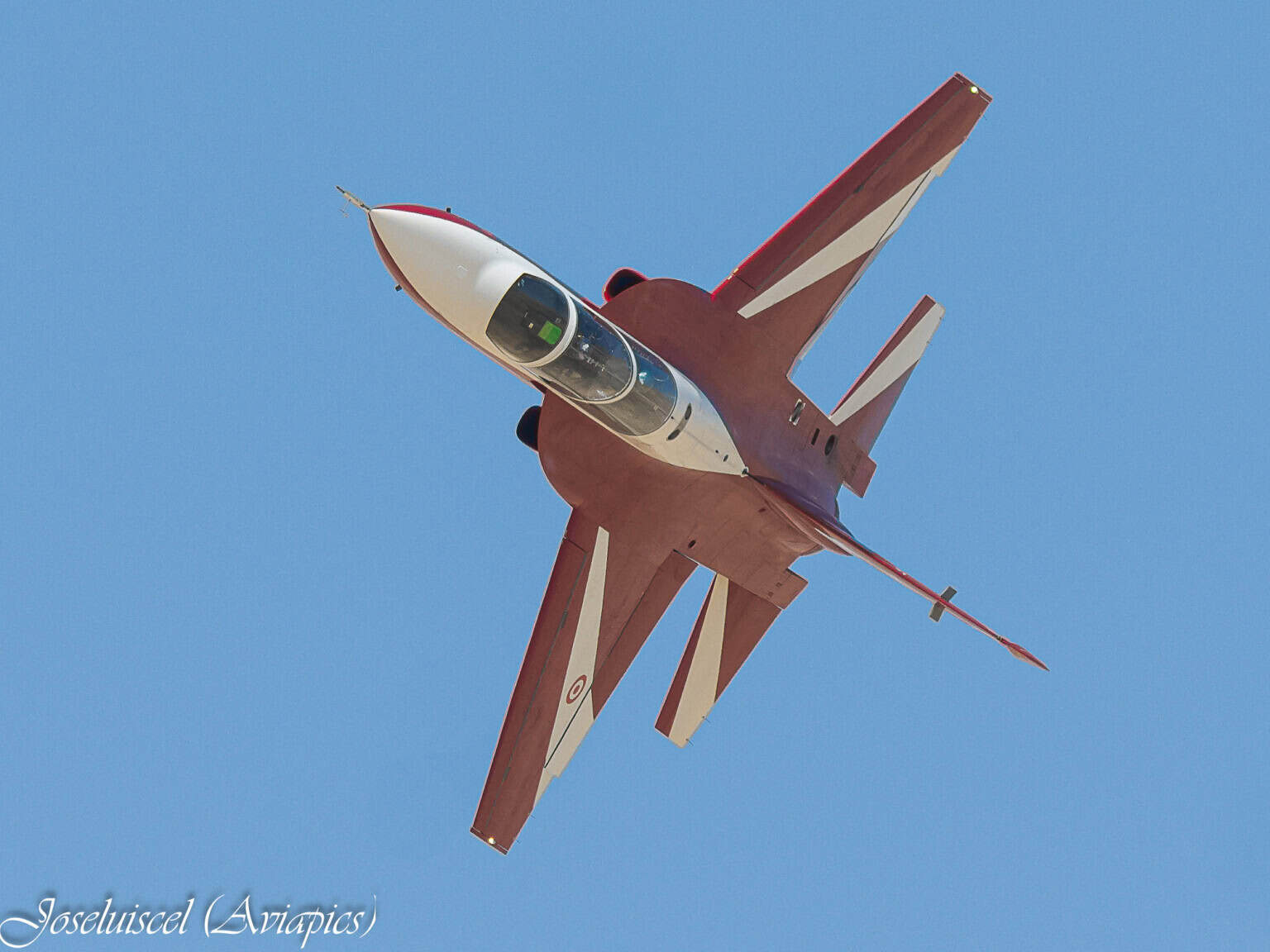
Turkish Aerospace flew the first Hürjet jet trainer built to production standard for the Turkish Air Force on August 30, 2026. The aircraft, coded TUS-A020, stayed airborne for 18 minutes with its landing gear down and a chase plane alongside, a routine profile for a first flight.
The date was not an accident. August 30 is Victory Day in Turkey, a national holiday, and officials tied the sortie to the country’s drive to build its own military aircraft. Haluk Gorgun, who heads Turkey’s defense procurement agency, called TUS-A020 “the first Hürjet that will be delivered to the Turkish Air Force Command.”
What the Hürjet is
The Hürjet is a single-engine, two-seat advanced jet trainer. Air forces use this class of aircraft to bridge the gap between basic trainers and a frontline fighter, teaching high-speed handling, formation flying, and weapons work before a pilot ever straps into a combat jet.
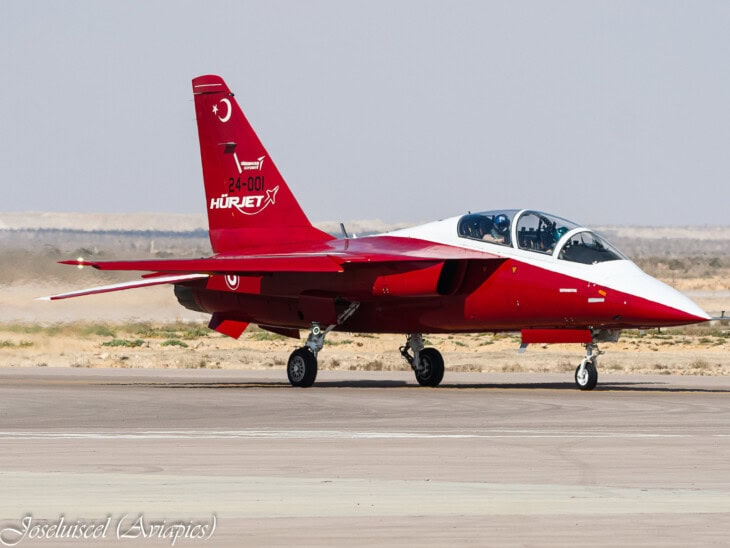
It is powered by a single General Electric F404 afterburning turbofan of about 17,700 pounds of thrust, and Turkish Aerospace quotes a top speed near Mach 1.4. The aircraft has a glass cockpit and external pylons, so Turkey also pitches it for light attack, not just training.
The class is crowded. Korea’s T-50 Golden Eagle and Italy’s M-346 already fill this role for many operators, and the aging Northrop T-38 is the aircraft most Western air forces are trying to replace.
Where the program stands
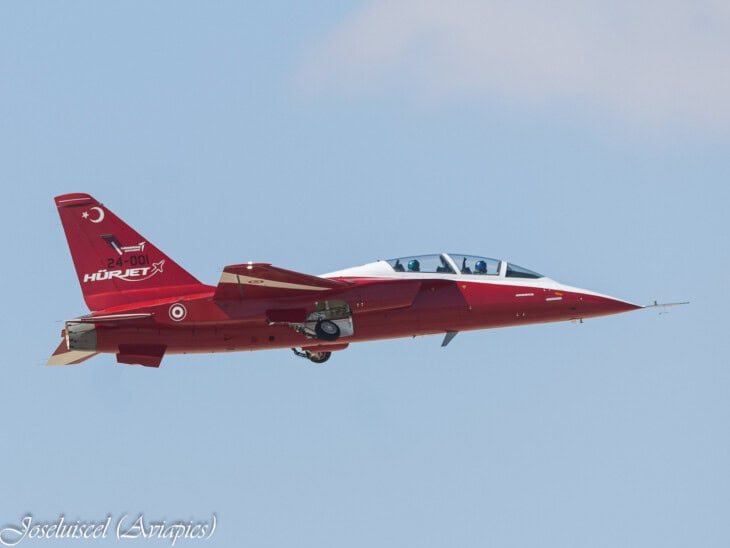
Turkey launched the Hürjet in 2017, and the first prototype flew in April 2023. The two development aircraft have since logged more than 500 test flights. TUS-A020 is the third airframe and the first built in the configuration the air force will actually receive, which is what separates this flight from a prototype hop.
The Turkish Air Force has ordered 12 aircraft, starting with a batch of six. Deliveries are expected to begin in 2027, later than the 2026 target the program once held. Early jets use the American F404; Turkish engine maker TEI is developing a domestic replacement for later batches, a recurring goal in Turkish defense programs that still rely on foreign parts.
For Turkey, the Hürjet is also a stepping stone. The same industry is developing the KAAN, a twin-engine fighter, and a home-built advanced trainer gives Turkish squadrons a domestic aircraft to prepare pilots for it rather than leaning on imported types that carry foreign export controls.
The export side is already moving. Spain has selected the Hürjet for its next combat training system, a program of roughly 30 aircraft run with Airbus that would retire Spain’s remaining Northrop F-5s. Turkish Aerospace has also entered the aircraft in the United Kingdom’s search for a new jet trainer.
A maiden flight is a start, not a finish
Advanced trainers routinely take years to move from first flight to squadron service, through weapons integration, spin and stall testing, and certification. The Hurjet’s 18-minute sortie clears an important gate, but the schedule risk between here and a 2027 delivery is real.
Sources and references used for research and fact-checking.
Get the Newsletter
The latest aviation news and stories sent to your inbox.
About the Author

Tim is the owner and lead editor of AeroCorner since 2019, overseeing aviation content covering aircraft, airlines, airports, and the broader aviation industry. Through years of researching, writing, editing, and publishing aviation-focused content, he has developed extensive practical knowledge of commercial aviation and air travel. Based in Asia and a frequent traveler himself, Tim also brings firsthand passenger experience to AeroCorner’s coverage. Outside of publishing, he has also explored aviation firsthand through hands-on flight training in New Zealand.