

Military Aircraft
The KAI T-50 Golden Eagle is South Korea's first indigenous supersonic aircraft, a jet trainer built with Lockheed Martin that grew into the FA-50 light fighter now flown by six air forces.
Updated: by Tim de Vries
The latest aviation news and stories sent to your inbox.
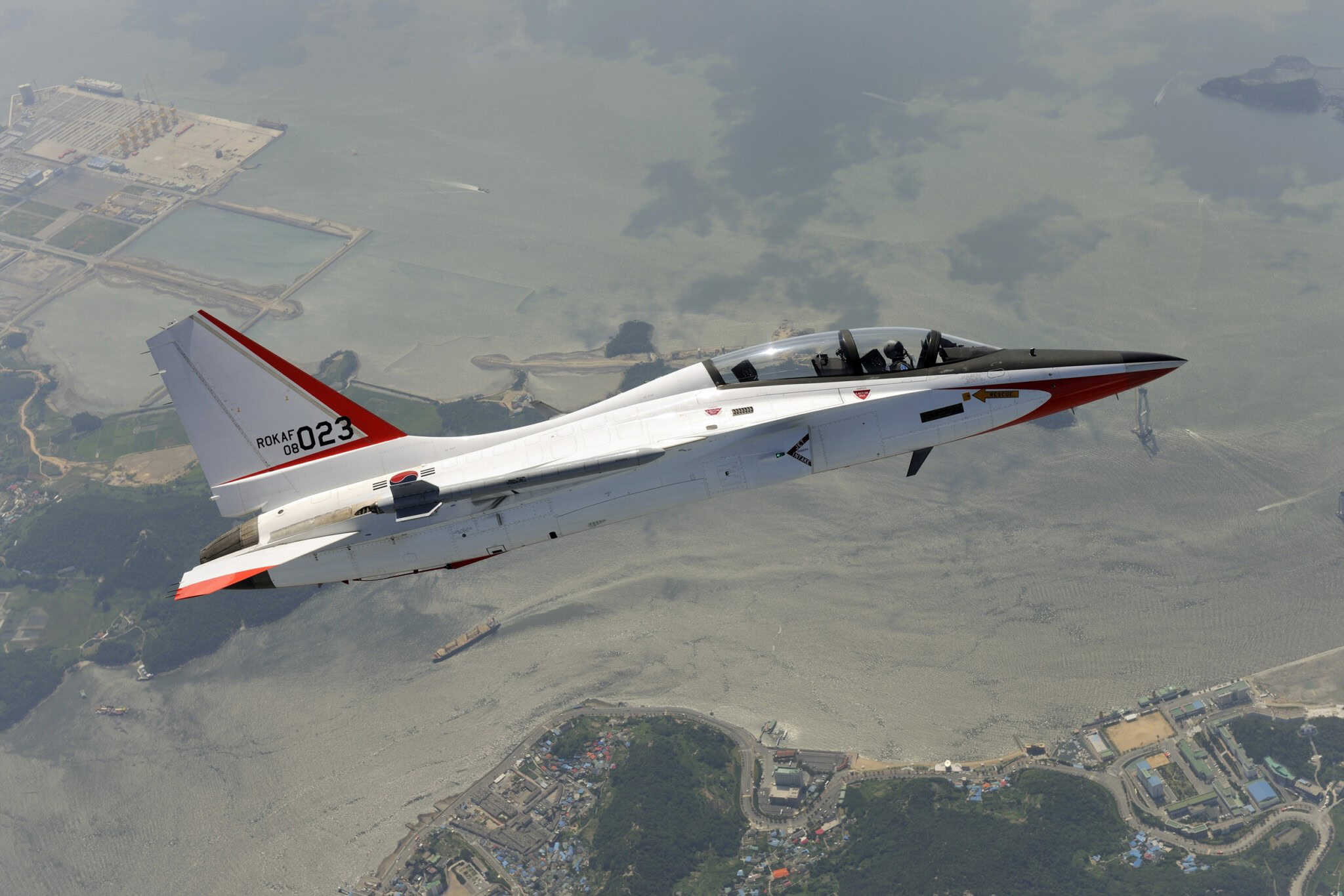
The KAI T-50 Golden Eagle is a supersonic advanced jet trainer developed by Korea Aerospace Industries (KAI) with Lockheed Martin. It first flew in August 2002 and was designed to prepare Republic of Korea Air Force pilots for the KF-16 and F-15K. Its light-attack and fighter derivatives, the TA-50 and FA-50, have since been ordered by Indonesia, Iraq, the Philippines, Thailand, Poland and Malaysia.
Live Fleet Activity (T-50)
Fetching live data…


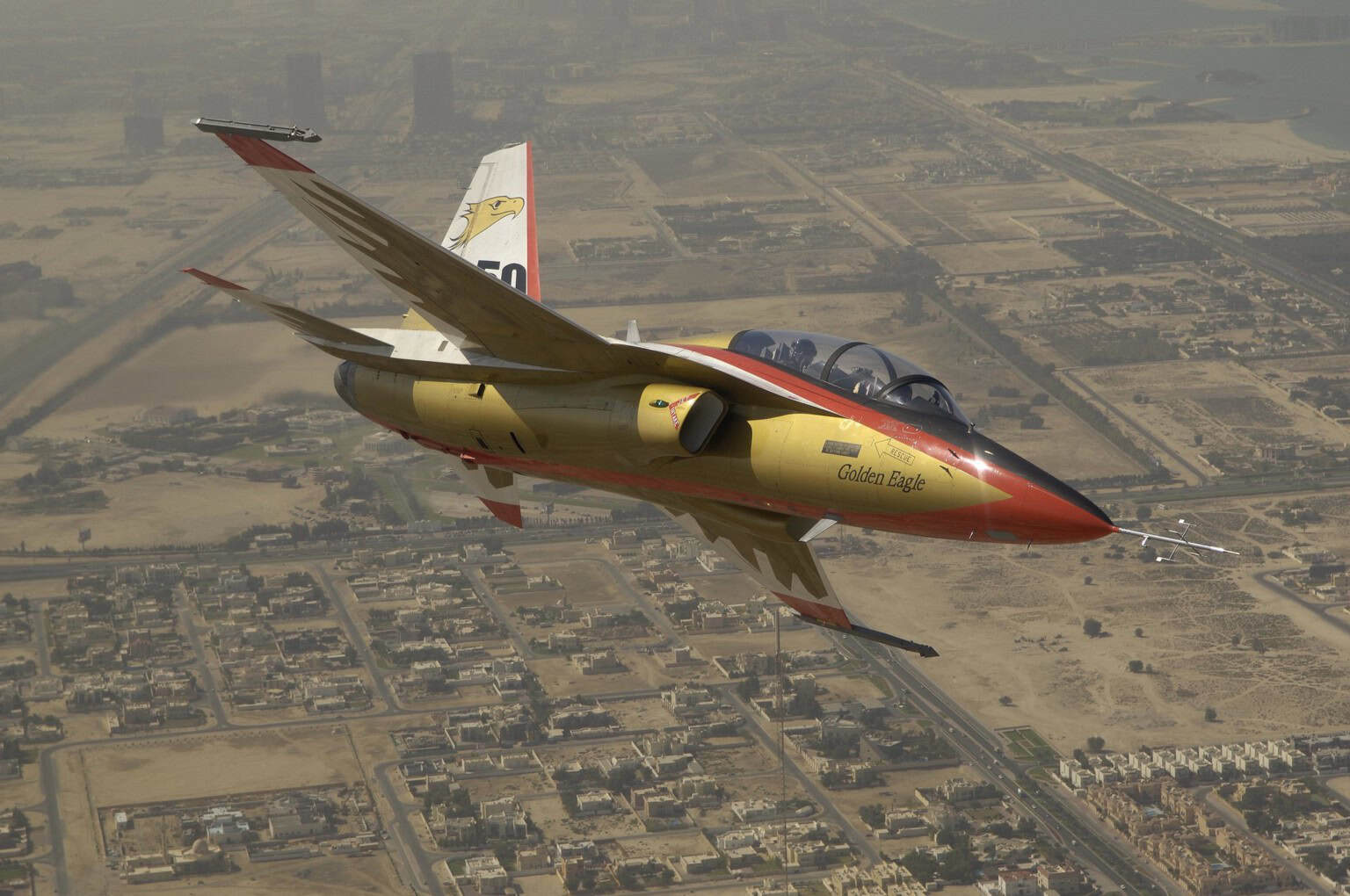
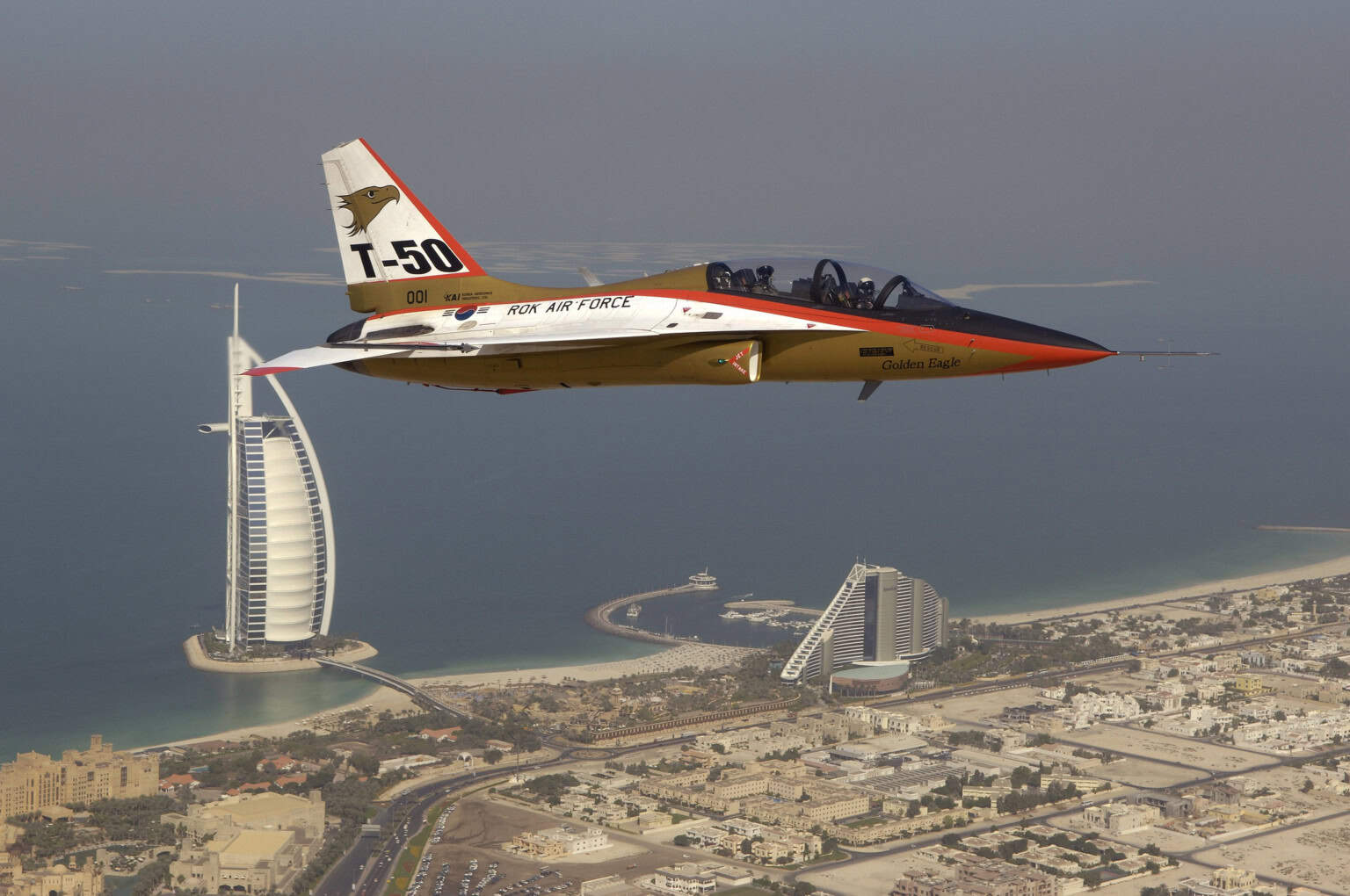

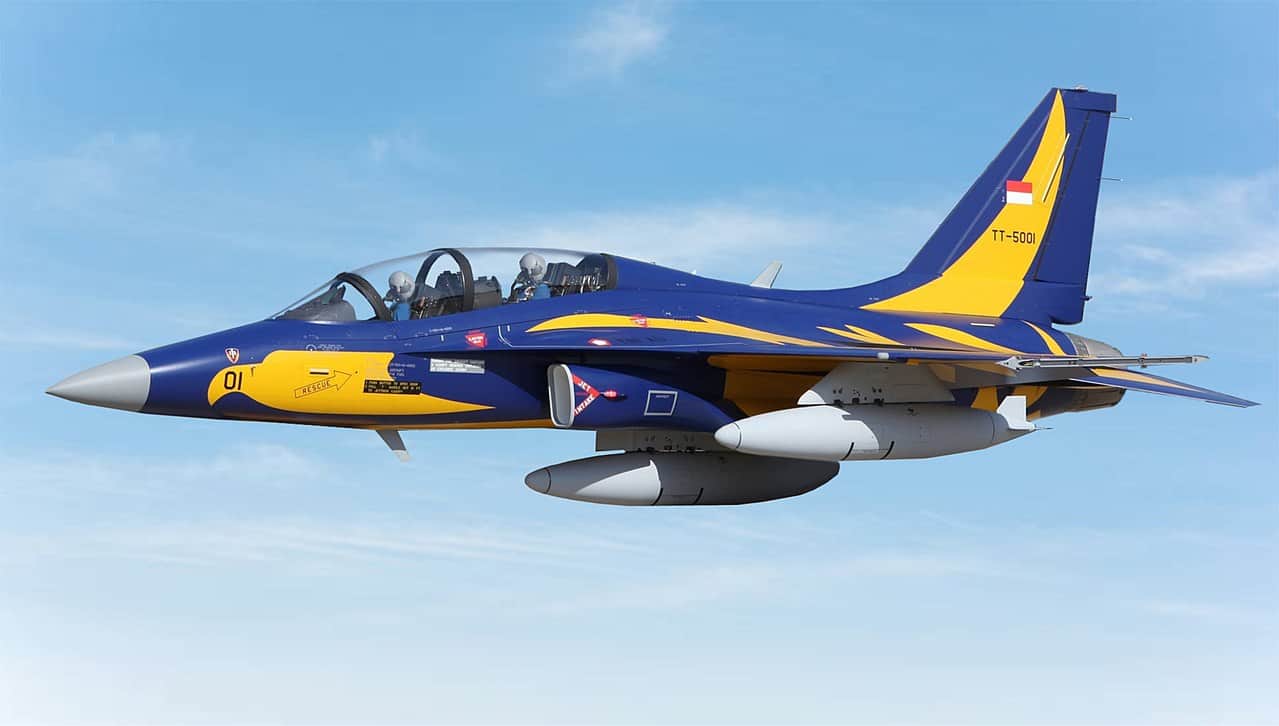


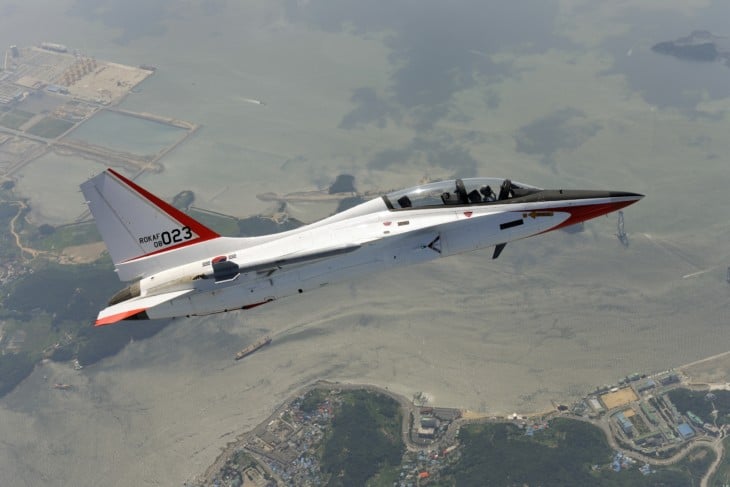
The KAI T-50 Golden Eagle is a family of supersonic jet trainers and light combat aircraft built by Korea Aerospace Industries (KAI) with Lockheed Martin. It is South Korea’s first indigenous supersonic aircraft and one of the few supersonic trainers in the world.
The T-50 first flew in August 2002. KAI delivered the first aircraft to the Republic of Korea Air Force (ROKAF) in December 2005.
The type was built to prepare pilots for the KF-16 and F-15K, and to replace older trainers such as the T-38 and A-37. It looks like a smaller F-16, and that is deliberate: a student steps from the Golden Eagle into a fighter with a familiar cockpit and flight controls.
South Korea wanted a home-grown supersonic trainer to end its reliance on imported types. KAI led the program and Lockheed Martin supplied design help and a joint marketing deal for export sales.
The aircraft was formally named the Golden Eagle in February 2000. The ROKAF placed its first production contract for 25 aircraft in December 2003.
The T-50 was the first trainer fitted with triple-redundant digital fly-by-wire controls. Its single General Electric F404-102 engine is built under license by Samsung Techwin and uses a FADEC control system developed jointly by GE and KAI.

The Golden Eagle name covers several aircraft, and the differences matter. Each step up adds radar, weapons and fuel.
KAI offered a T-50A, based on the FA-50, for the US Air Force T-X trainer competition. It was not selected.

The full specification table for the aircraft is on this page. A few figures need context.
The top speed is quoted as Mach 1.5. That is a clean-airframe speed at altitude, and an FA-50 carrying weapons and tanks is slower.
The thrust figure is the engine’s rating with the afterburner lit. Without it, the F404-102 produces about 11,930 lbf (53.07 kN).
The listed range assumes internal and external fuel with no combat load. Combat radius is far shorter. Wikipedia quotes 239 nmi (443 km) for the FA-50, and the proposed single-seat F-50 is meant to extend that by 20% to 30%.
Weights differ by source because the T-50, TA-50 and FA-50 are different aircraft. When you compare numbers across websites, check which variant each one describes.
The Golden Eagle has become one of Asia’s best-selling light combat jets.

The Philippines used its FA-50s in the Marawi campaign in 2017. On 12 July 2017 one dropped a bomb about 250 meters off target, killing two Philippine soldiers. An investigation cleared the aircrew and the aircraft, and the type returned to service in August.
In December 2025 Thailand used its T-50TH in combat for the first time. It flew a strike mission alongside F-16s and Gripens during the Cambodia-Thailand border conflict.
The Golden Eagle has lost aircraft in training and display flying. A Black Eagles T-50B crashed in November 2012, killing its pilot. An Indonesian T-50i crashed during an airshow at Yogyakarta in December 2015, killing both pilots.
Indonesia has had two more fatal T-50i accidents since then: a training accident in August 2020 and a night training crash in July 2022.
The closest rival in role is the Italian M-346. It simulates a wider range of virtual weapons, but the FA-50 is cheaper to operate and can carry real weapons for live training and combat. Against the FA-50’s light-fighter role, see our KAI FA-50 Fighting Eagle page.

Yes. Its top speed is Mach 1.5, which makes it one of the few supersonic trainers in service.
The T-50 is an unarmed trainer. The FA-50 is a light fighter with a radar, a datalink, a 20 mm gun and more internal fuel, and it can carry air-to-air and air-to-ground weapons.
South Korea, Indonesia, Iraq, the Philippines and Thailand fly it today. Poland and Malaysia have ordered the FA-50.
A single General Electric F404-102 afterburning turbofan, built under license in South Korea by Samsung Techwin. KAI has studied the more powerful F414 and Eurojet EJ200 for later versions.
Korea Aerospace Industries builds it in South Korea, with design and marketing support from Lockheed Martin.
Sources and references used for research and fact-checking.
.jpg)