

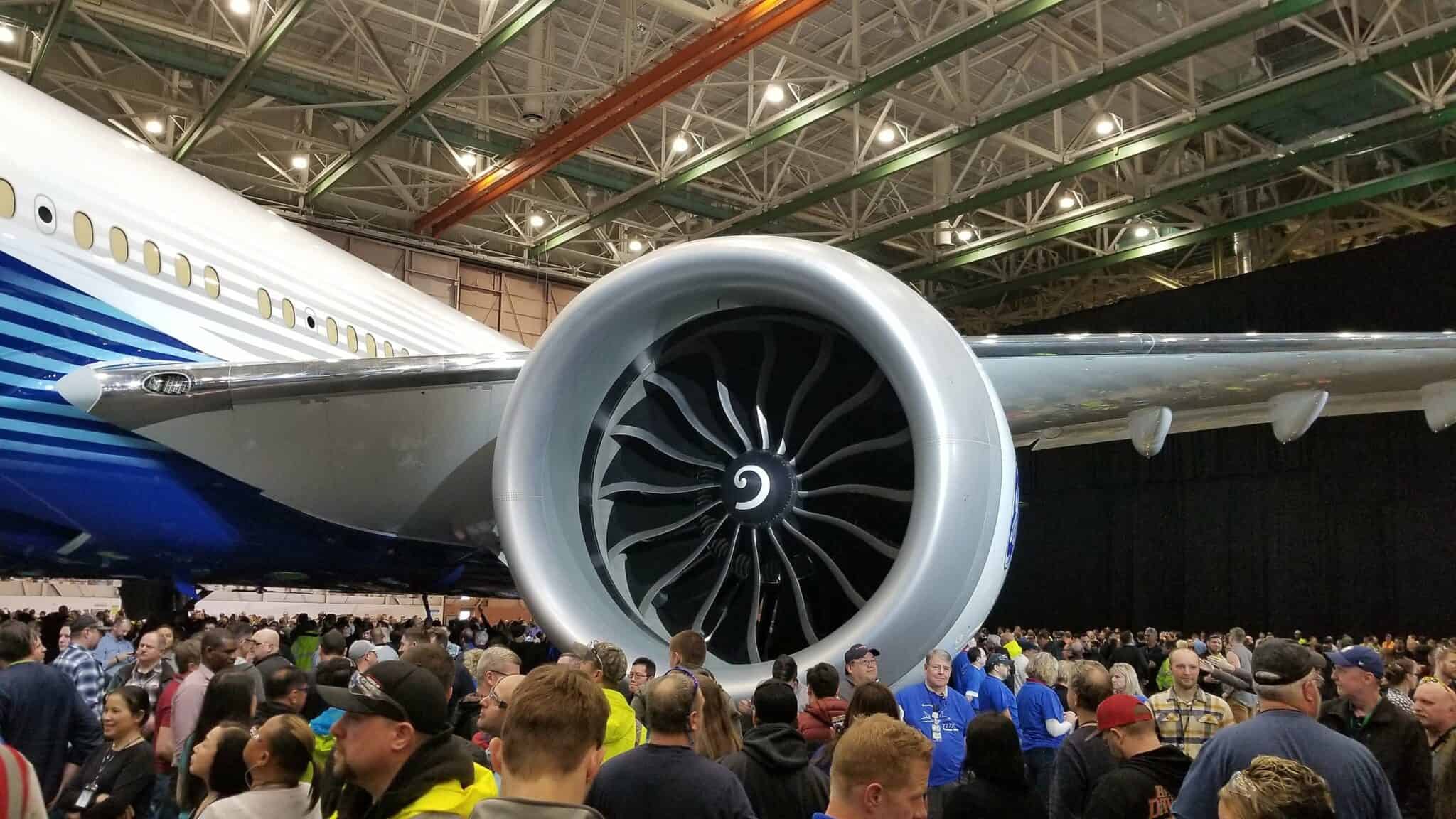
Boeing chief executive Kelly Ortberg said on September 17, 2026, that part of the 777-9 flight-test campaign may run into next year, because a durability problem with a single component inside the GE9X engine is blocking the start of extended-range testing.
“We may see some of the testing spill into next year,” Ortberg told the Morgan Stanley Laguna Conference. GE Aerospace, he said, had needed more testing than expected to prove out its fix.
The part that joins the front of the engine to the back
The component is the GE9X mid-seal. GE Aerospace chief financial officer Rahul Ghai, speaking at the same conference, described it as “one of the parts that connects the front and the back of the engine,” in remarks reported by Simple Flying.
The seal turned out to be less durable than GE expected. A crack was found in January 2026 during a shop visit on one of the 777X flight-test engines, which sent GE looking for a root cause.
“We developed a solution. We’ve tested that thoroughly internally, and we’ve been talking to the FAA about what that means,” Ghai said. GE began shipping GE9X engines carrying the redesigned seal to Boeing in the third quarter of 2026, and the new design is now in all current production engines.
Ghai said FAA approval of the redesigned part is expected within months, and that he has “a huge degree of confidence that our design will work.”
Why one seal can stop an entire ETOPS campaign
ETOPS is the approval that lets a twin-engine airliner fly routes that take it a long way from any airport it could divert to. Without it, the 777-9 is not allowed to fly the ocean crossings it was designed and sold for.
An ETOPS approval is fundamentally a statement about how unlikely the engines are to quit. That is why a seal whose durability is in question, rather than a problem with the engine’s basic architecture, is still enough to stall the whole exercise.
The blockage is procedural as much as technical. Boeing needs the mid-seal certification plan closed out before the FAA will issue the authorization that puts its own test pilots on the aircraft, and that authorization is what opens the ETOPS flight-test program.
“Until we get the mid-seal certification plan complete, we can’t get authorization to start ETOPS,” Ortberg said, in a quote picked up by Leeham News. “We’re expecting that very soon.”
Ghai was careful to say the aircraft does not need the redesigned seal to be certified at all. The existing seal remains usable for the certification work still under way, so the rest of the program is not on hold while the FAA works through the new part.
Two companies, two readings
GE Aerospace says the mid-seal will not delay the 777X’s 2027 service entry. Boeing says some flight testing may spill into next year and has already adjusted delivery and production schedules. Both can be true, because certification finishing later in 2027 and service entry in 2027 are not mutually exclusive. Neither company has published a dated milestone, so treat the schedule as unresolved.
What it means for a program already seven years late
Boeing chief financial officer Jay Malave said the company has made “a few adjustments already to deliveries and production schedules.” Reporting from the same conference by Air Data News put the number of already-built 777-9s needing modification before delivery at around 30.
The 777-9 first flew in January 2020 and was originally meant to enter service that same year. Boeing now targets 2027, and Emirates has refused the first ten aircraft built for it.
Every month of slippage keeps carriers flying the 777-300ER that the 777-9 was supposed to replace, on routes where the newer aircraft’s fuel burn was the entire business case.
In July, Boeing was telling the industry that 737 MAX 7 certification was nearly complete and that the 777-9 was advancing. Two months later the 777-9’s remaining hurdle has a name, a root cause and a redesigned part in production, which is further along than most of this program’s previous delays got before the date moved again.
Get the Newsletter
The latest aviation news and stories sent to your inbox.
About the Author

Tim is the owner and lead editor of AeroCorner since 2019, overseeing aviation content covering aircraft, airlines, airports, and the broader aviation industry. Through years of researching, writing, editing, and publishing aviation-focused content, he has developed extensive practical knowledge of commercial aviation and air travel. Based in Asia and a frequent traveler himself, Tim also brings firsthand passenger experience to AeroCorner’s coverage. Outside of publishing, he has also explored aviation firsthand through hands-on flight training in New Zealand.