

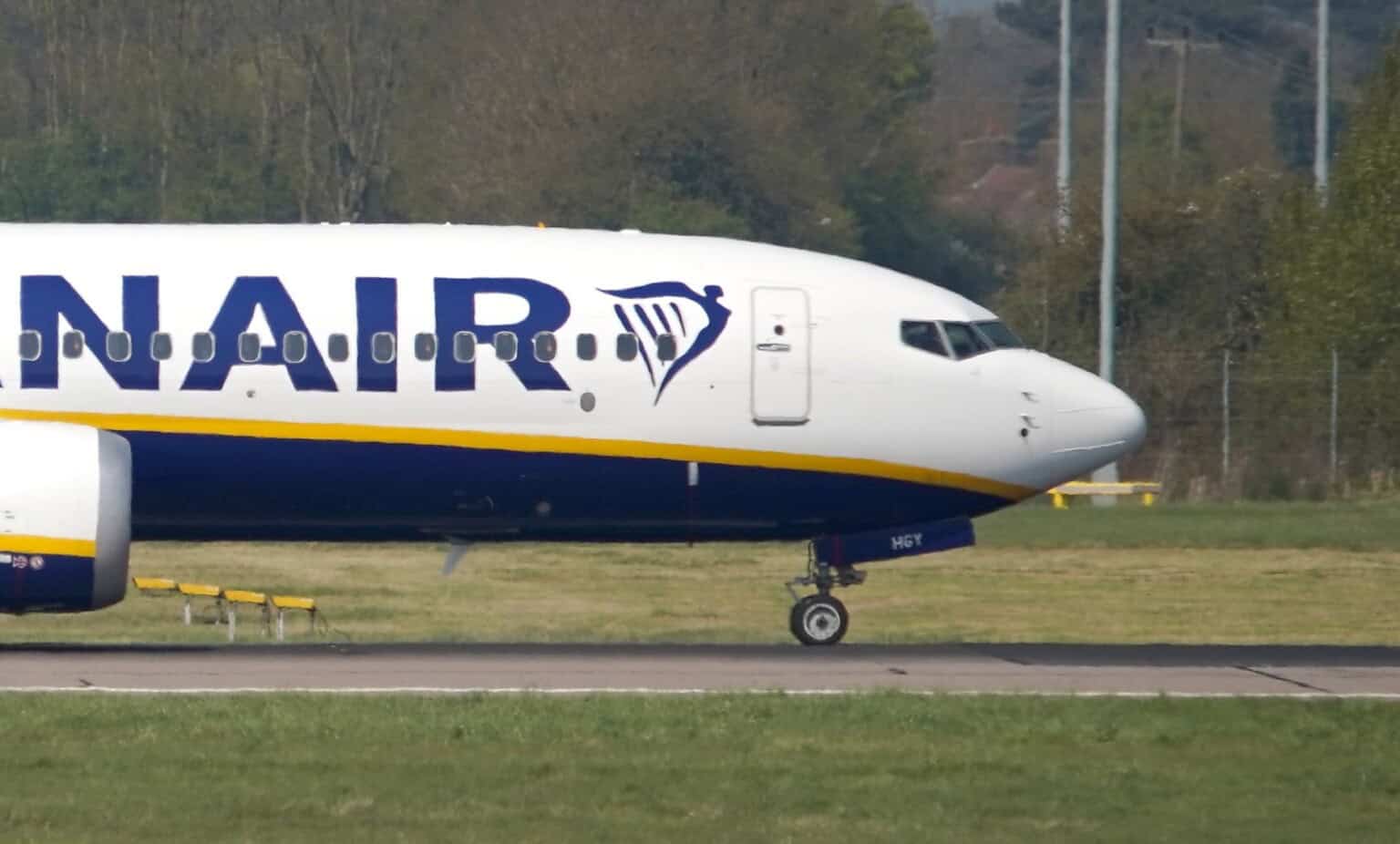
German air traffic control has tightened the rules for using the runways at Cologne/Bonn airport during military activity, after a landing Ryanair jet was involved in a near-collision with a military drone. The change follows an interim report from Germany’s air accident investigator, the BFU, released in August 2026.
The encounter happened on February 18, 2026, as Ryanair flight FR2105 from Alicante, Spain, was on final approach in a Boeing 737-800. The German armed forces were running counter-drone training next to the airport at the same time.
What happened on approach
According to the BFU, a military remote pilot launched a small quadcopter, an Autel EVO Max 4T weighing roughly 3.5 pounds (1.6 kg), to about 130 feet (40 m) above the ground. Around two minutes later the operator saw the airliner bearing down and pushed the drone upward to get clear of its path.
The 737 passed about 30 feet (9 m) to the side of the drone and 92 feet (28 m) above it, the BFU said. The crew continued the approach and landed without incident, and the investigator classified the event as a serious incident.
A coordination breakdown, not a rogue operator
The drone flight was authorized. The problem, the BFU found, was how the military exercise was cleared with the control tower.
The tower controller told investigators he understood that instrument arrivals would be fully possible during the training, and that the tower only needed to keep the area clear of helicopters and visual traffic. After an earlier phone call, those involved agreed the training would continue and that the tower would call if it needed the runway for an arriving jet. That call did not stop the drone before FR2105 arrived overhead.
Reality check
This was not one of the unidentified drones that have disrupted German airports this year. It was an authorized military flight that went wrong because a training exercise and a live instrument approach were allowed to share the same airspace at the same time.
Why Cologne/Bonn is exposed
Cologne/Bonn is a shared civil and military airport. The German Air Force keeps a base on the west side of the field, close to the approach path for runway 06, so military flying and airline traffic operate near each other by design.
A drone this size is small, but it is not harmless to an airliner. Ingestion into an engine or a strike on the windshield during a low, slow approach is exactly the phase of flight where a crew has the least room to react.
What changed
In response, DFS has revised how the runways at Cologne/Bonn are used while armed forces exercises are underway, tightening the rules on approaches and departures so that drone activity and instrument arrivals are kept apart.
The fix is procedural rather than technical. It separates the two operations in time and space instead of relying on a phone call to interrupt a drone flight once a jet is already on final approach.
Germany has spent 2026 dealing with repeated drone scares at airports including Munich, and an explosive-rigged drone that shut down another German airport in August, most of them tied to unidentified operators. This case is a reminder that even the drones the authorities know about need firm separation from passenger jets.
Sources and references used for research and fact-checking.
Get the Newsletter
The latest aviation news and stories sent to your inbox.
About the Author

Tim is the owner and lead editor of AeroCorner since 2019, overseeing aviation content covering aircraft, airlines, airports, and the broader aviation industry. Through years of researching, writing, editing, and publishing aviation-focused content, he has developed extensive practical knowledge of commercial aviation and air travel. Based in Asia and a frequent traveler himself, Tim also brings firsthand passenger experience to AeroCorner’s coverage. Outside of publishing, he has also explored aviation firsthand through hands-on flight training in New Zealand.