

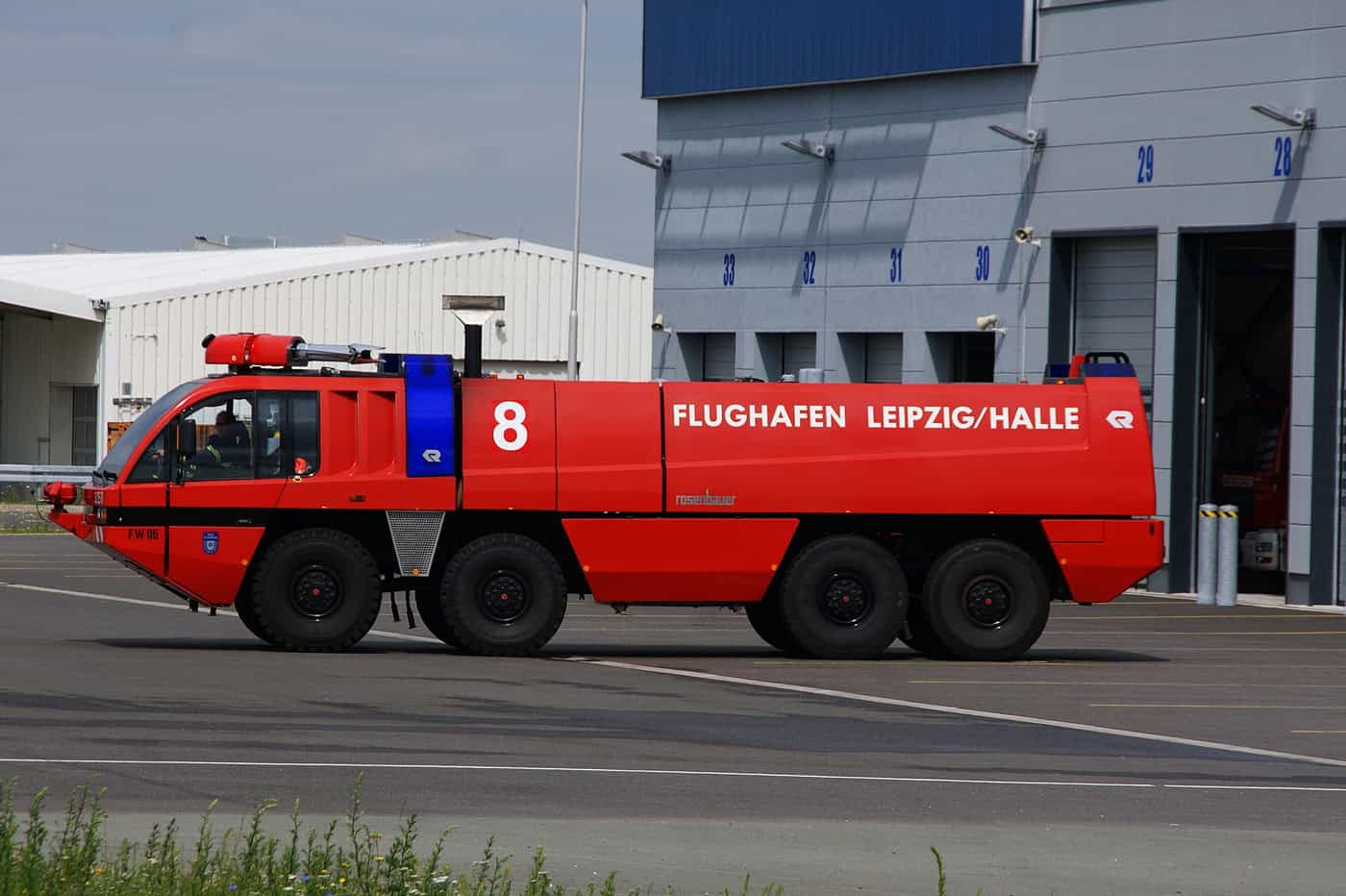
Just before midnight on August 4, 2026, an airport employee at Germany’s Leipzig/Halle Airport found a drone rigged with an explosive device and a detonator in the secure cargo area, only meters from a Ukrainian Antonov Airlines freighter. German federal police defused the device, and counterterrorism investigators have not ruled out a political motive.
A drone, a detonator, and a second flying object
According to Euronews, the drone was discovered in the airport’s cargo operations zone near the south runway, carrying what officials described as an unknown explosive substance. Federal police explosive-ordnance specialists were called in, and the State Criminal Police Office removed the detonator before destroying the device under controlled conditions.
Flight operations were suspended for roughly two hours. The north runway reopened Wednesday morning; the south runway stayed shut, partly because it was already down for scheduled maintenance.
A separate, still-unexplained event compounded the night’s chaos. As Aircargonews reported, a freighter on approach to Leipzig was forced to go around once the runway closed. While climbing away, it struck an unidentified object roughly 4 miles (6 km) from the airport.
The impact caused minor damage to the aircraft’s nose. The crew diverted about 130 miles (210 km) west to Hannover Airport and landed safely, with no injuries reported.
German authorities have not officially named the aircraft or its operator. Flight-tracking data reviewed by Airways Magazine points to a European Air Transport Leipzig Airbus A300, the dedicated freighter operator that flies DHL-branded cargo out of Leipzig, though this remains unconfirmed.
What is not confirmed
German police have not said whether the drone and the object that struck the freighter are connected, nor confirmed the freighter’s identity or what it hit. Treat both details as provisional until officials say otherwise.
Why this airport was the target
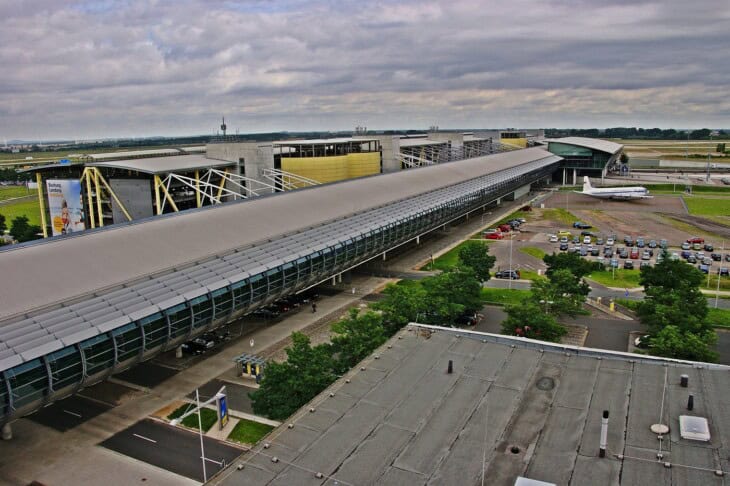
Leipzig/Halle Airport is not an ordinary regional field. It has served as DHL’s largest European air-freight hub since 2008, with runways and 24-hour cargo operations built for round-the-clock freighter traffic.
Those same long runways have made it a working base for Antonov An-124 heavy freighters flown by Antonov Airlines, aircraft that move oversized military and civilian aid into Europe in support of Ukraine.
That combination, a NATO-adjacent logistics artery sitting on German soil, is almost certainly why the airport drew scrutiny. Kyiv Independent reported that a NATO spokesperson confirmed awareness of the device and described it as part of a broader pattern of hybrid sabotage against European infrastructure tied to support for Ukraine.
German Interior Minister Alexander Dobrindt went further, calling the episode a “hybrid attack scenario.” As NBC News quoted him, ordinary drone sightings near airports are a known nuisance, but “a drone armed with explosives being present on airport grounds is a new threat scenario.”
Why this is different from a routine drone sighting
Rogue drones have grounded flights before, most famously at London Gatwick in 2018, but those were unarmed nuisance incursions. A drone carrying a working detonator on live airport grounds is a sabotage device, not a stray hobbyist aircraft, which is why prosecutors and NATO are both involved.
Who is investigating, and what happens next
The case has been handed to the federal prosecutor’s counterterrorism unit rather than local police, a sign of how seriously Berlin is treating it. Investigators are appealing for tips on suspicious people, vehicles, and online activity around the airport in the hours before the drone was found.
Airports generally rely on radar, radio-frequency detection, and, where legally permitted countermeasures allow, jamming or netting to counter drone incursions, tools built around spotting and forcing down an unauthorized aircraft rather than defusing a bomb.
An explosive payload changes the response from an airspace problem into a live ordnance one, which is why bomb-disposal robots, not just air traffic control, were first on the scene in Leipzig.
No cause has been confirmed for the object that struck the diverted freighter, and officials have drawn no formal link between it and the drone found on the ground. Both threads remain open as German and NATO investigators continue their work.
Get the Newsletter
The latest aviation news and stories sent to your inbox.
About the Author

Tim is the owner and lead editor of AeroCorner since 2019, overseeing aviation content covering aircraft, airlines, airports, and the broader aviation industry. Through years of researching, writing, editing, and publishing aviation-focused content, he has developed extensive practical knowledge of commercial aviation and air travel. Based in Asia and a frequent traveler himself, Tim also brings firsthand passenger experience to AeroCorner’s coverage. Outside of publishing, he has also explored aviation firsthand through hands-on flight training in New Zealand.