

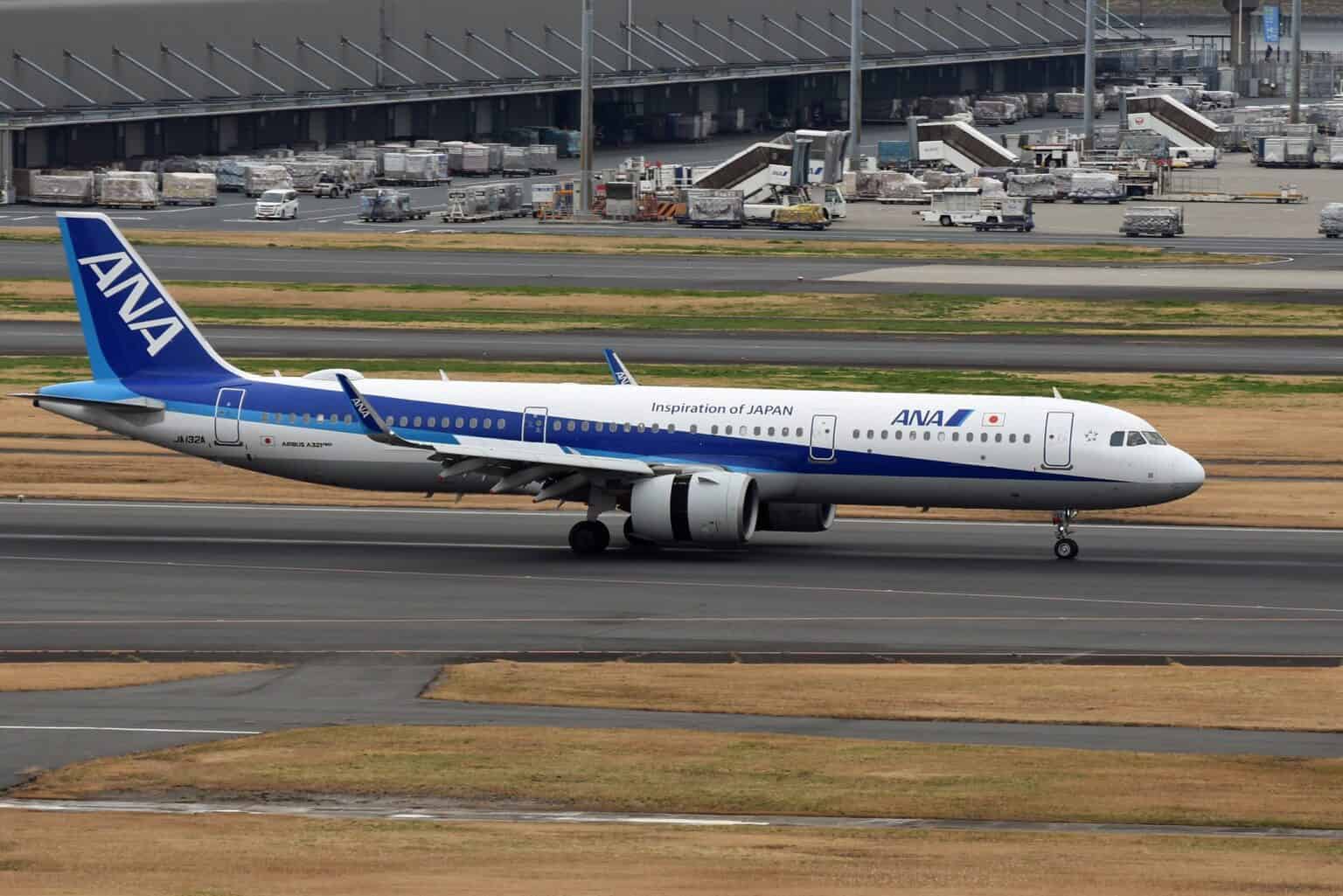
ANA flight NH299 from Tokyo Haneda to Tottori diverted to Kansai International Airport near Osaka on the evening of October 27, 2026. ANA gave the reason as aircraft maintenance, according to a notice from Tottori Prefecture.
The aircraft was an Airbus A321neo registered JA145A, The Aviation Herald reported. After it landed, emergency services found an oil leak on one of its Pratt & Whitney engines, according to the same report.
A Hold Over Tottori, Then Kansai
NH299 was scheduled to leave Haneda at 7:15 p.m. local time and reach Tottori at 8:35 p.m. It left at 7:44 p.m., according to the prefecture’s notice, which was published by the Nihonkai Shimbun.
The same notice said ANA had changed the flight’s arrival airport from Tottori to Kansai, with arrival expected at 9:55 p.m. It gave “aircraft maintenance” as the only reason.
The Aviation Herald’s account fills in the flight itself. On approach to Tottori, the crew stopped the descent at 6,000 feet and entered a hold because of a technical problem.
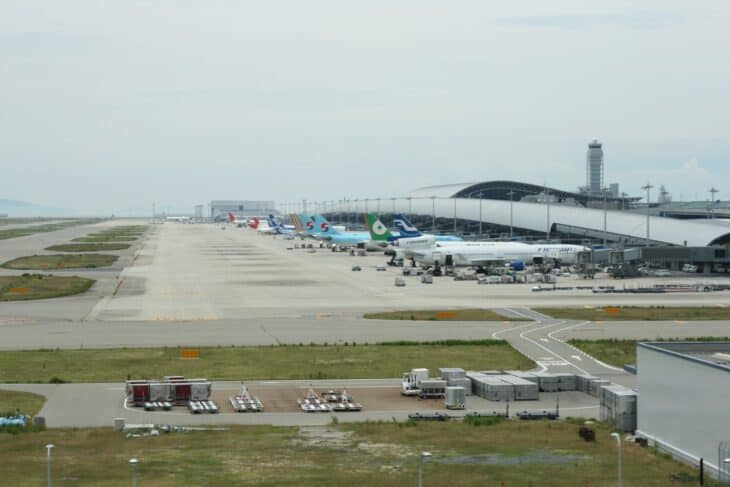
The pilots then chose to divert, and the jet landed safely on Kansai’s runway 06 about an hour after it stopped descending. The runway had to be cleaned after the landing, and the aircraft was still on the ground at Kansai about five hours later, the site reported.

The Aviation Herald identified the leaking engine as a PW1130G. Its report did not say whether the leak was what stopped the descent, and ANA has not published a cause.
Neither ANA nor the prefecture has given the number of people on board. At the time of writing on October 28, no statement from ANA or Kansai’s operator describing the leak had been found.
The Geared Turbofan Behind ANA’s Neo Fleet
The PW1130G belongs to Pratt & Whitney’s PW1100G-JM geared turbofan family, the engine RTX describes as powering the A320neo. ANA uses the family on both its A320neo jets and its larger A321neos.
The engine family has had a hard few years. In September 2023, RTX disclosed “a rare condition in powder metal used to manufacture certain engine parts” and said roughly 600 to 700 engines would come off wing for shop visits between 2023 and 2026.
RTX took a charge of about $3 billion and warned of a significant rise in grounded GTF-powered A320neo-family aircraft from 2024 through 2026. Spare engines have since become so valuable that some young A320neos are being scrapped so their engines can be rented out.
ANA felt it directly. In October 2023 it said all 33 of its A320neo-family jets, 11 A320neos and 22 A321neos, needed engine inspections, Aviation Wire reported at the time.
The checks covered high-pressure compressor and turbine discs, and ANA cut 2,412 flights between January 10 and March 30, 2024, because of them. That was about 30 flights a day.
What Is and Is Not Known
The powder-metal recall concerns disc parts inside the engine’s compressor and turbine. No source has linked it to the oil leak reported on NH299.
What caused the leak, how serious it was and when JA145A will fly again are all unknown. ANA’s only explanation so far is the one the prefecture relayed: aircraft maintenance.
The diversion comes about five weeks after another ANA group engine problem. On September 23, an ANA Wings 737-800, flight NH1502, turned back to Naha with its right engine shut down after an oil temperature warning, and all 158 people on board left by slide.
That jet is a Boeing with a different engine, so the two events have no known connection. Japan’s transport ministry classified the Naha event as a serious incident, Nikkei reported.
Sources and references used for research and fact-checking.
Get the Newsletter
The latest aviation news and stories sent to your inbox.
About the Author

AeroCorner News is the aviation news desk of AeroCorner.com. It covers accidents and incidents, safety rulings, airline and airport disruption, and new aircraft. It works from primary sources such as the NTSB, FAA, EASA and the manufacturers' own announcements.