

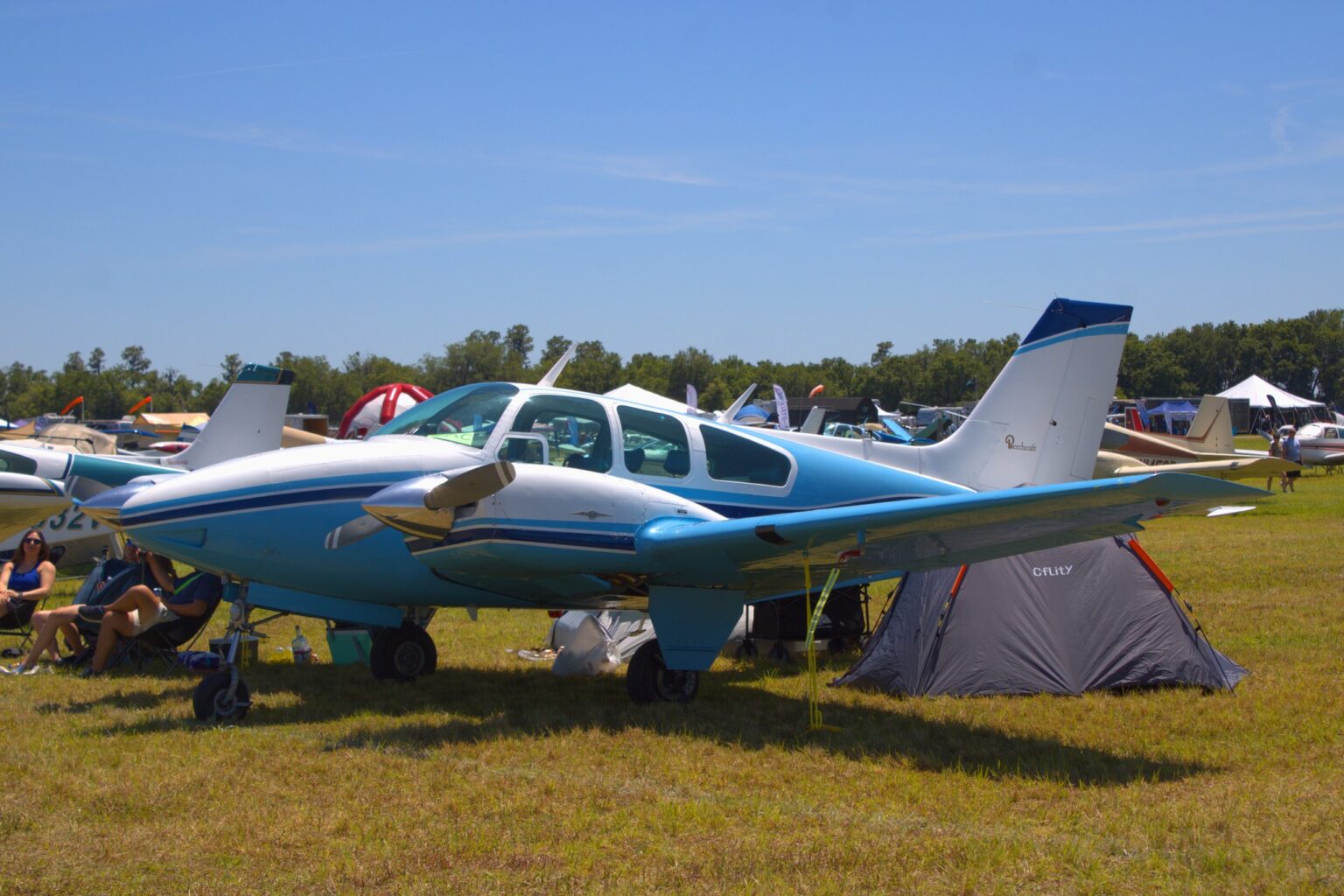
A 1968 Beechcraft Baron B55 struck a cornfield and then a house in Ashland County, Ohio, on the afternoon of Monday, October 26, 2026. The Ohio State Highway Patrol said the twin-engine plane may have suffered an engine failure, and both people on board escaped with minor injuries.
One person was inside the home when the aircraft hit it and was not hurt, according to the patrol.
What happened on Township Road 523
The crash was reported at about 2:41 p.m. along Township Road 523 in Montgomery Township, Cleveland 19 reported. The Baron was flying east from Vermilion, Illinois, to Scranton, Pennsylvania.
According to the patrol’s account, the plane first struck a cornfield, then crossed a private yard and hit the house. It came to rest in the farm field next door.
The patrol identified the pilot as Richard J. Nardone, 74, of Wapwallopen, Pennsylvania. His passenger was a 25-year-old woman from Wilkes-Barre, Pennsylvania.
Ashland Fire and EMS treated both of them at the scene and released them. A dog was also on board, Sheriff Kurt Schneider told the Ashland Source.
The dog was the reason for the trip. Nardone told Ashland County Pictures that he had flown from Pennsylvania to Illinois that morning to adopt the dog from a shelter, and described himself as a rescue pilot with more than 300 such flights. The site reported the dog was not hurt.
“It could have been very bad. So yes, we got lucky,” Sgt. Daniel Kumor of the patrol told Cleveland 19, adding that everyone was okay. A nearby farmer called 911 after seeing the plane go down and ran over to help the occupants out, the station reported.
The patrol is leading the local investigation, assisted by the Ashland County Sheriff’s Office, and the Federal Aviation Administration sent a representative to the scene. The cause is officially under investigation.
Several details are still unknown. None of the Monday reports reviewed by AeroCorner gave the aircraft’s registration, which engine may have failed, or the altitude and phase of flight when the trouble began.
Why an engine failure is hard work in a light twin
The Beechcraft Baron is a long-running piston twin: 3,651 of the 55-series Barons were built between 1961 and 1983. The 95-B55 version was introduced in 1964 and built through 1982, and the early 55-series Barons, the B55 included, used two 260 hp Continental IO-470 engines.
A second engine sounds like a guarantee that a failure is a non-event. The FAA’s own training material is blunter: in a light twin, losing one engine costs half the power but cuts climb performance by 80 to 90 percent, sometimes more.
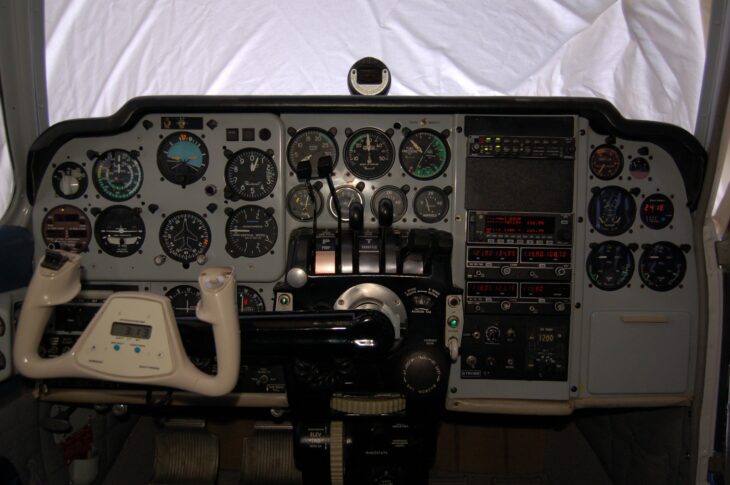

The second problem is control. With one engine still at power, the thrust is lopsided, and the airplane tries to turn toward the dead engine.
That is why twins carry a red line on the airspeed indicator for Vmc, the minimum speed at which the pilot can still hold directional control with the critical engine out. Below it, the pilot can lose directional control.
A blue line marks Vyse, the best single-engine rate-of-climb speed. Above the airplane’s single-engine absolute ceiling, the handbook notes, flying Vyse only gives the slowest possible descent.
The dead engine’s propeller matters too. A windmilling propeller at a flat blade angle can add so much drag that the airplane may become uncontrollable, so pilots feather it, turning the blades edge-on to the airflow.
The FAA sums it up in one line: the extra engine is a safety advantage “only to a trained and proficient pilot.” A single-engine airplane has no such margin to manage: when the engine of the Piper Cherokee that landed on Huntington Beach quit after takeoff in July, landing was the only option.
None of this says what happened over Ashland County. Whether an engine failed at all, and how the flight ended up in a cornfield, is for the investigation to establish.
Sources and references used for research and fact-checking.
Get the Newsletter
The latest aviation news and stories sent to your inbox.
About the Author

AeroCorner News is the aviation news desk of AeroCorner.com. It covers accidents and incidents, safety rulings, airline and airport disruption, and new aircraft. It works from primary sources such as the NTSB, FAA, EASA and the manufacturers' own announcements.