

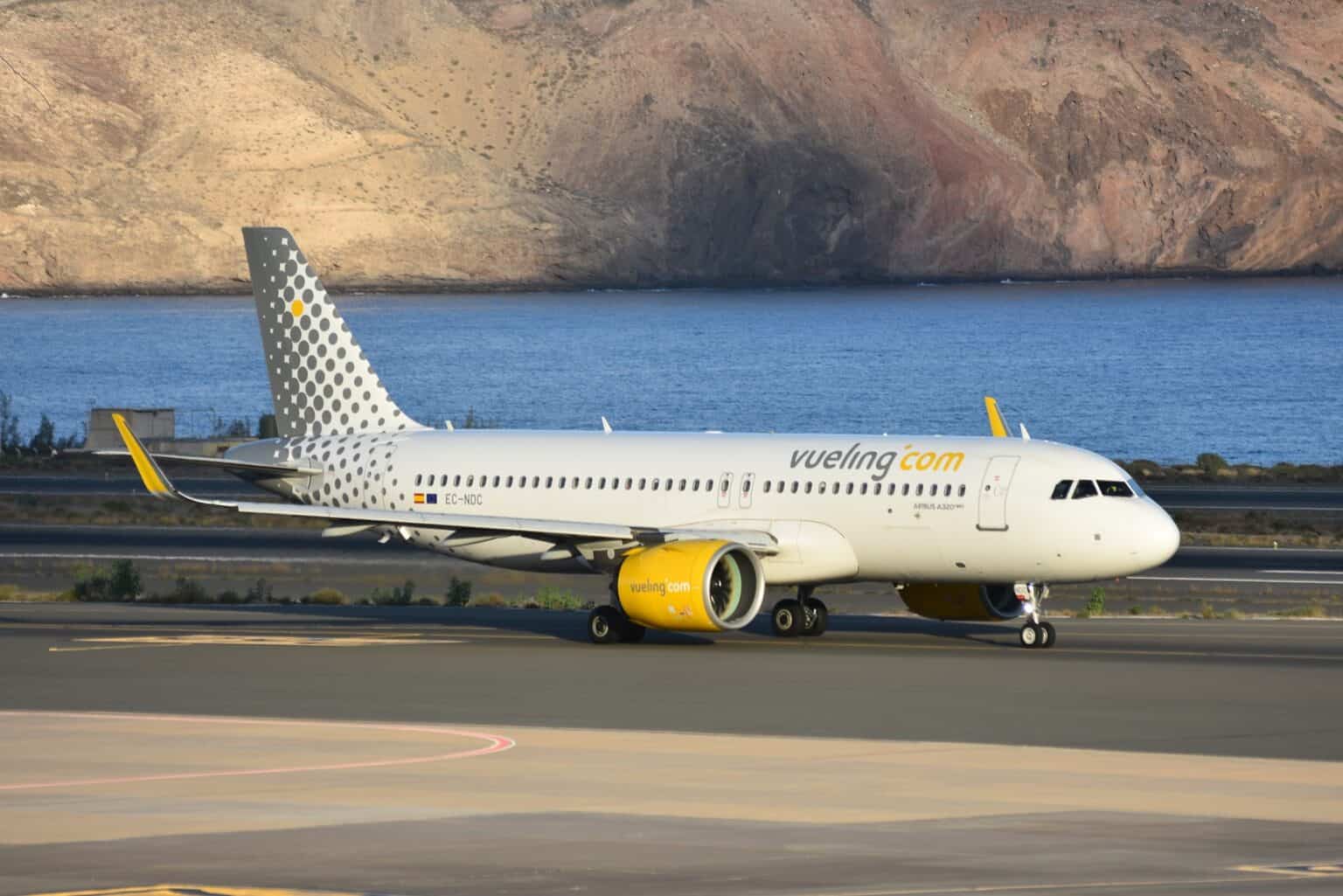
Vueling flight VY3008 from Barcelona was met by bomb disposal teams at Gran Canaria Airport on the evening of Monday, October 26, 2026, after a bomb threat against the aircraft. The jet was moved to a remote stand, and its passengers and crew were taken off and held in a separate room while the aircraft and luggage were searched.
Vueling sources told the Canary Islands daily Atlántico Hoy that the aircraft landed normally at Gando, was parked on a holding area and that its passengers had been disembarked under the security protocols. Aena, the Spanish airport operator, told Televisión Canaria that the airport was operating normally.
What happened on VY3008
The flight was scheduled to leave Barcelona-El Prat at 5:25 p.m. local time and reach Gran Canaria at about 7:50 p.m. Canary Islands time, according to flight records cited by the regional broadcaster RTVC.
Accounts of the landing time differ. Police sources quoted by Telde Actualidad put it at 7:30 p.m., while Canarias7 gives 7:50 p.m.
This was not a diversion: Gran Canaria was the flight’s planned destination. Canarias7 reported that passengers only learned on arrival that a bomb warning had been received about the aircraft.
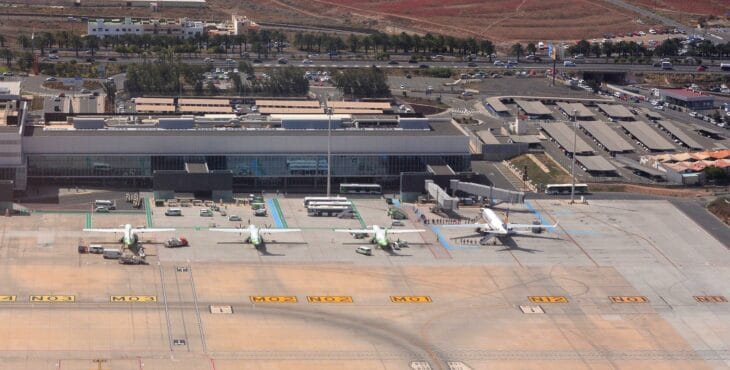
Two bomb disposal units were waiting on the runway, according to the police sources cited by Telde Actualidad. Canarias7 said the jet was parked in an outlying area near Ojos de Garza beach in Telde, and that passengers watched security forces and firefighters gather from their windows.
After the passengers were taken off, bomb disposal specialists searched the aircraft thoroughly, Canarias7 reported. Passengers collected their bags and left the terminal at about 10 p.m.
Neither Vueling nor the authorities have said how many people were on board or which aircraft operated the flight.
Knock-on effects at Gando
A Binter flight to Lanzarote was already in the takeoff queue when its pilot told passengers it could not leave because of the threat, a passenger told La Voz de Lanzarote. The passenger said it took off about 20 minutes after that announcement.
La Voz also reported that several arriving aircraft circled while they waited to land. Aena’s line to Televisión Canaria was that operations continued normally.
Hoax or not: what is known
Several Canary Islands outlets describe the warning as a false alarm, and La Voz de Lanzarote called that the main working hypothesis. At the time of writing, no authority had published the result of the search or said where the threat came from.
Canarias7 reported that Spain’s state security forces are investigating to identify whoever made the warning. Under Article 561 of Spain’s Criminal Code, faking a danger that sends out emergency or police services can bring three months and a day to a year in prison, or a fine.
Still unconfirmed
No official source has yet said whether anything was found on board, how the threat was received, how many people were on the flight, or which aircraft flew it.
Why the jet was parked away from the terminal
Moving the aircraft to a remote stand is standard practice, not a sign that a device was found. International rules in ICAO Annex 14 require every airport to designate an isolated aircraft parking position for an aircraft known or believed to be the subject of unlawful interference.
That position should be as far away as practicable, and never less than about 330 feet (100 m) from other stands, buildings or public areas. ICAO guidance says an aircraft under a sabotage threat should stay there until the threat is over.
Most threats of this kind end the same way. Earlier this month, a Delta flight was evacuated at Tel Aviv after a bomb threat, and nothing was found on board.
Get the Newsletter
The latest aviation news and stories sent to your inbox.
About the Author

AeroCorner News is the aviation news desk of AeroCorner.com. It covers accidents and incidents, safety rulings, airline and airport disruption, and new aircraft. It works from primary sources such as the NTSB, FAA, EASA and the manufacturers' own announcements.