Fighter Jets
BAE Harrier II
ICAO: GR9
The SEPECAT Jaguar was the Anglo-French supersonic strike jet that began as a trainer, flew in six air forces and is still flying with India more than half a century after its first flight.
Updated: by Tim de Vries
The latest aviation news and stories sent to your inbox.
The SEPECAT Jaguar was built jointly by Britain and France for low-level tactical strike, reconnaissance and, in RAF and French service, tactical nuclear delivery. The project started in the early 1960s as a jet trainer with a light attack role, then turned into a supersonic strike aircraft. France, Britain, Ecuador, Nigeria, Oman and India all flew it, and the Indian Air Force is the only operator still using it.
Live Fleet Activity (JAGR)
Fetching live data…


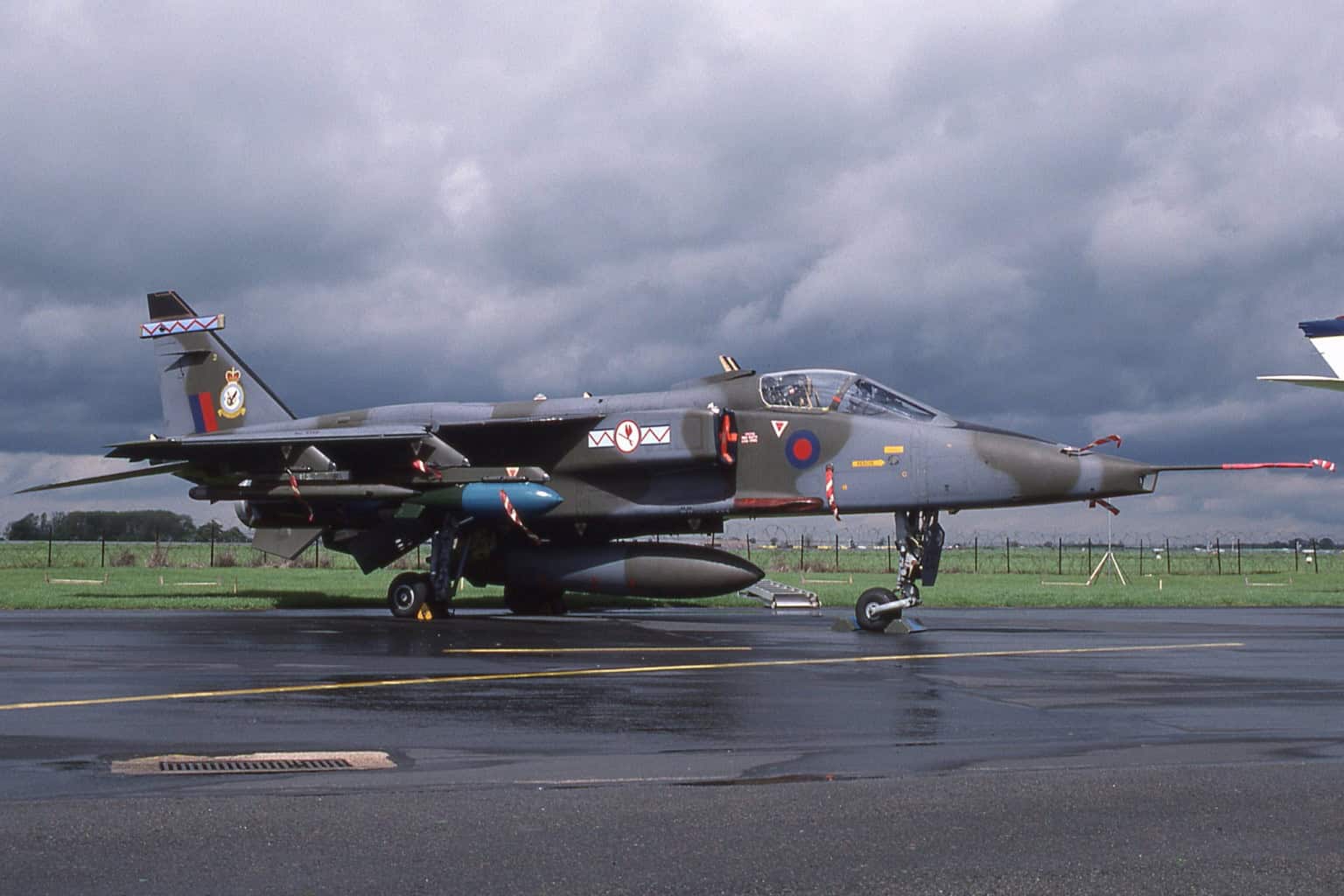
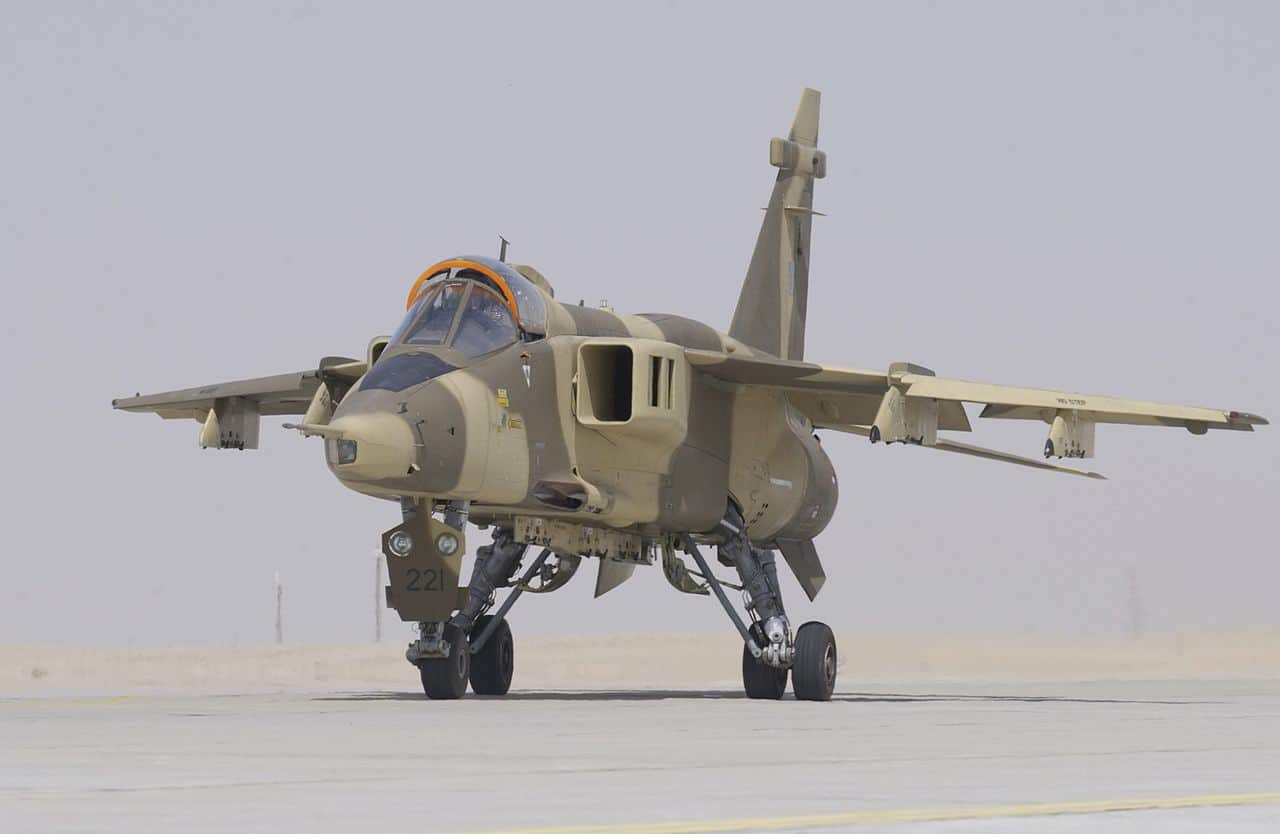

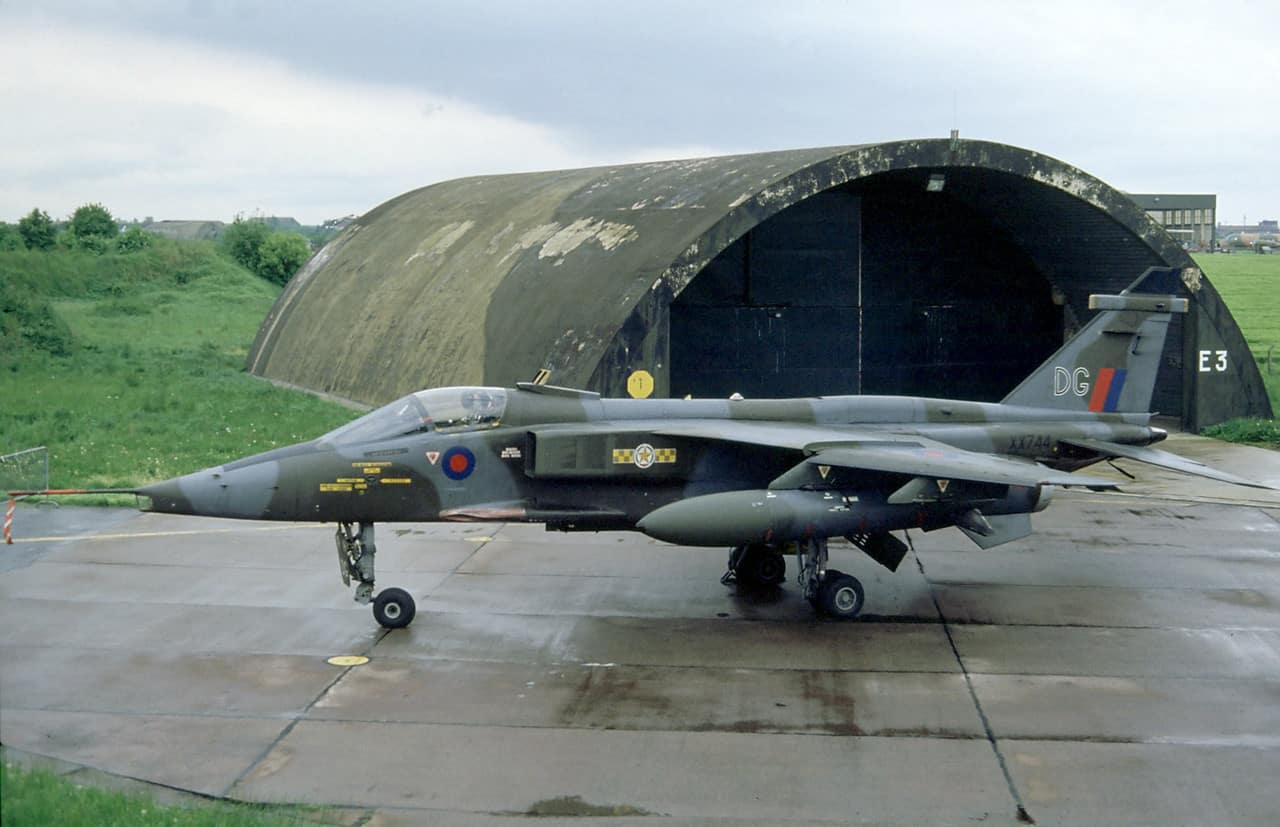


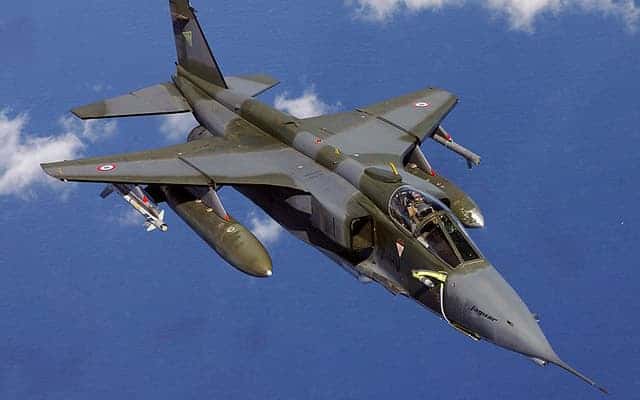
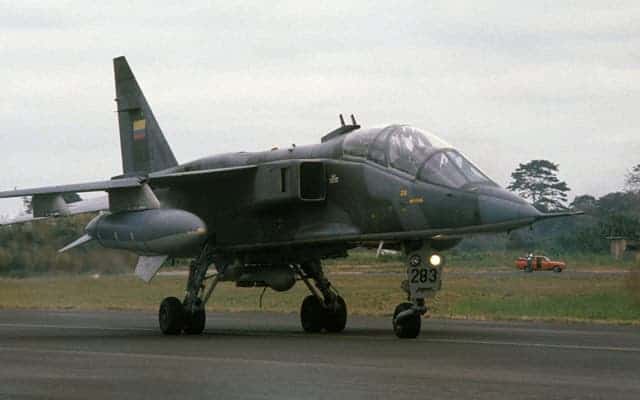
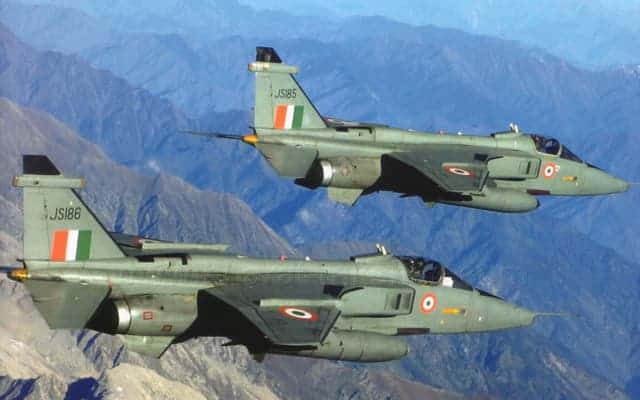
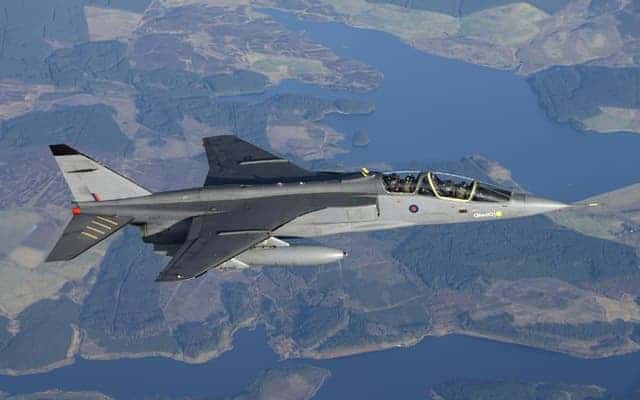
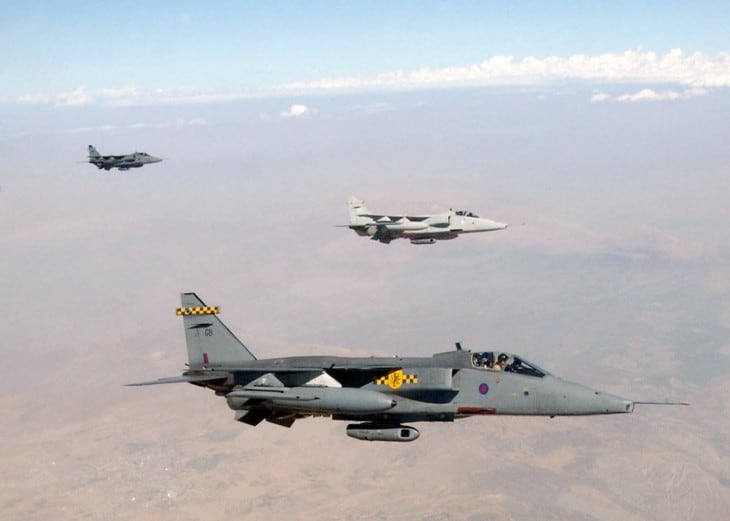
The SEPECAT Jaguar started in the early 1960s as two separate requirements. Britain wanted an advanced jet trainer (Air Staff Target 362), and France wanted a light attack trainer.
The two countries signed a memorandum of understanding in 1965, and the Breguet and British Aircraft Corporation joint venture SEPECAT followed in 1966. The brief then grew to include supersonic speed, reconnaissance and tactical nuclear strike.
The AFVG swing-wing project was cancelled in 1967, which pushed the RAF to adopt the Jaguar as its low-level strike aircraft. The first of eight prototypes flew on 8 September 1968, and French service began in 1973.
The Jaguar was designed to fly low and fast to its target, hit it and get out. It has a small, swept wing, a tough undercarriage and two Rolls-Royce Turbomeca Adour afterburning turbofans.
The Adour flew for the first time on the same day as the Jaguar. RAF aircraft entered service with the Mk 102, were re-engined with the Mk 104 around 1981, and received the Mk 106 in 1999.
The specification table for the aircraft is on this page. A few figures need context, because the published numbers for this jet measure different things.
Top speed is quoted as Mach 1.6 at 36,000 ft (11,000 m), but the Jaguar spent its working life well below that. The combat radius for a hi-lo-hi mission on internal fuel is about 440 nautical miles (815 km) and shrinks sharply on a low-level run.
The range shown in the panel is the ferry range with full internal and external tanks. Treat it as the distance for a delivery flight, not a mission radius.
The takeoff and landing distances in the panel are measured to and from a 50 ft obstacle with a typical tactical load, so the ground run is much shorter.
The Jaguar carries two 30 mm DEFA cannon and has seven hardpoints, four under the wings, two over the wings and one on the centreline. The hardpoint capacity is 10,000 lb (4,500 kg).
It carried unguided and laser-guided bombs, rocket pods and drop tanks. Overwing pylons were used for Sidewinder air-to-air missiles.
The RAF Jaguar was a nuclear delivery aircraft and could carry the WE177A. French Jaguars could carry the AN-52 tactical nuclear bomb.

France flew the single-seat Jaguar A (160 built) and the two-seat Jaguar E trainer (40 built). The RAF flew the single-seat Jaguar S, known as the GR1 (165 built), and the two-seat Jaguar B, known as the T2 (38 built).
RAF upgrades produced the GR1A, GR1B, GR3 and GR3A, with matching trainer standards. A carrier-capable Jaguar M flew as a prototype, but it was cancelled in 1973 in favour of the Super Étendard.
Export aircraft were sold as the Jaguar International, to Ecuador, Oman and Nigeria. India took its own versions: the IS single-seat strike aircraft, the IB two-seat trainer and the IM maritime strike aircraft armed with Sea Eagle.

France used Jaguars in combat for the first time in Mauritania in 1977, against Polisario Front forces. They went on to fly in Chad from 1978 to 1987, including the 1986 raid on Wadi Doum airfield.
In the 1991 Gulf War, France flew 615 sorties with up to 28 aircraft. The RAF flew 612 sorties with 12 aircraft and lost none.
In 1995, six Jaguars based in Italy flew 63 strike missions in Operation Deliberate Force over Bosnia. Ecuador used its Jaguars in the 1995 Cenepa War, and India used them for bombing missions at Kargil in 1999.
France retired the Jaguar in 2005, Britain followed in 2007 and Oman in 2014. The Indian Air Force is the only operator left.
India signed a 1978 order for 160 aircraft, reported at about $1 billion. Forty were built at Warton in England, and 120 were licence-built by Hindustan Aeronautics. The Indian name for the type is Shamsher.
India kept the fleet alive with the DARIN avionics suite, and DARIN III is the later upgrade, and it brings an EL/M-2052 AESA radar. Sixty aircraft had been upgraded by 2024, and HAL unveiled a further upgrade, the Jaguar MAX, in 2019.
The IAF plans to retire its oldest batch of 60 Jaguars between 2028 and 2031. Check for newer announcements before relying on that schedule, because the plan has moved before.
The Jaguar is a single-seat aircraft in its A and S forms. The two-seat B and E versions were built as trainers.

The SEPECAT Jaguar is a supersonic, twin-engine attack aircraft built by Britain and France. It first flew on 8 September 1968 and was designed for low-level strike, reconnaissance and tactical nuclear delivery.
A total of 573 were built between 1968 and 1981 across the British, French, export and Indian versions, according to Wikipedia.
The top speed is Mach 1.6 at 36,000 ft (11,000 m), or 1,698 km/h. At sea level the quoted figure is Mach 1.1.
The Indian Air Force is the only operator still flying the Jaguar. France retired it in 2005, Britain in 2007 and Oman in 2014.
Retired Jaguars have been displayed in museums, and some former operators have offered airframes for sale. We found no source for a military Jaguar being cleared for private flight, so treat any listing with caution.
Yes. RAF Jaguars could carry the WE177A bomb, and French Jaguars could carry the AN-52.
Sources and references used for research and fact-checking.