


Table of Contents
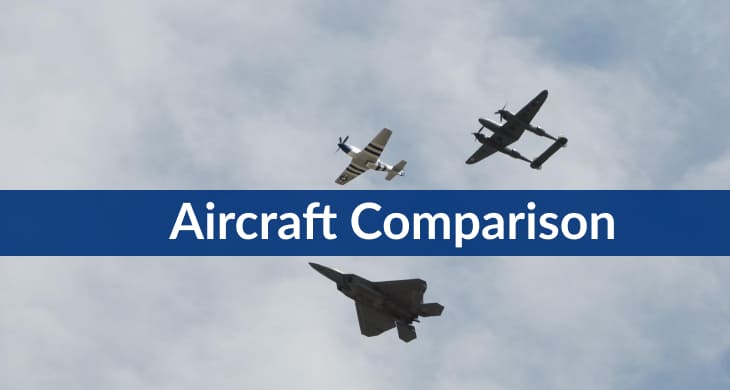
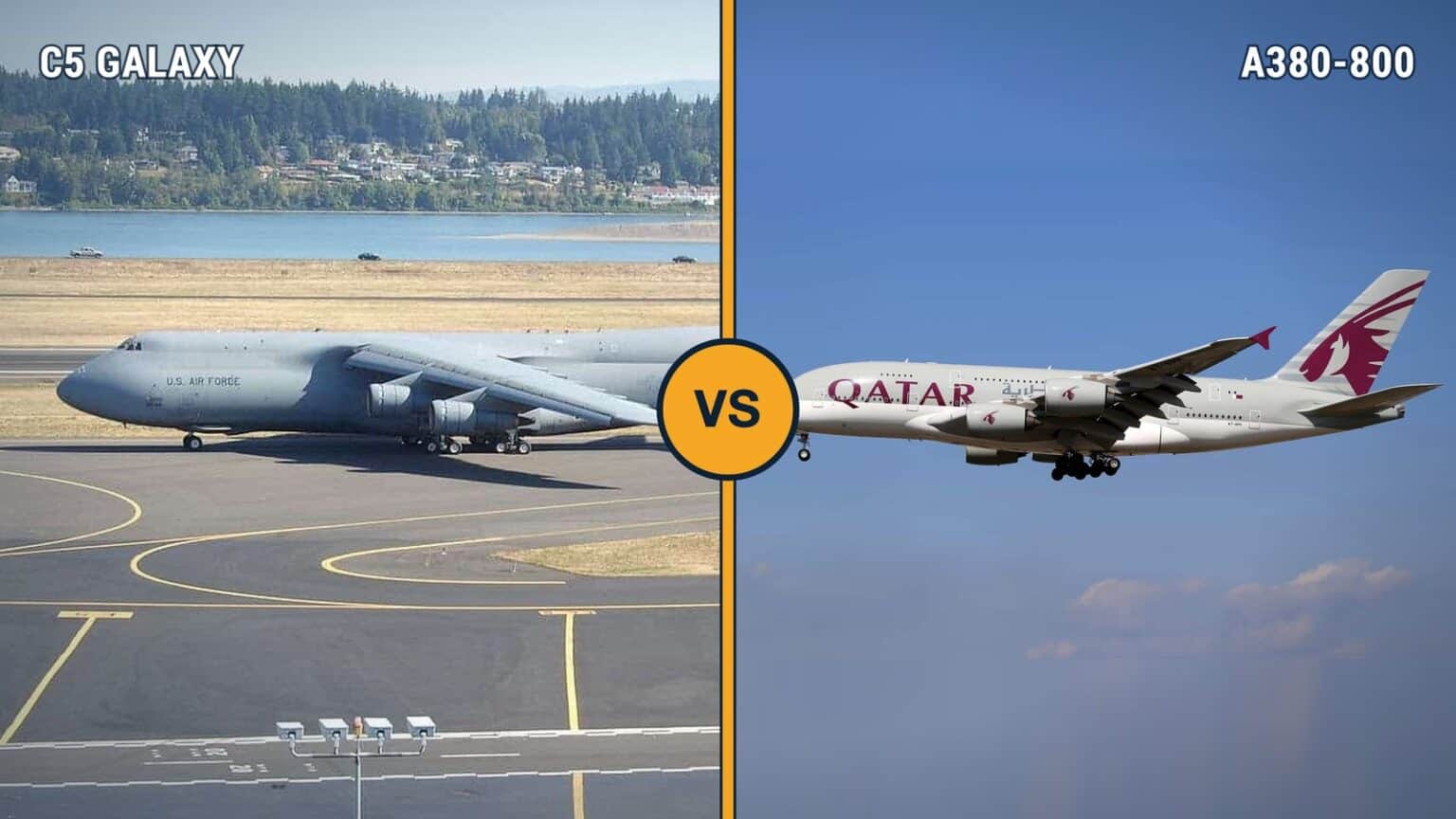
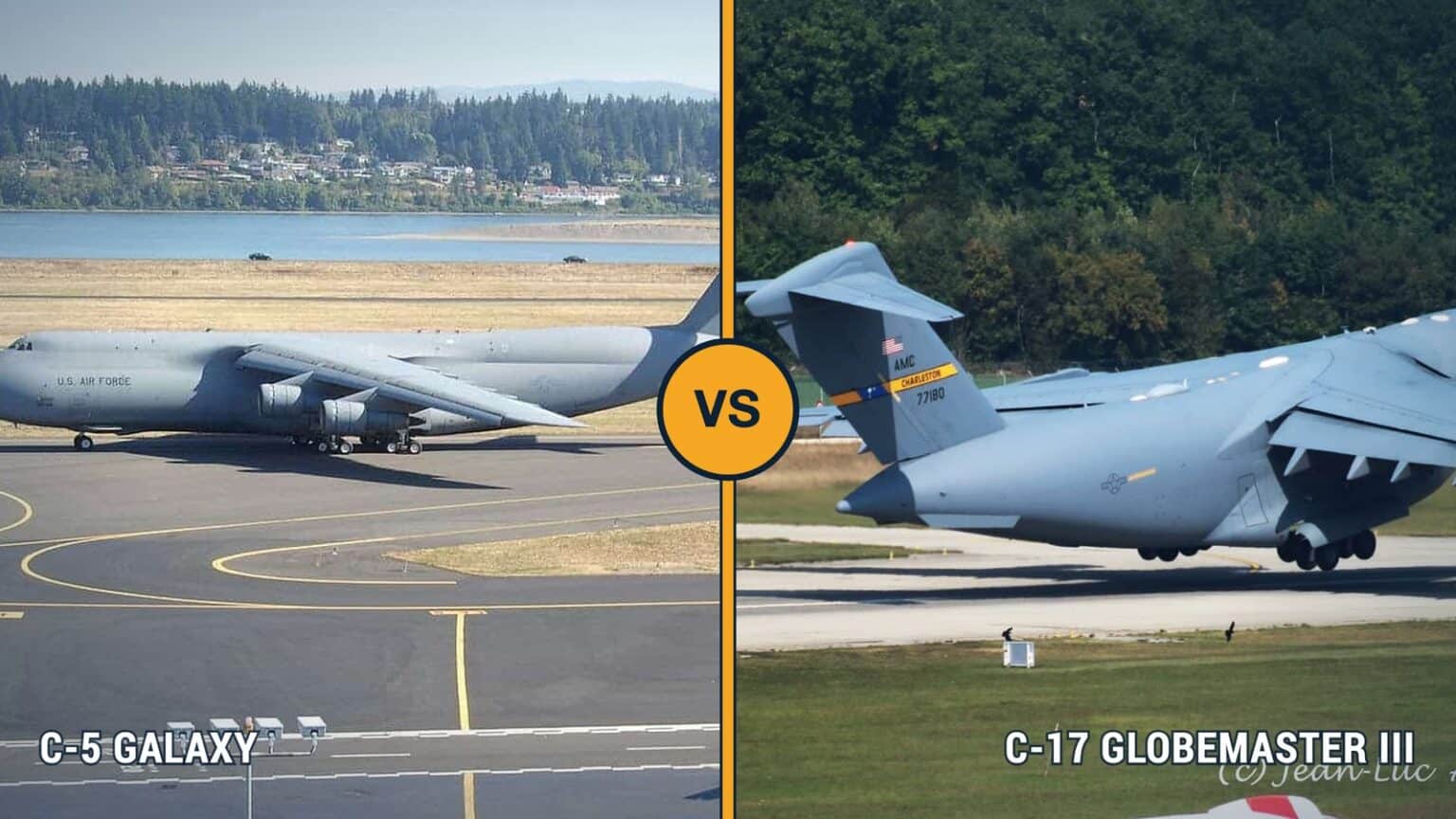
Thinking about which aircraft to choose can be difficult, especially when comparing different models. One of the most common questions is who wins in the C5 galaxy vs C130 war. This is a tough question as both planes have advantages and disadvantages.
About the Lockheed C-5 Galaxy
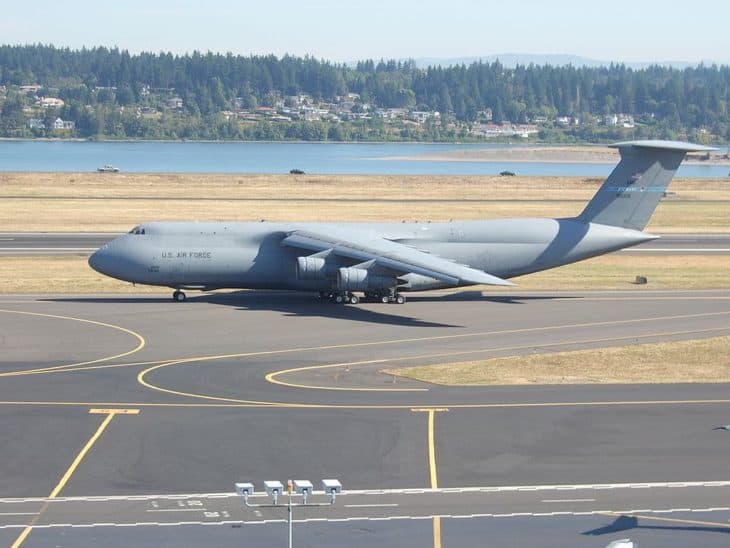
Starting with the Lockheed C-5 Galaxy is an American military transport aircraft. It was first used in 1968 and has been used for its large cargo holding capacity and range. The Lockheed C-5 Galaxy has a wingspan of 222 feet and is the largest military transport plane in the world, with a cargo capacity of nearly 281,000 lbs.
Why was it developed and built?
The C-5 was designed to meet the military’s need for a larger and more capable cargo plane. By 1969, it held the record for the largest military aircraft in the world and was designed with an impressive range of over 5,000 nautical miles.
What purpose does it serve?
Primarily, the Lockheed C-5 Galaxy transport heavy cargo and personnel over long distances. It has been used in various missions, including transporting troops and equipment to war zones, delivering supplies during relief efforts, and providing logistical support. As one of the most reliable transport planes in the US Air Force, it is a crucial part of military operations.
About the Lockheed C-130 Hercules
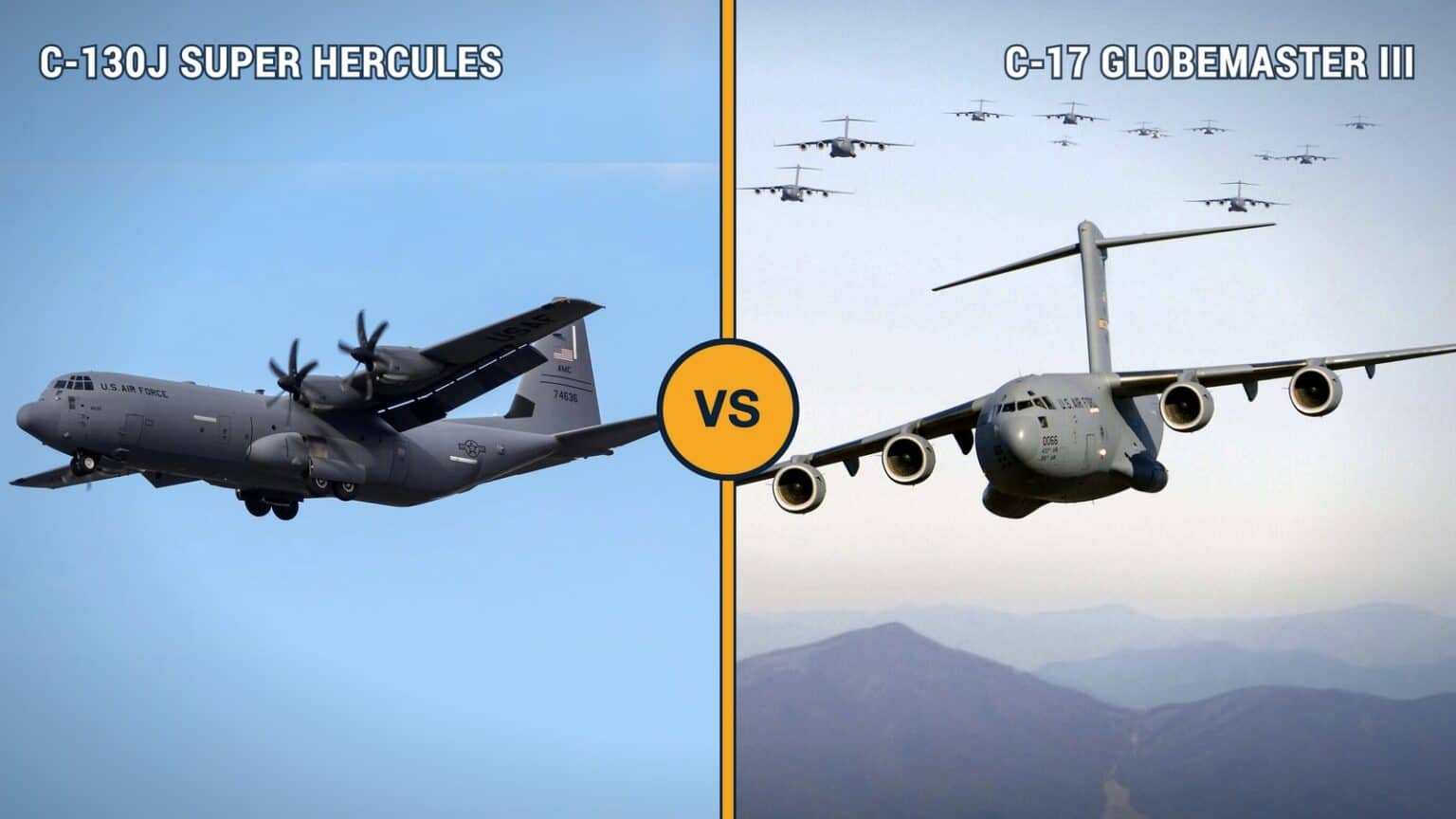
Next is the Lockheed C-130 Hercules, a four-engine turboprop military transport plane. The Lockheed C-130 Hercules first took flight in 1954 and has become the backbone of military transport aviation. Apart from the US military, more than 60 other countries use it in their air forces.
Why was it developed and built?
The Lockheed C-130 Hercules was developed to replace the piston-engine transports of the 1940s, such as the Douglas C-47 Skytrain and Fairchild C-119 Flying Boxcar. It was designed to have a longer range, greater cargo capacity, and better performance than its predecessors.
What purpose does it serve?
It is a versatile aircraft for various roles, including airlift, search and rescue, aerial refueling, and electronic warfare. It is also used to transport troops, supplies, and equipment and provide medical evacuation support.
How are the Lockheed C-5 Galaxy and Lockheed C-130 Hercules different?
These two aircraft have become synonymous with air mobility worldwide, but there are a few key differences between them that you might not know about. Let’s examine some of the key differences between these two iconic aircraft.
Size and Capacity
The most obvious difference between these two aircraft is size. The Lockheed C-5 Galaxy is one of the largest military transport aircraft, measuring 247 feet long and with a wingspan of 222 feet. It has a maximum takeoff run of 5,400 ft. Likewise, the much smaller Lockheed C-130 Hercules measures 97 feet long with a wingspan of 132 feet.
Range and Speed
Another key difference between these two aircraft is their range and speed capabilities. The Lockheed C-5 Galaxy has been designed for long-range missions and can fly up to 4,800 nautical miles without refueling.
It also has a maximum speed of 520 mph at an altitude of 41,000 feet. In comparison, the shorter-range Lockheed C-130 Hercules can fly up to 370 mph and reach an altitude of 33,000 feet.
Designs and Features
The designs of these two aircraft also differ significantly as well. The Lockheed C-5 Galaxy has been designed as an all-weather transport plane with four engines mounted on pylons above its wings. At the same time, the Lockheed C-130 Hercules uses a turboprop engine mounted directly beneath its wing for propulsion.
Both planes are equipped with modern avionics systems such as GPS navigation systems. However, they differ in complexity from one model to another depending on the specific year they were released in.
How are the Lockheed C-5 Galaxy and Lockheed C-130 Hercules similar?
These planes are known for their impressive capabilities and are often seen as a symbol of American military strength. But did you know that these two planes have more in common than just their manufacturer?
- While it may not be immediately obvious, the C-5 Galaxy and the C-130 Hercules are similar in size. This similarity allows them to share many interchangeable parts, such as tires, brakes, and landing gear.
- Both planes also share an impressive ability to fly at high altitudes. The Galaxy can fly up to 45,000 feet, while the Hercules has been known to reach 35,000 feet – not too shabby for an aircraft designed over 50 years ago!
- This means that both planes can easily traverse long distances without refueling midflight- which was invaluable during wartime operations.
- Lastly, both aircraft are incredibly versatile in their uses; they can be used for cargo transport, passenger transportation, search and rescue operations, and airdrop missions – you name it!
This versatility means that these two planes have proven themselves time and time again on countless battlefields around the world.
What’s better about the Lockheed C-5 Galaxy?
The Lockheed C-5 Galaxy is an impressive aircraft with robust capabilities and incredible performance.
- Perhaps the most notable feature is its massive payload capacity, tremendous range and speed, and heavy cargo door.
- It has the largest wingspan of any military transport plane, giving it enough lift to carry up to 270 thousand pounds at one time – equivalent to 4500 cubic feet of cargo!
- Plus, it has been used in various missions, ranging from providing humanitarian aid to transporting US soldiers overseas.
With such power under its wings, there’s no denying that the Lockheed C-5 Galaxy is truly a marvel of modern engineering.
What’s better about the Lockheed C-130 Hercules?
The Lockheed C-130 Hercules is an incredibly useful aircraft.
- The C-130 Hercules has the incredible capability, offering extreme versatility for moving cargo, troops, or even medical evacuation missions.
- Its exceptional short takeoff and landing capability make it ideal for use in remote areas or small runways where other aircraft cannot land.
- From natural disaster relief efforts to supplying large amounts of food and medical aid, this state-of-the-art aircraft offers much aviation technology.
The Lockheed C-130 Hercules has earned its reputation as an incredibly reliable yet powerful tool that continues to prove invaluable today.
Conclusion
The Lockheed C-5 Galaxy and the Lockheed C-130 Hercules are two of the most reliable military transport aircraft. Each plane offers impressive capabilities, from its large cargo capacity to its short takeoff and landing capabilities.
These two planes are versatile in various missions, from transporting troops overseas to providing humanitarian aid in regions of need.
About the Author

With a passion for aviation, as well as surfing and scanning the web, Rocco is in his element analyzing aircraft data and the differences and similarities between aircraft.