



Table of Contents
The A400M carries nearly twice the load of the C-130J, cruises faster and flies higher. The C-130J is the smaller, lighter airlifter, with a lower listed price and a family that has been in service since 1956.
So the winner depends on the job. Pick the A400M when you need to move outsize loads far. Pick the C-130J when you need a lighter, cheaper tactical airlifter that can still land on dirt.
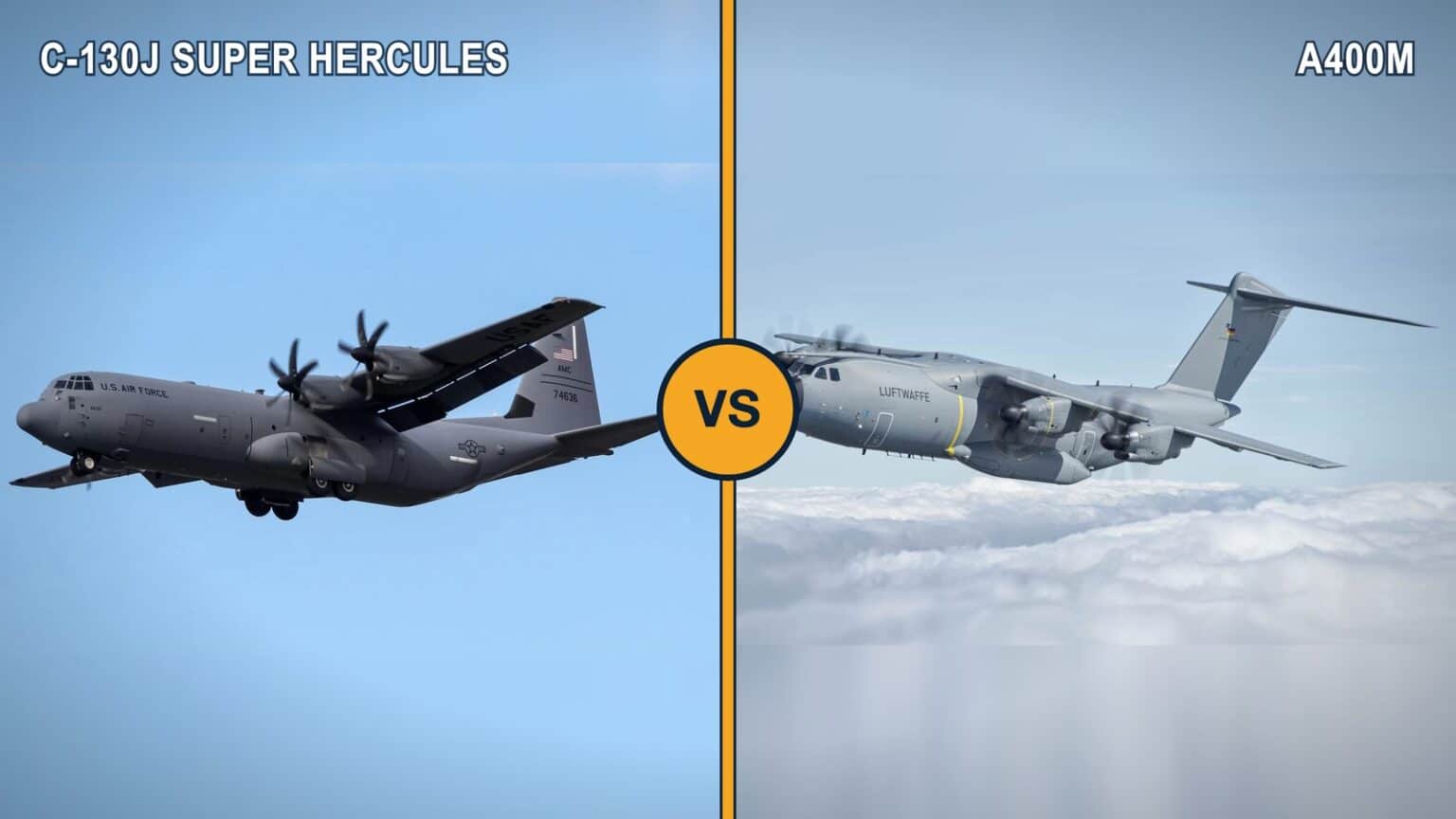
This page compares the Lockheed Martin C-130J Super Hercules, the current Hercules, with the Airbus A400M Atlas. The full spec table for both aircraft is above, so the sections below explain what the numbers mean.
| What | C-130J Super Hercules | A400M Atlas |
|---|---|---|
| Class | Tactical airlifter | Tactical airlifter with strategic reach |
| First flight | April 5, 1996 | December 11, 2009 |
| Entered service | February 1999 (U.S. Air Force) | August 2013 (French Air Force delivery) |
| Troops | 90 combat troops (128 on the stretched C-130J-30) | 116 paratroops, or 54 troops with 9 pallets |
| Pallets | 6 (8 on the C-130J-30) | 9, alongside 54 troops |
| Aeromedical load | 72 litters (97 on the C-130J-30) | Up to 66 stretchers |
| Heaviest airdrop | 42,000 pounds (19,090 kg) | 25 tonnes (55,000 lb) |
Different sizes, different jobs
Airbus designed the A400M to sit between the C-130 and the Boeing C-17 Globemaster III. Wikipedia describes it that way, and it is why the two types often fly side by side.
The C-130J is the current version of a transport the Air Force first fielded in December 1956. The Air Force says it entered the inventory in February 1999 and replaced aging C-130Es and some high-time C-130Hs.
The A400M was a new program managed by OCCAR for European nations. It first flew on December 11, 2009, and the first aircraft was delivered to France in August 2013.
The short version
The C-130J is the lighter tactical workhorse. The A400M is a heavier airlifter that can still use rough strips. They overlap, but they are not the same size of aircraft.
Cargo and what each can carry
The A400M lists a maximum payload of 81,500 lb (37,000 kg). The C-130J lists 42,000 lb (19,100 kg).
That gap decides what fits. Airbus says the A400M hold takes outsize loads such as NH90 or CH-47 Chinook helicopters and heavy cranes. The Air Force says the Hercules can carry utility helicopters and six-wheeled armored vehicles.
The C-130J comes in two lengths. The C-130J-30 adds 15 feet to the fuselage and lifts the Air Force load list to 8 pallets or 128 combat troops.

Both aircraft airdrop cargo. The Air Force says the Hercules can drop up to 42,000 pounds, while Airbus certifies the A400M to drop multiple loads of up to 25 tonnes.
Rough strips and short fields
Both are built to land where jets cannot. The Air Force says the C-130 can use its high-flotation landing gear to land on rough dirt strips.
Airbus says the A400M can deliver its full 37-tonne load to a strip under 2,460 feet (750 m) long. It can also fly automatic low-level missions as low as 500 feet (150 m), even at night.


Speed, altitude and range
The A400M cruises at Mach 0.68 to 0.72 with a 40,000-foot ceiling, according to Airbus. That is close to jet speeds, and it lets the aircraft share airliner routes on long deployments.
The Air Force puts the C-130J at Mach 0.59 at 22,000 feet, with a 28,000-foot ceiling when carrying 42,000 pounds.
Range depends on load. The A400M carries 20 tonnes (44,000 lb) for about 3,400 nautical miles, according to Airbus. The Air Force gives the C-130J 1,800 nautical miles at maximum normal payload.
Those are different payload conditions, so they are not a straight head-to-head. Compare both at the same load before you trust a range gap.
Crew and flight deck
The C-130J flies with three crew: two pilots and a loadmaster. Older C-130E and H models need five, adding a navigator and a flight engineer.
The A400M crews 3 or 4, with two pilots and a loadmaster, according to Wikipedia. It uses fly-by-wire controls and a sidestick, like Airbus airliners.


Tanker and special missions
The A400M can act as a tanker. Airbus says it carries up to 51 tonnes of fuel, can fit two underwing pods for fighters and helicopters, and can also receive fuel through a probe.
The Hercules is the more established multi-role platform. The Air Force says it can be reconfigured for many missions, and the C-130 serves with Air Mobility Command and Air Force Special Operations Command, among others.
Cost and development history
The A400M program ran years late. A PwC audit projected an overrun of €11.2 billion, which corrective measures cut to €7.6 billion, according to Wikipedia.
The Air Force lists the C-130J at a unit cost of $75.5 million in fiscal 2017 dollars. That is a budget figure, not an export price, so it does not compare cleanly with the $152 million listed for the A400M.
Where the C-130J wins
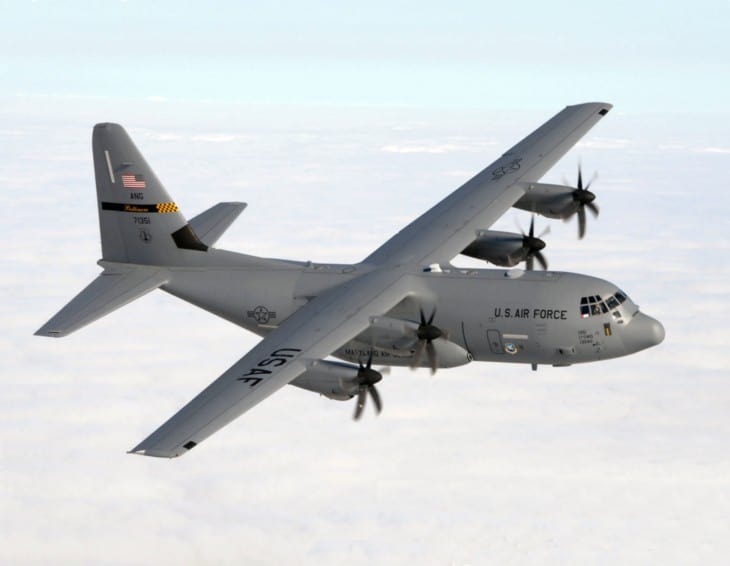

The C-130J has the lower listed price, and it needs fewer crew than older Hercules. It also has the longer service record: the Hercules family entered service in December 1956.
The Air Force says much of the special mission equipment added to the Hercules is removable, so one aircraft can perform the role of many. That flexibility is a large part of its appeal.
Where the A400M wins
The A400M wins on size. It carries nearly double the payload, cruises at Mach 0.72 and flies up to 40,000 feet.
It also takes outsize cargo such as a Chinook helicopter, which Airbus lists and the Air Force does not list for the Hercules, and it doubles as a tanker. Airbus markets that as heavy tactical airlift with strategic reach.
Which one is better?
Neither, because they answer different questions. If the mission is heavy, outsize cargo over long distances, the A400M is the better aircraft.
If the mission is routine tactical airlift, medevac or special operations on a tighter budget, the C-130J is the better buy. Many fleets run both.
FAQ
Sources and references used for research and fact-checking.
About the Author

Tim is the owner and lead editor of AeroCorner since 2019, overseeing aviation content covering aircraft, airlines, airports, and the broader aviation industry. Through years of researching, writing, editing, and publishing aviation-focused content, he has developed extensive practical knowledge of commercial aviation and air travel. Based in Asia and a frequent traveler himself, Tim also brings firsthand passenger experience to AeroCorner’s coverage. Outside of publishing, he has also explored aviation firsthand through hands-on flight training in New Zealand.