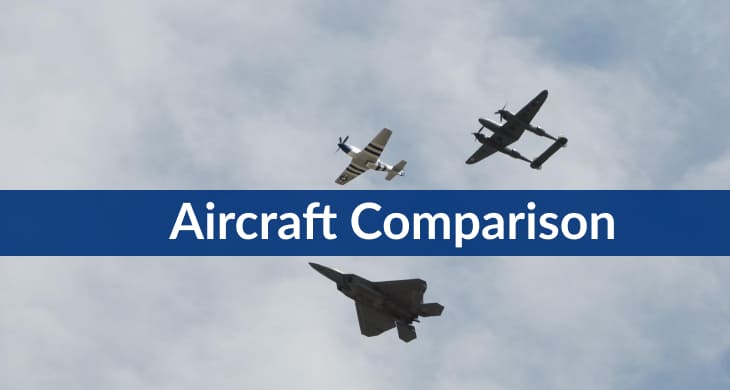
For years, military aircraft enthusiasts have debated the merits of the F-35 vs. Gripen. Both jets are incredibly advanced and can perform various tasks, but which is better? This blog post will look closely at both fighters and try to answer that question.
Lockheed Martin F-35 Lightning II

The F-35 was developed and built for several reasons. First and foremost, it was designed to be an effective fighter jet. It was meant to be able to compete with the best fighter jets in the world, and it has certainly lived up to that goal. Second, the F-35 was designed to be versatile. F-35 can be used for various missions, including air-to-air combat, ground attack, and intelligence gathering.
Third, the F-35 was designed to be cost-effective. It is one of the most expensive military projects ever undertaken. However, it is cheaper than buying and operating two separate aircraft fleets. Finally, the F-35 was designed to be safe and easy to fly. It is undoubtedly the safest fighter jet in the world, and its easy-to-use controls make it one of the most accessible jets to fly.
Saab Gripen
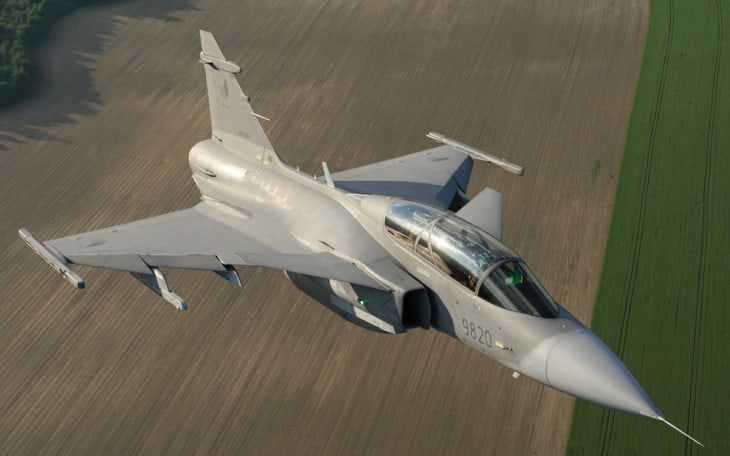
The purpose of the Gripen is to provide practical, affordable, and multirole fighter capabilities. It is also to build industrial relationships within Europe, including Sweden, Switzerland, Hungary, the Czech Republic, and South Africa. The aim was also to generate export revenue and create jobs. It is a light, single-engine, multirole fighter aircraft designed to perform air-to-air, air-to-ground, and reconnaissance missions.
The Gripen can operate in all weather conditions and environments, including the Arctic and Mountainous regions. It can take off and land on short and unprepared runways. The Gripen is also equipped with state-of-the-art avionics and sensors, which gives it unparalleled situational awareness.
The aircraft has been designed for minimal life cycle costs, making it cheaper to maintain than other comparable fighters. The Gripen has been operational with the Swedish Air Force since 1997 and has also been exported to several countries, including Brazil, the Czech Republic, Hungary, South Africa, and Thailand.
Differences between the F-35 & Gripen
With so many different fighter jets on the market, it can take a lot of work to keep them all straight. Two of the most popular models are the F-35 and Gripen, so what are the differences between these two aircraft?
For starters, the F-35 is a 5th generation jet while the Gripen is only 4th generation. The F-35 has several advanced features that the Gripen doesn’t, including stealth technology and better sensors.
The F-35 is also more expensive to operate than the Gripen due to its higher fuel consumption and maintenance costs. However, the F-35 has a more extended range. It can carry more weapons than the Gripen, making it a more versatile aircraft. When it comes to choosing between these two fighters, it depends on your specific needs.
Similarities between the F-35 & Gripen
While the F-35 and Gripen may appear to be very different aircraft, they have several similarities. Both are designed to be highly agile, with low wing loading and high thrust-to-weight ratios.
It gives them exceptional maneuverability, even at high altitudes. In addition, both aircraft are equipped with advanced avionics suites that allow them to share information with other friendly aircraft and ground units.
It increases situational awareness and allows for coordinated strikes against enemy targets. Furthermore, the F-35 and Gripen incorporate stealth technology into their design, making them difficult for radar to detect. It gives them a significant advantage in combat situations. Overall, the F-35 and Gripen are two of the most advanced fighter jets in the world, and their design similarity indicates the direction that military aviation is moving.
What’s better about the F-35?
The F-35 has been making headlines for all the wrong reasons lately. But there are some good things about this controversial aircraft. Here are four of them:
It’s incredibly maneuverable:
With its advanced flight control system and robust engines, the F-35 is highly maneuverable. It makes it an excellent choice for close-air support and other missions where agility is critical.
It has a powerful sensor suite:
The F-35’s sensors give it unprecedented situational awareness. It can detect and track targets even when they’re trying to hide.
It’s built by an international consortium:
F-35 is built by a consortium of international partners, which helps to spread the risk and cost of developing such an expensive aircraft. It also means that there will be a global market for the F-35, which should help to keep costs down in the long run.
It has stealth capabilities:
One of the F-35’s most controversial features is its stealth capabilities. While stealth technology is not perfect, it does make the F-35 much harder to detect and track than other aircraft.
What’s better about the Gripen?
There are a lot of things to love about the Gripen, but here are four of the best:
- It’s designed for versatility: The Gripen can be configured for many missions, making it a versatile and practical fighter jet.
- Advanced avionics: The Gripen is equipped with some of the most advanced avionics in the world, giving it a bitter edge in combat.
- Fast and agile: The Gripen is one of the quickest and most maneuverable fighter jets in the world, which makes it a formidable opponent in any dogfight.
- It’s affordable: Compared to other fighter jets on the market, the Gripen is relatively affordable, making it an excellent option for countries on a budget.