

Table of Contents
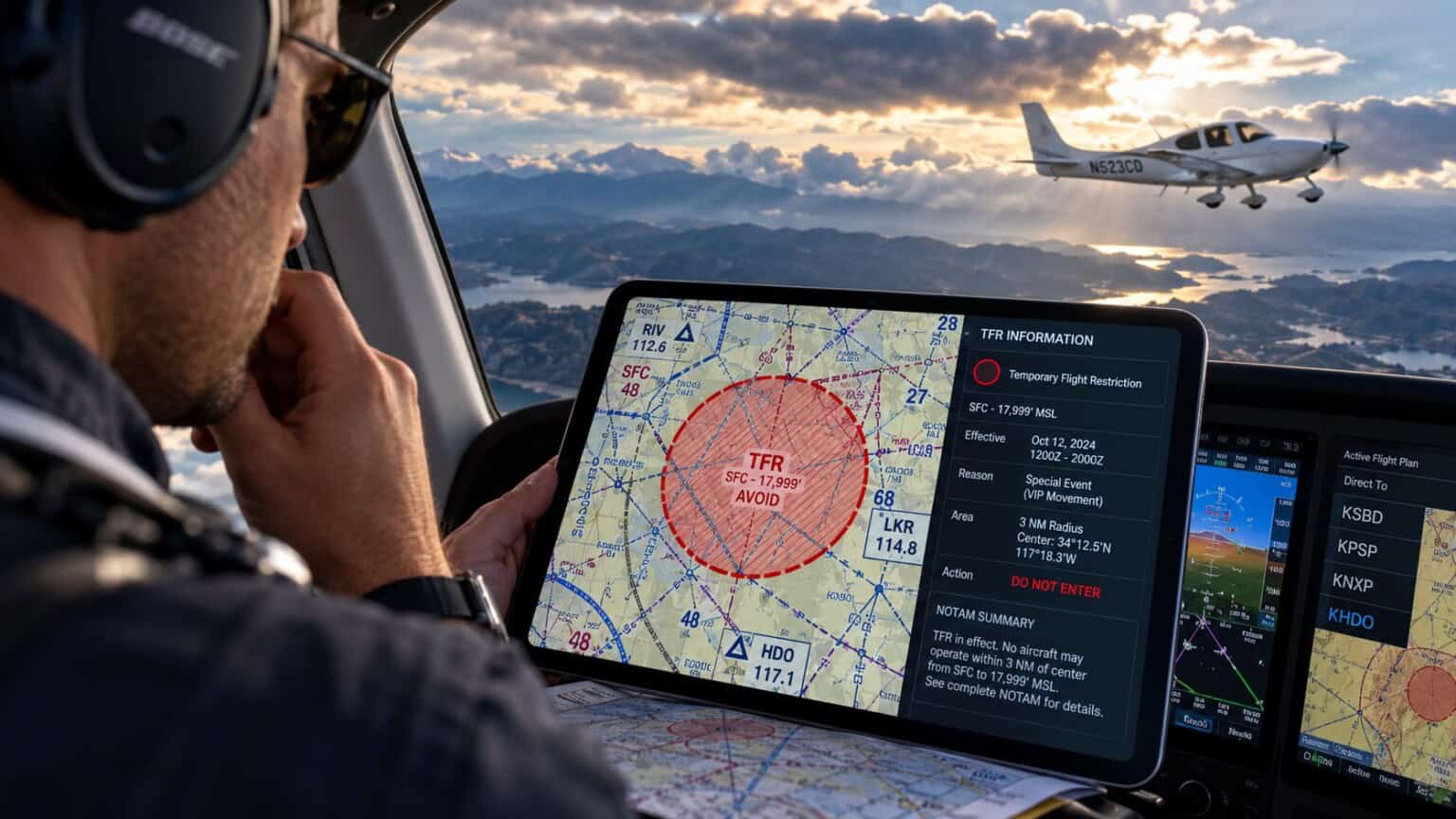
A temporary flight restriction (TFR) is a block of airspace the FAA closes or limits for a set period, published to pilots as a Flight Data Center NOTAM. Most are circles defined by a center point, a radius in nautical miles, and an altitude band. They keep aircraft away from wildfires, the President, stadiums, rocket launches, and air shows.
They are not rare. When we checked the FAA’s official TFR list on September 11, 2026, it carried 103 of them, active or scheduled: 47 for security, 29 for hazards (almost all wildfires), 13 for air shows and sports, six drone-only bans over public gatherings, four space launches, three VIP movements, and one special.
Every one of them is the pilot’s problem. Federal rules require a pilot in command to become familiar with “all available information concerning that flight” before takeoff, and armed fighter jets enforce the security TFRs.
This guide covers the eight rules TFRs are issued under, how big each type is, how to read one line by line, and what happens to pilots and drone operators who fly into one.
| TFR type | Rule (14 CFR) | Normal size | Who may fly inside |
|---|---|---|---|
| Disaster and hazard (wildfires, spills, crash sites) | 91.137 | 3 NM, up to 2,000 ft above the surface | Relief aircraft; some IFR, airport, and media traffic, depending on the subtype |
| Hawaii disaster areas | 91.138 | Set case by case | Authorized relief, law enforcement, accredited media on a flight plan |
| Emergency air traffic rules | 91.139 | Set by the emergency | Only on the terms of the emergency rule |
| VIP movement (President, Vice President) | 91.141 | President: 30 NM outer ring, 10 NM inner core, up to 17,999 ft. Vice President: usually 3 NM | Inner core: almost no general aviation. Outer ring: IFR, discrete squawk, talking to ATC |
| Space operations | 91.143 | Drawn to fit each launch | Only with ATC authorization |
| Abnormally high barometric pressure | 91.144 | Wherever pressure exceeds 31.00 inHg | As the NOTAM allows |
| Air shows and major sporting events | 91.145 | Air shows: 5 NM, up to 17,000 ft MSL. Events: 3 NM, 2,500 ft above the surface | With ATC approval or an event waiver |
| Special security (stadiums, Disney parks, Super Bowl) | 99.7 | Stadiums and Disney parks: 3 NM, up to 3,000 ft above the ground | As the NOTAM allows; Disney admits ATC-authorized, military, law enforcement, and air ambulance flights |
What is a temporary flight restriction?
A TFR is a legal boundary, not a physical one. The FAA publishes it as a NOTAM (Notice to Airmen), the system that tells pilots about anything that changes the airspace, runways, or navigation aids along their route.
TFRs are Flight Data Center (FDC) NOTAMs, which is why each carries a number like FDC 6/2372: the 6 is the year, 2026, and 2372 is the sequence number. Inside the boundary, the regulation named in the NOTAM spells out who is banned, who is allowed, and on what conditions.
If you learned the term as “Notice to Air Missions,” that was the official name from December 2021 until the FAA switched back to “Notice to Airmen” in February 2025. The acronym never changed.
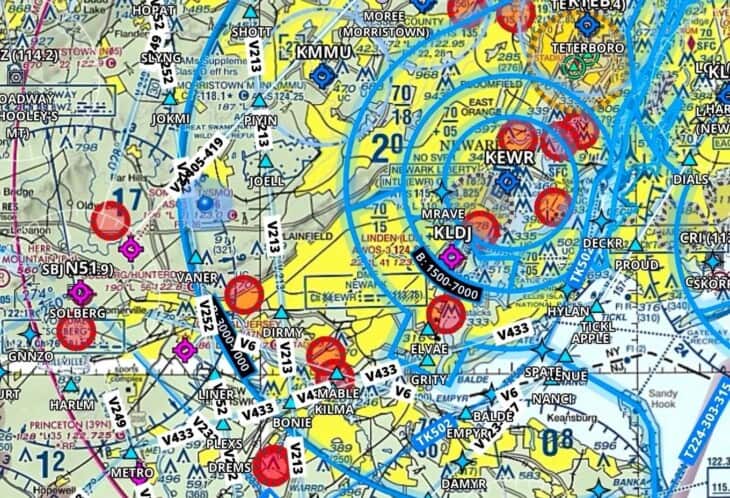
What separates a TFR from other special airspace is that it is not printed on the chart. Prohibited and restricted areas sit on aeronautical charts for years. A TFR appears, moves, and expires on the timescale of the event it protects, so a pilot has to check for it on the day.
The temporary flight restriction that ends "Permanent"
Over Walt Disney World, the FAA’s own TFR record lists the ending date as “Permanent.” FDC 4/3634 bans all aircraft, drones included, within 3 nautical miles of the park up to 3,000 feet above the ground, and it cites a statutory mandate from Congress. Disneyland has a matching restriction, FDC 4/3635. Both were last reissued in October 2015 and carry no end date.
The 8 types of TFR and the rules behind them
Every TFR names the regulation that authorizes it, in the Authority line at the bottom of the NOTAM. There are eight, and the rule tells you most of what you need to know about what is allowed inside.
1. Disaster and hazard areas (91.137)
This is the workhorse. Section 91.137 lets the FAA close airspace to protect people from a hazard on the surface, to give disaster relief aircraft room to work, or to stop sightseers from swarming over an incident that draws public interest.
The three purposes carry different rules. A hazard TFR under paragraph (a)(1), used for toxic spills, nuclear incidents, or imminent volcanic eruptions, admits only aircraft working the response under the on-scene official.
A relief TFR under (a)(2) is the wildfire TFR, protecting the aerial firefighting aircraft dropping retardant. It also admits law enforcement flights, aircraft on an ATC-approved IFR flight plan, accredited media flying above the relief aircraft, and some traffic to and from airports inside the area.
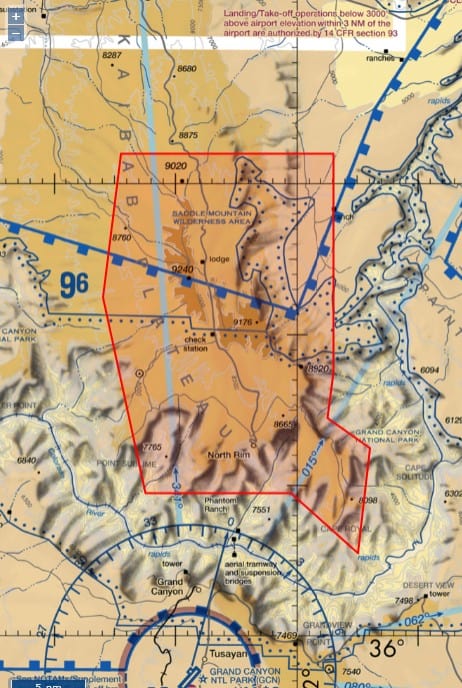
The AIM says these areas are normally limited to 3 nautical miles and 2,000 feet above the surface. Wildfire TFRs can run bigger: FDC 6/2372, issued on September 11, 2026 for a fire near Ukiah, California, covers 5 nautical miles from the surface to 8,000 feet MSL.
2. Hawaii disaster areas (91.138)
A Hawaii-only rule. When the governor requests it for an inhabited area inside a declared national disaster area, the FAA can close the airspace for humanitarian reasons.
Entry is then limited to flights authorized by the official running the relief effort, law enforcement, emergency or scientific flights, and accredited news crews who file a flight plan first.
3. Emergency air traffic rules (91.139)
The broadest rule on the list. When an emergency affects the FAA’s ability to run the air traffic control system itself, the Administrator can issue an immediately effective air traffic rule and announce it by NOTAM.
Pilots may then fly in the designated airspace only on the terms that rule sets. It is a tool for system-wide crises rather than a single fire or event.
4. VIP movement (91.141)
The regulation is a single sentence: no one may fly over or near any area visited or traveled by the President, the Vice President, or other public figures contrary to restrictions published by NOTAM. According to NBAA, the Secret Service sets the dimensions in coordination with FAA security.
These are the TFRs pilots worry about most. They go wherever the VIP goes, from the airport where Air Force One lands to the venues on the schedule, and they can be extended, cut short, or reshaped at little notice.
5. Space operations (91.143)
Launch TFRs close airspace around rocket launches. No one flying a US-registered aircraft, or flying on an FAA pilot certificate, may enter one unless ATC authorizes it.
They are drawn to fit the launch, not as simple circles. The Cape Canaveral area for a September 15, 2026 launch window is a polygon with a 30-nautical-mile arc over the Atlantic, from the surface to 18,000 feet MSL, active for two hours and 40 minutes.
6. Abnormally high barometric pressure (91.144)
The oddest rule of the eight. When barometric pressure along a route exceeds 31 inches of mercury (standard pressure is 29.92), the FAA can restrict flights by NOTAM.
The rule lets the FAA waive the restriction so emergency supplies, transport, or medical services can still reach isolated communities, provided the flight can be done safely.
7. Air shows and major sporting events (91.145)
The regulation names its own guest list, including the Blue Angels, the Thunderbirds, the Army’s Golden Knights parachute team, the Olympics, the Rose Bowl, World Cup soccer, the MLB All-Star Game, the World Series, the Albuquerque International Balloon Fiesta, and the Indianapolis 500. Any other event the FAA judges to need one can be added.
Air show TFRs are normally 5 nautical miles and up to 17,000 feet MSL for high-performance jets, or 13,000 feet above the surface for parachute jumps. Sporting-event TFRs under this rule are normally 3 nautical miles and 2,500 feet above the surface.
The FAA must issue these NOTAMs at least 30 days before the event, unless it finds good cause for a shorter period and says so. The Central Coast Airfest in Santa Maria, California, ran under one on September 11 to 13, 2026: 5 nautical miles, surface to 12,500 feet MSL, active only during the flying hours each day.
8. Special security instructions (99.7)
Section 99.7 is the security rule. It requires pilots to follow special security instructions the FAA issues in the interest of national security, by agreement with the Department of Defense or a federal security or intelligence agency.
It covers the Super Bowl, political conventions, the stadium restriction, and the Disney parks. The airspace it protects is usually designated “national defense airspace,” and that label matters: knowingly or willfully violating it is a federal crime.
It is also used for drone-only bans. On the 9/11 anniversary in 2026, 99.7 notices banned drones within 2 nautical miles of a point near Shanksville, Pennsylvania, and within 0.6 nautical miles of a point in Lower Manhattan.
A separate category protects large public gatherings from drones only, issued under a federal drone statute (49 U.S.C. 44812) rather than 14 CFR; six were on the FAA list that day.
How big is a TFR?
There is no single size. On the same day’s list, TFRs ranged from drone bans with a radius under a nautical mile to launch areas bounded by a 30-nautical-mile arc. The two types most pilots meet are the presidential TFR and the stadium TFR.
Presidential TFRs: the 30-mile ring and the 10-mile core
According to NBAA, a presidential TFR usually has an outer ring of 30 nautical miles and one or more inner rings, usually 10 nautical miles but sometimes 8 or 9. NORAD describes them as normally running from the surface to 17,999 feet, with armed fighters, and sometimes helicopters, within close reach.
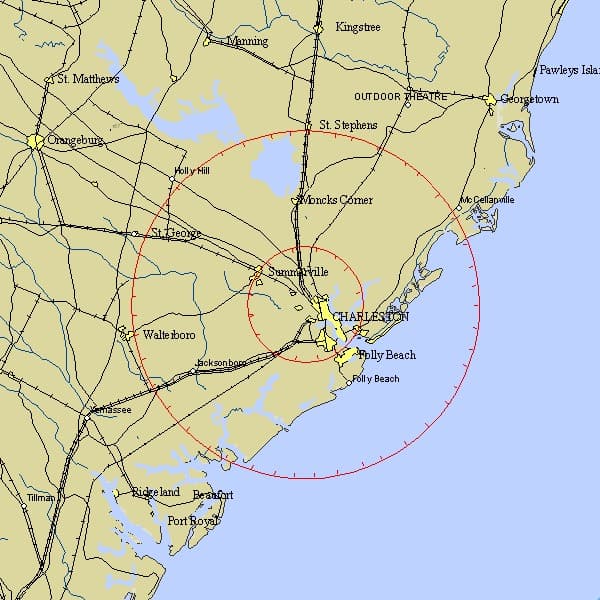
The inner core is the real barrier. It is almost always closed to general aviation below 18,000 feet, largely because private aircraft are not subject to TSA passenger screening, and airports inside it are unavailable to general aviation while it is active.
Exceptions are rare. The Secret Service sometimes agrees to “gateway” airports where private aircraft are screened before flying in. Some TFRs are also drawn with a cut-out for an airport just inside the core, which NBAA says happens often for Teterboro when a TFR covers New York City.
The outer ring is workable. General aviation may fly between the rings on an IFR flight plan and in contact with ATC, but may not loiter. Flight training, practice approaches, and sightseeing flights are off the table.
Just outside the ring still counts
An airport sitting 2 miles south of a 10-nautical-mile inner ring can be closed to northbound departures, NBAA notes, because the climb-out would point straight into the TFR. A missed approach at an airport near the ring can also carry an aircraft inside it, and not every ATC facility will catch it.
Vice-presidential TFRs are smaller: normally one or more 3-nautical-mile rings with no outer ring, open to aircraft on IFR flight plans talking to ATC. Airport operations inside one typically stop for a short time while the Vice President arrives or departs.
Stadium TFRs and other event airspace
The stadium TFR is a standing 99.7 restriction that switches on by itself. It covers any stadium with 30,000 or more seats during a regular or postseason Major League Baseball, NFL, or NCAA Division I football game, and during NASCAR Cup, IndyCar, and Champ Series races.
Each covers a 3-nautical-mile radius, up to and including 3,000 feet above the ground. It runs from one hour before the scheduled start until one hour after the event actually ends, so overtime and rain delays extend it.
Big one-off events get their own. For the 2026 FIFA World Cup, the FAA banned all aircraft, drones included, within 3 nautical miles and 3,000 feet above the ground of 11 US stadiums on match days, plus drone-only bans of 1 nautical mile and 1,000 feet over fan-festival sites.
How to read a TFR NOTAM
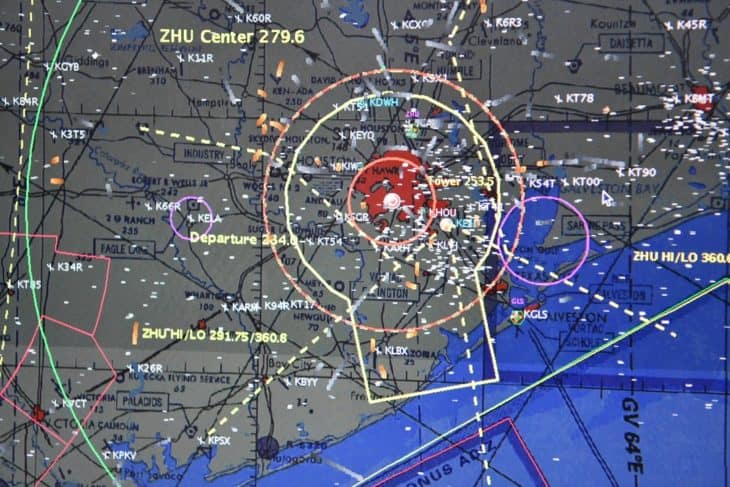
On the FAA’s TFR website, each restriction is laid out in labeled fields. Here is a real one, the wildfire TFR near Ukiah, California, as published on September 11, 2026.
| Field | What FDC 6/2372 says | What it means |
|---|---|---|
| NOTAM number | FDC 6/2372 | Flight Data Center NOTAM number 2372 of 2026. Quote it to a briefer or controller. |
| Location | 12NM NE Ukiah, California, near Mendocino VORTAC (ENI) | The nearest town and navigation aid, to find it on a chart |
| Reason | To provide a safe environment for fire fighting aircraft operations | A wildfire relief TFR |
| Center | ENI 034-degree radial at 17.7 NM (39°14’30″N, 122°59’00″W) | The center point, given as a bearing and distance from the VOR and as coordinates |
| Radius | 5 nautical miles | The size of the circle |
| Altitude | Surface up to and including 8,000 ft MSL | Above 8,000 feet MSL is outside the TFR |
| Effective | Sept 11, 2026 at 0500 UTC to Sept 26, 2026 at 0300 UTC | Times are in UTC (Zulu). 0500 UTC on Sept 11 is 10 p.m. Pacific on Sept 10. |
| Point of contact | Frequency 122.275 | Who to call on the radio near the fire |
| Authority | 14 CFR 91.137(a)(2) | The rule. A relief TFR, so IFR flights and some airport traffic may enter on conditions. |
Below the fields sits the restriction text. Security and VIP NOTAMs spell out their conditions in capitals and abbreviations, and that text is where most violations start.
A VIP TFR over New York City on September 11, 2026 is typical. Aircraft inside it had to be squawking an ATC-assigned discrete transponder code at all times and stay in two-way radio contact with ATC, and they could not loiter. Law enforcement, firefighting, and air ambulance flights on active missions were exempt.
The raw version is harder to read. The Disney World notice bans flights “WITHIN A 3 NMR OF 282445N/0813420W OR THE ORL238014.8 UP TO AND INCLUDING 3000FT AGL.” Decoded, that is a 3-nautical-mile radius around the coordinates 28°24’45″N, 81°34’20″W, which is also the Orlando VORTAC’s 238-degree radial at 14.8 nautical miles.
Watch the time zone. The FAA list marks some TFRs in UTC and others in local time, and a wrong conversion is an easy way to arrive early.
Where to check TFRs today: the map and the list
No article can list today’s TFRs, and none should try. The official source is the FAA’s TFR website at tfr.faa.gov, a list and map updated in real time that you can filter by state. The NOTAMs themselves also point pilots to Flight Service at 1800wxbrief.com.
Electronic flight bag apps overlay TFRs on their charts. NORAD’s 2025 letter to pilots named SkyVector as a free option, and reminded ForeFlight users to make sure the TFR layer is switched on.
Drone pilots have their own tools. The FAA’s B4UFLY app and the LAANC authorization apps both display TFRs.
The TFR that is not on the list
Stadium TFRs run off one standing notice, so individual games have not traditionally shown up as TFRs of their own. The FAA now publishes game dates and times on its Sporting Event Automated Monitoring System map, but the restriction ends one hour after the game actually finishes, and knowing when that is remains the pilot’s job.
How pilots avoid busting a TFR
Check close to departure, not the night before. VIP TFRs can be cancelled early or extended with little or no notice, so NBAA advises planning for holding or a diversion when arriving shortly after one is scheduled to end.
Get ATC involved. An IFR flight plan is the usual ticket into a presidential TFR’s outer ring and into wildfire relief TFRs, and a controller who knows where you are can warn you about one you missed.
Leave a margin. When planning a cross-country flight, route well clear of the boundary and check the departure and missed-approach paths at any airport near an inner ring.
Keep a radio on guard. The FAA’s Aeronautical Information Manual strongly encourages every aircraft in US airspace to maintain a listening watch on the emergency frequencies, 121.5 or 243.0 MHz, which is where interceptors will call.
What happens if you fly into a TFR
Over a security or VIP TFR, the answer can be a fighter on your wing. NORAD sends F-16s to intercept aircraft that stray into presidential TFRs, and it has used flares to get a pilot’s attention before escorting the aircraft out.
It happens often. NORAD reported responding to more than 20 “tracks of interest” over President Trump’s Mar-a-Lago resort in the two months after the January 20, 2025 inauguration. On one weekend in September 2025, six general aviation aircraft violated the TFR over Bedminster, New Jersey.
If you are intercepted, the AIM says to follow the interceptor’s signals, call on 121.5 or 243.0 MHz with your identity, position, and the nature of your flight, and squawk 7700 unless ATC says otherwise. Keep complying until you are positively released.
After landing, NORAD lists what can follow: a visit from law enforcement, a pilot deviation notice known as a Brasher notification, significant fines, and suspension or loss of the pilot certificate. The FAA says sanctions range from a warning to certificate revocation, depending on the circumstances.
National defense airspace adds criminal law. A person who knowingly or willfully violates it can be fined and imprisoned for up to one year, and up to five years for a second offense.
"Ignorance is not an excuse"
That line comes from NORAD’s own 2025 letter to general aviation pilots, written after a rise in TFR violations. It added that the onus is on pilots to be aware of and avoid TFRs, and that checking NOTAMs before flight is an FAA requirement, not an option.
What about Washington, DC?
The airspace over the capital is no longer a TFR. The FAA made it permanent in a rule published in December 2008.
The Washington, DC Special Flight Rules Area now covers a 30-mile radius around the DCA VOR/DME at Reagan National Airport, from the surface to just below 18,000 feet, with a tighter Flight Restricted Zone of about 15 nautical miles inside it.
It has a warning system no TFR has. Aircraft entering without authorization can be lit up by alternating red and green lasers; the AIM tells pilots to turn away from the center of the area and call ATC on 121.5 or 243.0 MHz immediately.
TFRs and drones
TFRs apply to drones exactly as they apply to airplanes. Since the FAA Reauthorization Act of 2024, drone operators face civil fines of up to $75,000 per violation, and the FAA can suspend or revoke their pilot certificates.
The FAA has used it. Two operators who flew near SoFi Stadium under the Super Bowl LVI TFR in 2022 were hit with proposed penalties of $16,000 and $4,000, and one who flew during the Miami Grand Prix weekend that year faced a proposed $18,200.
VIP and security NOTAMs also warn that the Departments of Defense, Homeland Security, or Justice may disrupt, seize, damage, or destroy a drone judged to be a credible threat. For a private citizen, by contrast, damaging a drone is itself a federal crime, as our guide on whether you can legally take down a drone explains.
Flying inside a TFR is possible for the right operator. A Part 107 remote pilot or an operator with a Certificate of Waiver or Authorization can apply through the FAA’s Special Governmental Interest process, which is typically open to public safety agencies, first responders, and media.
How to request a TFR
Pilots do not request TFRs; authorities do. For hazard TFRs, the FAA accepts requests from military major commands, state governors, civil defense directors, and similar authorities, and the TFR is set up through the manager of the regional air route traffic control center.
Relief TFRs can be requested by military search-and-rescue coordinators or by civil authorities running relief flights, including the US Forest Service and state aeronautics agencies. For sightseeing-control TFRs, state, county, and city governments can ask too.
Air shows and major events fall under 91.145. The FAA weighs factors such as crowd size, the number and type of performing aircraft, and the emergency procedures in place, then issues the NOTAM at least 30 days out.
FAQ
Sources and references used for research and fact-checking.
- FAA, Temporary Flight Restrictions list and map
- FAA, Disney World Theme Park TFR, FDC 4/3634
- FAA, Disneyland Theme Park TFR, FDC 4/3635
- FAA, Aeronautical Information Manual, Chapter 3 Section 5 (3-5-3 Temporary Flight Restrictions)
- FAA, Aeronautical Information Manual, Chapter 5 Section 6 (Interception Procedures, Visual Warning System)
- Cornell Law School LII, 14 CFR 91.137 Temporary flight restrictions in the vicinity of disaster/hazard areas
- Cornell Law School LII, 14 CFR 91.138 Temporary flight restrictions in national disaster areas in the State of Hawaii
- Cornell Law School LII, 14 CFR 91.139 Emergency air traffic rules
- Cornell Law School LII, 14 CFR 91.141 Flight restrictions in the proximity of the Presidential and other parties
- Cornell Law School LII, 14 CFR 91.143 Flight limitation in the proximity of space flight operations
- Cornell Law School LII, 14 CFR 91.144 Temporary restriction on flight operations during abnormally high barometric pressure conditions
- Cornell Law School LII, 14 CFR 91.145 Management of aircraft operations in the vicinity of aerial demonstrations and major sporting events
- Cornell Law School LII, 14 CFR 99.7 Special security instructions
- Cornell Law School LII, 14 CFR 91.103 Preflight action
- Cornell Law School LII, 49 U.S. Code 46307 Violation of national defense airspace
- eCFR, 14 CFR Part 93 Subpart V, Washington, DC Metropolitan Area Special Flight Rules Area
- NBAA, Temporary Flight Restrictions (TFRs)
- FAA, Temporary Flight Restrictions (TFRs) for drones
- FAA, Stadiums and Sporting Events
- Boldmethod, You Could Be Intercepted For Flying Through These Unpublished TFRs
- FAA, FAA Proposed $341,413 in Civil Penalties Against Drone Operators
- FAA, FAA Establishes No Drone Zones for FIFA World Cup 2026 Stadiums, Fan Events and Base Camps
- General Aviation News, Uptick in busted TFRs leads to warning from NORAD
- DVIDS, NORAD Responds to Violations of Temporary Flight Restrictions over Bedminster, New Jersey
- General Aviation News, NOTAMs return to original name
Get the Newsletter
The latest aviation news and stories sent to your inbox.
About the Author
Matt Claiborne is an FAA Airline Transport Pilot and Certified Flight Instructor with more than two decades of experience in flight training. He has served as an assistant professor and FAA Part 141 Assistant Chief Instructor for a university aeronautics program in Florida. His background in professional flying, flight instruction, and aviation education gives him firsthand expertise in aircraft operations, pilot training, flight procedures, and aviation safety.