

Table of Contents
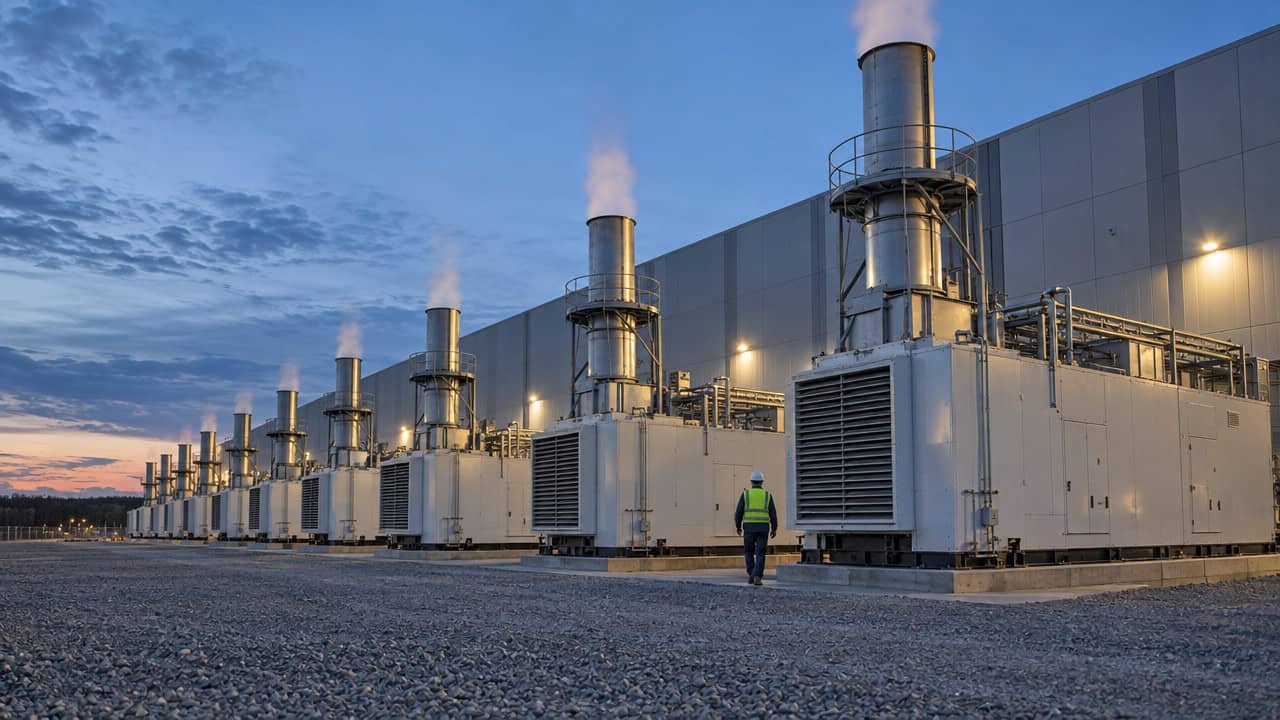
The engine that hung under the wings of the 747-400 is getting a second career on the ground, as AI data centers that cannot wait for the grid build their own power plants.
ProEnergy, a power company that builds its turbines in Sedalia, Missouri, takes the cores of retired GE CF6-80C2 jet engines and rebuilds them into PE6000 gas turbines that make about 48 megawatts of electricity each. It told IEEE Spectrum in October 2025 that it had sold 21 of them to two data center projects, more than 1 gigawatt in total.
The same report put the supply at roughly 1,000 more CF6-80C2 engines expected to retire over the next decade. As AeroTime reported on Nov. 5, 2026, the 747’s engine is no longer the only one being drafted.
Why an AI Data Center Wants a Jumbo Jet Engine
The problem is the grid. A data center can need more than 100 megawatts, and some of the newest designs for AI need more than 1 gigawatt. The wait for a utility connection big enough can run for years.
Building the power plant on site is the workaround, but new gas turbines are scarce too. GE Vernova, Siemens Energy and Mitsubishi Heavy Industries face multi-year backlogs, with delivery dates stretching toward 2029, according to Mexico Business News. ProEnergy says a PE6000 can be delivered in 2027.
A jet engine is a strong starting point because the power industry already borrowed it once. GE’s LM6000, a fast-start turbine used by power plants and ships, is the industrial and marine development of the CF6-80C2.
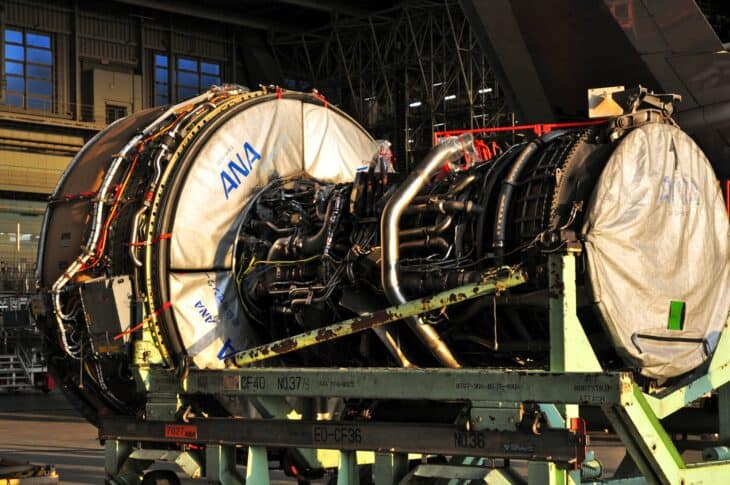

ProEnergy builds the PE6000 so its parts are interchangeable with the LM6000. It keeps the flight engine’s core, then adds newly made aeroderivative components so it runs on natural gas or other fuels instead of pushing an airliner.
The two projects that bought the 21 turbines plan to use them as bridging power for five to seven years, until their grid connections arrive.
The Numbers Behind the 747’s Second Career
Calling it a “747 engine” is fair, with one caveat. The CF6-80C2 was one of three engine choices on the Boeing 747-400, alongside the Pratt and Whitney PW4000 and the Rolls-Royce RB211-524. Boeing delivered 694 747-400s between 1989 and 2009.
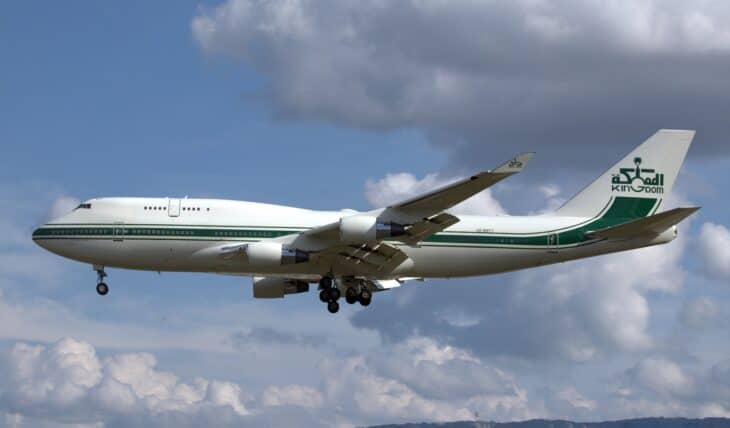

The same engine also flew on the Boeing 767, the Airbus A300 and A310, the McDonnell Douglas MD-11 and the Lockheed C-5M Super Galaxy. Its installed base is the largest of any widebody engine in history, by GE’s own count.
That is why the supply runs so deep. GE has delivered more than 8,500 CF6 engines of all versions since the family entered service on the DC-10 in 1971.
What one PE6000 makes
ProEnergy rates the PE6000 at 50.2 megawatts gross, with a five-minute start. Most reports quote about 48 megawatts of usable output per unit. Twenty-one of them add up to more than 1 gigawatt.
ProEnergy says it has built 75 PE6000 packages since 2020, with another 52 being assembled or on order as of October 2025. One test unit had logged 750 hours at a Houston facility by 2023, according to AeroTime.
The jumbo itself is down to a fraction of its peak. About 420 of the 1,574 747s built still fly, and most of the 747s still flying are freighters. Every GE-powered one that is parted out releases engines into this new market.
Why It Matters: Old Engines Are Worth More Off the Wing
For decades, a retired airliner engine had two fates: overhaul it to fly again, or tear it down and sell the parts. Power generation adds a third buyer, and that changes the math for the whole used-engine market.
New York-based FTAI Aviation is the clearest example. Its CEO, Joe Adams, said the engines are “worth more to us than they’re worth in the secondary market for part value.”
FTAI’s bet is the CFM56, the engine family under the Boeing 737NG. Its Mod-1 generator uses a CFM56 core and, in tests in Miami, met its targets of 23 megawatts continuous and 25 megawatts peak on both natural gas and liquid fuel.
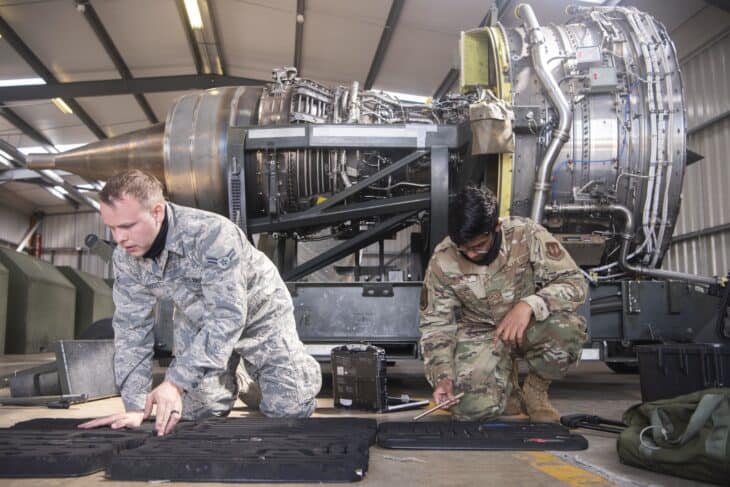

The engine shops are adjusting too. AeroTime reports that UK-based AerFin bought three CFM56s for teardown and returned one to service by swapping two serviceable modules into it. In October 2026, FTAI agreed to hand United Airlines a serviceable CFM56-7B ahead of a scheduled removal, then buy the engine United takes off.
In other words, the engines airlines retire are becoming feedstock for two industries at once. An airline still flying older jets now competes with data center builders for the same spare cores.
What Comes Next: A $1.465 Billion Order and a Supersonic Startup
The orders are getting bigger. In July 2026, J&F Power Systems, FTAI’s joint venture with Jereh Group, signed an initial $1.465 billion order for Mod-1 generator sets with an unnamed international cloud service provider, with deliveries in batches through November 2027.
FTAI says it now has contracts for more than 100 CFM56-based generators for US and Canadian customers in 2027 and 2028.
Aviation is also building new turbines for the same customers. Boom Supersonic is developing a turbine core for its Overture airliner’s Symphony engine and a 42-megawatt natural gas turbine called Superpower. Crusoe has ordered 29 of them, with first deliveries targeted for mid-2027.
The airliner half of that plan is slipping. United CEO Scott Kirby said in October 2026 that Overture would miss its 2029 entry-into-service target: “It’s not going to happen in ’29. It’s going to take longer.”
None of these turbines is a permanent answer. ProEnergy’s two buyers plan five to seven years of bridging power, and the supply of CF6 cores is finite. But for their first years, some AI data centers will run on engines that once carried passengers across oceans.
Sources and references used for research and fact-checking.
- AeroTime, Retired jet engines finding second life powering AI data centers
- IEEE Spectrum, Data Centers Look to Old Airplane Engines for Power
- Mexico Business News, ProEnergy Converts Boeing 747 Engines to Power AI Data Centers
- ProEnergy, PE6000 Aeroderivative Gas Turbine
- GE Aerospace, CF6 Engine
- Wikipedia, General Electric CF6
- Wikipedia, Boeing 747-400
- Pulse 2.0, FTAI Secures $1.465 Billion Gas Turbine Generator Order Through J&F Power Systems
Get the Newsletter
The latest aviation news and stories sent to your inbox.
About the Author

Tim is the owner and lead editor of AeroCorner since 2019, overseeing aviation content covering aircraft, airlines, airports, and the broader aviation industry. Through years of researching, writing, editing, and publishing aviation-focused content, he has developed extensive practical knowledge of commercial aviation and air travel. Based in Asia and a frequent traveler himself, Tim also brings firsthand passenger experience to AeroCorner’s coverage. Outside of publishing, he has also explored aviation firsthand through hands-on flight training in New Zealand.