

Table of Contents
The metal is gallium, and it is the reason a sabotage case at an Irish airport reads like a materials science lesson.
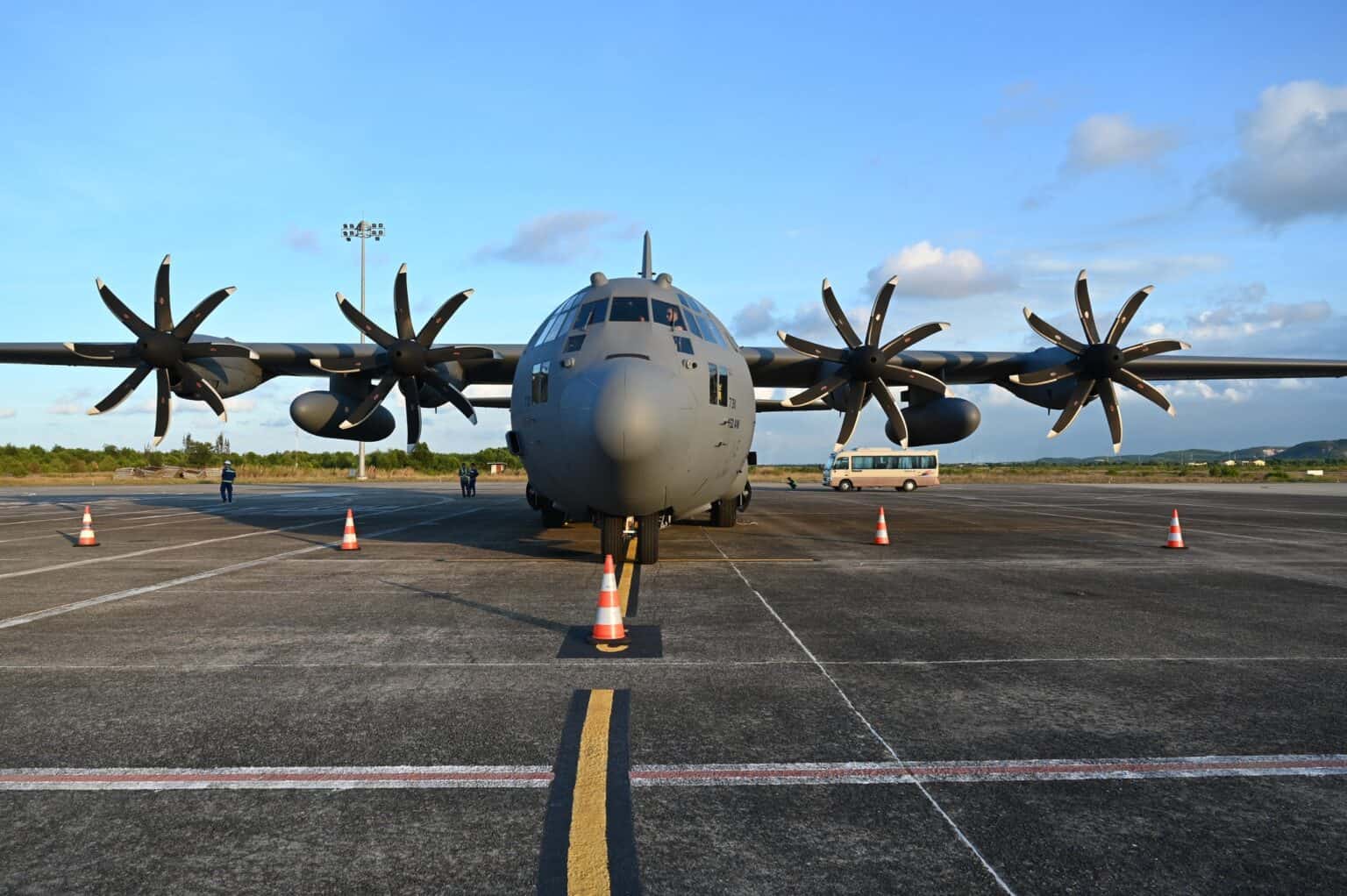
On Nov. 17, 2026, federal prosecutors in Manhattan announced an indictment of Daithi O’Corrain, 48, an Irish national, over the April 11 attack on a U.S. Air National Guard C-130H Hercules parked at Shannon Airport. Prosecutors value the aircraft at about $60 million and say the damage left it “effectively destroyed.”
Among the items prosecutors say he carried aboard were capsules of gallium, a metal that turns liquid at 85.6°F (29.8°C) and attacks aluminum. Every allegation below comes from the charging papers. O’Corrain is presumed innocent, and he has not entered a plea.
How prosecutors say a Hercules was taken apart from the inside
The aircraft belonged to the 139th Airlift Wing of the Missouri Air National Guard, which flies C-130H2 Hercules transports from Rosecrans Air National Guard Base in St. Joseph, Missouri. The wing and U.S. Air Forces in Europe confirmed the unit to Task & Purpose the day after the attack.
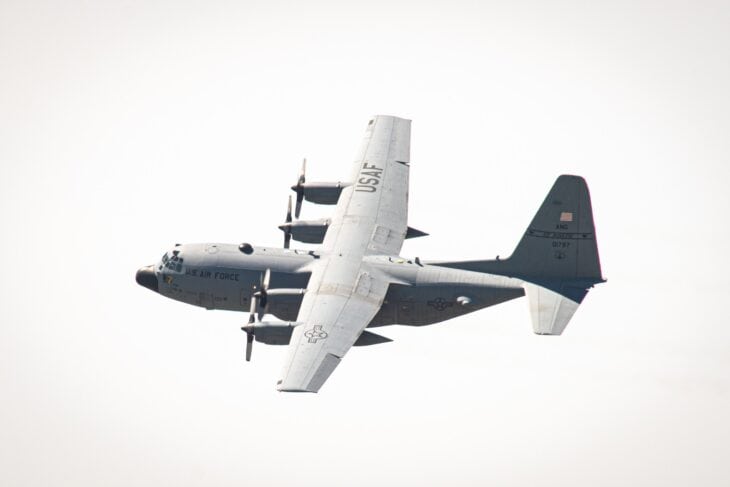

According to the indictment, O’Corrain got onto the airfield early that Saturday, broke the lock on the rear crew door of the C-130H Hercules and barricaded himself inside. Prosecutors say he sealed the doors with straps, brackets and screws, and packed the door tracks with ball bearings mixed with epoxy.
Then, prosecutors allege, he cut wire bundles and hydraulic lines, punctured air ducts, crimped a liquid oxygen line and destroyed every gauge in the cockpit.
When the flight crew spotted him, the indictment says, he climbed out through a roof hatch and struck the exterior with an axe. He is also accused of removing overhead refueling caps and pouring unknown substances and ball bearings into the fuel tanks before Irish police arrested him.
“This was not an act of spontaneous vandalism,” said James C. Barnacle Jr., the FBI’s assistant director in charge in New York. Prosecutors say O’Corrain spent months researching the aircraft’s construction, ordering tools and gallium, scouting fence breach points and studying earlier attacks at Shannon.
Why a metal that melts in your palm frightens aircraft engineers
Gallium is a soft, silvery metal with a melting point of 85.6°F (29.8°C). Body temperature is about 99°F (37°C), so a solid lump turns to liquid in a closed hand.
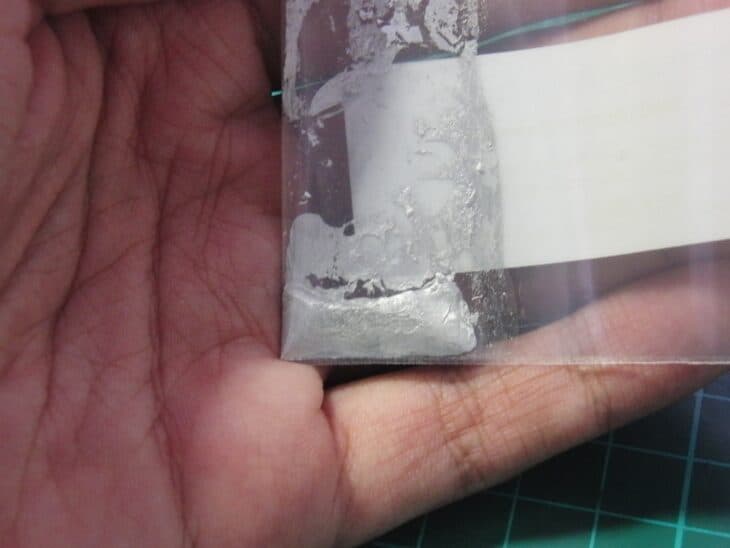

That party trick hides the danger. Liquid gallium slips into the cracks and grain boundaries of aluminum, the metal most airframes are built from, and strips the alloy of its strength. Metallurgists call this liquid metal embrittlement: a part that would normally bend can crack instead.
Aluminum in contact with liquid gallium is a well-documented case. Mercury, another metal that is liquid at room temperature, is treated as a serious danger in aircraft for the same family of reasons.
Regulators treat it accordingly. U.S. hazardous materials rules (49 CFR 173.162) let gallium travel by road, rail or sea in Packing Group III packaging, but by air it must be packed to the stricter Packing Group I standard, with leakproof liners or bags.
Even a device holding no more than 100 milligrams of it must fly as cargo. It may not go in a passenger’s or crew member’s bags unless a specific exception applies.
Was the gallium actually used?
Accounts of the charging papers differ. Prosecutors say O’Corrain brought capsules of gallium aboard. Air & Space Forces Magazine reports the indictment alleges he poured multiple capsules onto the aircraft, while The Aviationist reads the same document as not saying whether the gallium was used.
The numbers in the indictment
The headline figure is the airframe’s value: approximately $60 million, according to the indictment. The aircraft carried serial 91-1653, The Aviationist reported, a number whose first two digits mark the 1991 fiscal year it was bought with.
The charge is a single count of destruction of government property. It carries a maximum sentence of 10 years in prison, and any sentence would be set by a judge.
The most alarming line in the Justice Department’s statement concerns the aircraft’s liquid oxygen line. “Had O’Corrain cut, rather than crimped, the aircraft’s liquid oxygen line, as he had its wire bundles, there would have been a high chance of a massive explosion within the aircraft,” it said, as quoted by Air & Space Forces Magazine.
Prosecutors say that risk extended to people nearby, including U.S. troops. No one was injured, U.S. Air Forces in Europe said at the time.
Why Shannon keeps ending up in these stories
Shannon, on Ireland’s west coast, is a major hub for U.S. troops and equipment crossing the Atlantic, Air & Space Forces Magazine notes. That traffic has drawn protests, and break-ins.
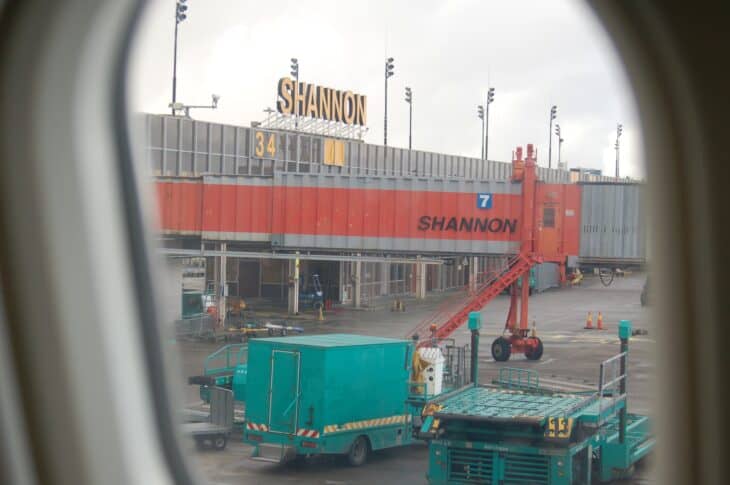

The April attack followed three security breaches in 2025 alone, Air & Space Forces Magazine reported: a van through the perimeter on May 1, a runway intrusion on May 17 in which a military aircraft was sprayed with paint, and a second van breach near a U.S. C-40 on Nov. 22.
Those earlier incidents were paint and trespass. The Shannon C-130 case is different in kind: prosecutors describe a planned, inside-the-aircraft attack on the systems that keep a Hercules flying, and they say the result was a total loss.
An online fundraiser for O’Corrain’s defense calls the episode direct action against the U.S. military presence in Ireland, the Associated Press reported. That is his supporters’ framing, not a finding of any court.
What happens to the case, and the airframe, now
As of Nov. 18, O’Corrain was not in U.S. custody, and prosecutors had not said whether they will seek his extradition. He separately faces criminal damage and trespass charges in Ireland, where the High Court granted him bail in May. Our news report on the U.S. indictment has the charging details.
The aircraft will not fly again. A Justice Department photo shows it after U.S. personnel removed its tail so it could be stored and dismantled.
Losing one airframe will not ground a type that has been flying since Aug. 23, 1954, and of which more than 2,700 had been built by June 2024. But the H model is no longer made: the C-130J Super Hercules is the only version still in production, so a destroyed C-130H cannot simply be replaced like for like.
What the case leaves behind is a lesson aircraft engineers already knew. The detail that turned an airport break-in into a materials lesson was not the axe, but a few capsules of a metal soft enough to melt in a palm.
Sources and references used for research and fact-checking.
- Air & Space Forces Magazine, Feds: Irish National Vandalized C-130 So Thoroughly It Was 'Effectively Destroyed'
- The Aviationist, U.S. Court Charges Irish Citizen for Destroying a C-130 Hercules
- Associated Press via Yahoo News, Irish man charged with wrecking US military C-130
- ABC News, Man charged for allegedly destroying US military plane parked in Irish airport: Feds
- Yahoo News, Irish man charged with destroying $60 million US military plane at Shannon Airport
- Task & Purpose, Air Force C-130 damaged at Shannon Airport in Ireland
- Wikipedia, 139th Airlift Wing
- Wikipedia, Gallium
- Wikipedia, Liquid metal embrittlement
- Cornell Law School Legal Information Institute, 49 CFR 173.162 - Gallium
- Wikipedia, Lockheed C-130 Hercules
- Wikipedia, United States military aircraft serial numbers
Get the Newsletter
The latest aviation news and stories sent to your inbox.
About the Author

Tim is the owner and lead editor of AeroCorner since 2019, overseeing aviation content covering aircraft, airlines, airports, and the broader aviation industry. Through years of researching, writing, editing, and publishing aviation-focused content, he has developed extensive practical knowledge of commercial aviation and air travel. Based in Asia and a frequent traveler himself, Tim also brings firsthand passenger experience to AeroCorner’s coverage. Outside of publishing, he has also explored aviation firsthand through hands-on flight training in New Zealand.