

Table of Contents
The airline that invented the Pokémon Jet has three new ones for the franchise’s 30th birthday, and the green one is the only one that leaves Japan.
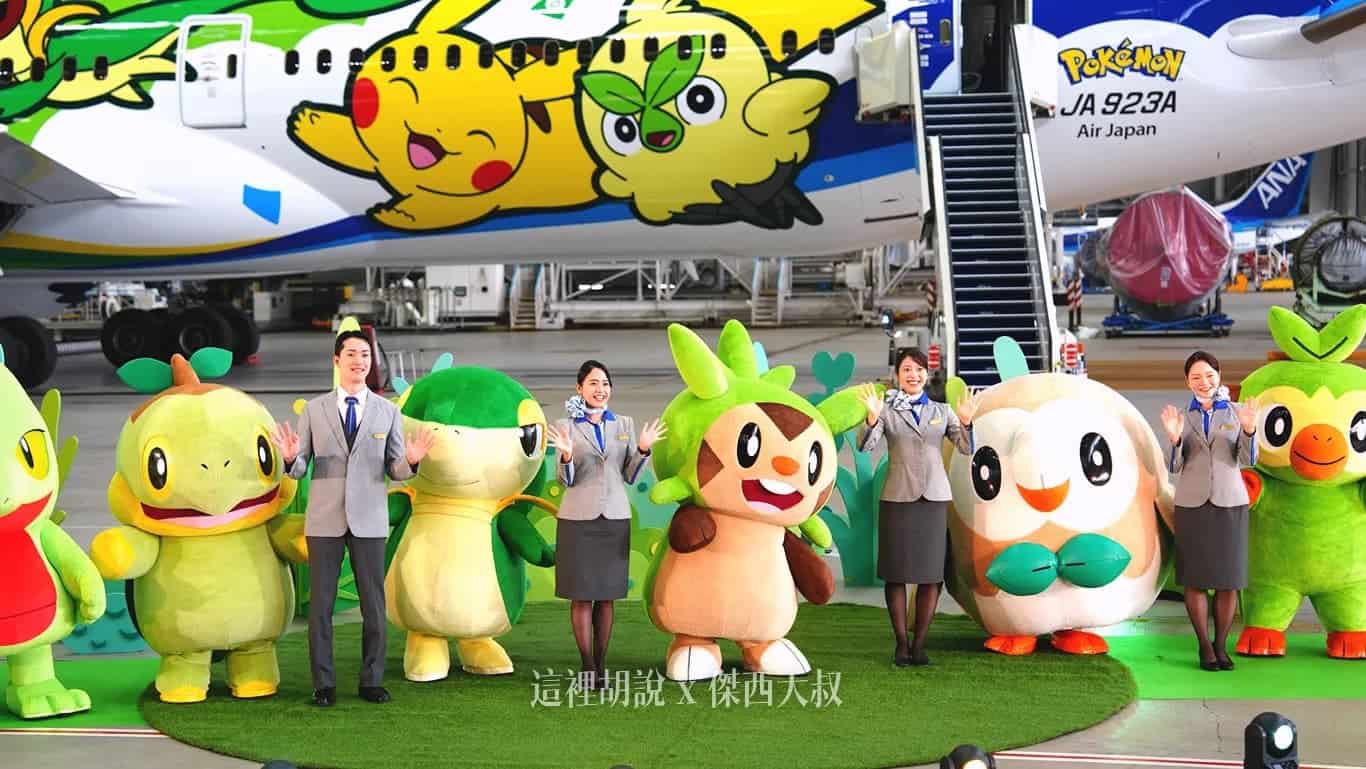
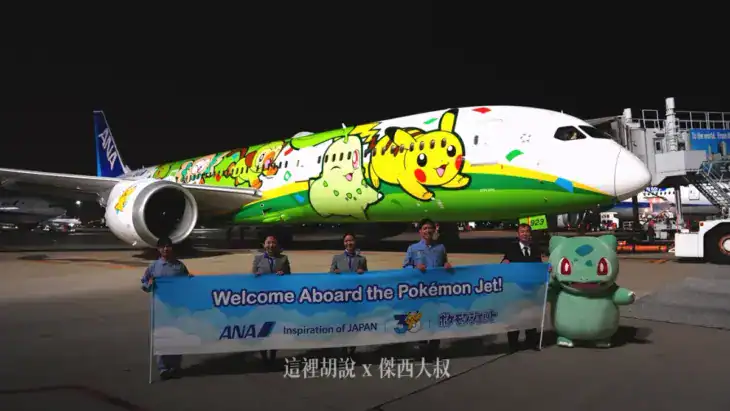
All Nippon Airways’ Green Pokémon Jet, a Boeing 787-9 registered JA923A, flew its first passenger service on September 18, 2026. It left Tokyo Haneda as flight NH186 for Honolulu, pushing back at 9:58 PM with 246 passengers and seven infants aboard, Simple Flying reported.
It crossed the International Date Line and landed in Hawaii at 10:35 AM local time. The first airliner ANA ever painted with Pokémon was a Boeing 747-400D in 1998. ANA flew its last 747 passenger service in 2014.
Red, Green and Blue: Why ANA Painted Three Pokémon Jets in 2026
The colors are a Pokémon history lesson. The first games went on sale in Japan on February 27, 1996, as Pocket Monsters Red and Pocket Monsters Green. A Blue version followed that October as a mail-order special edition.
ANA says the project marks two anniversaries at once: 30 years since Red and Green, and 40 years since the airline began international flights. So it built one jet for each original color.
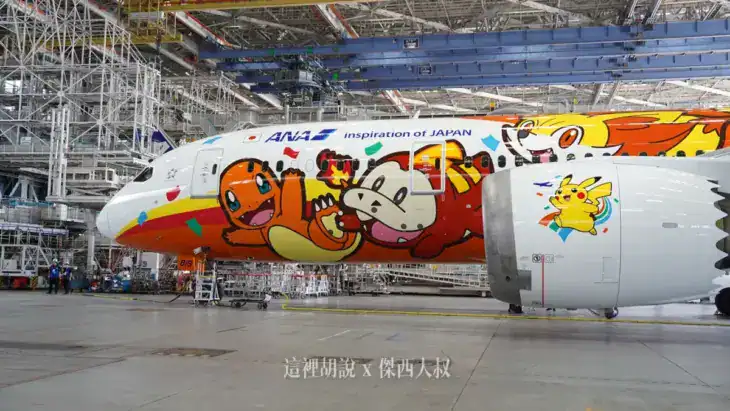
Each livery puts Pikachu alongside the starter Pokémon of one type, the partner a player picks at the start of every game. Red carries the fire types, Green the grass types and Blue the water types.
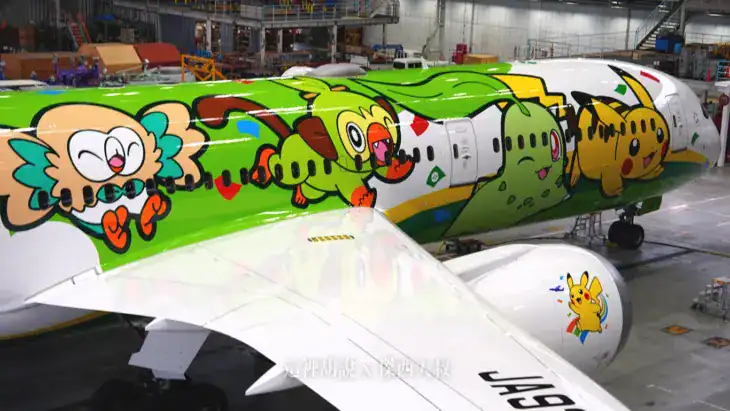
The Green jet’s cabin runs through every generation of grass starter, from Bulbasaur and Chikorita to Rowlet, Grookey and Sprigatito. ANA frames the idea as the excitement of starting a journey with a first partner, which is a neat fit for an airliner.
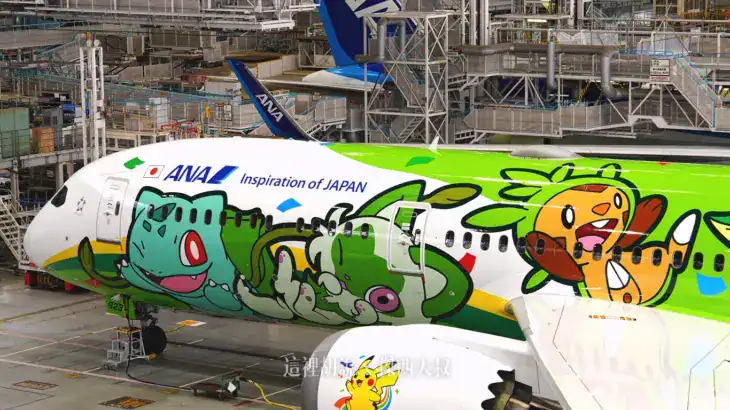
The version America never got
Pokémon Green was sold only in Japan. North America received Pokémon Red and Blue on September 28, 1998. Of ANA’s three 2026 jets, the Green one is the only one assigned to international routes, including Honolulu and Seattle.
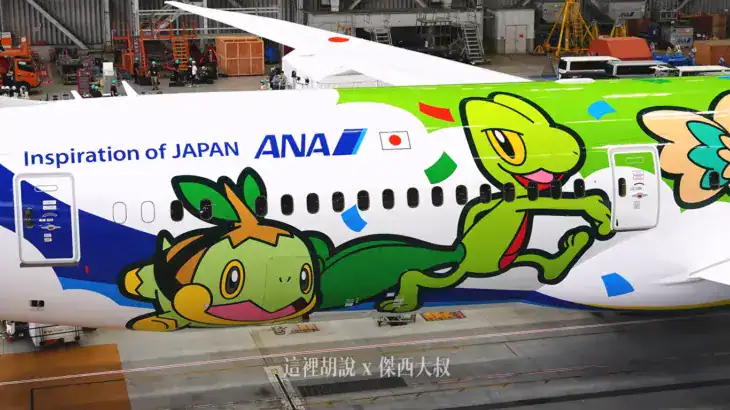
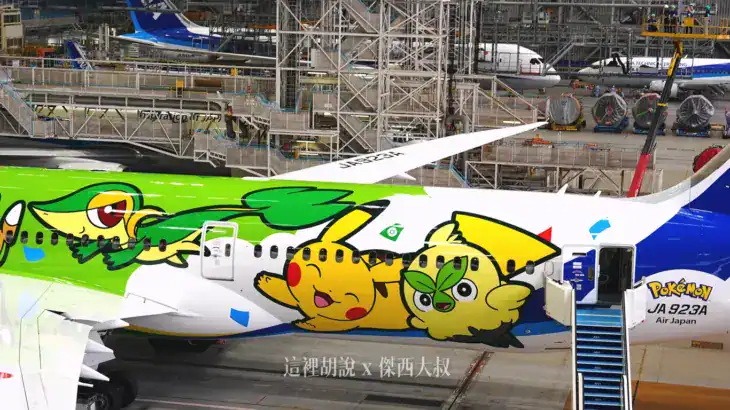
28 Years of Pokémon Jets, From a 747 to a 787
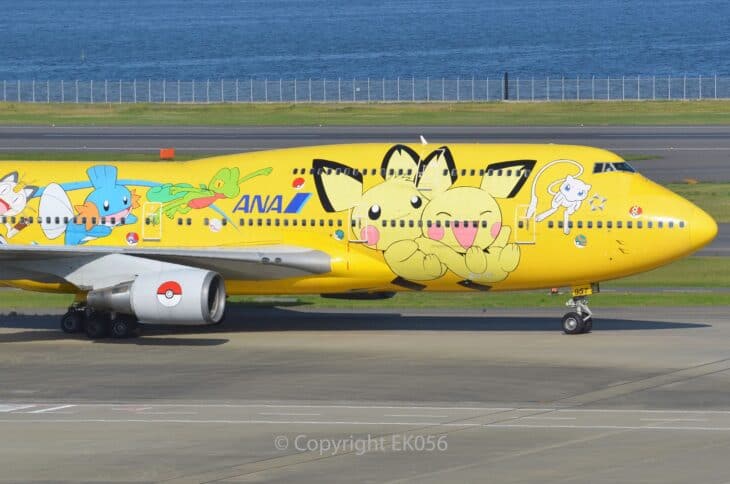
ANA calls its 1998 aircraft the world’s first Pokémon Jet. That summer it rolled out a Boeing 747-400, the domestic 747-400D registered JA8965, along with 767-300s JA8569 and JA8578 in the same design.
The 1998 design put four Pikachu on the jumbo alongside Bulbasaur, Squirtle, Jigglypuff, Snorlax and Mewtwo, according to the fan encyclopedia Bulbapedia’s aircraft records. In February 1999 a second, international 747-400 took the idea to New York.
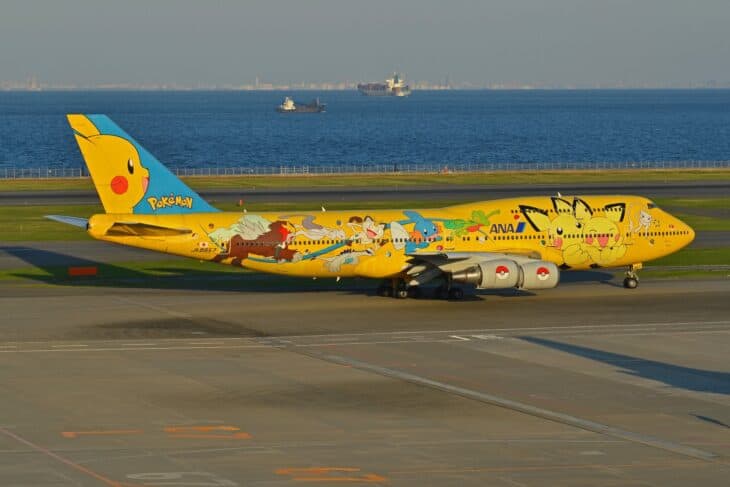
ANA operated ten Pokémon Jets between 1998 and 2016, including the yellow Pikachu Jumbo of 2004. The last of them, a Boeing 777 called the Peace Jet, was scheduled to make its final flight from Naha to Tokyo on April 15, 2016.
Then nothing for seven years. The brand came back on June 4, 2023, with the Pikachu Jet NH, a 787-9 registered JA894A that flew to Southeast Asia, Delhi, Vancouver, Sydney and Honolulu.
The 2026 set runs across three airframes:
- Red Pokémon Jet: Boeing 787-8 JA819A, domestic routes, in service since July 29, 2026 (first flight NH243 Haneda to Fukuoka).
- Green Pokémon Jet: Boeing 787-9 JA923A, international routes, in service since September 18, 2026.
- Blue Pokémon Jet: Boeing 737-800 JA56AN, domestic routes, due in December 2026 or later.
Why the Pokémon Jet Is a Dreamliner Now
The 747 option ran out on March 31, 2014, when 747-400D JA8961 flew ANA’s last 747 revenue service. It had logged 33,751 takeoffs and landings over 24 years.
Its replacement at ANA was the Boeing 787 Dreamliner, and ANA got there first. It was the 787’s launch operator in 2011, and the stretched 787-9 is now the most common Dreamliner in its fleet.
By March 2026, ANA had 87 Dreamliners in service, according to Simple Flying’s count from Planespotters data: 33 787-8s, 44 787-9s and ten 787-10s. That made it the world’s largest 787 operator at the time, three aircraft ahead of United.
JA923A itself was delivered in 2019. It is one of the 44 787-9s in that March count.
ANA also no longer has the idea to itself. The Pokémon Company’s Pokémon Air Adventures program has put Pikachu on a Skymark 737-800 (2021), a Scoot 787-9 (2022) and two Garuda Indonesia 737-800s (2024 and 2025).
Where the Green Pokémon Jet Flies Until March 2027
ANA has scheduled JA923A on international routes from September 18, 2026, to March 27, 2027. From Haneda, the pool covers Honolulu, Seattle, Vancouver, Sydney, Manila, Singapore, Delhi, Bangkok, Jakarta and Kuala Lumpur.
From Narita, it adds Perth, Singapore, Bangkok, Jakarta and Mumbai. Which Tokyo airport a route uses is a long story of its own, covered in why Tokyo has two major airports.
There is a catch for anyone trying to book it. ANA says route assignments can change daily and are confirmed only on the day of the flight, so no ticket guarantees the Pokémon jet.
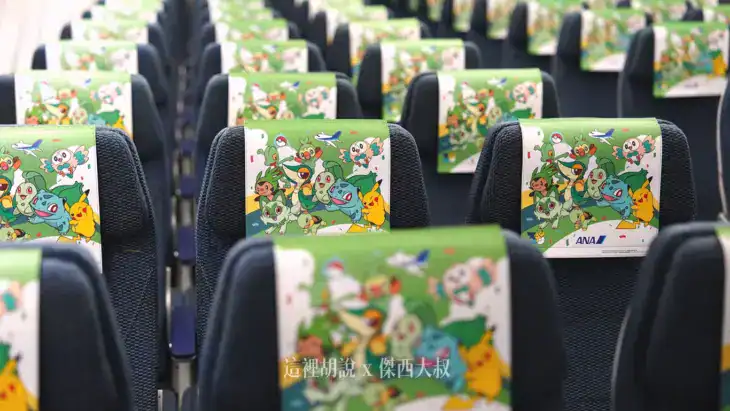
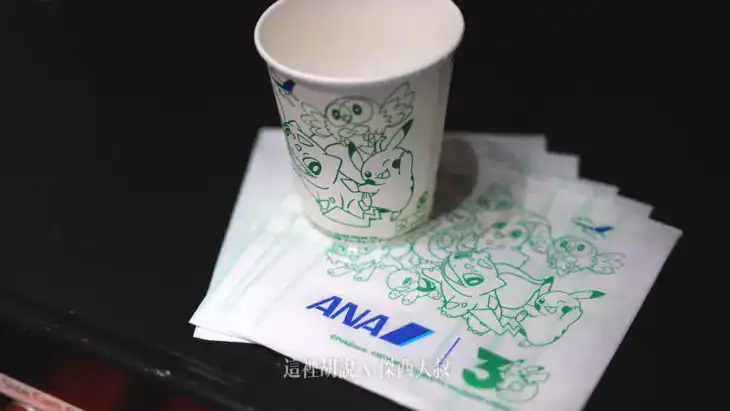
Passengers who do land it get Pokémon headrest covers in Economy and Premium Economy, 30th-anniversary cups, and themed cocktail napkins up to Business. ANA has also asked fans not to request autographs: cabin crew will not sign or write messages in logbooks, for safety reasons.
The Blue jet will finish the set on domestic routes around the end of the year. Until then, the version of Pokémon that was never sold outside Japan is the only one of the three you can catch in the United States.
Sources and references used for research and fact-checking.
- ANA, Pokémon 30th Anniversary: Red, Green and Blue Pokémon Jet
- ANA HOLDINGS, ANA Reveals Launch Date for Green Pokémon Jet Special Livery
- ANA HOLDINGS, Designs of Pokémon Jet Red and Pokémon Jet Green
- ANA HOLDINGS, Red Pokémon Jet: First flight takes off on July 29
- ANA HOLDINGS, Design for the Blue Pokémon Jet unveiled
- Simple Flying, 2 Of 3: ANA Unveils 2nd Pokémon-Themed Aircraft Of 2026 With Inaugural Flight To Honolulu
- AeroTime, ANA's Green Pokémon Jet takes to the skies
- AeroTime, ANA introduces Pikachu Jet: the first Pokémon Jet in 7 years
- KN Aviation, Pokemon Jets of the Past, the Present and the Future
- Bulbapedia, Pokémon aircraft
- Wikipedia, Pokémon Red, Blue, and Yellow
- AirlineReporter, Hello, Goodbye: The Last Boeing 747-400D
- Simple Flying, 5 Airlines With The Largest Boeing 787 Fleets In 2026
Get the Newsletter
The latest aviation news and stories sent to your inbox.
About the Author

Tim is the owner and lead editor of AeroCorner since 2019, overseeing aviation content covering aircraft, airlines, airports, and the broader aviation industry. Through years of researching, writing, editing, and publishing aviation-focused content, he has developed extensive practical knowledge of commercial aviation and air travel. Based in Asia and a frequent traveler himself, Tim also brings firsthand passenger experience to AeroCorner’s coverage. Outside of publishing, he has also explored aviation firsthand through hands-on flight training in New Zealand.