Military Propellor Planes
Messerschmitt Me 410
ICAO: ME410
The Messerschmitt Bf 110 was the Luftwaffe's twin-engine heavy fighter, a failure as a daylight escort over Britain in 1940 that was reborn as Germany's most successful night fighter.
Updated: by Tim de Vries
The latest aviation news and stories sent to your inbox.
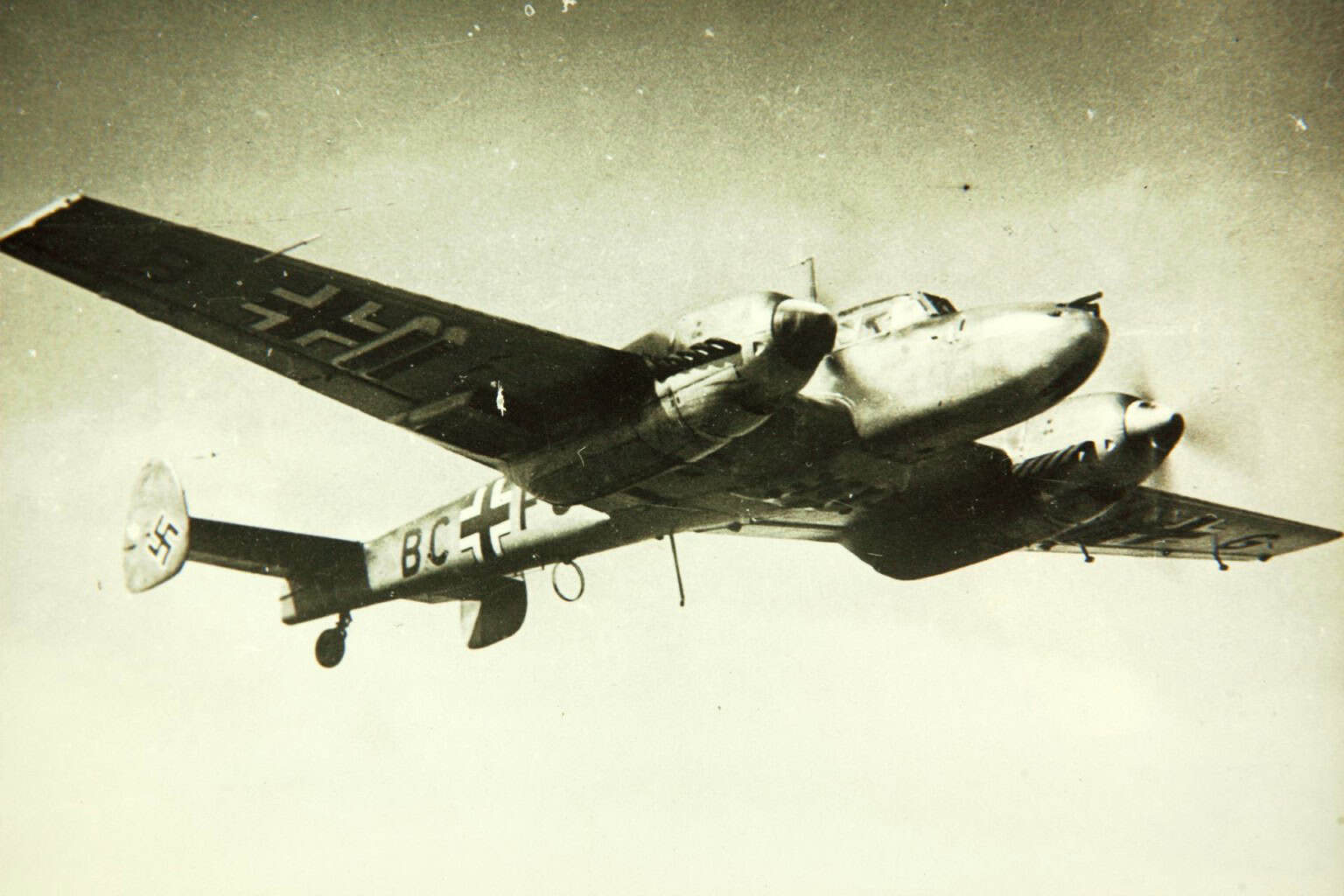
The Messerschmitt Bf 110 was a German twin-engine heavy fighter, or Zerstörer, designed in the 1930s to escort bombers deep into enemy territory. It first flew on 12 May 1936, entered Luftwaffe service in 1937 and was built until 1945, with 6,170 produced. It lost its daylight escort role in the Battle of Britain, then found a second career as a ground-attack aircraft and, above all, as the Luftwaffe’s main night fighter.
Live Fleet Activity (BF110)
Fetching live data…
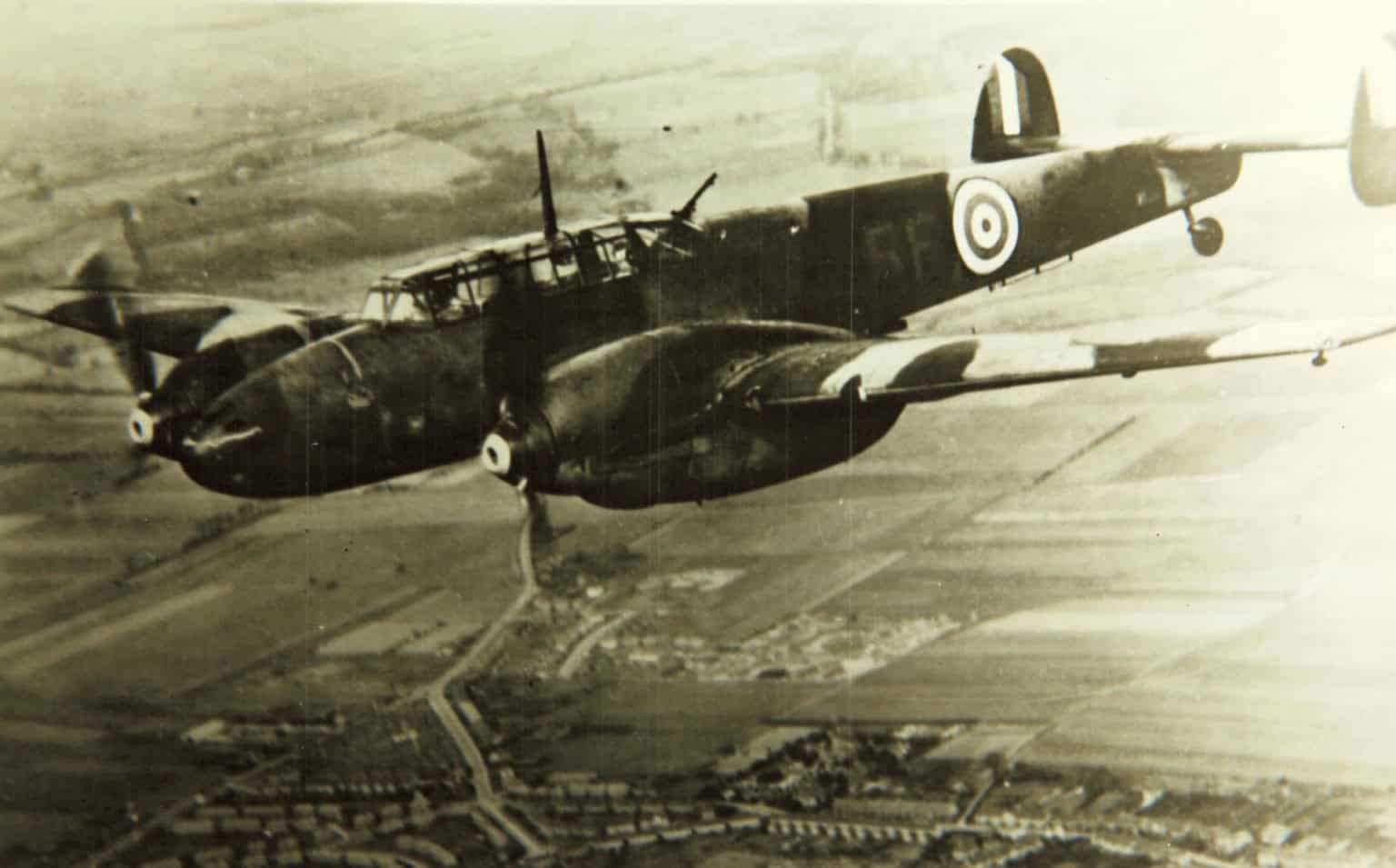
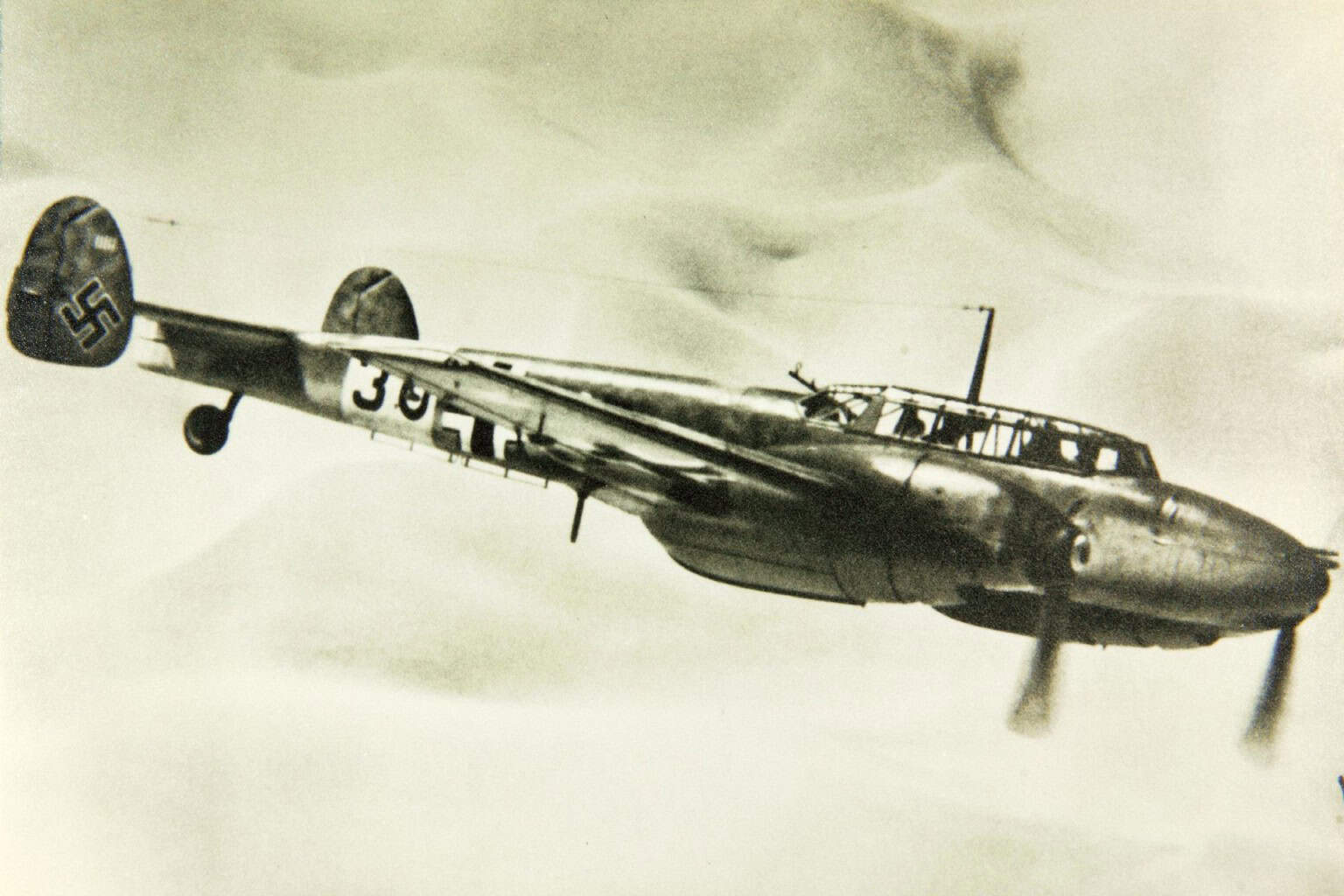

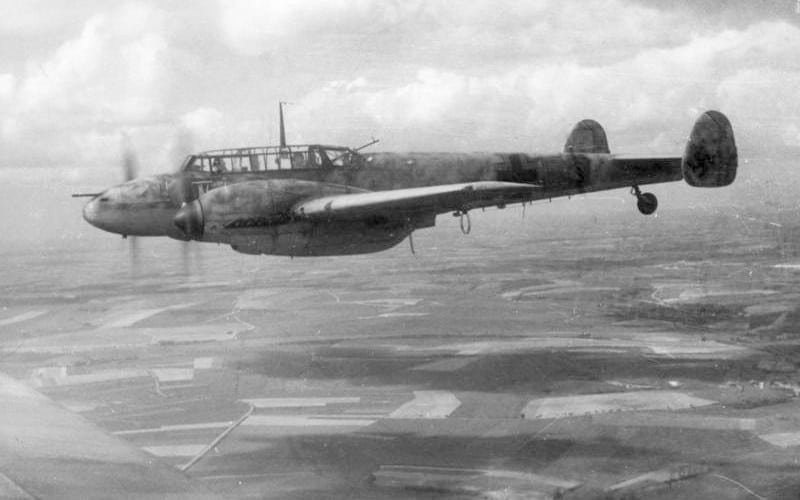
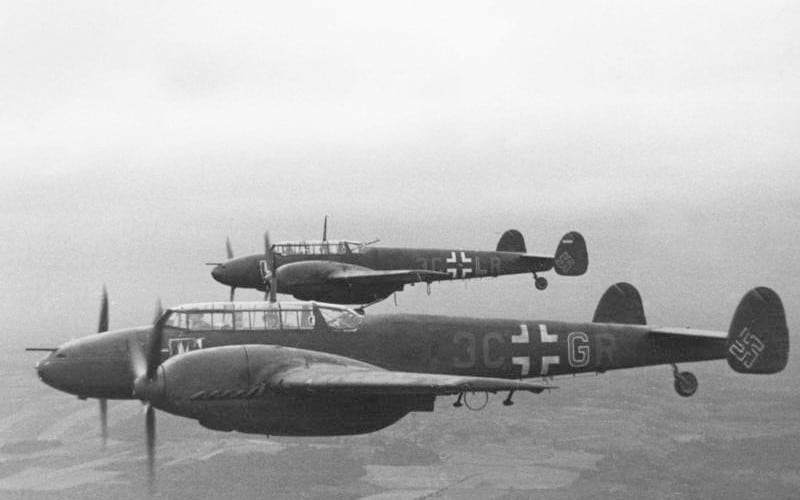


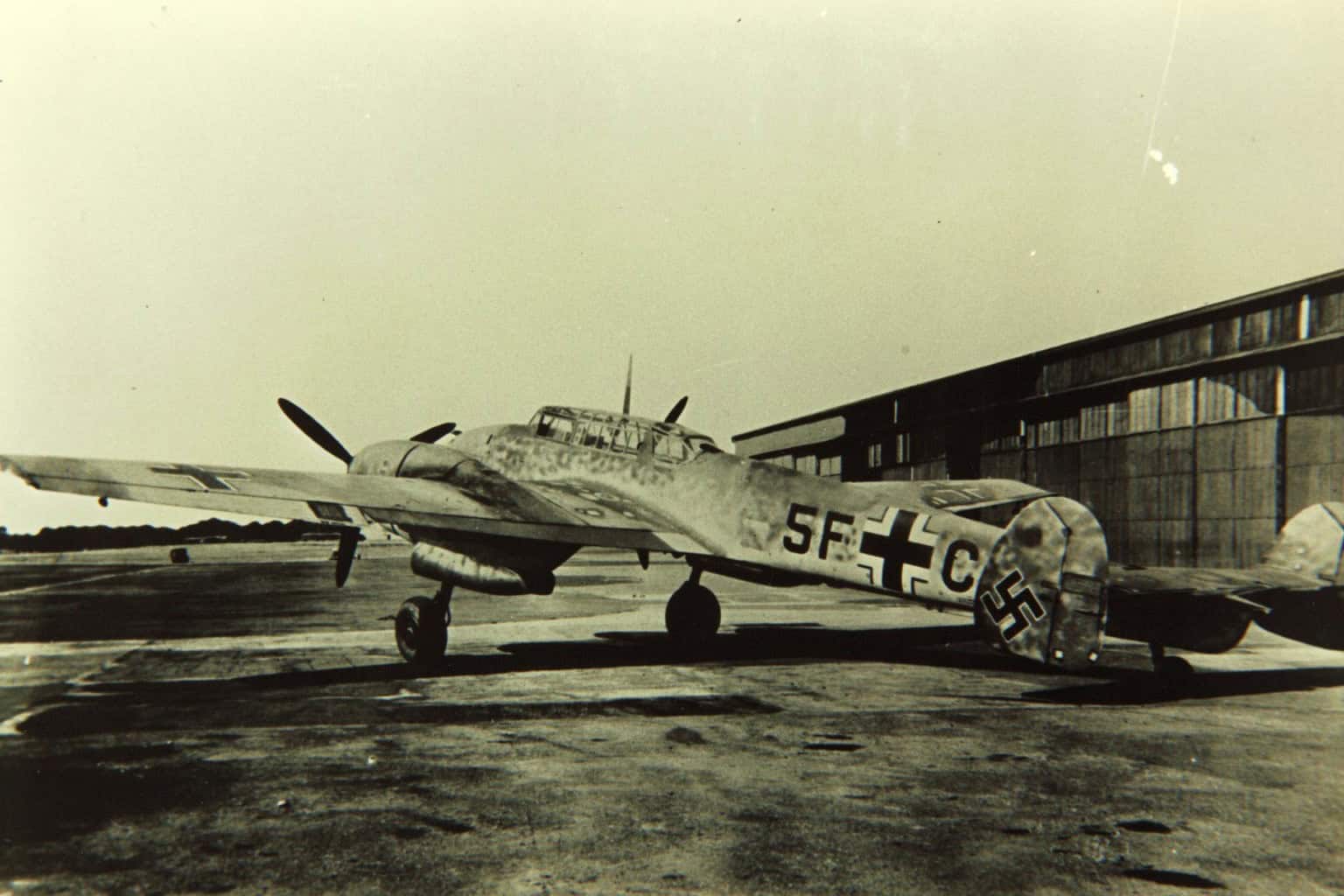


The Messerschmitt Bf 110 was a twin-engine, three-seat, all-metal heavy fighter built for the Luftwaffe. Germany called this class of aircraft the Zerstörer, or “destroyer.”
The idea was a long-range fighter that could escort bombers deep into enemy territory and still win a dogfight. The prototype first flew on 12 May 1936, and 6,170 were built before production ended in 1945.
The full specification table for the aircraft is on this page. The sections below explain the history behind the numbers.
The Bf 110 was a low-wing monoplane with two Daimler-Benz DB 601 inverted V-12 engines, an enclosed cockpit for the pilot and a rear gunner-radio operator, and a heavy forward-firing armament.
Early production aircraft, the Bf 110 C series, carried two 20 mm MG FF cannon and four 7.92 mm MG 17 machine guns in the nose. A single 7.92 mm MG 15 gun covered the rear.

The Bf 110 was meant to be the escort that made the Luftwaffe’s bombers safe. Over Britain in 1940 it was not.
It could not out-turn single-engine fighters, and the RAF exploited that weakness whenever Bf 110s covered German bombers. Historian accounts record nearly thirty destroyed on 15 August alone. The Luftwaffe lost 223 of the 237 it began the battle with, and replacements could not keep pace.
After the battle the type was no longer treated as an elite day fighter.
The Bf 110 did not disappear. Its range, payload and firepower made it useful as a fighter-bomber, and the Bf 110 E could carry up to 2,650 lb (1,200 kg) of bombs. During the invasion of the Soviet Union, ground attack became its main job rather than air combat.
The type’s real redemption came at night. From the winter of 1940-41 the Bf 110 became the Luftwaffe’s main night fighter. Its size let it carry crew, fuel and, later, airborne radar that a single-seat fighter could not.
The Bf 110 F-4 was the first version designed specifically for the night role. The later G-4, with 2,293 built, carried FuG 202 and FuG 220 Lichtenstein radar and optionally upward-firing Schräge Musik guns.
Heinz-Wolfgang Schnaufer, the top-scoring night fighter pilot of the war, flew the Bf 110 exclusively and claimed 121 victories.

The Bf 110 evolved through several series, each tied to a new engine or role.
Quoted Bf 110 speeds vary because they describe different variants and altitudes. The figure on this page is for the Bf 110 C-1 at about 19,685 ft (6,000 m), where the DB 601 engines made their best speed.
Later versions, such as the G series, used more powerful DB 605B engines, so their performance differs from the C-1 figures here.
The range figure is the standard range at sea level on internal fuel. Flown at economical cruise at altitude, a Bf 110 C could reach about 680 mi (1,094 km).
The Luftwaffe was the main operator. Smaller numbers served with the air forces of Hungary, Romania and Croatia, and Italy’s Regia Aeronautica received three C models.
A few captured aircraft flew with the Soviet Air Force, and the RAF’s No. 1426 Flight operated one captured example for evaluation.
Against its contemporaries the Bf 110 looked impressive on paper and poor in a turning fight. If you want to see how it stacked up against the era’s best, our guide to the best fighter aircraft in the world shows how fighter design changed after the piston era.
It depended on the job. As a daylight escort fighter in the Battle of Britain it failed, because it could not out-manoeuvre single-engine fighters. As a night fighter it was very successful, and it carried the Luftwaffe’s top night aces.
The Bf 110 C-1 reached 292 kt (336 mph, 541 km/h) at about 19,685 ft (6,000 m). At sea level it was slower. Later variants with more powerful engines changed those numbers.
Yes. From 1941 experimental airborne radar was fitted to night-fighter Bf 110s, with an effective range of about 2 miles (3.5 km). The Bf 110 G-4 carried FuG 202 and FuG 220 Lichtenstein radar.
A total of 6,170 Bf 110s were built between 1937 and 1945, including 2,293 of the G-4 night-fighter version.
Badly. The Luftwaffe lost 223 of the 237 Bf 110s it started the battle with, and the type was withdrawn from the escort role.
Sources and references used for research and fact-checking.