Military Helicopters
Boeing Vertol CH-46 Sea Knight
ICAO: H46
The latest aviation news and stories sent to your inbox.
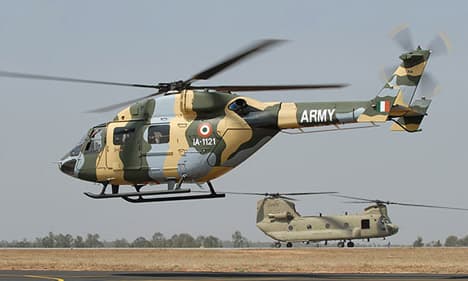
The HAL Dhruv ALH is the military-focused Advanced Light Helicopter variant of the Dhruv family. Developed for Indian armed forces requirements, it supports transport, reconnaissance, and armed missions. The aircraft builds on the core Dhruv design with mission-specific adaptations.


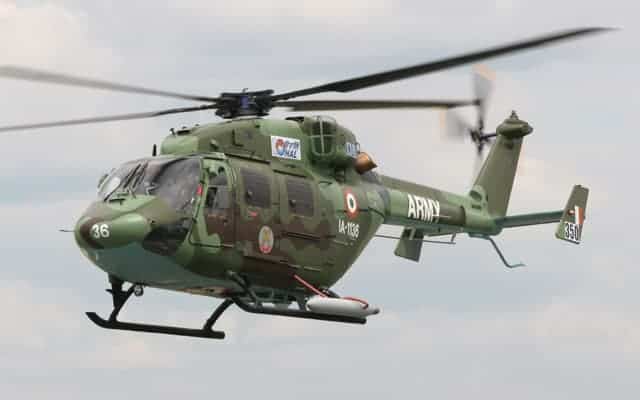
The Advanced Light Helicopter program sought to provide India with a domestically produced multirole rotorcraft. Following its first flight in 1992 and entry into service in the 2000s, the ALH variant became standard across multiple Indian military branches. It incorporates structural strengthening and mission avionics suited for operational use.
Equipped with twin Shakti turboshaft engines delivering roughly 1,400 shaft horsepower each, the ALH cruises near 140 knots (260 km/h). Maximum takeoff weight is approximately 12,100 pounds (5,500 kg). The helicopter’s composite rotor blades enhance performance at high altitude.
The ALH has operated in diverse environments, including high-altitude Himalayan regions and maritime deployments. Armed derivatives such as the Rudra add weapon systems for battlefield support. The platform continues to evolve as part of India’s expanding rotary-wing fleet.