Military Propellor Planes
Douglas SBD Dauntless
ICAO: SBD
Ground attack aircraft and close air support gunship introduced in 1965
The latest aviation news and stories sent to your inbox.
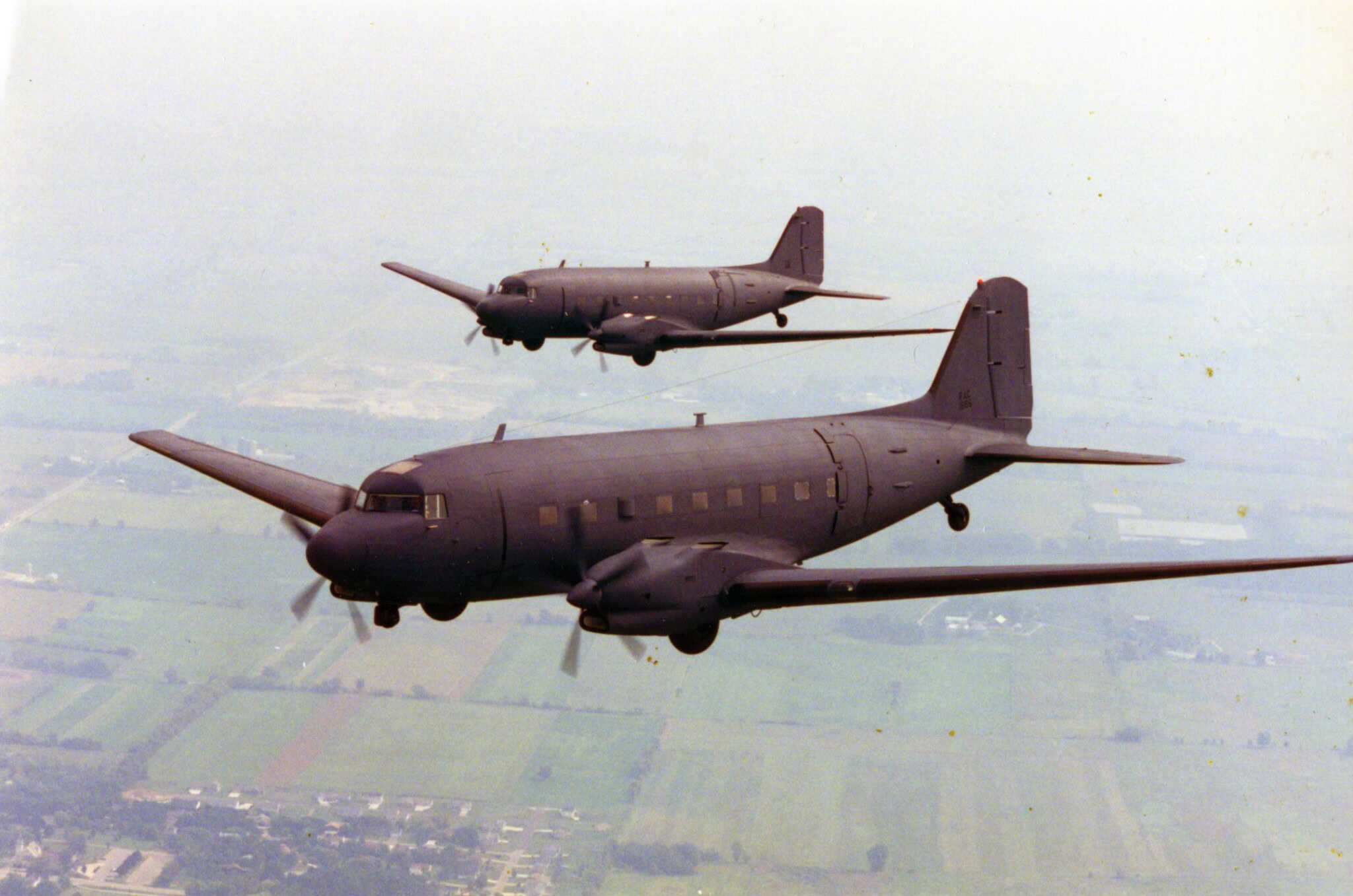
The Douglas AC-47 Spooky was developed by the United States Air Force as a ground attack aircraft and close air support gunship. It was a modification of the C-47 and was the first in a family of fixed-wing gunships throughout the Second Indochina War.
Live Fleet Activity (AC47)
Fetching live data…


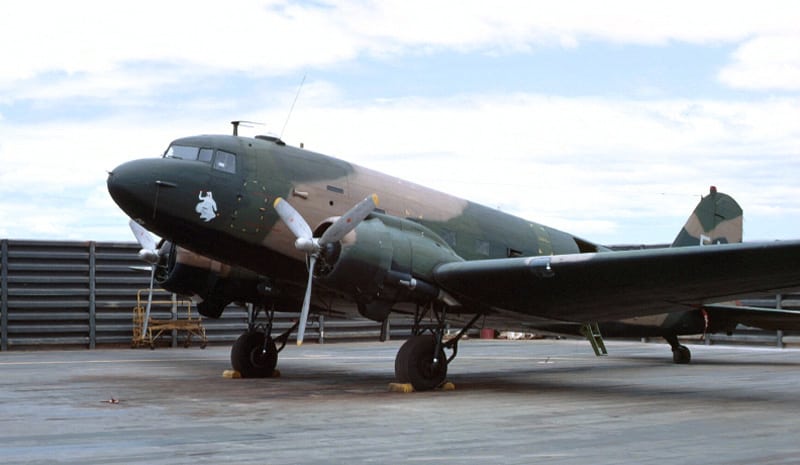


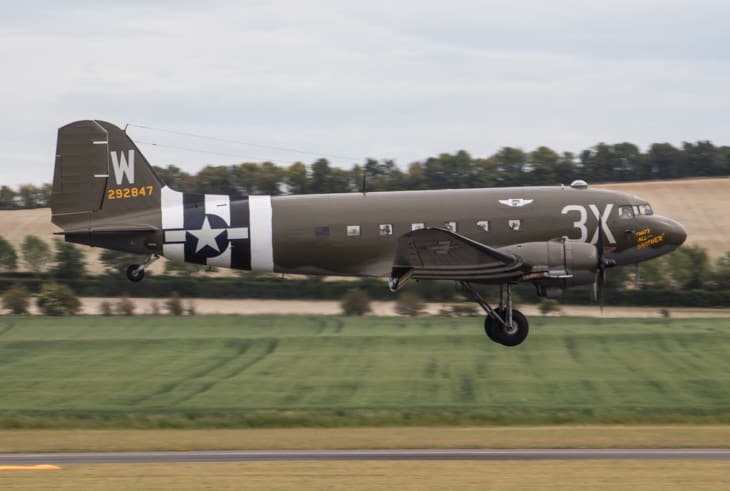
The Douglas AC-47 was a modification of the military transport C-47 incorporating 3×7.62 mm miniguns by General Electric firing from the rear windows on the left side, as well as the cargo door, to deliver close air support for ground troops.
The AC-47 was also configured with the same weaponry as of the C-47 across the world. The guns were operated through the yoke where the pilot could actuate the guns separately or cooperatively, notwithstanding that gunmen were also between the crew to aid when the guns fail or encounter any problem.
The aircraft could circle the target for hours, firing suppressive fire to prevent an enemy force from moving or shooting. It was also equipped with flares to counter an infrared bombing surface-to-air missile or air-to-air missile.
The aircraft had an external length of 19.6 meters, an external height of 5.16 meters, a tail height of 4.1 meters, and a fuselage diameter of 2.1 meters. It has a wingspan of 29 meters, a wing area of 91.7 square meters, and a wheelbase of 10.9 meters. It could accommodate seven crew members including a pilot, copilot, navigator, flight engineer, loadmaster, and two gunners.
The AC-47 is powered by two Pratt and Whitney R-1830 Twin Wasp engines. The engine is a fourteen-cylinder two-row supercharged air-cooled radial type with two overhead valves per cylinder, single-speed General Electric centrifugal-type supercharger, and a two-barrel Stromberg carburetor. Each engine produces a maximum thrust of 1,200 horsepower.
The aircraft has a maximum speed of 200 knots, a cruise speed of 152 knots, and a travel range of 1,890 nautical miles. It can fly up to 24,450 feet and can climb up to 1,130 feet per minute. The maximum takeoff weight is 15,000 kg and the maximum payload is 2,700 kg. It can store a maximum fuel capacity of 822 gallons.
The production of United States military conversion commenced from 1963 to 1965.
Sources and references used for research and fact-checking.