Military Propellor Planes
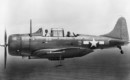
Douglas SBD Dauntless
ICAO: SBD
The Douglas A-26 Invader was introduced late in World War II as a twin-engine attack aircraft. Designed for both bomber and ground-attack missions, it combined speed with substantial armament. The aircraft continued in service long after the war.

The latest aviation news and stories sent to your inbox.
Douglas A-26 Invader — twin-engine attack aircraftThe A-26 first flew in 1942 and entered service in 1944. It featured a tricycle landing gear configuration and streamlined fuselage. The aircraft was adaptable to multiple mission profiles.Two Pratt & Whitney radial engines, each producing approximately 2,000 horsepower, powered the Invader. Cruise speed exceeded 280 knots (519 km/h). Maximum takeoff weight surpassed 35,000 pounds (15,876 kg).The Invader served in World War II, Korea, and later conflicts. Its longevity reflected robust construction and versatility. The aircraft remains a respected example of wartime attack design.
Live Fleet Activity (B26)
Fetching live data…
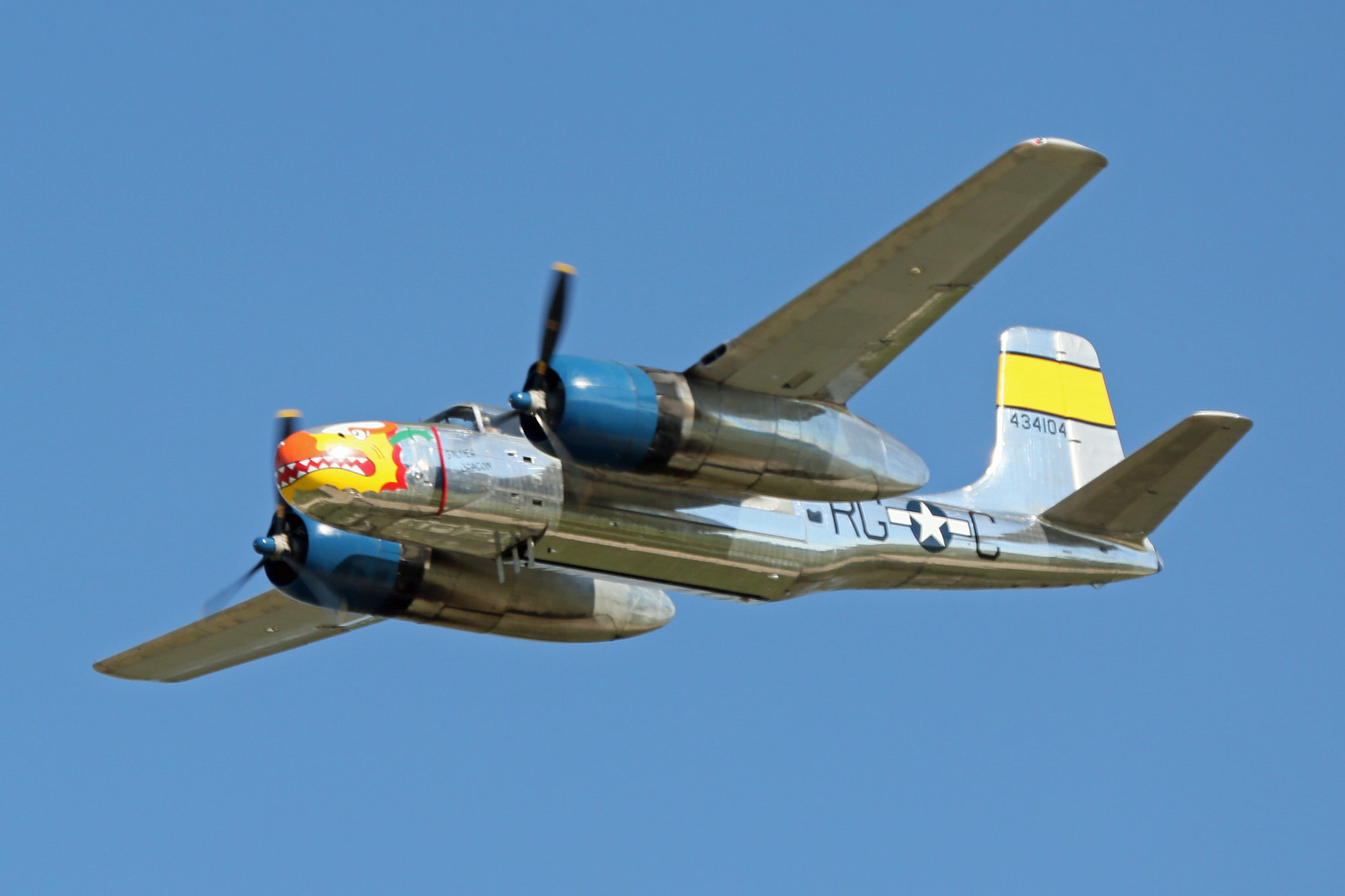
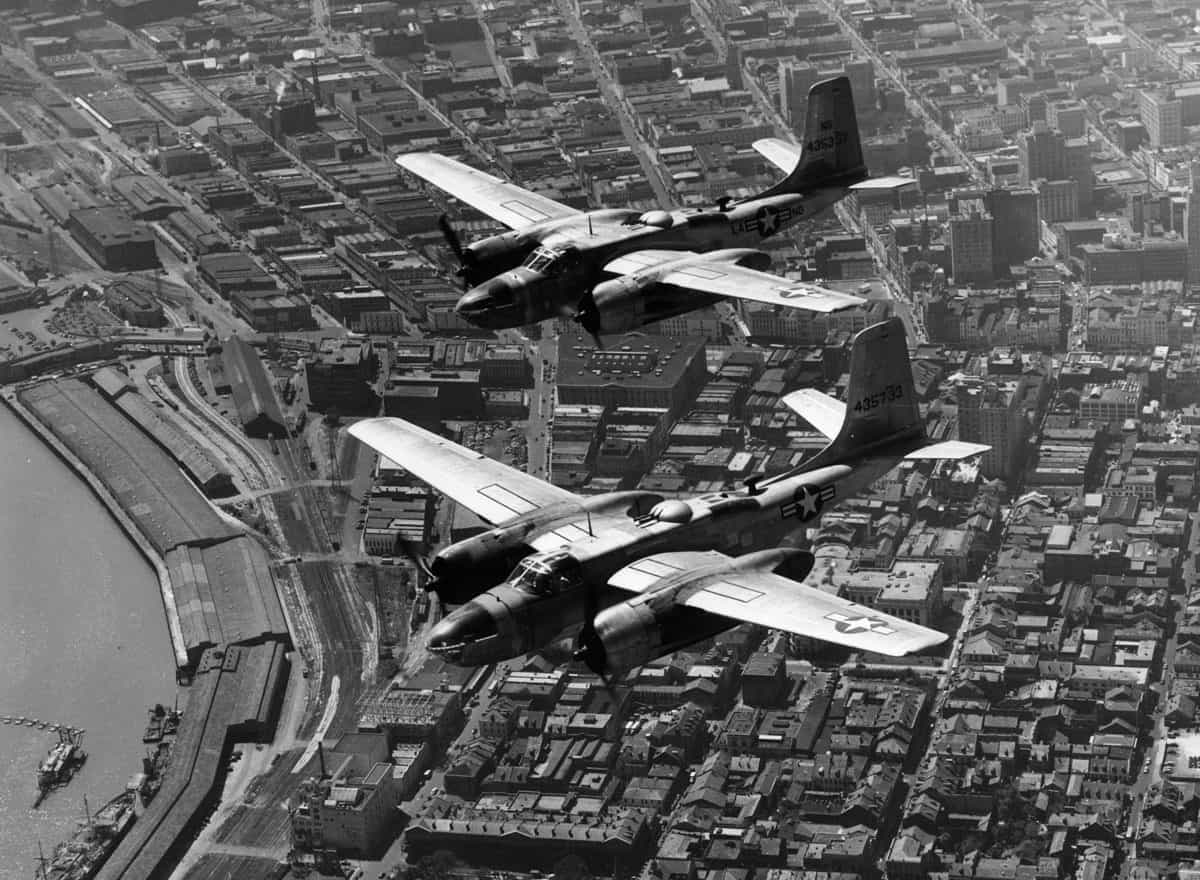

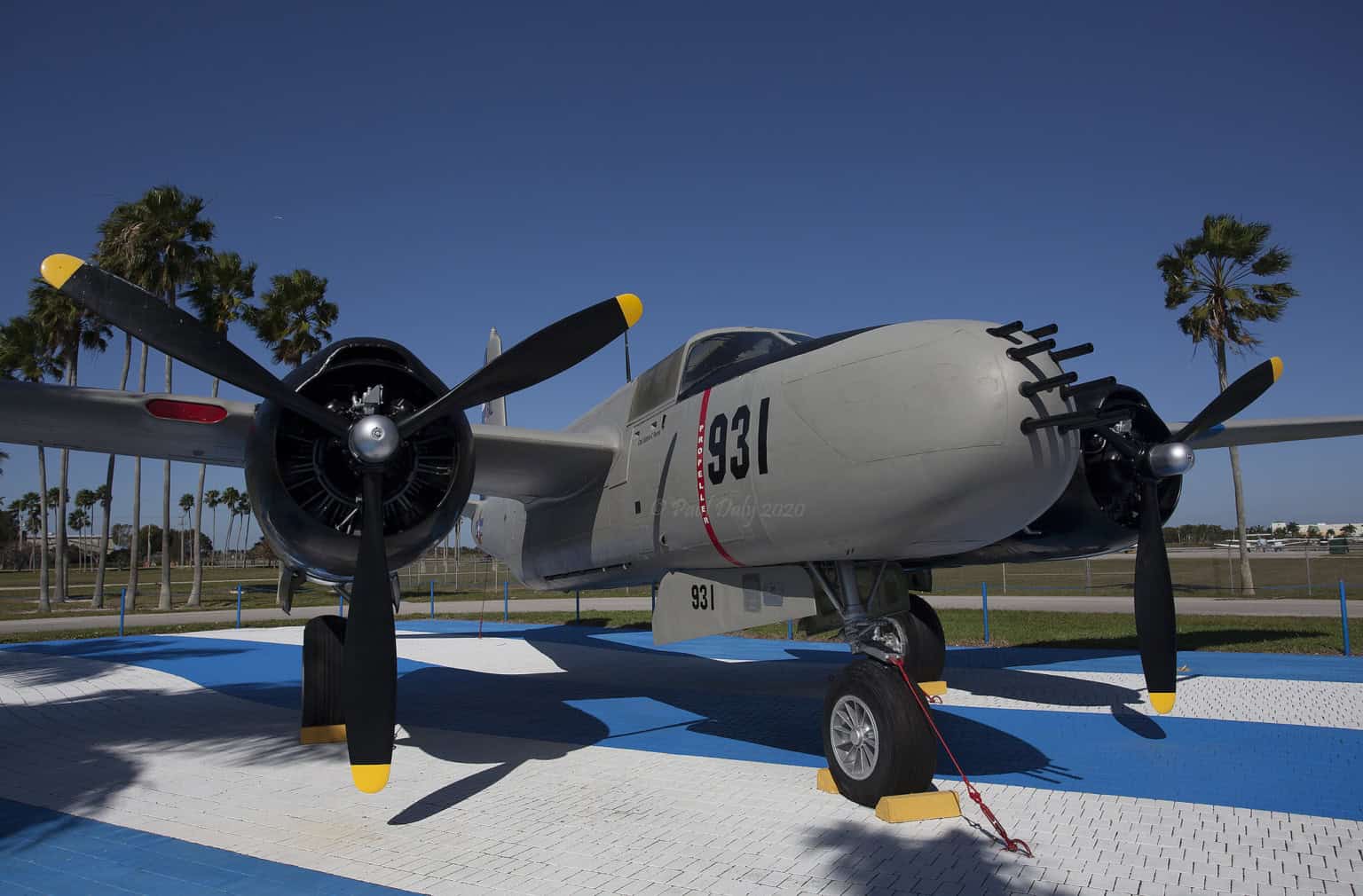


The A-26B production version has an external length of 15.6 meters, an external height of 3.1 meters, a tail height of 5.64 meters, and a fuselage diameter of 1.57 meters. It has a wingspan of 21 meters and a wing area of 50 square meters. The wheelbase is 4 meters. The aircraft has an empty weight of 10,147 kg and a gross weight of 12,519 kg. The maximum takeoff weight is 15,876 kg. It has a maximum payload of 1815 kg. The normal fuel capacity is 925 US gal with an optional 675 US gal ferry tank in the bomb bay.
The aircraft is powered by a twin Pratt and Whitney R-2800-71 or -27 or -79s Double Wasp engine. It is an eighteen-cylinder, air-cooled twin-row radial engine with water injection. It has two poppet valves per cylinder, a variable-speed single-stage single-speed centrifugal-type supercharger, a Stromberg injection carburetor fuel system, and an air cooling system.
Each engine produces a maximum takeoff thrust of 2,000 horsepower and drives a three-bladed Hamilton Standard Hydromatic constant-speed fully-feathering propeller. The A-26 has a maximum speed of 312 knots at 16,700 feet and a cruise speed of 231 knots at 5,000 feet. It has a range of 1,400 nautical miles without a ferry tank at 5,000 feet, a combat range of 610 nautical miles, and a ferry range of 2,600 nautical miles. The service ceiling is 28,500 feet and the rate of climb is 1,250 feet per minute.
The A-26 can be loaded with different guns, rockets, and bombs. It is armed with six or eight 12.75 mm M2 Browning machine guns or two 12.7 mm M2 machine guns, up to eight 12.7 mm M2 machine guns paired in four optional underwing pods or three 12.7 mm M2 machine guns per outer wing panel, two M2 machine guns in the remote-controlled dorsal turret and two in the ventral turret. It is also equipped with up to ten 12.7 cm HVAR rockets and up to 2,700 kg capacity of bombs.
Sources and references used for research and fact-checking.