Military Transport Planes
The WWII heavy hauler that flew the Hump
Updated: by Tim de Vries
The latest aviation news and stories sent to your inbox.
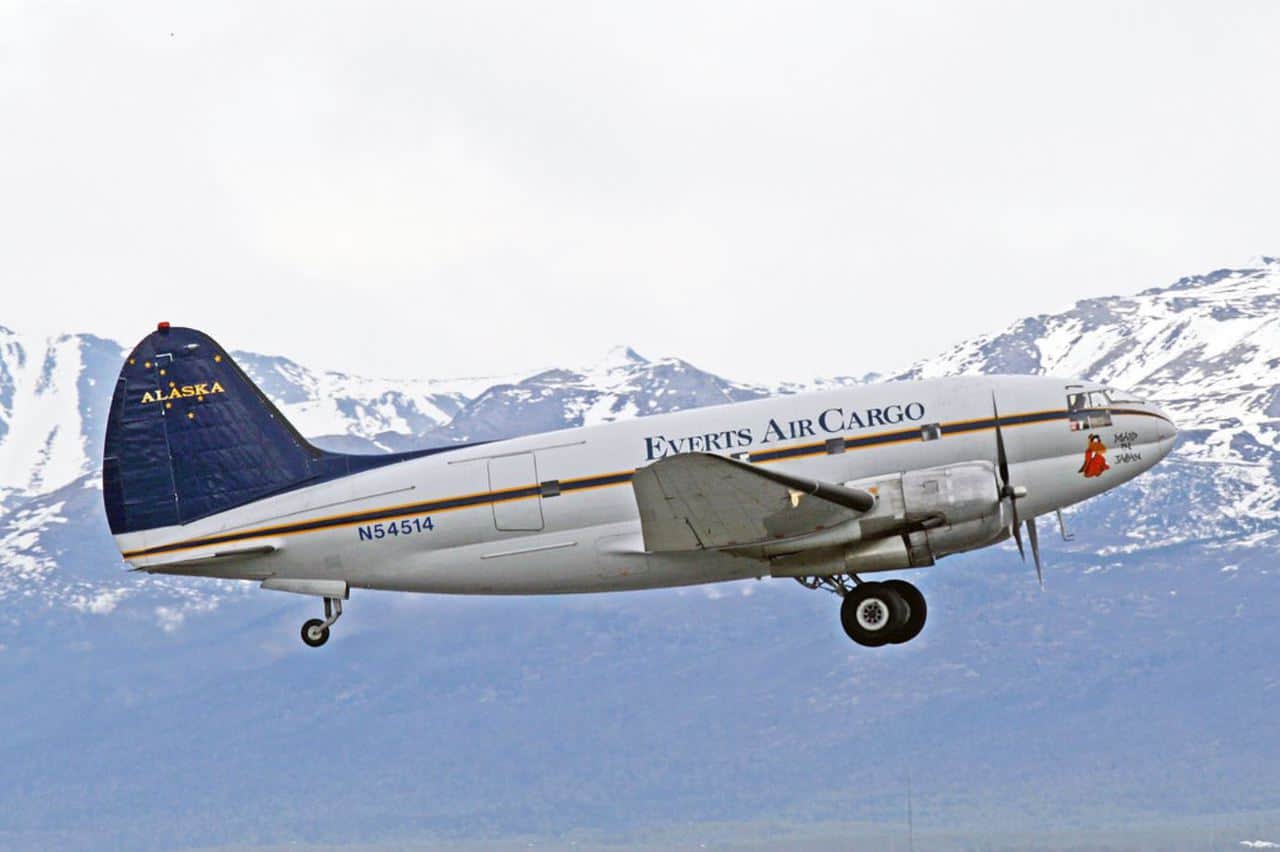
The Curtiss C-46 Commando is a twin-engine World War II transport developed from the CW-20, a pressurized airliner design that first flew in March 1940. The U.S. Air Force calls it America’s largest and heaviest twin-engine transport of the war. It became famous hauling supplies over the Himalayan “Hump” from India to China, carrying more cargo than the C-47 at higher altitudes. In all, 3,181 were built, and a few still fly freight in northern Canada and Alaska.
Live Fleet Activity (C46)
Fetching live data…


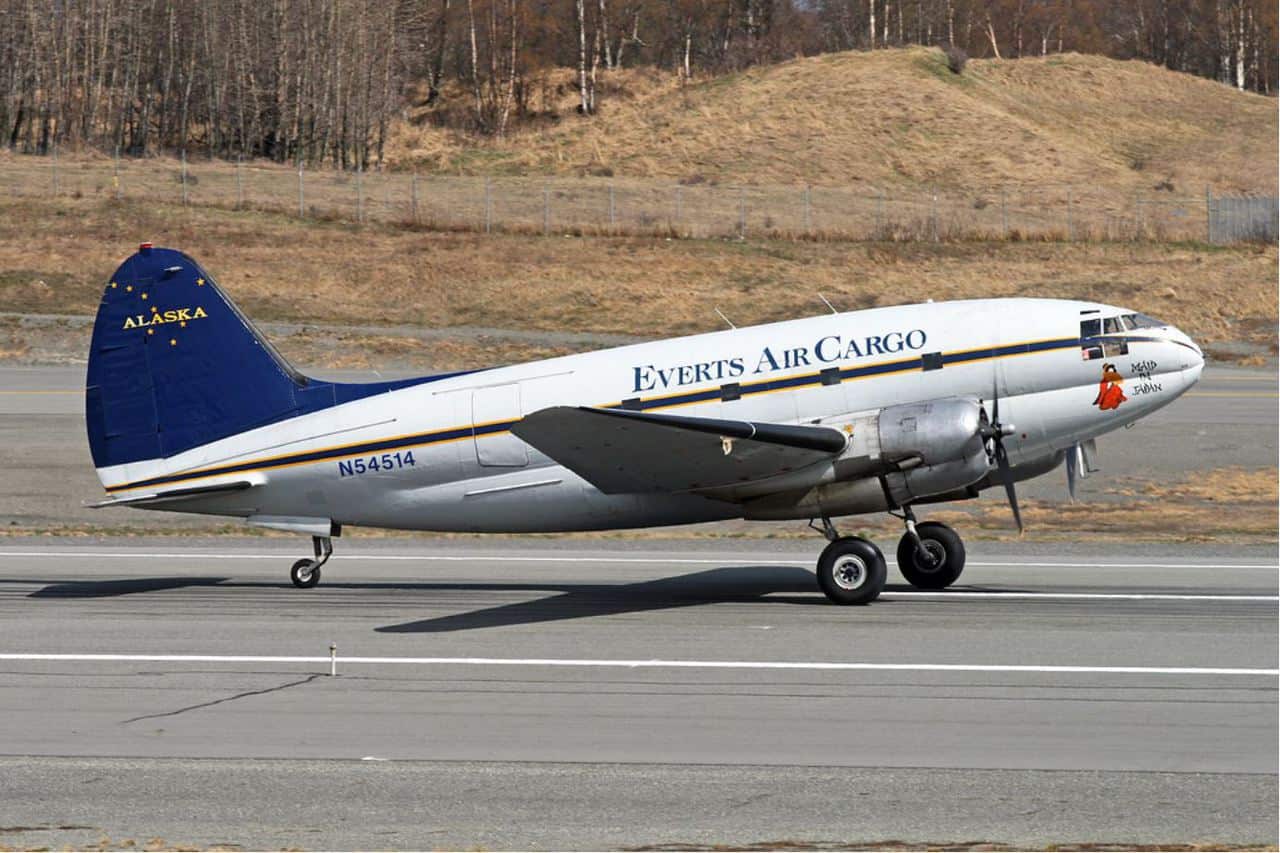


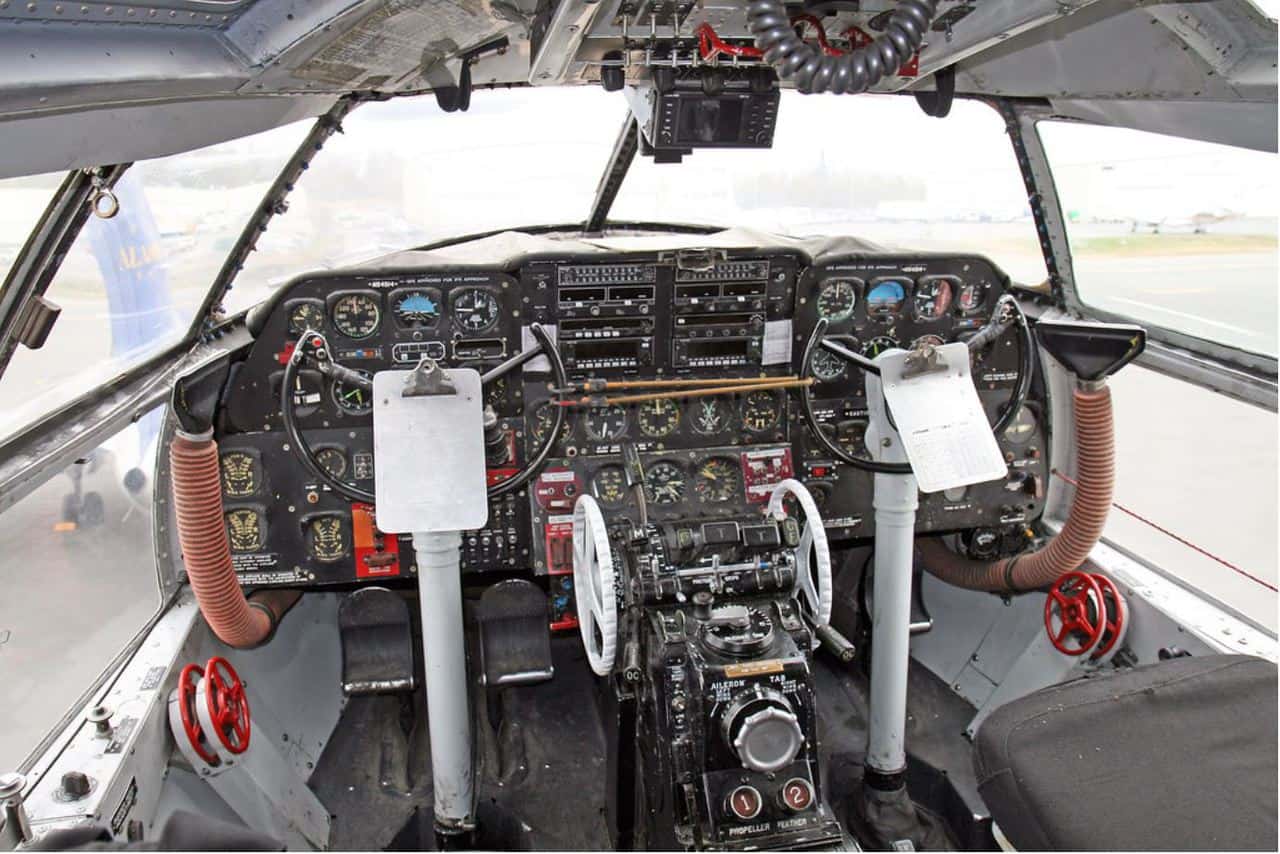

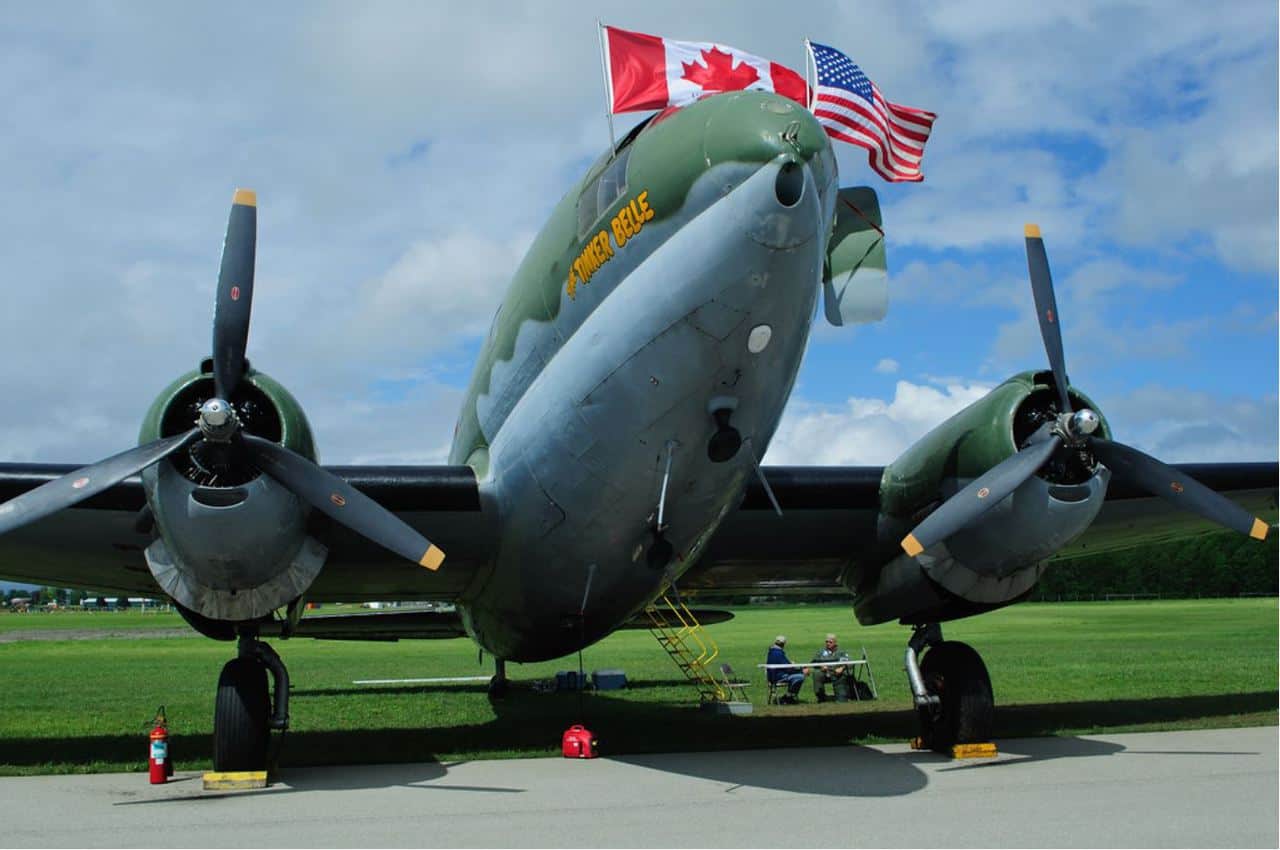

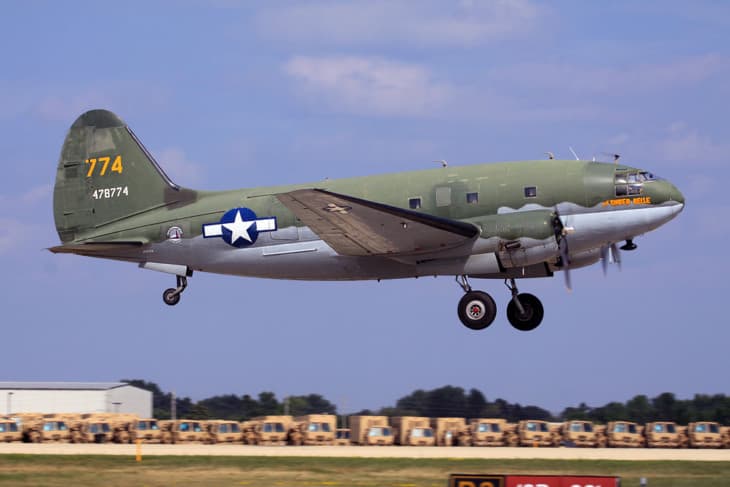
The Curtiss C-46 Commando is a twin-engine transport that grew out of the CW-20, a pressurized airliner design that first flew on March 26, 1940. The U.S. Army Air Forces turned it into an unpressurized cargo and troop carrier, and a U.S. Air Force fact sheet calls it America’s largest and heaviest twin-engine transport of World War II.
It is best known for hauling supplies over the Himalayan “Hump” from India to China, where it carried more cargo than the Douglas C-47 Skytrain and performed better at altitude. Its early fuel system also caused dozens of in-flight fires, and Air Transport Command pilots called it the “flying coffin.”
In all, 3,181 were built, and the U.S. Air Force flew its last one until 1968. A few still haul freight in northern Canada and Alaska, more than 80 years after the type first flew, which makes the Commando a rare survivor among working cargo planes.
Curtiss-Wright chief designer George A. Page Jr. drew up the CW-20 in 1937 as a private venture, a twin-engine pressurized airliner meant to compete with the four-engine Douglas DC-4 and the Boeing 307 Stratoliner. Its “figure-eight” or “double-bubble” fuselage was designed to cope with the pressure difference at high altitude, with the wing spar passing through the lower lobe instead of the passenger cabin.
The prototype, NX-19436, first flew from St. Louis on March 26, 1940, with test pilot Eddie Allen at the controls and two 1,700 hp (1,270 kW) Wright R-2600 Twin Cyclones. It originally had twin tail fins, but it lacked stability at low speed, so Curtiss replaced them with the single tall fin every later aircraft carries.
General Henry “Hap” Arnold saw a military freighter in it. On September 13, 1940, the Army ordered 46 as the C-46, and the prototype itself was later bought as the C-55, then returned to Curtiss and sold to the British Overseas Airways Corporation.
The military versions got 2,000 hp Pratt & Whitney R-2800 engines, large cargo doors, a strengthened floor and a hydraulic cargo winch. Deliveries to the Air Transport Command and Troop Carrier Command began in July 1942, and by November 1943 Curtiss had logged 721 changes to the production design.
No. The CW-20 was designed as a pressurized airliner, but none of the C-46s the U.S. military bought were pressurized. The military versions dropped cabin pressurization and gained a reinforced cargo floor and extra-large cargo doors instead.
The design kept one high-altitude trait, its two-stage supercharged engines. On the Hump that meant crews flew heavy loads at high altitude in an unpressurized, hard-to-heat cockpit, which was part of what made the route so exhausting.
The hold is what set the C-46 apart. Its cabin was 48 ft 0 in (14.63 m) long, with a strengthened floor for loads such as light artillery, fuel, ammunition and aircraft parts.
The cabin was 9 ft 10 in (3.00 m) wide. Cabin height was 6 ft 8 in (2.03 m).
The C-46A had double cargo doors on the left side, a hydraulic winch and 40 folding seats as its only passenger accommodation. Bowers credits it with 40 troops, 30 stretcher patients or 15,000 pounds (6,800 kg) of cargo, while the Air Force’s Hurlburt Field fact sheet gives 50 fully equipped troops or 33 litter patients, depending on configuration.
The C-46 was big for a twin. The Commemorative Air Force notes it was longer and taller than both the B-17 Flying Fortress and the B-24 Liberator bombers, and only the B-24’s wing was wider.
The full specification table for the aircraft is on this page, and it describes the wartime C-46A. A few of the figures need context, because museum placards quote different variants and different conditions.
Top speed is 270 mph (435 km/h) at 15,000 feet. Cruise speed is 173 mph (278 km/h). The National Museum of the U.S. Air Force lists only 245 mph for its C-46D, so expect to see both numbers quoted.
Range swings the most. The 3,150 miles (5,070 km) in the table assumes the 173 mph cruise, but at 237 mph the same aircraft managed only 1,000 miles (1,610 km), and both Air Force fact sheets quote 1,200 miles (1,930 km).
Weight limits changed over the aircraft’s life. The C-46A’s normal maximum was 45,000 pounds (20,400 kg), with a 49,600-pound (22,500 kg) overload rating, and the FAA later certified it at 48,000 pounds (21,800 kg) for cargo, which is the takeoff weight in the table.
After a string of accidents, a 1952 emergency rule cut passenger flights to 45,000 pounds, and a 1953 rule cut them again to 44,300 pounds (20,100 kg).
The 1,175 ft/min climb rate is an initial figure, as the Military Aviation Museum labels it. Wikipedia gives 17 minutes 24 seconds to reach 10,000 feet (3,050 m), an average below 600 feet per minute, so treat the table’s number as a best case.
The C-46A used two Pratt & Whitney R-2800-51 Double Wasps, 18-cylinder air-cooled radials of 2,000 hp (1,491 kW) each, turning four-bladed Curtiss Electric constant-speed propellers. That was a lot of power for a transport: the C-47 made do with two 1,200 hp (895 kW) Twin Wasps.
The propellers were a weak point, and their troublesome electric pitch mechanism was eventually removed from C-46s flying in India and China. The C-46E used three-bladed Hamilton Standard propellers instead, as does the CAF’s China Doll today.
Fuel capacity is 1,410 gal (5,300 L). The CAF’s China Doll burns about 150 gallons an hour at economy cruise, and one pilot’s account on the CAF site gives 125 to 135 gallons an hour at a low-power cruise of about 150 knots.
After the Japanese closed the Burma Road, the only supply link between India and China was an air route over the Himalayas that airmen called the Hump. C-46 flights over it began in May 1943.
The airlift grew steadily across all aircraft types, from 2,800 tons in February 1943 to 71,000 tons in July 1945, according to the National Museum of the U.S. Air Force. It cost the lives of some 800 flyers, and it kept China in the war.
The museum says the Commando carried more cargo than the C-47 and performed better at higher altitudes. Under Hump conditions, though, it needed extensive maintenance and had a relatively high loss rate.
Crews flew out of hot, humid fields in India, through monsoon weather and over high terrain with few navigation aids, often near the aircraft’s limits. Several C-46 squadrons also supported the B-29 Superfortress units of Operation Matterhorn.
The Army Air Forces’ official history is blunt: the Commando “remained a headache” and was kept flying only with thousands of extra maintenance hours. From May 1943 to March 1945, Air Transport Command received reports of 31 C-46s catching fire or exploding in the air, and others simply went missing.
The cause was eventually traced to fuel. Small leaks pooled at the wing roots because the wings were not vented, and a spark from open-contact electrical parts could set the pooled fuel off. After the war, every C-46 got a wing vent modification and an explosion-proof fuel booster pump.
Maintenance crews called it the “plumber’s nightmare,” and other nicknames included “The Whale” and the “Curtiss Calamity.” The same official history notes that Eastern Air Lines, flying C-46s on a route with more favorable conditions, lost only one in more than two years.
The C-46 reached Europe in numbers only in March 1945, in time to drop paratroopers across the Rhine near Wesel in Operation Varsity. Of 72 C-46s in the drop, 19 were shot down, and General Matthew Ridgway then barred the type from airborne operations.
Wikipedia’s account points out that the C-46s had no self-sealing fuel tanks, while most C-47s on the same mission did. In the Pacific, the Marine Corps flew 160 as the R5C-1, carrying supplies into hastily built island airstrips and bringing the wounded out.
The Commando served again in Korea and Vietnam, which the Air Force notes put it alongside the C-47 and the B-26 as a veteran of three wars. In 1962 and 1963, air commandos from Hurlburt Field flew C-46s out of Panama in support of special forces and civic-action missions across Latin America.
The C-46 also flew in the failed 1961 Bay of Pigs invasion, and the CIA’s airline, Civil Air Transport, later renamed Air America, used it for clandestine supply work in Asia. The U.S. Air Force retired its last C-46 in 1968, from service in Panama.
The first 25 C-46s were close to the civil design. The C-46A, the first true military version, added the big cargo doors, the strengthened floor and R-2800-51 engines.
The C-46D was a personnel and paratroop model with an extra door on the left side, and the Army Air Forces accepted 1,410 of them. Seventeen C-46Es had a stepped windscreen and three-bladed propellers, and the final 234 C-46Fs had cargo doors on both sides and square-cut wingtips.
One-offs included the XC-46B with water-injected engines and the XC-113, which swapped the right engine for a General Electric T31 turboprop. It handled so badly on the ground that it never flew.
After the war, three kits brought civil C-46s up to passenger standards: the Aircraft Engineering Foundation’s Super 46, the CW-20T from L.B. Smith of Miami, and Riddle Airlines’ C-46R, which added about 40 mph (64 km/h) to the cruise speed.
Wikipedia and the Military Aviation Museum give 3,181 built between 1940 and 1945. The National Museum of the U.S. Air Force counts 3,144 accepted by the Army Air Forces during the war, of which 1,410 were C-46Ds.
That is roughly a third as many as the C-47, of which about 10,200 were built.
The C-46 is the bigger, stronger and faster aircraft. The C-46A carried 15,000 pounds (6,800 kg) or 40 troops, against 6,000 pounds (2,720 kg) or 28 troops for the C-47, and Wikipedia puts its cargo volume at twice the Skytrain’s.
It also had far more power. Two 2,000 hp engines drove it to 270 mph (435 km/h), against 224 mph (360 km/h) for the C-47 with its 1,200 hp Twin Wasps, and its wing spans 108 ft 0 in (32.92 m) to the C-47’s 95 feet 6 inches (29.1 m).
The C-47, the military version of the Douglas DC-3, won on numbers. After the war, the flood of surplus C-47s dominated the market, while the C-46 could not initially meet U.S. certification rules for scheduled passenger service.
In 1946 there were more than 600 surplus C-46s, but only about 15 were certificated for civil use. The pioneering freight carrier Slick Airways bought 10 of them, and the Flying Tiger Line and Riddle Airlines also became major C-46 operators.
So-called irregular carriers flew C-46s for both passengers and freight. By January 1951, 92 of their 188 transport aircraft were C-46s, and the U.S. Air Force’s Logair and Navy’s Quicktrans domestic freight programs both started with the type.
In 1956, Northeast Airlines put a 40-seat CW-20T on its Boston to Montreal route, the first C-46 type in U.S. scheduled passenger service. In 1960, Flight magazine counted 391 C-46s with airlines worldwide, 356 of them in the Americas.
The type suited mountains and jungle, and it became common in Bolivia, Peru, Brazil, Argentina and Chile. Japan’s Air Self-Defense Force flew it until at least 1978 and Taiwan’s air force until 1982.
Pilots describe controls that “never got heavy” in the air, even in slow flight on one engine, and a real problem on the ground. The rudder is only about 30 percent of the vertical tail’s area, and one pilot writes that it “has absolutely no noticeable effect when taxiing.”
On the takeoff and landing roll, the rudder is “extremely ineffective at low speeds,” so the fix for a swerve is to “yank back the opposite throttle.” The approach is slow and steep: “You make the landing approach at 65 kts, fairly steep,” in the words of one account on the Commemorative Air Force’s site.
One account says the Air Transport Association’s postwar findings called the C-46 “beyond the capabilities of the average airline Captain.” Pilots who mastered it praised its load-carrying: “It required no more maintenance than the C-47, but could carry twice the load.”
The deadliest C-46 accident happened on October 12, 1945, when a USAAF C-46F carrying four American crew and 55 Chinese soldiers struck a radio antenna on approach to Nanyuan Airport in Peiping (now Beijing). Everyone aboard was killed.
On December 10, 1946, a Marine Corps R5C-1 flying on instruments in severe weather hit the South Tahoma Glacier on Mount Rainier, killing all 32 Marines aboard. On June 7, 1949, a Strato-Freight C-46 lost power in its right engine after takeoff from Isla Grande Airport in San Juan, Puerto Rico, killing 53 of the 81 people aboard.
Accidents still thin the fleet. Everts’ C-46 N1822M, “Salmon Ella,” was withdrawn from use after a landing accident in July 2018.
Yes, a handful. As of February 2025, Wikipedia’s survivor list counted six airworthy C-46s: three with Everts Air Fuel in Fairbanks, Alaska, two with Buffalo Airways in Yellowknife, Canada, and one museum aircraft.
Buffalo Airways still lists C-FAVO and C-GTPO in its fleet as of September 2026, flying freight between Yellowknife and Hay River and farther into the Canadian North. Flying freight into remote northern strips is classic bush pilot territory.
Everts’ three, N54514 “Maid in Japan,” N7848B “Dumbo” and N1837M “Hot Stuff,” were all still validly registered with the FAA in September 2026. Other published counts of Everts’ active C-46s run as low as one, and a valid registration does not prove regular flying.
The museum flyer is C-46F “Tinker Belle,” N78774, which the Military Aviation Museum in Virginia Beach acquired in July 2023. Wikipedia’s list says it takes part in airshows from spring through autumn. The CAF’s C-46F “China Doll” remains registered, but Wikipedia lists it as grounded by corrosion and propeller-time limits.
The National Museum of the U.S. Air Force, one of the aviation museums in Ohio, displays C-46D 44-78018 painted as a 1944 Hump transport. It was retired from Air Force service in Panama in 1968 and flown to the museum in 1972.
The Pima Air & Space Museum shows C-46D “Syracuse Shackrat” and is on our list of aviation museums in Arizona. Castle Air Museum has C-46D “Honey Gal,” and the CAF keeps China Doll at Camarillo, two stops among the aviation museums in California.
The Museum of Aviation next to Robins Air Force Base, one of the aviation museums in Georgia, displays a C-46D, and Hurlburt Field in Florida has C-46D 44-77424, which flew in Korea and was leased to Japan’s Self-Defense Force in 1955. The Military Aviation Museum, among the aviation museums in Virginia, is home to Tinker Belle, the museum C-46 still listed as airworthy.
Other U.S. examples sit at the Air Mobility Command Museum in Dover, Delaware, and at the Glenn H. Curtiss Museum in Hammondsport, New York, on loan from the National Air and Space Museum. Abroad, C-46s are preserved in Japan, South Korea, China, Taiwan, Brazil, Argentina, Mexico and Israel.
Rarely. Almost every survivor belongs to a museum or a working freight operator, and one Alaska pilot’s account on the CAF site notes that “spare parts are in short supply.”
A few airframes have been offered. As of January 2016, the Canadian C-46 C-GIBX was claimed to be airworthy and for sale while it was tied up in receivership, and a passenger-configured Bolivian C-46, CP-973, has reportedly been up for sale. In 1960, a used C-46 cost from £20,000 for a C-46F conversion to £60,000 for a C-46R.
Very few. Wikipedia counted six airworthy C-46s as of February 2025: three with Everts Air Fuel in Alaska, two with Buffalo Airways in Canada and the Military Aviation Museum’s Tinker Belle. Buffalo still lists its two in its fleet as of September 2026, and Everts’ three remain validly registered with the FAA, though registration alone does not prove an aircraft flies regularly.
No. It was derived from the CW-20, which Curtiss designed as a pressurized airliner, but none of the C-46s the U.S. military bought were pressurized.
It was an exceptional load hauler with a poor safety and maintenance record. It carried more than the C-47 and flew higher, which made it vital on the Hump, but Air Transport Command logged 31 in-flight fires or explosions between May 1943 and March 1945, eventually traced to fuel pooling in unvented wings. Crews called it the “flying coffin” and the “plumber’s nightmare.”
The C-46 is larger and more powerful. The C-46A carried 15,000 pounds or 40 troops on two 2,000 hp engines, while the C-47 carried 6,000 pounds or 28 troops on two 1,200 hp engines. The C-47 was built in far greater numbers, about 10,200 against roughly 3,200.
Wikipedia and the Military Aviation Museum give 3,181. The National Museum of the U.S. Air Force says the Army Air Forces accepted 3,144 during World War II, including 1,410 C-46Ds.
The C-46A had a top speed of 270 mph (435 km/h) at 15,000 feet and cruised at 173 mph (278 km/h). The National Museum of the U.S. Air Force lists 245 mph for its C-46D.
Two Pratt & Whitney R-2800 Double Wasp 18-cylinder radials of 2,000 hp each. The CW-20 prototype first flew with 1,700 hp Wright R-2600 Twin Cyclones.
The U.S. Air Force retired its last C-46 in 1968, from service in Panama. Japan’s Air Self-Defense Force flew the type until at least 1978 and Taiwan’s air force until 1982, and a few civil C-46s still fly freight in Canada and Alaska.
Commando was the name Curtiss-Wright used for the military transport. Early press reports called it the “Condor III,” but Commando was in use in company publicity by early 1942, and the Navy and Marines designated it the R5C.
Sources and references used for research and fact-checking.