

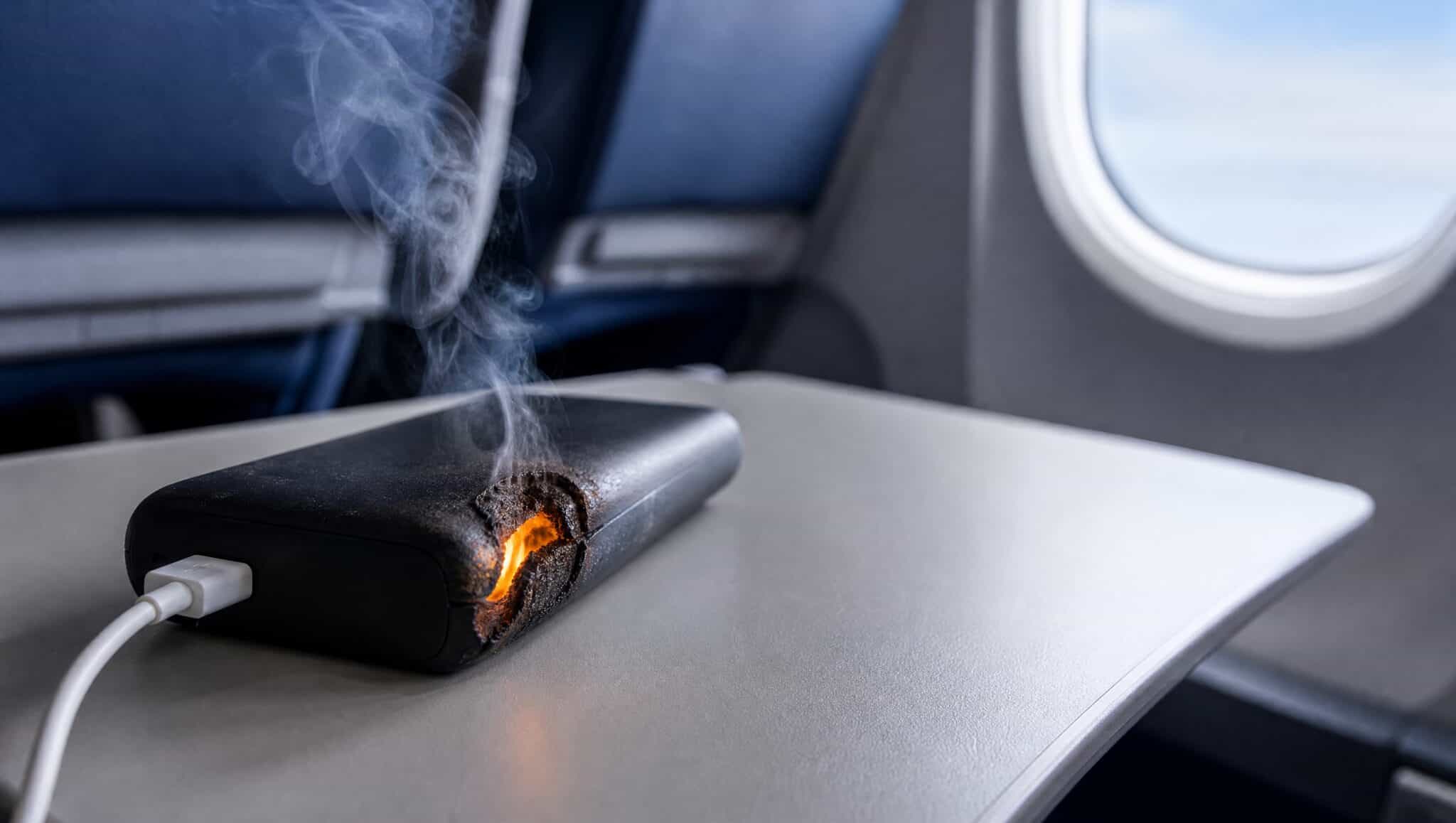
On August 9, 2026, a SWISS Airbus A330 bound for Boston diverted to Dublin after a passenger’s power bank caught fire in the business-class cabin over the North Atlantic. All 206 people aboard flight LX52 landed safely, and SWISS confirmed the power bank was the cause.
What happened on flight LX52
Flight LX52 left Zurich for Boston shortly after 6 p.m. local time on August 9. About three hours into the crossing, cruising at 38,000 feet roughly 660 miles (1,060 km) southwest of Dublin, the crew reported smoke from a power bank in a seat pocket in business class.
The pilots declared a Mayday and squawked 7700, the universal emergency code. They first pointed toward Shannon, the usual first stop for troubled transatlantic flights into Irish airspace, then revised course for Dublin instead. The Airbus landed on runway 28L in the early hours of August 10, about 100 minutes after the diversion began.
No injuries were reported. SWISS confirmed the cause directly: “The smoke was caused by a power bank,” the airline said. It was the second time in two weeks that a SWISS transatlantic flight turned back over the ocean because of cabin smoke, after an A330 diverted to Bangor, Maine, on July 27 for a cause that was never confirmed.
Why a power bank in a seat pocket becomes a fire
A lithium-ion power bank does not need to be plugged in or switched on to catch fire. A damaged cell, a manufacturing defect, or simple physical stress, such as being crushed in a seat pocket, can trigger thermal runaway, an internal short circuit that heats the cell faster than it can dissipate.
Once that reaction starts, it feeds itself. The cell keeps heating until it vents smoke, flame, or both, often with little warning. That is why cabin crew are trained to douse a burning battery in water or drop it into a fire-containment bag rather than fight it like an ordinary fire.
Not a rare event
The FAA logged 93 incidents of lithium batteries smoking, igniting, or overheating on US flights in 2025, up from 89 in 2024. Power banks are among the most common devices involved.
Rules are only just catching up
SWISS has barred passengers from using power banks on board since early this year, but the device on LX52 appears to have ignited while stowed, not in use, a gap that a use-only ban does not close.
The broader problem pushed the International Civil Aviation Organization’s 193 member states to adopt a coordinated global rule on March 27, 2026, the first of its kind for portable batteries in aviation. It caps each passenger at two power banks, limits them to 100 watt-hours without special approval, and bans recharging them in flight.
Major US carriers rolled out matching limits within weeks of the ICAO rule taking effect. LX52 landed safely, but it is a reminder that even a compliant, unused power bank sitting in a seat pocket can still fail.
Sources and references used for research and fact-checking.
Get the Newsletter
The latest aviation news and stories sent to your inbox.
About the Author

Tim is the owner and lead editor of AeroCorner since 2019, overseeing aviation content covering aircraft, airlines, airports, and the broader aviation industry. Through years of researching, writing, editing, and publishing aviation-focused content, he has developed extensive practical knowledge of commercial aviation and air travel. Based in Asia and a frequent traveler himself, Tim also brings firsthand passenger experience to AeroCorner’s coverage. Outside of publishing, he has also explored aviation firsthand through hands-on flight training in New Zealand.