

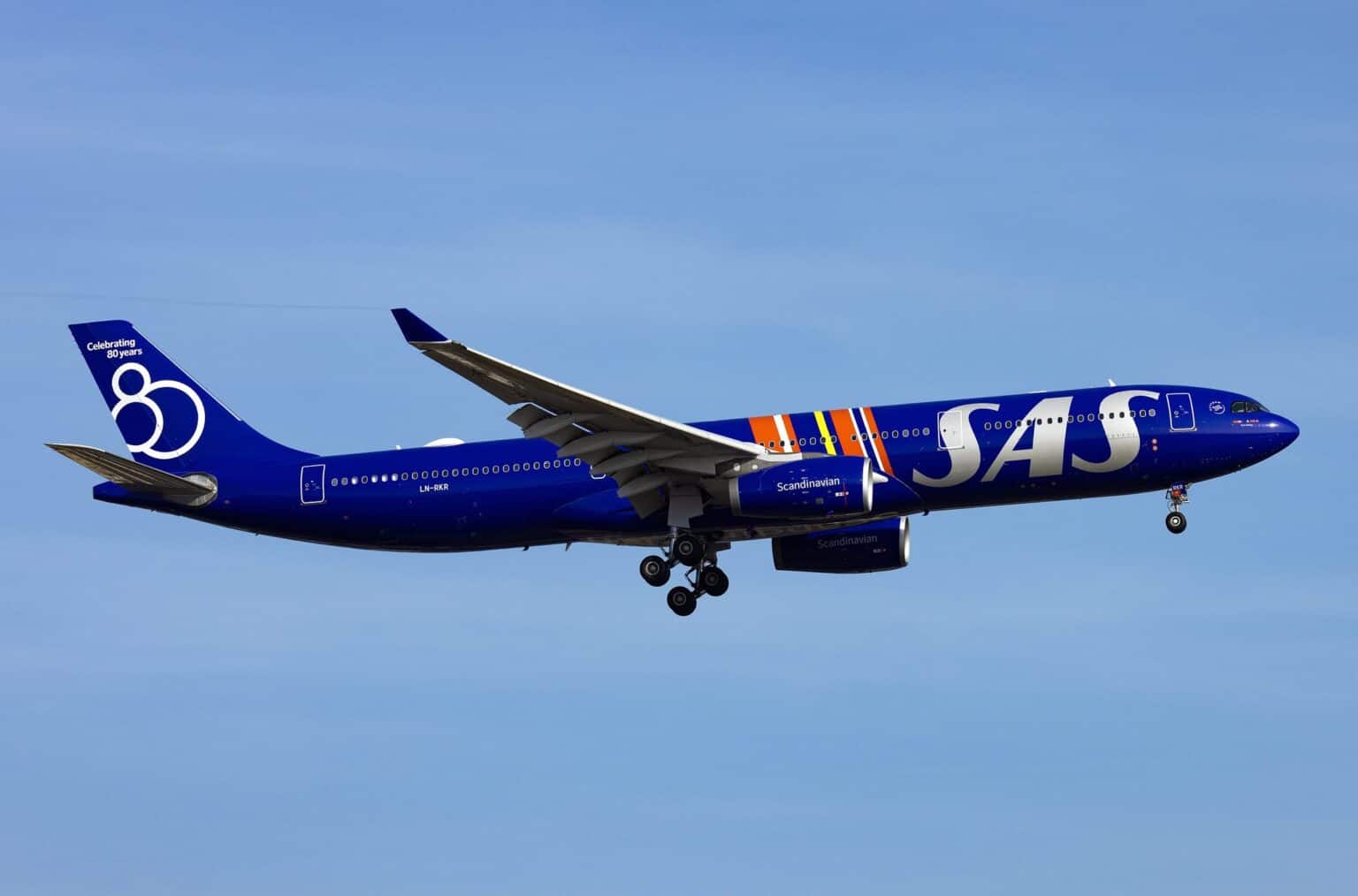
SAS flight SK916 from New York JFK to Copenhagen turned around before its Atlantic crossing on Friday, October 23, 2026, and landed at Newark instead. SAS told Danish broadcaster TV 2 the flight returned because of a possible technical fault.
The landing was safe, but the night that followed was not smooth. One passenger says travelers waited for bags that never came off the plane, then were told by email to find and pay for their own hotel rooms.
What the tracking data shows
The flight was operated by LN-RKR, an Airbus A330-300, according to FlightStats. FlightAware data shows it pushed back 10 minutes late at 7:05 p.m. and took off from JFK at 7:24 p.m. Eastern time.
The jet climbed to 39,000 feet and headed northeast over New England and the Canadian Maritimes on its filed route across the North Atlantic. At about 8:58 p.m., near the eastern tip of Quebec’s Anticosti Island in the Gulf of St. Lawrence, it reversed course.
That was roughly an hour and a half after takeoff, and before the aircraft had left the North American coast behind. It flew about two more hours back south and landed at Newark Liberty at 10:57 p.m., three hours and 33 minutes after leaving JFK.
SAS has described the cause only as a possible technical fault and said the aircraft was being inspected in Newark, according to TV 2. SAS did not explain why the crew chose Newark over JFK, Simple Flying noted.
A passenger’s account of the night
Danish designer Michael Flarup, flying home with his son, described the evening in a post on X. He wrote that he first noticed the problem on the in-flight map, which showed the jet heading the wrong way with a new destination.
Passengers were later told the plane had developed a technical issue and the pilots did not feel comfortable crossing the Atlantic, Flarup wrote. He said fire trucks and ambulances were waiting on the runway at Newark.
After an hour at baggage claim, he said, passengers were told their luggage could not be taken off the aircraft. The missing-bag form SAS offered through a QR code would not accept reports, because the travelers had never reached their original destination.
Flarup said promised rebooking details did not arrive for hours and his booking vanished from the SAS app. Well past midnight, SAS had emailed passengers telling them to arrange their own accommodation, with reimbursement of up to €250 per room.
He found one of the last rooms at a nearby airport hotel and got himself and his son seats on a direct flight home on Saturday evening by calling SAS. “Safety comes first. But the handling of hundreds of stranded passengers afterwards really needs to be better,” he wrote.
The story was picked up by Simple Flying, which said SAS had not responded to its questions. LN-RKR itself was back in service the next day, flying SK910 from Newark to Copenhagen on Saturday evening, according to FlightAware.
Why turning back early makes sense, and what passengers are owed
A crew that finds a fault before the ocean crossing faces a simple choice. Once a jet is out over the North Atlantic, diversion airports are far apart, so a problem that is minor over land becomes harder to manage mid-ocean.
Turning back while still over land, rather than pressing on, is the conservative call. Where a crew lands is a separate decision that weighs the urgency, the weather, runway length and whether the airline has engineers and spare parts on site. Our explainer on how flight diversions work covers those trade-offs.
Newark is one of SAS’s own gateways, with its own nonstops to Scandinavia. FlightAware shows LN-RKR had flown in and out of Newark earlier that week.
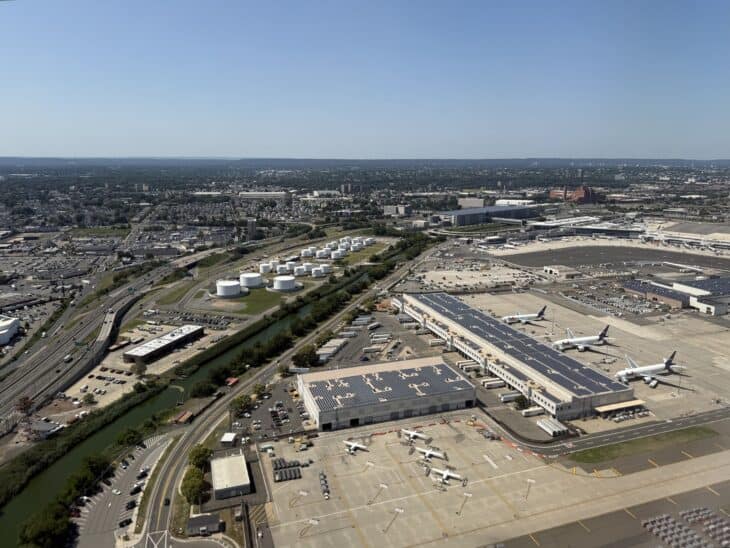

The passenger side is where SK916 differs from a US airline’s diversion. Because SAS is a European carrier flying into the EU, Europe’s air passenger rules cover the flight, the European Commission’s guidance says.
Under those rules, an airline should provide meals, a hotel and transport to it when a disruption pushes travel to the next day. If it does not, passengers can claim back reasonable costs, so they should keep their receipts.
The same rules also set cash compensation of up to €600 a person on flights over 3,500 km (2,175 miles), as JFK to Copenhagen is. The Commission’s guidance says most technical faults do not count as the extraordinary circumstances that let an airline avoid paying.
Whether a given SK916 passenger is owed that money depends on how late they reached Copenhagen and on the nature of the fault, which SAS has not disclosed. For delayed bags, the guidance sets a written claim deadline of 21 days from the day the luggage is returned.
US carriers work differently: there is no federal cash compensation for delays, and their meal and hotel promises now hinge on how a disruption is classified.
Sources and references used for research and fact-checking.
Get the Newsletter
The latest aviation news and stories sent to your inbox.
About the Author

AeroCorner News is the aviation news desk of AeroCorner.com. It covers accidents and incidents, safety rulings, airline and airport disruption, and new aircraft. It works from primary sources such as the NTSB, FAA, EASA and the manufacturers' own announcements.