

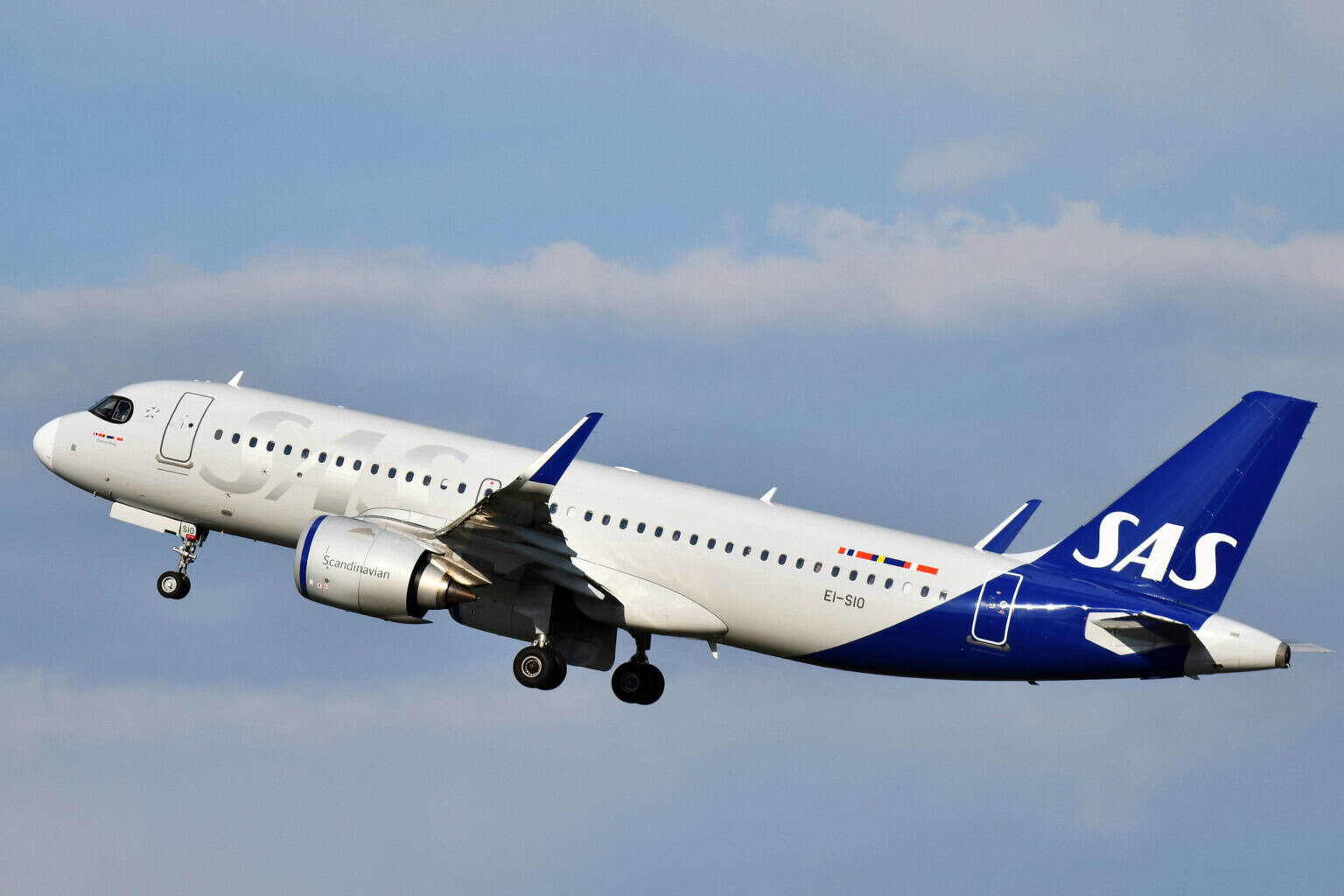
A SAS Connect Airbus A320neo aborted its landing at Malaga Airport on July 6, 2026, after its collision-avoidance system commanded an emergency climb to avoid two firefighting aircraft that had entered the control zone without radio contact. The jet, flight SK1817 from Stockholm with 175 passengers and 6 crew aboard, landed safely about 15 minutes later on a second approach.
What happened on approach to runway 12
The Airbus A320neo, registered EI-SIG, was descending through roughly 2,600 feet on final approach when its TCAS resolution advisory triggered, according to a report by Aviation Herald, which first detailed the occurrence. The crew broke off the approach, climbed to 7,000 feet, and repositioned for another attempt.
Two firefighting aircraft, en route to reload water and retardant at the nearby Cartama heliport, had entered Malaga Airport’s control zone without being able to raise the tower on the radio. The closest point of the encounter put the aircraft at 0 feet of vertical separation and 0.8 nautical miles horizontally, meaning the two flights briefly shared the same altitude less than a mile apart.
What TCAS actually did here
TCAS, the Traffic Collision Avoidance System, is the aircraft’s own last-resort radar-based backup to air traffic control. It works independently of the tower, so it caught the conflict even though the firefighting aircraft never checked in with Malaga approach.
Why wildfire season keeps producing these near-misses
Spain runs one of Europe’s largest aerial firefighting fleets through the summer, and Malaga sits close to hills that burn most years. Water-scooping and retardant aircraft often fly low, fast, and under real time pressure to reach a fire front, which pushes some crews to prioritize getting airborne over completing a full radio check-in with a nearby control tower.
That pattern is not unique to Spain. In July 2026, two firefighting helicopters collided over a Greek wildfire, killing two crew members, in an accident investigators linked to the same crowded, fast-moving airspace that surrounds active fire operations.
Commercial jets operate under strict clearances and continuous radio contact with air traffic control. Firefighting aircraft, especially when scrambled on short notice, sometimes do not, which is exactly the gap TCAS exists to cover when it works and the near-miss headline when a controller cannot separate two aircraft the old-fashioned way, by talking to both of them.
Controllers normally keep firefighting traffic clear of arrival paths by coordinating directly with the water-bombing base before aircraft launch, or by holding commercial arrivals until a fire mission clears the zone. That coordination depends on the firefighting crew checking in on the radio first. When an aircraft is airborne and heading for a control zone without having made contact, the tower has no reliable way to warn an inbound jet that a conflict is developing.
That leaves TCAS as the backstop. The system on the SAS jet interrogated the transponders of the two firefighting aircraft directly, calculated the closing rate, and issued a climb instruction without needing the tower to intervene at all. It is designed to work exactly this way, as a layer that functions even when the normal chain of radio coordination breaks down.
Investigation still open
Spain’s CIAIAC, the national civil aviation accident investigation body, has opened a probe into the occurrence. No official report or findings have been published yet, and the account here reflects the only detailed reporting available so far. AeroCorner will update this story if CIAIAC publishes its findings.
Get the Newsletter
The latest aviation news and stories sent to your inbox.
About the Author

Tim is the owner and lead editor of AeroCorner since 2019, overseeing aviation content covering aircraft, airlines, airports, and the broader aviation industry. Through years of researching, writing, editing, and publishing aviation-focused content, he has developed extensive practical knowledge of commercial aviation and air travel. Based in Asia and a frequent traveler himself, Tim also brings firsthand passenger experience to AeroCorner’s coverage. Outside of publishing, he has also explored aviation firsthand through hands-on flight training in New Zealand.