

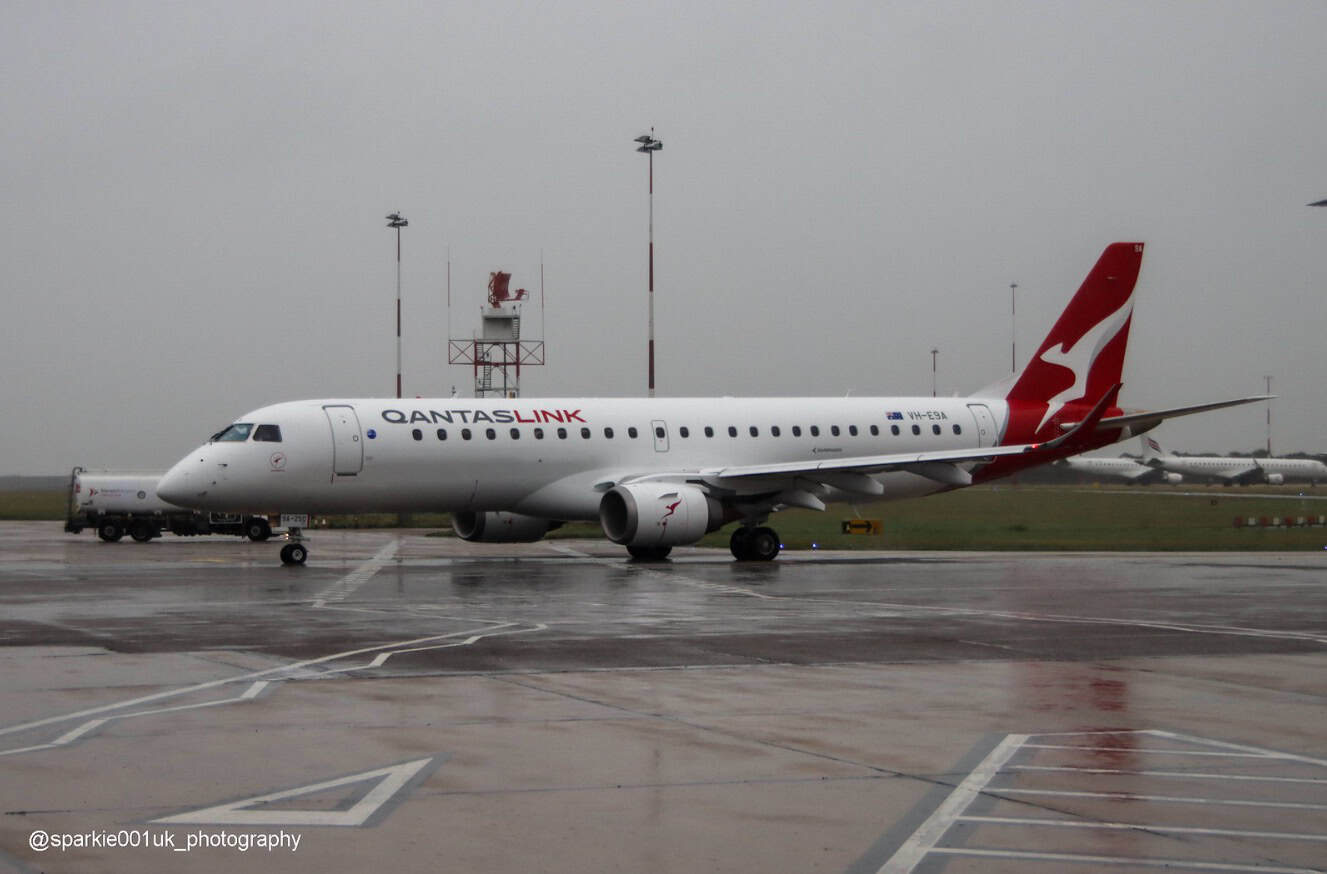
QantasLink took delivery of its first Embraer E190 on September 7, 2026, when the jet landed in Perth after a 20-hour ferry flight from Norwich, England. The aircraft, registered VH-E9A, is the first of up to 14 used E190s that will replace the aging Fokker 100 fleet flown by Qantas subsidiary Network Aviation across Western Australia.
The delivery flight
VH-E9A, named Exmouth, reached Perth by way of Bulgaria, Tajikistan, India, Malaysia and the Western Australian town of Broome. Qantas said the 100-seat jet will not carry passengers until January 2027, because each aircraft first goes through a full cabin refresh.
That refit adds Wi-Fi, new seats with adjustable headrests, USB-A and USB-C power, and a Qantas Economy Plus section with extra legroom. Two more airframes, VH-E9B and VH-E9C, are already on the Australian register.
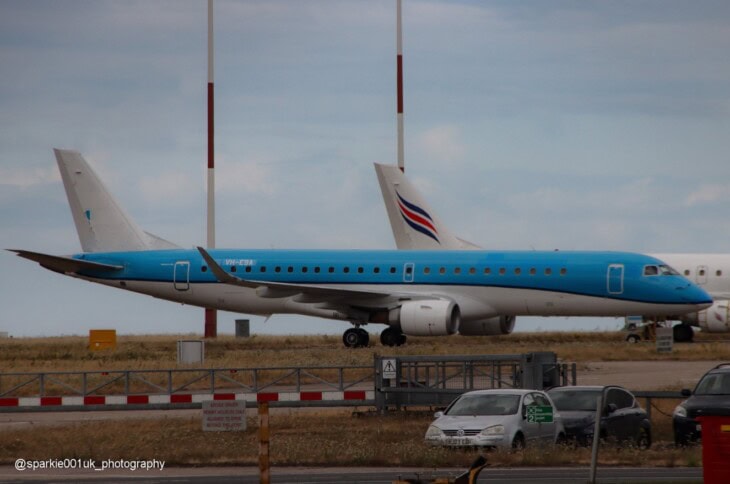
The jets were bought secondhand rather than new. VH-E9A spent most of its career with KLM Cityhopper in Europe as PH-EZC and flew its last service for the Dutch carrier in February 2026, according to Airport Spotting, which traced the tail’s history.
Why the Fokker 100 lasted this long
The Perth-based Network Aviation flies about 120 charter and scheduled departures a week to more than 25 destinations around regional Western Australia, much of it fly-in fly-out work for the mining industry. The Fokker 100 has done that job since 2008, and some of the airframes are now more than 30 years old.
Fokker stopped building airliners in 1997, yet the 100 held on in exactly this kind of niche. It seats around 100 people, tolerates short and rough outback runways, and boards through built-in airstairs, so it does not need the infrastructure of a major airport. A replacement that matches all three traits has never been easy to find.
The first-generation E190 is the closest fit on the market. It carries a similar load, flies farther, burns less fuel and is noticeably quieter, and Embraer has since moved to the re-engined E190-E2, which puts plenty of early E190s up for sale. Qantas says the switch will touch about 3 million passenger journeys a year.
Roughly 70 pilots, cabin crew and engineers are already training on the type, a figure Qantas expects to pass 600 as the full fleet arrives.
“For almost 20 years, the F100 has played a vital role connecting regional Western Australia,” Trevor Worgan, chief operating officer and regional general manager at Network Aviation, said in the Qantas statement. He called the E190’s arrival “the beginning of an exciting new chapter.”
The in-house E190s also fit a wider Qantas shift in regional flying. In August the group said it would cut its wet-leased E190s operated by Alliance Airlines from 30 aircraft to 23, moving more of that flying onto its own books.
Reality check
The first E190 is on the ground, but the Fokker 100 is not retiring yet. Network Aviation will run both types side by side, and the E190 does not enter revenue service until January 2027. Working through up to 14 aircraft will take years, not months.
Sources and references used for research and fact-checking.
Get the Newsletter
The latest aviation news and stories sent to your inbox.
About the Author

Tim is the owner and lead editor of AeroCorner since 2019, overseeing aviation content covering aircraft, airlines, airports, and the broader aviation industry. Through years of researching, writing, editing, and publishing aviation-focused content, he has developed extensive practical knowledge of commercial aviation and air travel. Based in Asia and a frequent traveler himself, Tim also brings firsthand passenger experience to AeroCorner’s coverage. Outside of publishing, he has also explored aviation firsthand through hands-on flight training in New Zealand.