

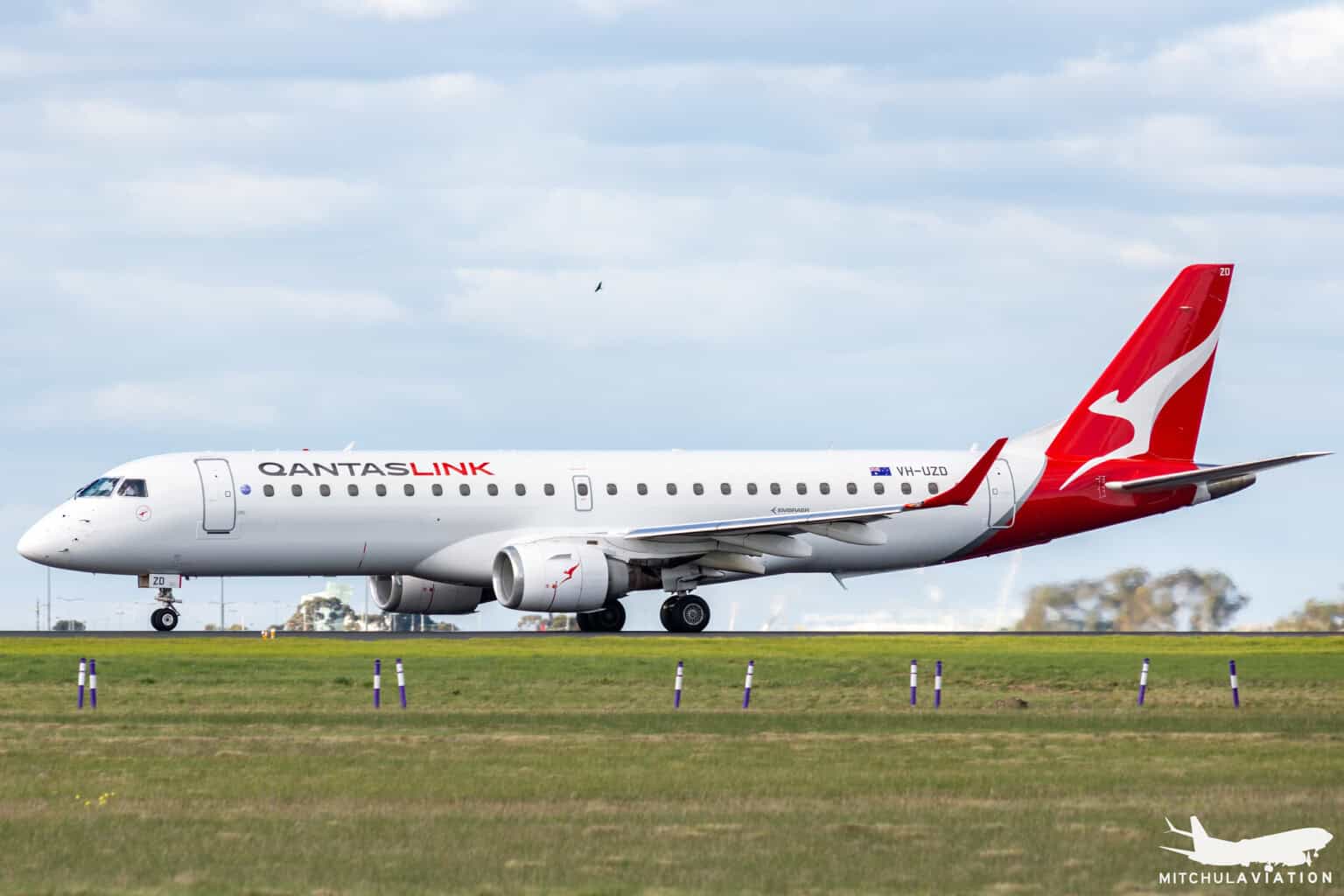
Alliance Aviation Services said on August 5, 2026, that it had finalized revised terms for its wet-lease agreement with Qantas, reducing the number of Embraer E190s flying under the QantasLink brand from 30 aircraft to 23 in a staged cut through the 2027 financial year.
Fewer jets, but a better price
Under the revised deal, seven aircraft come out of the Qantas commitment over the financial year ending June 30, 2027. In exchange, Alliance secured higher lease pricing effective July 1, 2026, plus a new annual escalation mechanism meant to keep the contract in step with rising costs.
Alliance managing director Stewart Tully said the new terms “improve the expected returns and cash flow for Alliance” while reaffirming the partnership with Qantas. The company reaffirmed its FY26 underlying profit guidance at $35 million to $40 million and said the full financial impact of the revised wet lease will be detailed alongside its FY26 results on August 25, 2026.
The renegotiation follows a warning Alliance issued in its February 2026 half-year results, when it disclosed the Qantas wet lease had become commercially unviable and cash flow negative as aircraft, maintenance, and logistics costs rose. Alliance also said it will “rightsize” its workforce and operating model to match the smaller contract, with phased staff consultations starting in the coming months.
Market reaction
Alliance shares jumped roughly 30% on the announcement, according to Proactive Investors, as the market read the repriced deal as a fix for a loss-making contract rather than a shrinking business.
What a wet lease actually buys an airline
Alliance’s E190s do not carry Alliance’s own branding when they fly QantasLink routes. Under a wet-lease arrangement, Alliance supplies the aircraft, crew, maintenance, and insurance while Qantas sells the seats and sets the schedule. Qantas gets regional capacity, largely on routes like Adelaide-Alice Springs and Darwin-Adelaide, without buying Embraer E190 jets outright or building a separate pilot and maintenance base for them.
That flexibility cuts both ways. It let Qantas scale the E190 fleet up from an initial three aircraft in 2021 to 30 without committing capital, but it also means Alliance carries the cost risk if the pricing in the contract falls behind what it actually costs to operate the jets, which is what forced this week’s reset.
A customer that is also a part-owner
Reality check
Qantas is not a neutral counterparty here. It has held 19.9% of Alliance since February 2019, and in 2022 agreed to buy the rest of the company outright. Australia’s competition regulator opposed that full takeover in April 2023, citing reduced competition in resource-industry charter flying in Western Australia and Queensland, so Qantas remains a large minority shareholder negotiating lease terms with a company it once tried to fully acquire.
That structure gives both sides a reason to keep the relationship working rather than let it collapse. Qantas still needs the regional lift the E190s provide across the QantasLink network, and Alliance still counts Qantas as its largest single customer even with the fleet trimmed to 23 aircraft instead of 30.
Sources and references used for research and fact-checking.
Get the Newsletter
The latest aviation news and stories sent to your inbox.
About the Author

Tim is the owner and lead editor of AeroCorner since 2019, overseeing aviation content covering aircraft, airlines, airports, and the broader aviation industry. Through years of researching, writing, editing, and publishing aviation-focused content, he has developed extensive practical knowledge of commercial aviation and air travel. Based in Asia and a frequent traveler himself, Tim also brings firsthand passenger experience to AeroCorner’s coverage. Outside of publishing, he has also explored aviation firsthand through hands-on flight training in New Zealand.