

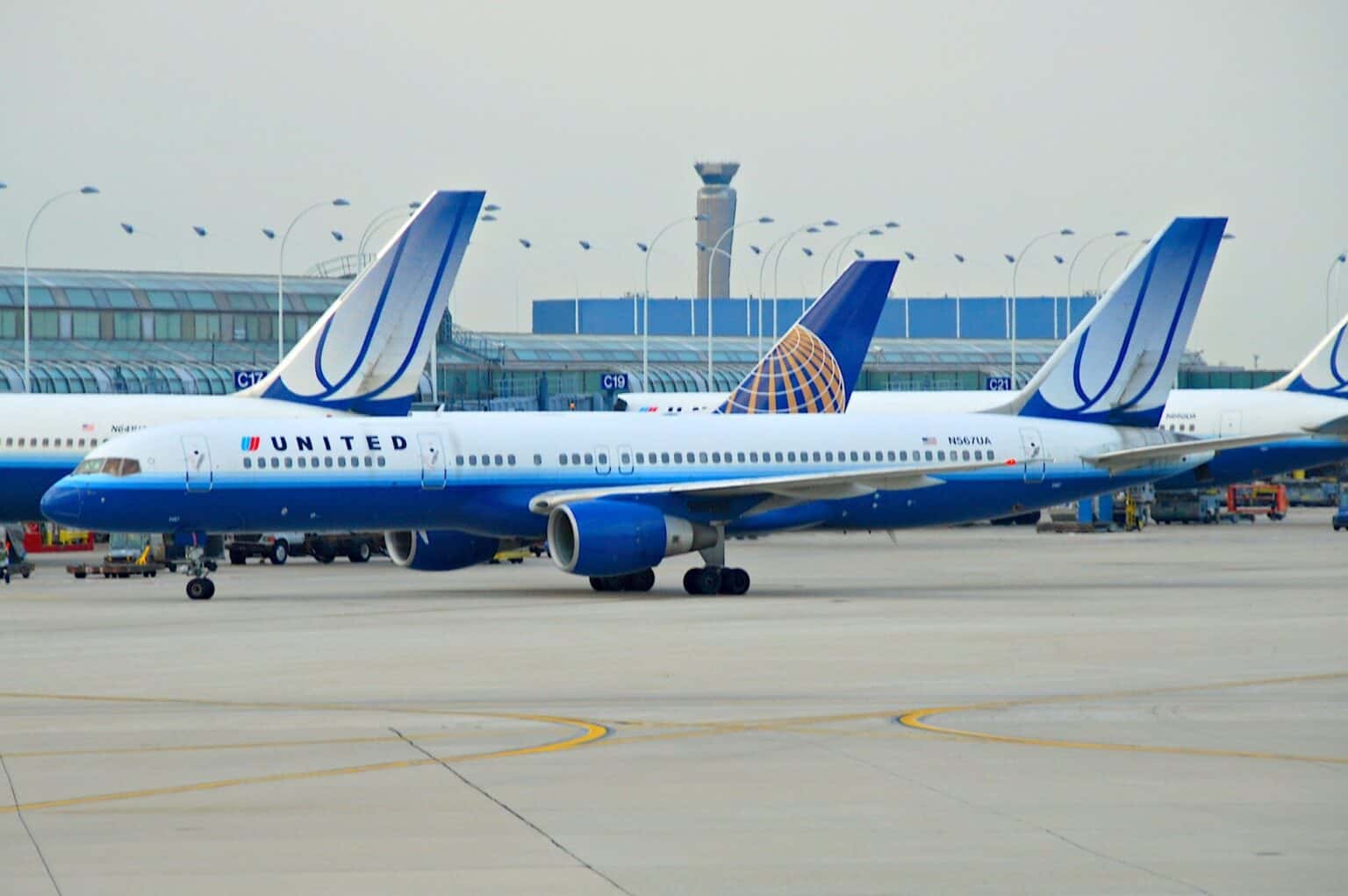
A United passenger booked from Chicago O’Hare to Washington Dulles spent more than seven hours aboard a plane stuck on the tarmac during the FAA’s nationwide ground stop on Friday, November 13, 2026, the Chicago Sun-Times reported. Federal rules say passengers on a domestic flight must get a chance to leave the plane before a tarmac delay passes three hours, but they also carve out exceptions for safety, security and air traffic control.
Whether United stayed within those rules is not yet known. AeroCorner found no United statement on the length of the holds by Tuesday morning, November 17, and Simple Flying, which reported holds of up to eight hours, said it had asked the airline for comment.
What passengers described
Abdul Sankoh was due to leave O’Hare for Dulles at 2:21 p.m. on Friday and was already on board when the ground stop was announced, according to the Sun-Times. He did not get off the plane until about 9 p.m., then spent another four hours in a rebooking line on Saturday morning.
Simple Flying, citing CNN, reported a second United passenger whose flight from O’Hare to Charleston, South Carolina, sat on the ground for about eight hours before it was canceled and passengers could get off. Neither account gives a flight number, so the exact flights, and the time each aircraft’s door closed, are not public.
The nationwide departure stop lasted more than four hours. Transportation Secretary Sean Duffy said on Saturday that a contractor replacing old copper wiring with fiber had overloaded the system, the Sun-Times reported.
Gate space became a second bottleneck. Some passengers were left sitting on planes for hours because airports did not have the gates to let them off, CNN reported on Friday.
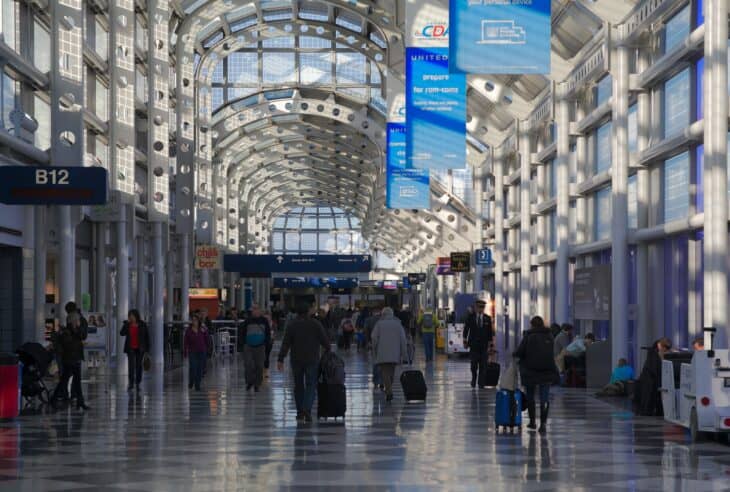

At O’Hare the fallout ran into Saturday, when FlightAware counted 685 canceled flights by about 5:30 p.m., according to the Sun-Times. A United spokesperson told the paper the FAA also held United flights bound for O’Hare on Saturday morning, until 10 a.m., to help clear the delayed departures.
What the DOT tarmac rule requires
The rule is 14 CFR 259.4. For a domestic flight leaving a US airport, the airline must start moving the aircraft back to a place where passengers can get off no later than three hours after the main boarding door closes, or four hours on an international flight.
Other duties start sooner. The airline must tell passengers the status of the delay once it passes 30 minutes, and must hand out food and drinking water within two hours unless the captain decides safety or security rules it out.
Toilets must work and medical attention must be available throughout. The DOT’s tarmac delay guide says the food can be a snack such as a granola bar rather than a meal, and adds comfortable cabin temperatures to the list.
Your rights during a tarmac delay
A status update after 30 minutes. A snack and drinking water within two hours. Working toilets and medical help throughout. A chance to get off before three hours on a domestic flight, or four on an international one, unless a safety, security or air traffic control exception applies. If you choose to get off, the airline does not have to let you back on.
The exceptions that matter on a ground stop day
The three-hour limit does not apply when the captain decides that letting passengers off would put their safety or security at risk, or when a safety or security reason keeps the aircraft from leaving its position. The rule does not list a ground stop itself among the exceptions.
The limit also does not apply when air traffic control tells the captain that returning to a gate or another deplaning point “would significantly disrupt airport operations.” On a day when airports were short of gates and parking space, that is the exception most likely to be argued.
The rule also judges when the airline started the return, not when the aircraft reached a gate. If the aircraft sits in an area the airline does not control, a request to the FAA tower or the airport authority counts as starting the return.
A long hold is therefore not automatically a violation. What decides each case is when the door closed, when United asked to bring the aircraft back and what controllers told the crew, and none of that has been published.
What happens next
Airlines must file a written report with the DOT’s Office of Aviation Consumer Protection on every domestic tarmac delay longer than three hours, within 30 days. It has to give the flight number, the length of the delay, its “precise cause” and how passengers were looked after, so reports on the November 13 flights are due by mid-December.
Failing to follow a tarmac delay plan counts as an unfair and deceptive practice that the DOT can pursue under 49 U.S.C. 41712. In August 2023 it fined American Airlines $4.1 million, then the largest penalty it had ever imposed under the rule, over 43 domestic flights held on the tarmac between 2018 and 2021.
Most of those delays were at Dallas Fort Worth, and they affected 5,821 passengers. The DOT found that none of the rule’s exceptions applied, and it credited American with $2.05 million of the fine for compensation the airline had paid those passengers.
Passengers who believe a hold broke the rule can file a complaint with the DOT. A cash refund for a flight that was later canceled is a separate right, set out in our guide to refunds after the ground stop.
On Monday, November 16, a separate United system outage left crews without final weights and held mainline departures across the US.
Sources and references used for research and fact-checking.
- eCFR (US DOT), 14 CFR 259.4, Contingency Plan for Lengthy Tarmac Delays
- eCFR (US DOT), 14 CFR 259.3, Definitions
- US Department of Transportation, Tarmac Delays (Aviation Consumer Protection)
- US Department of Transportation, DOT Fines American Airlines $4.1 Million for Unlawfully Keeping Thousands of Passengers on the Tarmac for Hours
- US Department of Transportation, American Airlines - Order 2023-8-20
Get the Newsletter
The latest aviation news and stories sent to your inbox.
About the Author

AeroCorner News is the aviation news desk of AeroCorner.com. It covers accidents and incidents, safety rulings, airline and airport disruption, and new aircraft. It works from primary sources such as the NTSB, FAA, EASA and the manufacturers' own announcements.