

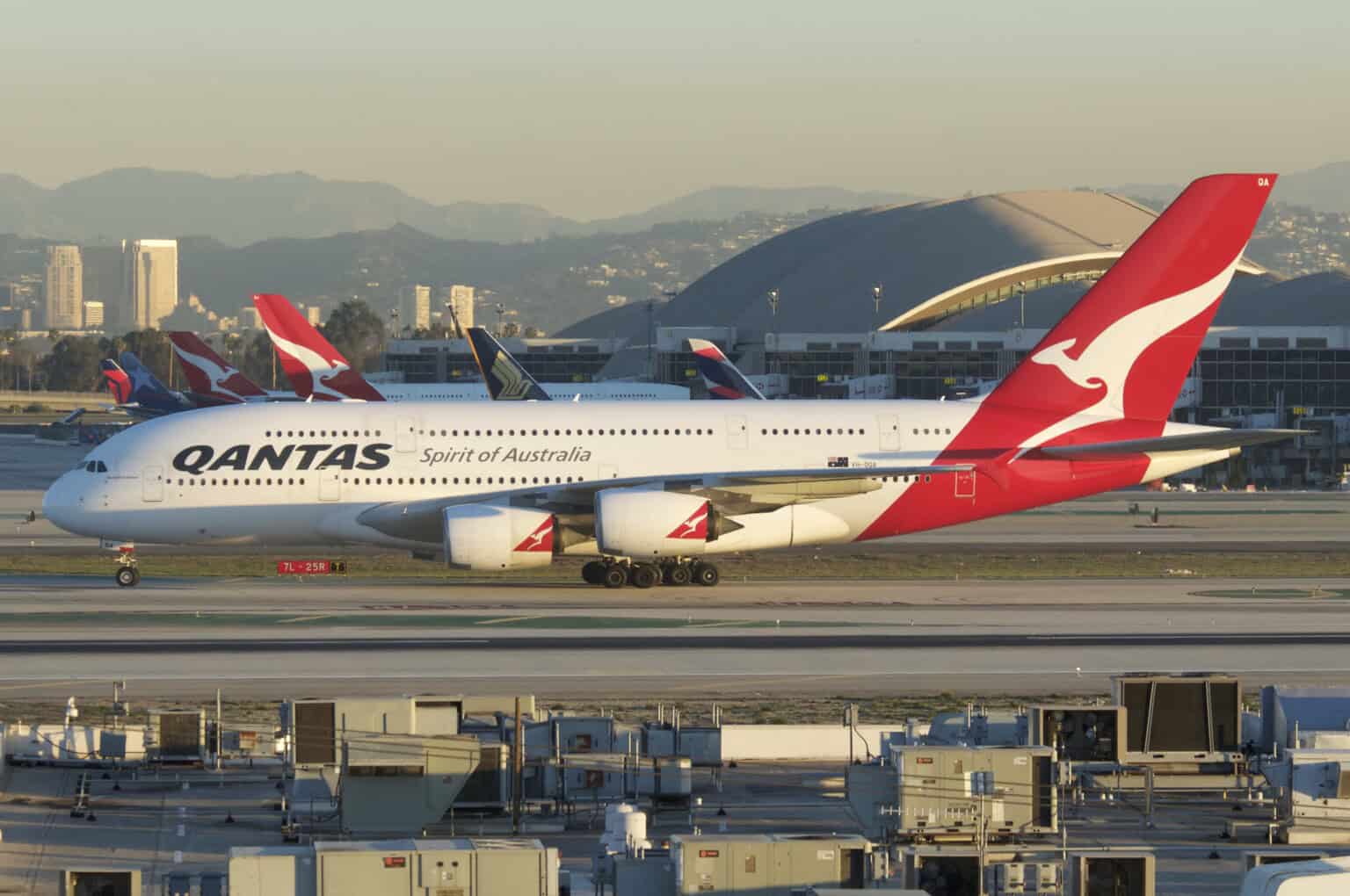
Qantas Group reported an underlying profit before tax of 2.06 billion Australian dollars (about 1.5 billion US dollars) for the year ended June 30, 2026, down 330 million dollars from the prior year. The airline announced the result on August 27, 2026.
Qantas pointed to a fuel bill that came in 610 million dollars higher than it had expected and a 420 million dollar net hit from the conflict in the Middle East. It also said it would begin retiring its Airbus A380 fleet in 2028, years earlier than previously planned.
A record demand year, a smaller profit
Statutory profit after tax came in at 1.29 billion dollars, down 316 million on the year, according to Qantas. The group set its full-year dividend at 39.6 Australian cents per share and said a planned 150 million dollar share buyback would not go ahead.
Demand was not the problem. Qantas and Jetstar launched 23 new routes during the year, and revenue rose across every flying segment, with Qantas Domestic up 5 percent and Qantas International up 8 percent.
Qantas Loyalty, the group’s frequent flyer business, grew revenue and earnings about 12 percent and now counts close to 19 million members. By segment, Qantas said underlying earnings before interest and tax were 1.44 billion dollars for its combined domestic operations, 650 million dollars for international, and 625 million dollars for loyalty.
The drag was cost. Qantas described FY26 as a year of two parts, with a strong first half giving way to a sharp jet fuel price spike as the Middle East conflict escalated. Net debt finished the year at 6.2 billion dollars, within the range the group targets.
The fuel number
Qantas said its fuel bill landed about 610 million Australian dollars above what it had planned for, after jet fuel prices spiked in the second half of the year alongside the conflict in the Middle East.
Why a strong year still cost Qantas money
Fuel is usually an airline’s largest or second-largest expense, and it is the one big cost that cannot be cut quickly when prices climb. Airlines soften the blow with hedging, buying financial contracts months ahead that lock in part of their future fuel cost.
Qantas said hedging and other measures cushioned the increase but could not absorb a price rise that lasted most of the second half. Hedging delays a sustained move rather than removing it, so a long run of high prices eventually feeds through to the bottom line.
Reality check
Qantas carried more passengers and grew revenue in every flying segment in FY26. Profit still fell because fuel is the cost an airline can least control, and hedging only buys time against a sustained price rise.
The A380s are leaving early
Qantas operates 12 Airbus A380 superjumbos, the double-deck jet it once planned to fly into the early 2030s. It now expects to start retiring them in 2028.
Chief executive Vanessa Hudson said the A380 is no longer in production, so maintenance costs and the cost of disruptions when one breaks down will keep rising. Newer, more efficient aircraft are arriving fast enough to take over.
Qantas took delivery of 17 new aircraft in FY26 and expects up to 31 more in the year ahead. Seven Airbus A321XLRs are now in service, and the first A350-1000 for the airline’s Project Sunrise ultra-long-range flights is due in April 2027, with nonstop Sydney to London service planned from October 2027.
Not yet an order
Qantas said it is in talks with Airbus and Boeing about converting around 20 aircraft purchase options into firm orders from 2030. No deal has been signed, and the size and manufacturer split could still change.
For passengers, the near-term change is mostly about which aircraft shows up at the gate. Qantas is betting that a younger fleet will cut fuel use, reduce delays, and give it room to hold fares steady the next time costs climb.
Sources and references used for research and fact-checking.
Get the Newsletter
The latest aviation news and stories sent to your inbox.
About the Author

Tim is the owner and lead editor of AeroCorner since 2019, overseeing aviation content covering aircraft, airlines, airports, and the broader aviation industry. Through years of researching, writing, editing, and publishing aviation-focused content, he has developed extensive practical knowledge of commercial aviation and air travel. Based in Asia and a frequent traveler himself, Tim also brings firsthand passenger experience to AeroCorner’s coverage. Outside of publishing, he has also explored aviation firsthand through hands-on flight training in New Zealand.