

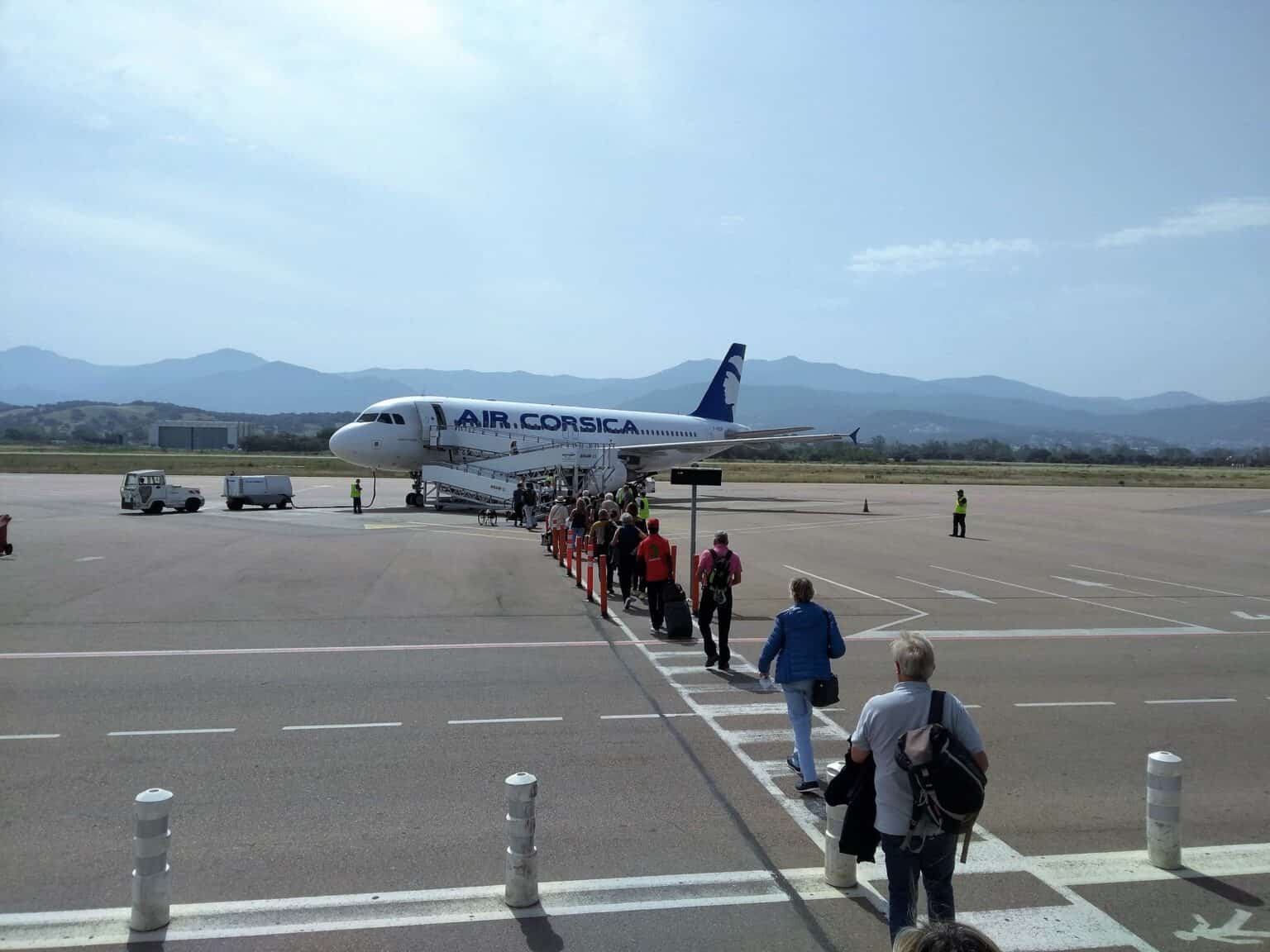
Air Corsica and its two pilot unions, the SNPL and the SPAC, reached an agreement overnight from Sunday, October 11, 2026, into Monday, ending a strike that began on Friday, October 9. The unions lifted their strike notice on Monday, October 12, four days before it was due to run out on October 16.
Normal service is expected to return on Tuesday morning, October 13, at all four of Corsica’s airports: Ajaccio, Bastia, Calvi and Figari. The terms of the deal have not been made public.
How the deal came together
The talks resumed under the mediation of Marie-Hélène Casanova-Servas, who chairs Air Corsica’s supervisory board, and ran late into the night with Gilles Albertini of the executive board, ICI Corse reported. She said a protocol agreement had been concluded between management and the pilots, and that the strike notice had been lifted.
She also apologized to passengers for the disruption. ICI said the only detail released so far is a principle of equity among all pilots, and that the airline still had to inform its customers officially.
Alta Frequenza described it as a lasting agreement, quoting Casanova-Servas as saying each side had weighed what was at stake for Corsica, its people and the company. The emergency program built on chartered aircraft stayed in place for Monday, Corsica Infurmazione reported.
What the pilots wanted
The two unions represent about 140 pilots, and this was the first strike in Air Corsica’s history, according to AFP. They wanted a general and significant pay rise, after accepting a two-year pay freeze and the loss of leave days under a 2024 agreement that expires on November 30.
Their main objection was a management proposal they said would block pay progression tied to seniority, Air Journal reported. Management, led by executive board chairman Pierre Muracciole, had offered a raise in two steps during 2027, worth what he called several thousand euros per pilot.
On the first day of the strike, 9 of the 33 departures scheduled from the island’s four airports were canceled, along with 8 arrivals, AFP reported. Air Corsica said most of its program still flew because it chartered larger aircraft to combine flights.
The weekend that followed was heavily disrupted, with many cancellations and knock-on delays, France 3 Corse reported. None of the reports gave a cancellation count for Saturday or Sunday.
September 23
Five ATRs grounded. Air Corsica confirms five of its seven ATR 72-600s are out of service over recurring cockpit odors.
October 1
Strike notice filed. The SNPL and SPAC give notice of a strike from October 9 to 16.
October 8
Talks fail. The airline says negotiations could not prevent the strike and arranges charter flights.
October 9
Strike begins. About a quarter of the day’s flights are canceled.
October 11
Deal reached. A mediated agreement is reached late on Sunday night.
October 13
Normal service. Flights are due back to normal at all four Corsican airports.
A strike on top of a grounded turboprop fleet
The walkout hit an airline already short of aircraft. Air Corsica flies seven ATR 72-600 turboprops and seven Airbus A320-family jets, and by late September five of the ATRs had been withdrawn as a precaution after recurring reports of unusual odors, mainly in the cockpit.
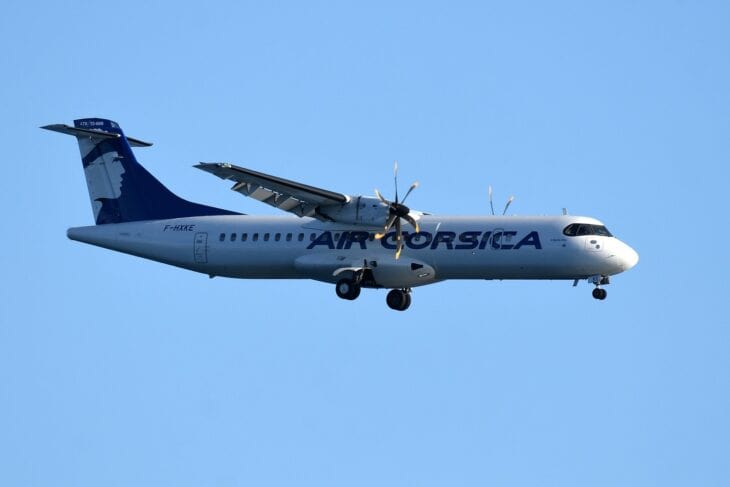

AFP described them as unusual oil smells. The cause has not been found, and the airline has pointed to equipment feeding the air conditioning system as one line of inquiry.
Engineers from ATR, engine maker Pratt & Whitney Canada and equipment supplier Liebherr are investigating in Toulouse. Executive board member Hervé Pierret said in September that the team needed until late October or early November, and that no ATR would fly until the doubt was resolved, Corse Net Infos reported.
To cover the gap, Air Corsica chartered an A319 from Amelia, an ATR 72 from Chalair and even an A350 widebody from Air Caraïbes in September. Muracciole put the charter bill at about €1 million a month.
The grounding also explains the deal’s one public principle. Management had offered partial-activity pay to pilots, mainly on the ATRs, whose aircraft are parked, AFP reported. Management now says the agreement balances its ATR and Airbus flight crews, according to Corsica Infurmazione.
Why a small airline’s strike reaches so far
Air Corsica is majority-owned by the Collectivité de Corse, the island’s regional government, and carried 2.29 million passengers in 2024, according to AFP. Its year-round routes link the island with Marseille, Nice and Paris-Orly.
Replacing those pilots at short notice is harder than it sounds. Ajaccio and Calvi require crews with specific airport qualifications, which limits which charter operators can fly there, so most of the strike charters served Bastia and Figari while buses carried passengers to and from the other two airports, France 3 Corse reported before the strike began.
The deal clears one problem, but the ATR grounding remains, and Air Corsica had planned more than 100 replacement charter flights through the end of October to cover it. The settlement also comes days after French pilot and cabin crew unions suspended their national strike planned for October 17 to 21.
Get the Newsletter
The latest aviation news and stories sent to your inbox.
About the Author

Tim is the owner and lead editor of AeroCorner since 2019, overseeing aviation content covering aircraft, airlines, airports, and the broader aviation industry. Through years of researching, writing, editing, and publishing aviation-focused content, he has developed extensive practical knowledge of commercial aviation and air travel. Based in Asia and a frequent traveler himself, Tim also brings firsthand passenger experience to AeroCorner’s coverage. Outside of publishing, he has also explored aviation firsthand through hands-on flight training in New Zealand.