

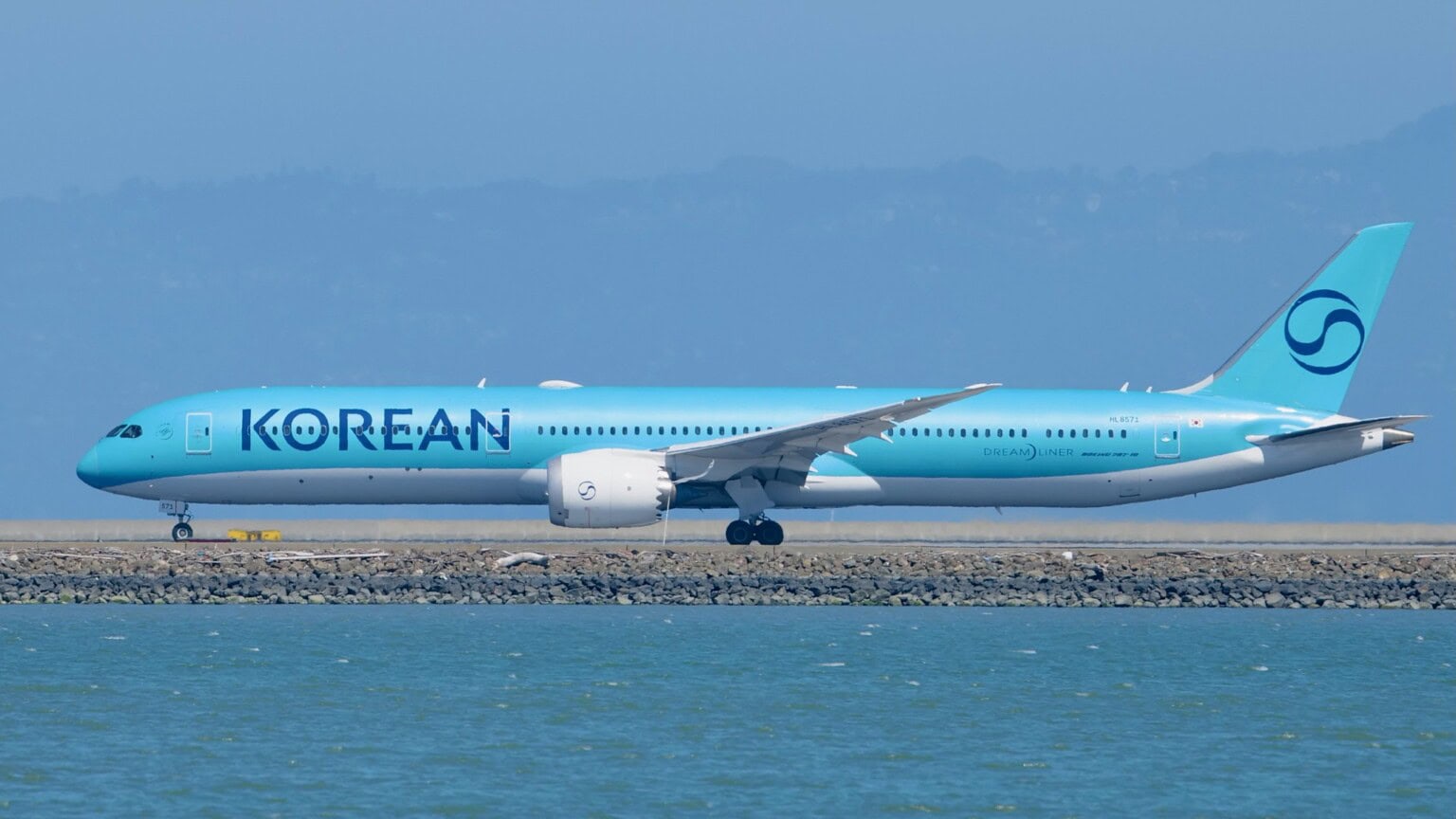
Boeing and Korean Air said on Wednesday, September 16, 2026, that the airline has finalized an order for 103 aircraft, closing a deal first announced as an intention more than a year earlier. The signing took place in Seoul.
The order covers 20 777-9s, 25 787-10s, 50 737-10s and eight 777-8 Freighters. It is the same mix the two companies named in August 2025.
Why the same 103 jets keep being announced
Aircraft orders rarely arrive as a single event, and this one has surfaced three times in thirteen months. Each stage meant something different.
In August 2025, Boeing described an intent to purchase rather than a completed deal. Its own announcement said the order would be posted to Boeing’s Orders and Deliveries website “once it is completed.”
That first agreement was signed in Washington at a Korea and United States business roundtable, presided over by US Commerce Secretary Howard Lutnick and South Korean Trade Minister Kim Jung-kwan.
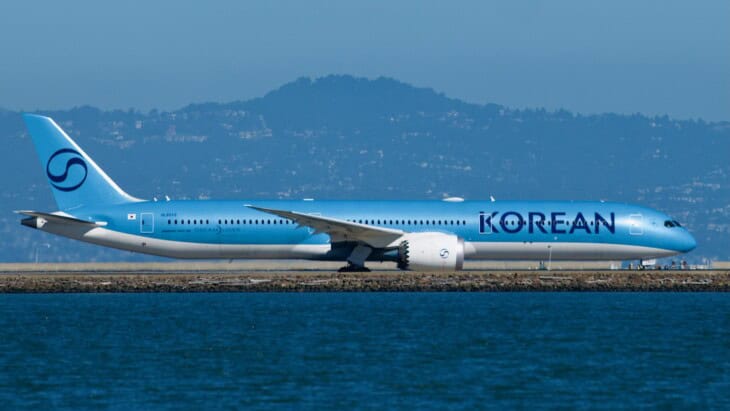
In late March 2026, Korean Air put a number on it in a regulatory filing. The airline said the 103 aircraft amounted to about $36.16 billion at Boeing’s 2025 list prices, a figure it warned could move with exchange rates.
This week’s announcement is the third step, and the one that matters to Boeing’s books. The manufacturer now calls the order finalized, language it did not use in 2025.
A commitment can be revised or quietly shrunk. A finalized order is a contract, and it is the version that reaches the backlog the market actually watches.
Why $36 billion and $50 billion are both right
The August 2025 package was reported at the time as being worth about $50 billion, which makes the $36.16 billion filing look like a markdown. It is not.
The larger figure covered the whole arrangement, including spare engines and servicing from GE Aerospace. The filing counts the airframes alone, at list prices that airlines almost never actually pay.
Korean Air is taking 21 spare engines alongside the aircraft, according to ch-aviation: six GE9X for the 777-9s, five GEnx-1B for the 787s and ten LEAP-1B for the 737s.
What Korean Air wants the jets for
The fleet plan runs well past the current decade, with deliveries scheduled from 2026 through 2039.
Boeing said in 2025 that the aircraft would support Korean Air’s growth as it fully integrates operations with Asiana Airlines, a merger that cleared its final approval this year. Chairman Walter Cho called the jets “a critical enabler for our future as a merged airline with Asiana.”
Korean Air has not said how the aircraft will be divided between its own network and the routes it inherits from Asiana.
Two of the four types are not yet in airline service. Boeing has said the 737-10 and the 777-9 are still advancing toward certification, which makes the delivery schedule the part of this order worth watching.
Reading an order announcement
List prices are a published sticker figure, and large customers negotiate well below them, so a headline order value is an upper bound rather than what an airline pays. Korean Air’s own filing flagged that its number could move with exchange rates. Neither Boeing nor Korean Air has disclosed the discounted price.
Sources and references used for research and fact-checking.
Get the Newsletter
The latest aviation news and stories sent to your inbox.
About the Author

Tim is the owner and lead editor of AeroCorner since 2019, overseeing aviation content covering aircraft, airlines, airports, and the broader aviation industry. Through years of researching, writing, editing, and publishing aviation-focused content, he has developed extensive practical knowledge of commercial aviation and air travel. Based in Asia and a frequent traveler himself, Tim also brings firsthand passenger experience to AeroCorner’s coverage. Outside of publishing, he has also explored aviation firsthand through hands-on flight training in New Zealand.