

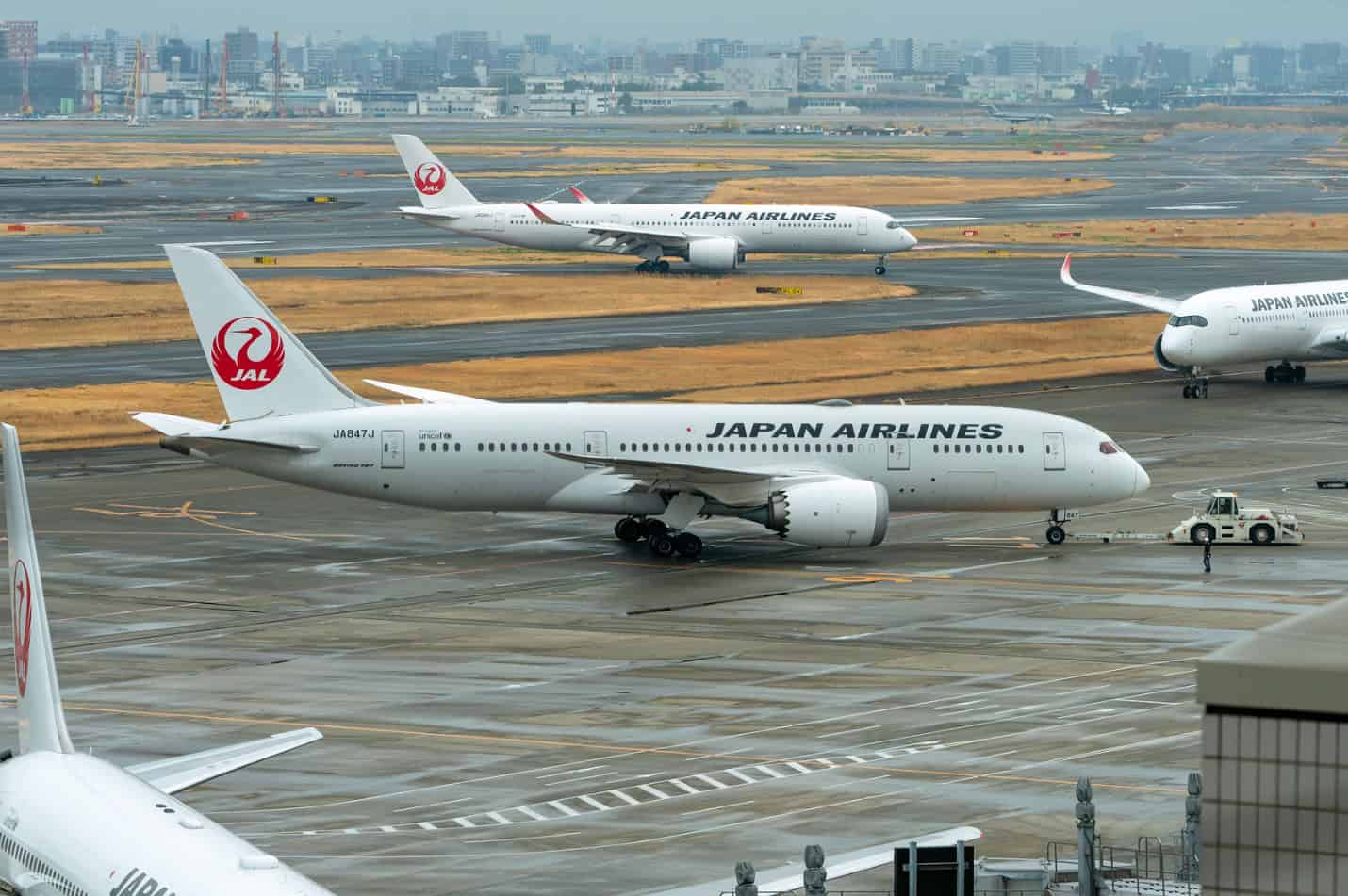
On September 3, 2026, Japan Airlines and Korean Air signed a strategic partnership in Tokyo that reaches well beyond the codeshare the two carriers have run for years. The signing was attended by JAL president Mitsuko Tottori and Korean Air vice chairman Keehong Woo. Within days, JAL confirmed to Korean media that it had also bought a stake in Hanjin KAL, the holding company that controls Korean Air.
What the partnership covers
The centerpiece is frequency. Once the merged Korean Air launches in December 2026 after absorbing Asiana Airlines, the two airlines plan to grow their Japan to Korea codeshare from about 250 flights a week to roughly 400.
Beyond schedules, the carriers said they will cooperate on cargo with shared terminals across their networks, and exchange staff for ground handling and cabin crew training. They also plan joint work on aircraft maintenance, sustainable aviation fuel, urban air mobility, and joint procurement.
This is not a joint venture and not an alliance change. JAL stays in the oneworld alliance and Korean Air stays in SkyTeam, and their bilateral cooperation dates back to the early 1960s.
The Hanjin KAL stake
JAL described the share purchase as an independent investment decision based on Hanjin KAL’s long-term market value, according to the Korea Herald. It did not disclose the size or the price, and no regulatory filing has appeared for a holding of 5 percent or more.
The timing carries weight in Seoul. Hanjin KAL is the subject of a slow contest for control between chairman Walter Cho and his affiliates, who hold about 20.6 percent, and the construction firm Hoban Group, which raised its stake to 20.15 percent in July.
Delta Air Lines has held about 14.9 percent of Hanjin KAL since 2020, when it built the position to support Cho. Korean outlets including the Seoul Economic Daily read JAL’s purchase as a second friendly bloc on the same side.
Still developing
JAL has not put a number on the stake, and there is no public filing to confirm one. FlightGlobal’s account of the partnership described the deal as not involving an equity stake at all, so the exact structure of JAL’s investment is not yet settled.
Why rival-alliance carriers are doing this
Airlines from competing alliances rarely sign deals this broad. The Japan to Korea market is the exception, because it is one of the densest international short-haul corridors in the world and passengers there choose on frequency and schedule rather than alliance loyalty.
Small cross-holdings work as soft alliances. They align two carriers’ interests without the antitrust scrutiny of a merger or the exclusivity of a joint venture, and Delta’s Hanjin KAL position has shown the model can hold for years.
The December merger will fold Asiana into Korean Air and create one of the world’s largest carriers by international traffic. For JAL, locking in feed from that network across the Tokyo Haneda and Seoul corridor is worth more than which alliance badge Korean Air wears.
Sources and references used for research and fact-checking.
Get the Newsletter
The latest aviation news and stories sent to your inbox.
About the Author

Tim is the owner and lead editor of AeroCorner since 2019, overseeing aviation content covering aircraft, airlines, airports, and the broader aviation industry. Through years of researching, writing, editing, and publishing aviation-focused content, he has developed extensive practical knowledge of commercial aviation and air travel. Based in Asia and a frequent traveler himself, Tim also brings firsthand passenger experience to AeroCorner’s coverage. Outside of publishing, he has also explored aviation firsthand through hands-on flight training in New Zealand.